In short
Peak XV has raised its Surge seed investment ceiling to $5 million and unveiled an 18-startup cohort spanning AI, robotics, healthcare, fintech, and space. The move reflects a tougher Series A market and growing demand for larger seed rounds.
- Peak XV increased Surge’s maximum seed investment from $3 million to $5 million.
- The Surge 12 cohort includes 18 startups that have collectively raised more than $90 million.
- Only five startups in the cohort are focused on India; many are built in India for global markets.
- The cohort spans AI, robotics, healthcare, fintech, insurance, music, beauty, and space.
- Peak XV says the higher ceiling reflects rising Series A requirements and more capital-intensive startups.
Peak XV Partners has raised the amount it can invest in each startup through its Surge seed program to as much as $5 million and has introduced an 18-company cohort that reflects a more global, more capital-intensive startup market. The new batch is the first to come in under the higher ceiling, and it arrives as founders increasingly need larger seed rounds to clear a tougher path to Series A financing.
The move matters because Peak XV is one of the most influential early-stage investors in India and Southeast Asia, with more than $10 billion under management and a portfolio that increasingly stretches far beyond its home markets. By increasing Surge’s investment cap, the firm is signaling that seed-stage companies now need more runway, especially in deep tech, AI, robotics, space, and other fields that demand more upfront spending before revenue scales.
According to Peak XV, the latest cohort has collectively raised more than $90 million in seed funding, while the firm itself invested over $50 million across the 18 startups. At least three of the companies had already secured outside capital before joining Surge, including some that had previously taken money from Peak XV. The company did not disclose the cohort’s median check size, but it said the figure is higher than in past batches.
Why Peak XV is writing larger seed checks
Peak XV says the short answer is that early-stage fundraising has changed. The long answer is that the old seed-to-Series A progression has become harder, and startups are now expected to demonstrate more traction, more technical sophistication, and stronger product-market fit before investors at the next stage commit.
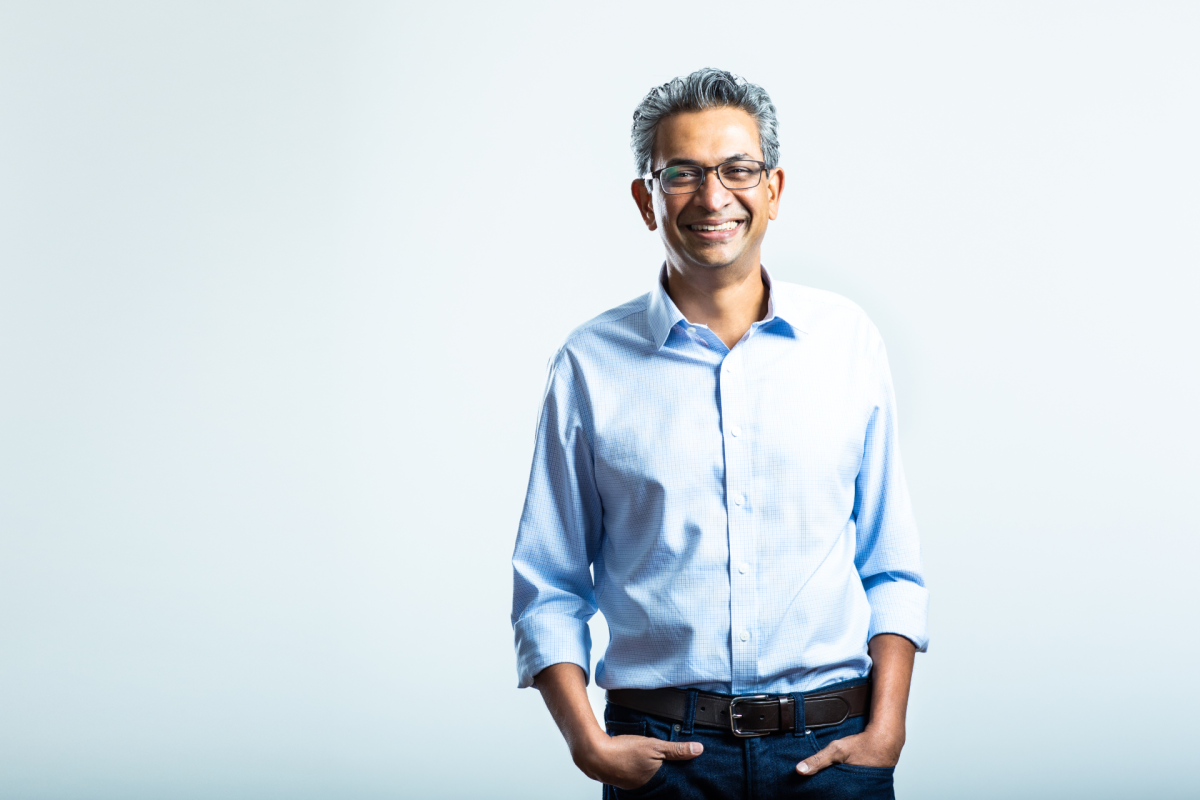
Rajan Anandan, managing director at Peak XV, said the threshold to raise a Series A has risen noticeably. In his view, that has pushed founders to raise larger seed rounds so they can extend their progress far enough to reach the next milestone with confidence.
Anandan said the firm is seeing a growing number of capital-hungry startups, particularly in deep tech, that need bigger seed rounds than before to build and validate their products.
The higher cap also gives Peak XV more flexibility in competing for top founders. Seed investors increasingly face a market where some startups want institutional backing earlier, while others need enough capital to support longer technical development cycles, more hiring, and more expensive product validation.
What changed from the old Surge model?
Peak XV’s earlier Surge structure topped out at $3 million per startup. Under the new framework, the firm can invest up to $5 million in a single company, a meaningful jump for a seed-stage platform that has long positioned itself as a launchpad for high-potential founders across India and Southeast Asia.
The increase does not mean every startup will receive the maximum. But it does suggest Peak XV wants the option to be more aggressive where it believes the opportunity warrants it, especially in categories where the cost of building and testing a product is materially higher than in software-only businesses.
| Key metric | Surge 12 | Earlier Surge cohorts |
|---|---|---|
| Maximum Peak XV investment per startup | Up to $5 million | Up to $3 million |
| Number of startups in cohort | 18 | Varied by cohort |
| Peak XV capital deployed in cohort | More than $50 million | Not disclosed |
| Total seed funding raised by cohort | Over $90 million | Not disclosed |
| Program start | 2019 | Same program |
How global is the new Surge cohort?
Surge 12 is more international than many people may expect from a program historically associated with India and Southeast Asia. Peak XV says the cohort includes founders and companies spanning locations from San Francisco to Sydney, while only five of the 18 startups are focused on the Indian market.
That does not mean the companies are all based abroad. In fact, more than half of the startups in the cohort are headquartered in India. The difference is that many are building for global customers rather than only for local markets, underscoring how the region’s founders increasingly aim at worldwide opportunities from day one.
Since Surge launched in 2019, when the firm was still known as Sequoia Capital India and Southeast Asia, it has backed more than 180 startups founded by entrepreneurs from more than 18 nationalities. Peak XV says the 10 biggest companies that have emerged from the platform now generate more than $1 billion in combined annual revenue.
India still matters, but the market is broader
Peak XV’s latest cohort illustrates a familiar pattern in today’s startup ecosystem: companies may be built in India, but the products are increasingly designed to serve customers everywhere. That shift is especially visible in software, AI tools, and technical infrastructure businesses, where founders can ship globally from the start.
The company also said many Surge founders are repeat entrepreneurs, experienced operators, or deeply specialized technical talent. Around half to 60% of a typical cohort comes from operator backgrounds at major technology companies, according to Anandan. That means Peak XV is not merely funding first-time dreamers; it is often backing people who have already worked inside scaled product organizations.
What kinds of startups are in Surge 12?
The new class spans artificial intelligence, robotics, healthcare, consumer products, fintech, music, insurance, space, and more. The diversity reflects how broad the seed market has become and how Peak XV is trying to maintain exposure to both software-native businesses and companies that require serious technical infrastructure.
Some of the startups are building in categories that have become especially competitive in the AI era, such as model adaptation, AI safety, and AI-assisted productivity. Others are tackling less glamorous but potentially large markets, including underground pipe inspection, business insurance, and satellite-based spectrum intelligence.
Selected startups in Surge 12
- Alma is developing a personal computing platform designed to make computer use faster and more affordable.
- August AI combines AI and physician-led care for healthcare users and says it has reached more than 9 million people across 160 countries.
- Ditto is building an AI dating matchmaker inside iMessage and had already raised a $9.2 million seed round earlier this year.
- GameStock is adding competitive mechanics to investing and trading.
- HiLoop helps companies post-train open-weight models for specific use cases.
- Hoola Health focuses on pediatric and family care services through a single platform.
- Kello is creating an AI-driven talent discovery platform centered on potential rather than credentials alone.
- Kindling aims to serve as a storytelling operating system for tech startups.
- Puralink is building autonomous robots that can navigate underground pipe systems.
- Reinforce Labs develops tools to test, red-team, and fix enterprise AI systems.
- Riffle is a browser-based collaboration platform for musicians.
- Rosella is building an AI-native commercial insurance brokerage for U.S. businesses.
- Tribe Money offers an AI-powered personal finance platform.
- ULOOK is creating autonomous satellite systems for radio-frequency sensing and spectrum intelligence.
- Wingit is building a beauty platform for India’s premium consumer market.
Three startups in the cohort have not yet publicly disclosed their names or products. Peak XV said those businesses are working in education, applied AI, and medical products.
How the new cohort reflects the state of early-stage investing
The latest Surge class offers a useful snapshot of where early-stage capital is flowing in 2026. Investors are still interested in software, but they are also more willing to back businesses that blend software with heavy technical development, regulated markets, or hardware-adjacent execution.
That is particularly visible in the number of AI-related companies in the cohort. Some are direct AI infrastructure plays, others apply AI to health, talent, insurance, finance, or content creation, and a few use AI as part of a broader workflow or service layer. The common thread is that AI is now embedded across most startup categories rather than confined to a standalone sector.
Peak XV’s decision to increase its maximum investment size also suggests that seed rounds are becoming less about “just enough to get started” and more about helping founders reach a much more demanding next financing milestone. In markets where Series A investors are pushing for stronger metrics, more polished products, and clearer distribution, seed investors are being asked to shoulder more of the early risk.
Why deep tech is changing seed stage economics
Deep tech businesses often need more time and money to show visible progress. They may require engineering talent, specialized equipment, clinical or industrial validation, or regulatory review long before a customer base becomes obvious. That changes how much capital founders need at the seed stage and why a $5 million check can now look more normal than extravagant.
For Peak XV, the benefit is strategic. A higher ceiling can help the firm stay relevant to the best founders in markets where the cost of building has risen. It also gives the firm room to support more ambitious companies without forcing them to stitch together a patchwork of small early checks.
Who is Peak XV backing this time?
Peak XV appears to be backing a mix of seasoned operators, repeat founders, and highly technical builders. That profile aligns with the firm’s broader seed strategy, which increasingly favors teams capable of building quickly and navigating complex product or market challenges.
Some founders in the cohort have already developed notable track records. Others bring deep industry or research credentials. The mix matters because many of today’s early-stage startups are not simple consumer apps; they are companies that need technical depth, domain expertise, or both to survive.
Peak XV described Surge as one of several ways it invests at seed, alongside its standard early-stage strategy, and said it continues supporting companies as they move into later financing rounds.
That continuity is part of the appeal for founders. Surge is not just a one-off seed program; it is a gateway into a relationship with a major regional investor that can stay involved as companies grow.
Why this cohort stands out
Surge 12 stands out for three reasons. First, the investment ceiling is higher than before. Second, the geographic scope is wider than ever. Third, the mix of businesses spans some of the most active and competitive sectors in startup investing right now.
It is also notable that several companies arrived with outside funding already in place. That suggests Peak XV is competing in a market where promising founders can attract capital before joining a structured program, and where top seed investors may need to move faster or invest more to win allocations.
- Seed rounds are getting larger.
- Series A expectations are rising.
- Global ambition is now standard for many India-linked startups.
- Deep tech and AI are reshaping how much capital founders need early on.
Peak XV’s broader position in the market
As one of the largest venture firms focused on India and Southeast Asia, Peak XV plays an outsized role in shaping what early-stage funding looks like in the region. Changes to Surge therefore matter beyond the individual cohort, because they can influence founder expectations, competitive dealmaking, and the size of seed rounds across the ecosystem.
The firm’s move also comes at a time when venture investors globally are still recalibrating after the boom years. Even as capital availability remains uneven, the most ambitious startups are often raising more at seed than they once did, especially if they are building in AI, infrastructure, or other technically demanding fields.
In that sense, Surge 12 is less a departure than a formal recognition of where the market already is. Peak XV is not just following a trend; it is codifying it in a more ambitious investment policy.
Timeline: How Surge evolved
| Year | Milestone | Why it matters |
|---|---|---|
| 2019 | Surge launches under Sequoia Capital India and Southeast Asia | Creates a dedicated seed platform for early-stage founders |
| 2020-2025 | Multiple cohorts back founders across India and global markets | Expands the program’s reputation and geographic reach |
| 2026 | Surge 12 debuts with a $5 million investment ceiling | Signals larger seed checks and tougher Series A conditions |
What it means for founders and investors
For founders, the message is straightforward: if your company needs more money early, there may be more room to ask for it. For investors, the implication is that seed-stage underwriting increasingly requires conviction not only in the product, but in the amount of capital required to reach a meaningful next step.
For the startup ecosystem in India, Southeast Asia, and beyond, Peak XV’s move is another sign that early-stage financing is becoming more global, more technical, and more expensive. The line between local and international startup markets continues to blur, and companies are being built to serve customers far outside the geography where they were founded.
Surge 12 captures that shift clearly. It is a cohort of founders building in AI, robotics, healthcare, finance, and space, but it is also a signal that the seed stage itself has changed. The bar is higher, the checks are bigger, and the ambitions are broader than before.
Frequently asked questions
What did Peak XV announce about Surge?
Peak XV announced that it has raised the maximum it can invest in each Surge startup to $5 million, up from $3 million, while unveiling a new 18-company cohort. The change matters because it shows how seed-stage investing is becoming larger and more competitive.
How much has Surge 12 raised in total?
Surge 12 startups have collectively raised more than $90 million in seed funding, according to Peak XV. The firm said it invested more than $50 million across the cohort, though it did not disclose the median check size.
Why is Peak XV increasing its seed investment ceiling?
Peak XV is increasing the ceiling because founders now need more capital to reach Series A, which has become harder to secure. The firm also says deep tech and other capital-intensive startups often require larger seed rounds to build and validate their products.
How global is the new Surge cohort?
The new cohort is highly global. Peak XV said it includes founders and companies from places such as San Francisco and Sydney, while only five startups are focused on the Indian market and more than half are based in India.
What kinds of startups are in Surge 12?
Surge 12 includes startups in AI, robotics, healthcare, fintech, insurance, music, consumer products, beauty, and space. The batch includes companies building AI tools, autonomous robots, commercial insurance software, and satellite systems for radio-frequency sensing.