In short
Refik Anadol has opened Dataland in Los Angeles, a new AI art gallery built around immersive, data-driven installations and an ethics-first approach to training models. The debut show, Machine Dreams: Rainforest, uses biometric sensors, custom datasets, and Google Cloud support to argue that AI art can be more than generic image generation.
- Dataland opened in downtown Los Angeles on June 20 as a new museum-style venue focused on AI art.
- Its debut installation, Machine Dreams: Rainforest, combines biometrics, scent, sound and generative visuals.
- Anadol says the work was built from original datasets gathered over three years, not scraped internet images.
- The gallery emphasizes consent, transparency and lower-energy compute to separate itself from controversial AI practices.
Refik Anadol has opened Dataland in downtown Los Angeles, presenting what he says is the world’s first museum devoted to AI art and a new case study in how artificial intelligence can be used in creative work without relying on the usual flood of scraped, generic imagery. The June 20 debut matters because it offers a high-profile rebuttal to the criticism that AI in art is mostly fast, disposable, and ethically murky.
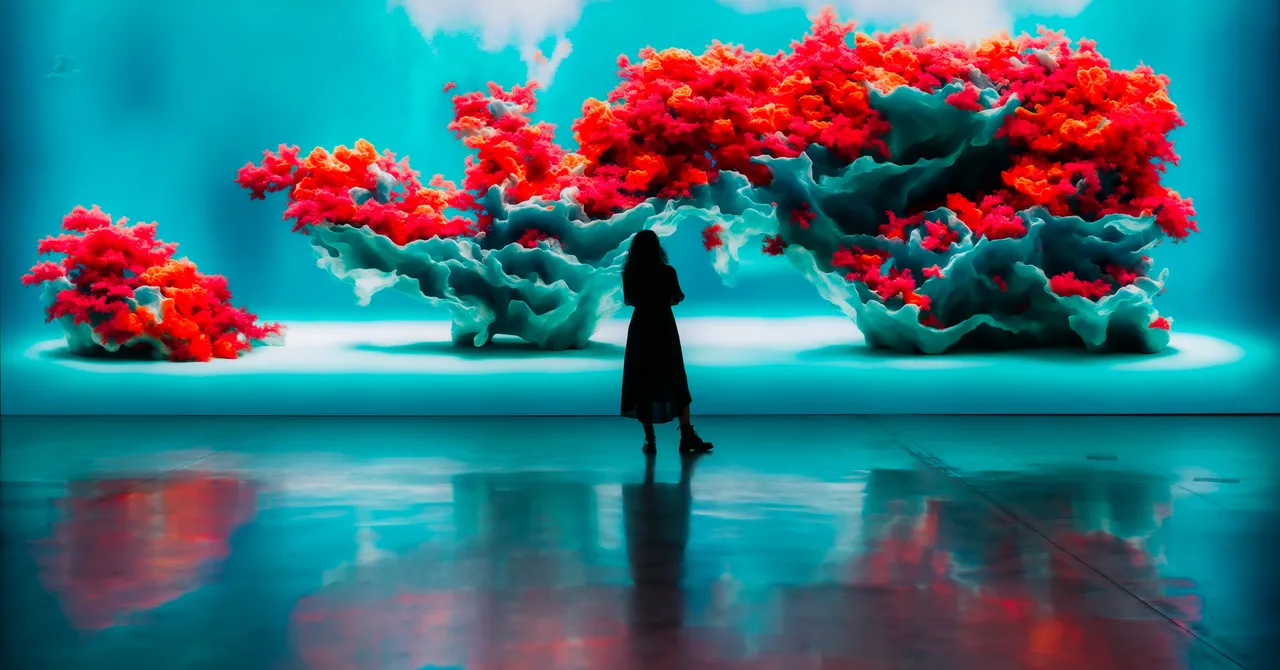
The gallery’s opening installation, Machine Dreams: Rainforest, pulls together biometric tracking, immersive projection, sound, scent, and custom-built AI models trained on licensed and research-based data. In the first two weeks, Anadol says more than 10,000 people came through the doors, signaling strong public interest in a project that aims to redefine what AI art can be.
What Dataland is trying to prove
Dataland is not simply another digital art venue with flashy screens and algorithmic visuals. It is an attempt to turn AI art into a fully immersive cultural institution, one that treats the medium as an experience rather than a novelty. Anadol, who has built an international reputation for large-scale media installations, says the project is meant to show there are more possibilities for artificial intelligence in art than prompt-driven images or short generated clips.
That positioning is significant. Generative AI has become a lightning rod in the arts because many creators see the technology as extractive, unoriginal, and indifferent to the rights of human artists. Dataland is designed to move the conversation away from mass-produced output and toward a more deliberate, research-heavy model that foregrounds authorship, consent, and environmental responsibility.
Anadol has framed the project as both an artistic and philosophical argument. In his view, AI should not be treated only as a production shortcut. Instead, he wants visitors to encounter a medium that can evoke emotion, create wonder, and even reveal something about human perception.
Anadol argues that the point of Dataland is to expand the public understanding of AI art and prove that the field is not limited to fast, surface-level image generation.
How Machine Dreams: Rainforest works
Machine Dreams: Rainforest is the opening show at Dataland and the clearest expression of Anadol’s current ambitions. The installation uses a custom AI system called the Large Nature Model, which was built from scientific archives and environmental data rather than the unvetted image pools that have fueled controversy across the generative AI industry.
The result is an environment that changes in response to the people inside it. Visitors are given wearables that register biometric information and movement, allowing the artwork to shift around them. The installation responds with visual fields that resemble rainforests, storms, and living ecosystems, while also incorporating textures that suggest circuitry, digital matter, and machine logic.
According to Anadol, the project took three years to develop from scratch. His team traveled to rainforests, including the Amazon, to capture original source material and build a dataset that would feed the model’s output. He says the production involved roughly 5 petabytes of raw data gathered directly by the team.
The installation’s ambition lies not just in scale but in its attempt to make AI feel embodied. Visitors can move through the work as anonymous observers, but the wearable sensors allow the system to adapt to individual presence, turning each visit into a temporary collaboration between body and machine.
Why the experience feels different from standard AI imagery
It feels different because the installation is built as an environment, not a slideshow. Rather than presenting fixed images on a screen, Dataland surrounds visitors with sound, scent, motion, and responsive visuals that unfold over a 40-minute cycle. The piece is designed to be encountered physically, and that makes it difficult to reduce to a screenshot or short video clip.
Anadol has said the project is meant to be impossible to fully capture in recording, a claim that reflects his broader belief that AI art can become more than an output machine. In this setting, the AI-generated visuals are only one part of the work. The atmosphere, timing, sensory feedback, and visitor interaction are equally central.
Inside the gallery: sensors, scent, and shifting weather
The experience begins with a level of friction that underscores how carefully the environment is controlled. Visitors are asked to complete a waiver, use a companion app, and wear equipment that includes a smartwatch and a U-shaped shoulder collar. Once calibrated, the devices begin feeding signals into the installation.
What follows is a room-scale sensory event. One section simulates rain and thunder, with droplets, reflections, and storm patterns changing as people move. Another zone uses scent to suggest forest air. Elsewhere, an Infinity Room sends a glittering hummingbird through a neon landscape, creating a sense of flight and disorientation that recalls major studio fantasy films, but with a more abstract, machine-generated logic.
There is also a quieter, more revealing side to the gallery. In the Latent Gallery, visitors can inspect part of the model’s training structure. Rather than hiding the data behind a black box, Dataland invites people to look at categories such as frogs, which are displayed as grids of source images behind the immersive effects. The point is to show that the surreal output is anchored in a large and organized body of underlying material.
| Feature | Details | Why it matters |
|---|---|---|
| Dataland opening | June 20 in downtown Los Angeles | Marks the debut of a dedicated AI art museum |
| Opening exhibit | Machine Dreams: Rainforest | Shows how AI can be used for immersive, interactive art |
| Visitor response | More than 10,000 visitors in two weeks | Suggests broad curiosity about AI art beyond novelty |
| Training data | 5 petabytes gathered by the team | Highlights the scale and custom nature of the model |
| Technical partners | Google DeepMind and Google Cloud support | Shows the project’s dependence on advanced infrastructure |
Why data ethics are part of the artwork
Dataland’s creators are making a deliberate ethical argument alongside the artistic one. Much of the backlash against generative AI has centered on how leading models were trained, with creators accusing tech companies of using copyrighted or otherwise unlicensed content without permission. Anadol is trying to avoid that dynamic by emphasizing consent, collaboration, and transparency.
He says the data behind the Large Nature Model was assembled with the participation of researchers and institutions, not merely scraped from the internet. That includes material from organizations such as the Smithsonian, whose Encyclopedia of Life provided data on more than 2 million species. By putting scientific provenance at the center of the work, the gallery tries to distinguish itself from the most criticized corners of the AI industry.
This approach also serves a practical artistic purpose. By showing the source material in the Latent Gallery, Dataland lets visitors see how the machine’s strange visual inventions are grounded in a structured archive of real-world observations. The result is not realism in the conventional sense, but a transformation of evidence into atmosphere.
Anadol says Dataland was built to “demystify” the model, the datasets, and the training process so audiences can see what is underneath the hallucination.
How does Dataland handle privacy and visitor data?
Dataland says it is designed to minimize data retention, and that claim is central to the gallery’s self-presentation. The wearables collect biometric information while a visitor is inside, but Anadol says the system does not keep that information once the person leaves. Instead, the visitor receives a token that can be used to retrieve a personal record of the experience.
That framing is meant to contrast with broader digital culture, where surveillance and behavioral tracking are often invisible to the user. In Dataland, the data exchange is intended to be explicit, temporary, and part of the artistic premise. Even the idea of the artwork “remembering” a visitor is presented as a controlled, bounded process rather than an ongoing profile.
The final room in the experience, called the Sanctuary, pushes this concept further. It compiles biometric information from everyone in the room — including heart rate, skin temperature, and movement patterns — and converts it into an abstract 3D visualization of collective energy. That image is not saved. It exists briefly and then disappears, reinforcing the exhibition’s theme of ephemeral memory.
Why Google’s role matters
Google’s involvement gives the project more technical credibility and shows how high-end AI art increasingly depends on major cloud and research infrastructure. Anadol says Google DeepMind provided access to experimental low-energy resources, helping Dataland operate on Google Cloud while aiming for what he calls sustainable compute.
The relationship is not new. Anadol has worked with Google for years and was the first person to receive the Google Artists and Machine Intelligence Artist Residency in 2016. That history helps explain why a project like Dataland could combine advanced AI, environmental messaging, and a polished public exhibition in a single venue.
The sustainability angle is important because AI infrastructure carries a significant energy burden. Large-scale model training and deployment have prompted growing concern about electricity use, water consumption, and environmental cost. Dataland’s focus on “low-energy” resources is therefore more than a technical detail; it is part of the gallery’s effort to present AI art as responsible rather than extractive.
What visitors actually feel inside the exhibit
The strongest argument Dataland makes may be experiential rather than theoretical. Visitors are not asked to think about AI only as software. They are asked to feel it as a space, a weather system, a scent, and a responsive organism. That is a meaningful shift in a debate that often gets stuck on whether machine-generated work can ever be original or authentic.
In the gallery, the visuals do not sit still long enough to become mere decoration. Rain changes course. Birdsong swells. Forest imagery mutates into synthetic textures. The rooms answer back to human movement in a way that feels tactile, even when the material is digital. Anadol’s bet is that this interactive quality can generate a different kind of emotional legitimacy than the static image pipeline associated with many AI tools.
He says the exhibition has repeatedly produced visible reactions from the public, including tears, joy, and surprise. Those reactions, in his view, are the evidence that the medium can carry real artistic force. Whether skeptics agree is another matter, but the opening turnout suggests the audience for ambitious AI art may be larger than its critics assume.
What sets the show apart from AI “slop”
It sets itself apart by being slow, spatial, and authored. Most public conversation about AI imagery involves fast content production, low effort, and the circulation of uncanny or derivative results across social feeds. Dataland’s debut instead places AI inside a carefully staged environment with a clear conceptual frame, museum-scale production values, and a visible chain of data provenance.
That distinction matters because it changes the question from “Can AI make pictures?” to “Can AI be used to create an art form with depth, atmosphere, and intention?” Dataland’s opening exhibit is an answer to that question, even if only a partial one.
A timeline of the project
The gallery’s public debut did not happen overnight. It is the product of years of development, partnerships, and technical experimentation. The timeline below summarizes the main milestones disclosed in the reporting around the launch.
| Date/Period | Milestone | Significance |
|---|---|---|
| 2016 | Anadol becomes the first Google Artists and Machine Intelligence Artist Residency recipient | Begins a long collaboration with Google |
| Three years before opening | Development of the Large Nature Model begins | Marks the start of the custom AI system behind the exhibit |
| During development | Team gathers 5 petabytes of original data | Builds the model from curated and research-based sources |
| June 20, 2026 | Dataland opens in Los Angeles | Launches the first “museum of AI arts” |
| First two weeks | More than 10,000 visitors attend | Indicates immediate public interest |
Who is Refik Anadol, and why does his voice matter here?
Refik Anadol is one of the best-known artists working at the intersection of data, architecture, and machine learning. His work is often distinguished by scale, visual density, and a belief that algorithms can be used to create not just images but conditions for perception. Dataland is the most ambitious articulation of that approach so far.
His optimism about the field is also notable because he does not deny the backlash against AI. Instead, he acknowledges that many critics are reacting to genuine problems, especially the flood of low-effort, machine-generated content. His argument is that those examples should not define the entire medium.
That stance matters for the wider cultural debate. If AI art is going to gain legitimacy, it likely will not do so through generic outputs alone. It will need institutions, curatorship, technical rigor, and a stronger ethical framework. Dataland is an attempt to assemble all of those pieces in one place.
Anadol has described the project as a way to remind audiences that AI is only a tool, while the meaning of the work still comes from human intention and interpretation.
What Dataland means for the future of AI art
Dataland arrives at a moment when AI in the arts is both unavoidable and widely mistrusted. That tension gives the gallery its relevance. It is not trying to settle the debate in one exhibition, but it does offer a concrete alternative to the dominant image of AI as a cheap content engine.
If the project succeeds, it could help broaden the vocabulary around machine-made art. It suggests that AI can be used for immersive environments, research-based visual systems, and participatory installations that rely on data transparency and physical engagement. It also suggests that the public may be more willing than critics expect to enter into that experience, provided the work feels substantive.
Whether Dataland becomes a template for future institutions or remains a singular, highly produced statement, its opening shows how the AI art debate may be maturing. The question is no longer only whether machines can make art. It is whether artists, curators, and audiences can build ethical, moving, and memorable forms around them.
For now, Anadol appears convinced that the answer is yes. He sees the present as a kind of artistic renaissance, even if the name for it has yet to stick. Dataland is his bid to give that era a shape, a room, and a pulse.
Frequently asked questions
What is Dataland?
Dataland is a new Los Angeles gallery dedicated to AI art, launched by artist Refik Anadol and studio partner Efsun Erkılıç. It is designed as an immersive museum-style space that uses custom models, biometric interaction and sensory installation techniques.
What is Machine Dreams: Rainforest?
Machine Dreams: Rainforest is Dataland’s opening exhibition and its most ambitious installation so far. It uses a custom Large Nature Model trained on research-based environmental data to generate shifting rainforest imagery, soundscapes and sensory effects that respond to visitor movement.
How is Dataland different from other AI art projects?
Dataland is different because it emphasizes original datasets, scientific archives, visitor biometrics and museum-scale immersion rather than quick prompt-based image generation. The project also highlights data ethics and sustainability as part of the artistic concept.
Why is Google involved with Dataland?
Google is involved because Anadol says Google DeepMind provided access to experimental low-energy resources and Dataland runs on Google Cloud. The relationship reflects Anadol’s long collaboration with Google and helps support the gallery’s compute-heavy installations.
Does Dataland keep visitor data?
Dataland says it does not retain biometric data after visitors leave. According to Anadol, the system forgets the information once the visit ends, though visitors can use a token to access a personal record of the experience.