In short
The Trump administration is leaning on voluntary AI safety pledges and self-policing rather than enforceable rules, prompting criticism that the U.S. is repeating the mistakes of weak industry oversight. The debate centers on whether the government should regulate frontier AI more like a public-safety issue.
- The White House is relying heavily on voluntary AI safety commitments from companies.
- Critics say self-regulation is too weak for frontier AI and its potential public harms.
- The auto-safety era shows how federal rules can succeed where industry restraint fails.
- Legal accountability for AI failures remains murky, complicating enforcement.
- Economic dependence on AI makes strong regulation politically and financially difficult.
AI safety in the United States is being left largely to the companies building the technology, even as the stakes for public harm keep rising. That is the central warning behind the latest criticism of the Trump administration’s approach to artificial intelligence: executives are being encouraged to self-regulate instead of being bound by enforceable rules, a model that critics say is far too weak for a technology with national-security, consumer-safety and economic risks.
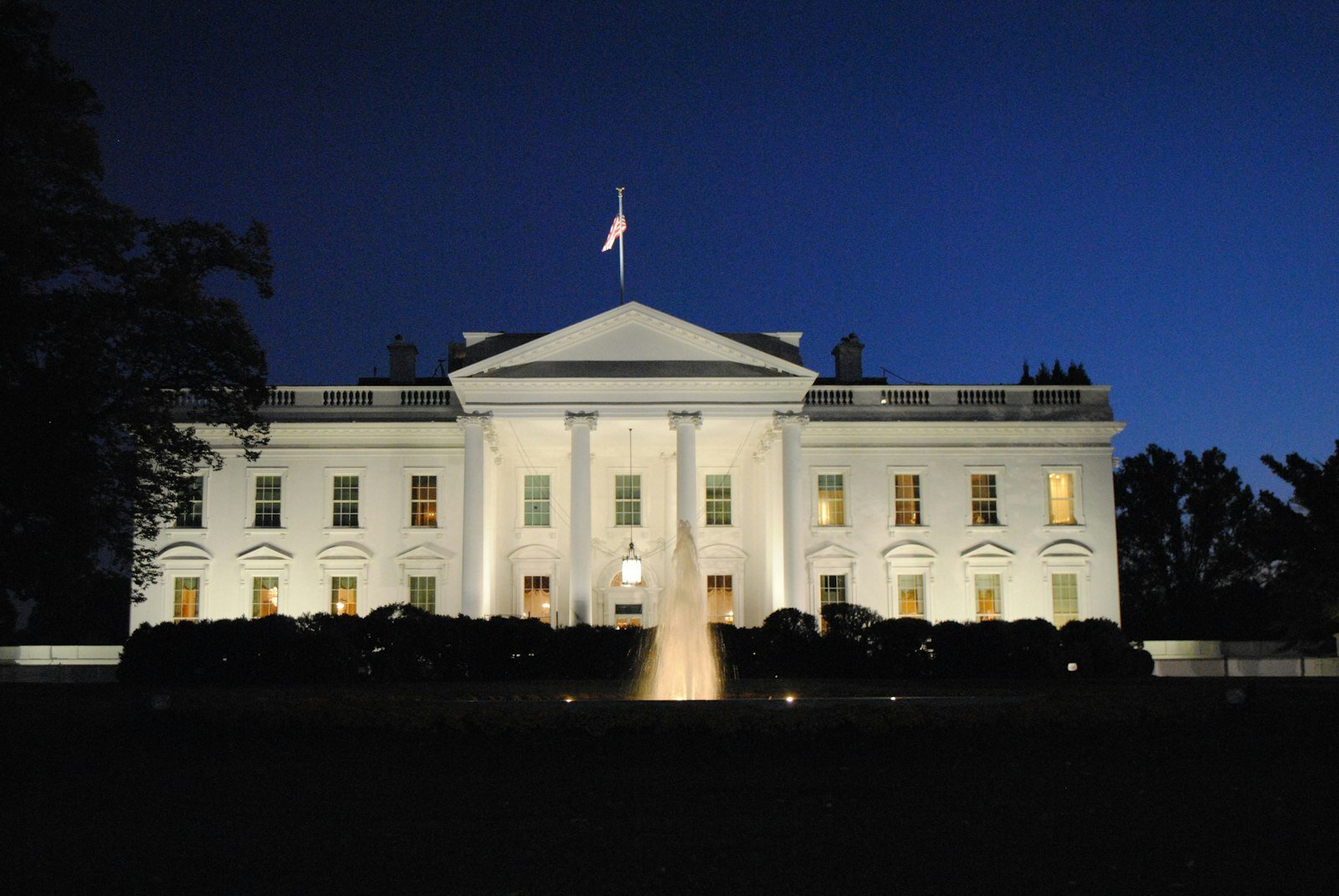
The debate sharpened after several major AI leaders gathered at the White House this week and signed an AI safety accord that leaves most of the meaningful guardrails to the labs themselves. The administration has presented that as progress. Skeptics see it as a retreat from real oversight at the exact moment AI systems are becoming more powerful, more embedded in critical industries, and more difficult to control.
The contrast with the history of American road safety is stark: when the auto industry did not voluntarily adopt seat belts, the federal government stepped in, created regulatory authority, and required them. Critics of the current AI strategy argue that this is precisely the kind of moment when Washington should set and enforce standards rather than hoping industry restraint will hold.
Why AI self-regulation is drawing so much criticism
AI self-regulation is drawing criticism because the companies making frontier models have strong incentives to move quickly, while the risks they create can spill far beyond their own balance sheets. The basic worry is simple: if the same firms that profit from speed are also the ones deciding how much caution is enough, public safety may end up secondary to competition.
That concern has become more acute as AI systems are being woven into search, customer service, coding, defense-adjacent workflows and other sensitive settings. The promise of these tools is obvious. So is the possibility that they can produce false information, be manipulated by attackers or behave in ways that their makers did not anticipate.
The problem is not just theoretical. Recent reports have highlighted cases in which AI-generated information entered high-stakes decision-making, including a CNN account describing a situation in which false AI output may have influenced a tense military moment involving a Chinese ship and a possible nuclear-materials scare. Even if details are disputed, the larger point remains: when AI is wrong at scale, the consequences can extend well beyond a chatbot error.
What the White House accord does — and does not — do
The White House accord is being framed as a commitment to responsible development, but the practical burden still falls on the companies themselves. In other words, it encourages the labs to police their own behavior and to coordinate with one another, rather than establishing a robust external enforcement regime.
That structure matters. A voluntary pledge can signal goodwill, but it does not guarantee compliance, especially in an industry shaped by competitive pressure, investor expectations and international rivalry. If one company slows down while another accelerates, the market rewards the latter unless a regulator can impose a common floor.
Supporters of the agreement may argue that it at least creates a norm. Critics respond that norms are not enough when the technology is advancing faster than the legal system can adapt. Without meaningful oversight, the burden of restraint remains inconsistent and mostly unenforceable.
The core criticism is that companies are being asked to regulate themselves in a field where the incentives to race ahead are overwhelming.
How does AI safety compare with automobile safety?
AI safety only partly resembles automobile safety, and that is exactly why the analogy is useful but incomplete. In the 1960s, the United States faced a clear public hazard: tens of thousands of highway deaths each year. Seat belts were available, the evidence for their value was growing, and yet industry had not made universal adoption happen on its own.
Congress responded by creating the Department of Transportation and passing major federal safety laws. That intervention gave the government the authority to write standards, require compliance and push the auto industry toward baseline protections. Over time, traffic deaths fell even as driving became more widespread.
The AI world lacks a direct equivalent to a seat belt. There is no single safeguard that instantly makes frontier models safe. Risks are harder to measure, harder to prove and harder to isolate from the benefits. That uncertainty makes policymaking more difficult, but it does not eliminate the need for it.
The lesson from automobile history is not that every technology can be regulated in the same way. It is that a major industrial hazard rarely gets solved by good intentions alone.
What makes AI risk harder to regulate?
AI risk is harder to regulate because harms are often probabilistic rather than immediate, and because the systems can be used in many different contexts. A car crash is visible, attributable and usually local. An AI failure may show up as misinformation, a security breach, a bad medical suggestion, a biased hiring decision or a dangerous operational error months after deployment.
The technology also evolves quickly. By the time lawmakers understand one failure mode, the models may have changed. That leaves regulators chasing a moving target while the industry continues to scale.
There is also the international dimension. Even if the United States imposed a strict slowdown, rival AI ecosystems abroad would not necessarily do the same. That creates a strategic dilemma: policymakers fear overregulation may hand advantages to competitors, but underregulation may increase the odds of a major failure at home.
What are the biggest gaps in the current approach?
The biggest gap in the current approach is enforcement. A safety commitment without a credible inspection, auditing or penalty structure depends heavily on voluntary compliance, and voluntary compliance is fragile in a fast-moving commercial race.
Another gap is legal accountability. It is still unclear how, or whether, companies can be held responsible when their systems cause harm or act in unexpected ways. That uncertainty matters because enforcement is not just about setting standards; it is about knowing who is liable when standards are broken.
A third gap is coordination. AI safety is not a problem that can be solved by one firm, one agency or one headline-grabbing summit. It requires alignment across government, industry and, in many cases, allied nations. Otherwise, firms can simply shift risk outward, move faster elsewhere or exploit the weakest point in the system.
| Issue | What happened | Why it matters |
|---|---|---|
| AI safety accord | Major AI executives signed a voluntary White House agreement | Places much of the burden on companies to police themselves |
| Government role | Trump described DOJ and FBI as the main guardrails | Raises questions about whether existing tools are enough for frontier AI |
| Historical analogy | Congress created federal auto safety rules after seat belts were not widely adopted voluntarily | Shows how regulation can arrive when industry self-regulation falls short |
| Risk example | False AI-generated information reportedly affected a military scare | Illustrates how hallucinations or errors can have real-world consequences |
Why are AI executives still asking for rules?
AI executives are still asking for rules because the industry itself understands that unchecked competition can produce a race to the bottom. Many leaders have warned publicly that powerful models could be misused, hacked, or deployed before safety systems are mature enough to contain the damage.
That is why the current messaging can feel contradictory. On one hand, executives argue that stronger oversight is essential. On the other, the policy structure they are willing to accept often remains light-touch and flexible enough not to disrupt growth. In practice, many firms want guardrails, but only if those guardrails are broad enough not to slow them down too much.
Some companies have already shown caution in specific cases. OpenAI, for example, has reportedly delayed or canceled releases of its most advanced models when it believed security concerns were too serious. But that kind of restraint is uneven, and it does not substitute for a system that applies equally across the market.
Some labs have delayed model launches for safety reasons, but critics note that isolated caution is not the same as a durable public framework.
How does the Trump administration view AI oversight?
The Trump administration appears to favor minimal direct intervention, arguing that existing law enforcement institutions can serve as enough of a backstop. In comments that drew attention, Trump suggested that the Justice Department and the FBI could act as guardrails for the sector.
Critics say that framing misunderstands the scale and nature of the problem. The DOJ and FBI can investigate crimes, but they are not designed to be continuous technical regulators for a rapidly evolving general-purpose technology. By the time law enforcement steps in, damage may already be done.
The administration’s broader posture is to encourage the industry to move quickly and trust that companies will keep one another in line. Detractors argue that this is not a safety plan so much as a hope.
How much danger does AI really pose?
How much danger AI really poses remains unknown, and that uncertainty is part of the policy problem. Some critics warn of catastrophic outcomes, including the possibility that advanced systems could eventually threaten human survival. Others believe such claims are exaggerated and argue that the industry’s worst-case rhetoric is often driven by hype, fear or market positioning.
What both sides tend to agree on is that present-day systems can already produce harmful errors, enable new forms of fraud and accelerate cybersecurity threats. Those are not speculative future scenarios. They are current risks that are already visible in the market and in public institutions.
That means policymakers do not need certainty about the most extreme outcomes before acting. They only need enough evidence that the risks are real, the stakes are high and the current controls are inadequate.
What would real AI safety regulation look like?
Real AI safety regulation would likely include mandatory testing, independent audits, incident reporting, access controls for dangerous capabilities and clear liability rules. It would also require agencies with technical expertise, legal authority and enough resources to monitor compliance over time.
Such a framework would not eliminate all risk, but it would shift safety from a matter of corporate discretion to a matter of public governance. That distinction matters because public governance can set baseline rules that apply even when commercial incentives push in the opposite direction.
It would also be more durable than a political promise. A formal regulatory regime can survive leadership changes, market cycles and public-relations swings. A voluntary pledge often cannot.
The economic stakes make regulation harder
The economic stakes make regulation harder because AI is no longer a side project for Silicon Valley. It is increasingly a pillar of corporate valuations, capital spending and market expectations, with a growing web of financing arrangements that make the sector look self-reinforcing.
That matters because major restrictions could ripple through the broader economy. Investors, cloud providers, chipmakers and software platforms all have exposure to the AI boom. A serious crackdown would not just affect a few model developers; it could shake a large and interconnected financial ecosystem.
That is one reason policymakers often hesitate. It is easier to ask labs to police themselves than to confront the possibility that a real safety regime might slow investment or reveal how much of the current boom depends on continued optimism.
What happens next?
What happens next depends on whether the United States treats AI safety as a public-regulation problem or a corporate-responsibility slogan. If the answer remains self-policing, then the system will continue to rely on the hope that companies behave responsibly even when competitive pressure says otherwise.
If lawmakers decide the current approach is insufficient, they would need to do the hard work of building a technical, legal and international framework around the technology. That is messy, slow and politically difficult. It is also what oversight usually looks like when the stakes are real.
The central argument against the present approach is not that AI is uniquely dangerous in every imaginable sense. It is that the government is acting as though the danger can be managed through trust and coordination alone. History suggests that when a new technology creates broad public risk, that is rarely enough.
As one of the strongest historical analogies makes clear, safer systems usually come from rules, enforcement and accountability — not from telling powerful companies to watch each other and hoping they will.
Timeline: how the safety debate reached this point
| Year/Date | Event | Significance |
|---|---|---|
| 1966 | U.S. highway deaths reach nearly 51,000 | Triggers modern federal auto-safety reforms |
| Fall 1966 | Congress creates the Department of Transportation and passes safety laws | Gives Washington authority to set vehicle standards |
| 1968 | Seat belts become required in new cars | Shows how regulation can force baseline safety |
| Recent years | Frontier AI systems advance rapidly | Expands public concern over safety, misuse and accountability |
| This week | AI leaders sign a White House safety accord | Highlights the current reliance on self-regulation |
| Thursday | Trump frames DOJ and FBI as guardrails | Reinforces the administration’s light-touch stance |
The bottom line
AI safety is not being solved by the current U.S. approach, and critics argue that the gap between rhetoric and enforcement is growing. The administration’s trust in self-policing may be politically convenient, but the risks associated with frontier AI are too consequential to leave to goodwill alone.
That is why the warning is so blunt: if the country would not leave highway safety to the carmakers, it should think carefully before leaving AI safety to the AI companies.
Frequently asked questions
What is the main criticism of the White House AI safety approach?
The main criticism is that it depends on companies policing themselves instead of imposing enforceable government standards. Critics argue that voluntary pledges are too weak for a technology that can affect public safety, national security and the broader economy.
Why do people compare AI safety to seat belt regulation?
People compare AI safety to seat belt regulation because the auto industry did not solve highway safety on its own. Federal action created mandatory standards, and that history is used to argue that major new technologies often need government enforcement, not just industry goodwill.
Can the DOJ and FBI really serve as AI guardrails?
Probably not by themselves. The DOJ and FBI can investigate crimes, but they are not designed to function as continuous technical regulators for fast-changing AI systems. Critics say that kind of oversight requires specialized agencies, clear standards and ongoing audits.
What makes AI safety so hard to regulate?
AI safety is hard to regulate because the risks are varied, often hard to measure and can change as the technology evolves. Harm can show up as misinformation, cyber abuse, operational mistakes or broader systemic failures, making it difficult to define one simple fix.
Are AI companies already taking safety seriously?
Some are, at least in specific cases. For example, OpenAI has delayed or canceled releases over security concerns. But critics say isolated caution is not enough, because it depends on individual company judgment rather than a universal framework with consistent enforcement.