In short
Google has launched its first advanced TPU into orbit aboard a SpaceX rocket to test whether AI chips can survive and operate in space. The mission is part of Project Suncatcher, a long-term plan for orbital data centers that depends on lower launch costs and reliable satellite networking.
- Google sent a prototype TPU into space for the first time on October 1, 2026.
- The test is part of Project Suncatcher, which aims to explore orbital AI compute clusters.
- Google’s research says space data centers will require far cheaper launches and a much larger Starship flight cadence.
- The company believes its chips can handle space radiation well enough for inference workloads.
- A second, more purpose-built satellite demo is planned for next year.
Google has launched its first advanced AI chip into space, sending a prototype Tensor Processing Unit aboard a SpaceX rocket as part of an ambitious push to build orbital data centers. The test matters because it is the company’s first real attempt to prove that high-performance AI hardware can survive radiation, power limits and thermal stress beyond Earth.
The flight, carried on a SpaceX rocket from California on October 1, 2026, gives Google a live test of Project Suncatcher, its long-range plan for compute clusters in orbit. The company says the experiment is meant to determine whether future satellite systems can host AI workloads at scale and whether the economics of launch, cooling and networking can eventually make space-based computing practical.
For now, the satellite is a prototype. But Google is already looking well beyond a single mission: the company has released a peer-reviewed paper on orbital data centers and argues that if launch costs continue to fall, space may become a serious venue for large-scale AI infrastructure.
What Google launched, and why it matters
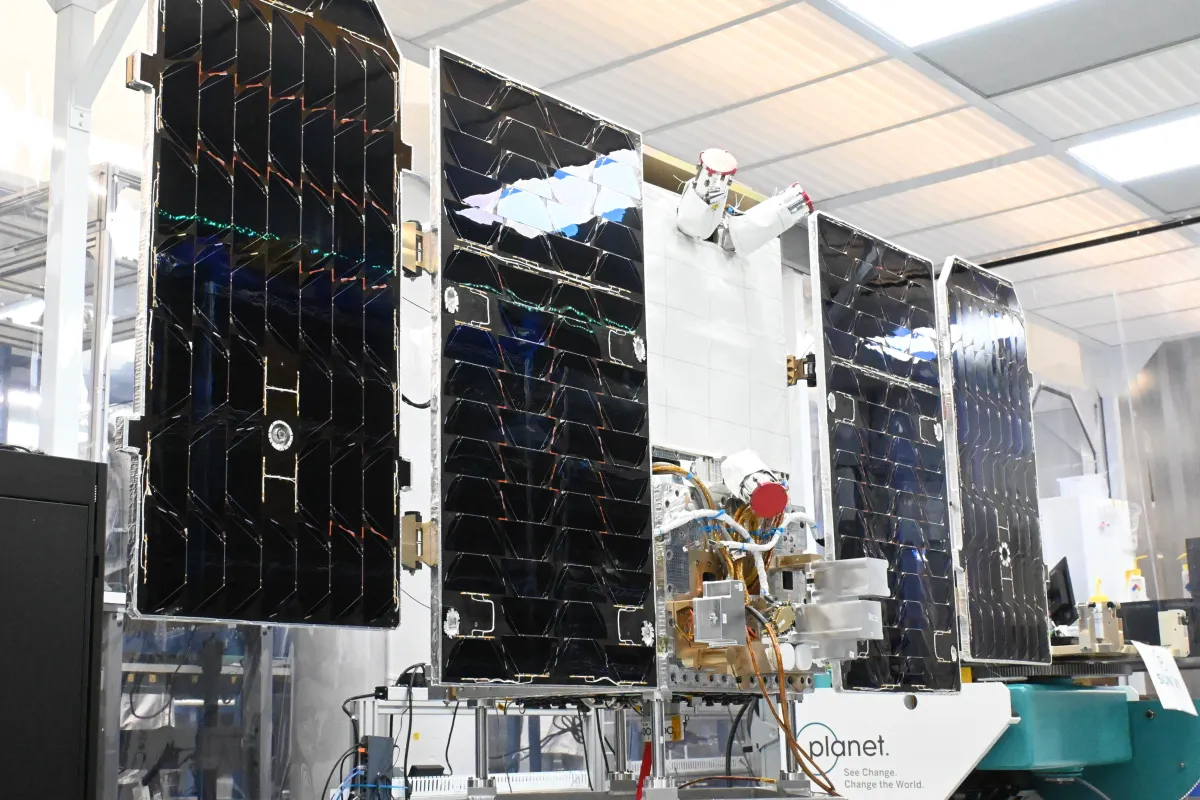
Google’s payload is a prototype satellite built by Planet Labs that contains one of the company’s Tensor Processing Units, or TPUs, the specialized chips Google uses to accelerate machine-learning tasks. The chip is being tested in orbit to see whether it can reliably function in the harsh conditions of space, including constant radiation exposure and strict power and thermal constraints.
In practical terms, the test answers a simple question: can a modern AI accelerator operate outside Earth without failing under real mission conditions? Google has already validated the hardware on the ground, but its researchers and executives say orbit is the only environment that can reveal how the system behaves under true space stress.
Google’s Project Suncatcher team says ground simulations are useful, but they can never fully replace an in-orbit test of the chip, power system and thermal design.
The satellite is designed to run the TPU in short, controlled bursts rather than continuously. Those 15-minute sessions reduce strain on the craft’s power supply and cooling system while still allowing engineers to measure how the chip performs and whether errors appear in its logic circuitry.
How Project Suncatcher is supposed to work
Project Suncatcher is Google’s effort to explore distributed AI computing in space. The concept assumes that, over time, satellites in close formation could act as connected compute nodes, processing data in parallel much like racks inside a terrestrial data center.
The company says its long-term vision is a network of 81 satellites operating together. In that model, the satellites would not merely collect data; they would process it on orbit, potentially reducing the need to move huge volumes of information back to Earth.
Why does the network design matter?
Because AI workloads depend heavily on speed between chips, Google says the layout of the network will be critical. Its researchers argue that bandwidth and latency between TPUs are essential if the system is going to support multi-rack-style workloads in orbit.
That is a major engineering challenge. Space is not a friendly environment for the tightly synchronized communication that modern AI systems often require, especially when many chips need to exchange data quickly and reliably.
Google is therefore designing for future workloads, not present ones. The company says its work is intended to anticipate how AI compute may evolve in five years, not simply mirror today’s cloud architecture in space.
Why Google is betting on space data centers now
Google’s orbital experiment is part of a broader industry question: where will the next generation of compute live? As AI models grow larger and more power hungry, cloud operators are looking for ways to expand capacity without running into limits on land, water, electricity and cooling.
Space offers a theoretical answer to some of those constraints. In orbit, solar power is more consistent, land use disappears and heat dissipation can be approached differently than on the ground. But the trade-offs are severe: launching hardware is expensive, maintenance is difficult and every component must survive radiation, vacuum and extreme temperature swings.
That is why Google calls the project a moonshot. It is not treating orbital compute as an immediate commercial product, but as a strategic investigation into what infrastructure might be possible if launch economics keep improving.
What makes Google’s approach different?
The company is taking a longer view than many of the space-tech startups on the same SpaceX rocket. The launch also carried payloads from Satlyt and Cowboy Space Company, among more than 100 missions sharing the flight.
Those companies are also exploring space-based computing, but Google’s effort stands apart because it is backed by one of the world’s largest cloud and AI operators and is being framed as a multi-year infrastructure program rather than a one-off demonstration.
| Item | Details | Why it matters |
|---|---|---|
| Launch date | October 1, 2026 | First time Google has sent an advanced chip into space |
| Launch vehicle | SpaceX rocket from California | Provides access to orbit for the prototype and related payloads |
| Test hardware | Google TPU on a Planet Labs satellite | Checks whether Google’s AI accelerator can operate in space |
| Operating mode | 15-minute bursts | Limits power and thermal stress during early testing |
| Long-term concept | 81-satellite formation | Represents Google’s vision for scalable orbital compute |
What the new research says about launch costs
Alongside the flight, Google published a peer-reviewed version of its research paper on orbital data centers, which is due to appear in Joule. The paper does not claim that space computing is already economical. Instead, it offers one of the clearest public windows into how Google thinks the economics could work in the future.
At the center of that analysis is SpaceX, the same company that carried the prototype to orbit. Google’s researchers argue that SpaceX has been on a steady cost-reduction path for years, and that this trend could make orbital infrastructure more plausible over time.
The paper estimates that if launch prices continue falling at roughly the same pace seen since Falcon 1, SpaceX could eventually reach launch costs near $200 per kilogram by 2035. Google presents this as a plausible direction rather than a guaranteed outcome.
How many launches would Starship need?
Google’s research suggests a very large number: about 1,800 launches over the next decade if Starship is to move enough payload into orbit to preserve a similar cost trajectory. That would amount to roughly 370,000 tons of payload, assuming each mission can carry 200 metric tons.
In other words, orbital data centers would only make sense if Starship or a comparable vehicle can fly at a scale that is still far beyond today’s operational reality.
Google’s researchers note that this is a demanding target for a rocket that has never flown more than five times in a year. Even so, the company appears to think the real question is not whether that pace is possible today, but whether launch economics will continue to improve enough to justify designing for it now.
How realistic is SpaceX’s launch cadence?
SpaceX has set extremely ambitious expectations for Starship, and Elon Musk has repeatedly suggested the vehicle could reach a much higher flight rate than any rocket in history. The company sees Starship as a reusable platform capable of driving down the cost of moving mass to orbit.
Google’s paper does not depend on Musk’s most aggressive timelines, but it does assume a future in which launch becomes dramatically cheaper and more frequent. That is the central bet behind all large-scale space infrastructure: hardware only becomes useful in orbit if it can be deployed often enough and replaced cheaply enough to make the system sustainable.
That is also why Google’s analysis is notable. It does not simply ask whether a satellite can run a TPU. It asks whether the entire launch-and-deploy ecosystem could mature enough to support large compute clusters in space at all.
Can TPUs survive space radiation?
Google says the answer appears to be yes, at least for the kinds of workloads it is testing first. The company’s updated research suggests the chips can survive orbital radiation well enough to perform inference tasks over a five-year satellite lifespan.
That conclusion was not reached casually. Google reran particle-accelerator tests after discovering that its original setup gave the chips more shielding than they would have in actual orbit. The revised experiments produced slightly more logic-circuit errors, but the error rate still remained low enough for the company to keep its confidence in the hardware.
According to Google’s project lead, the chip error rate appears small enough for normal inference workloads, though far less suitable for massive training runs involving many chips operating for months.
That distinction is important. Inference and training are very different tasks. Inference, which is the act of using a trained model to make predictions or generate output, can tolerate a modest level of reliability if the architecture is robust. Training, by contrast, is more sensitive because it often requires thousands of chips to operate in coordination for long periods without interruption.
What this means for AI in orbit
Google’s current view is that orbital chips are more plausible for inference than for the largest model-training jobs. That makes sense: a small error rate can be acceptable in some deployed services, but long-duration training runs could break down if too many chips fail or drift out of sync.
That reality may shape how space data centers evolve. Instead of serving as floating versions of the largest hyperscale training clusters, they may first find a role in high-value, latency-sensitive or remote-sensing workloads that benefit from computing directly in orbit.
Why the experiment is being watched across the AI and space industries
Google’s test sits at the intersection of two fast-moving sectors: artificial intelligence and commercial space launch. Both are racing to reduce costs, improve performance and scale infrastructure faster than physical constraints used to allow.
The AI industry needs enormous compute capacity. The space industry needs practical, repeat customers for the rockets it is building. Orbital data centers, if they ever become viable, could connect those two ambitions in a way that creates demand for more launches, more satellites and more specialized hardware.
That possibility explains why a single prototype launch is getting such close attention. The mission is not important because it changes the market overnight. It matters because it is among the clearest signals yet that a major AI company is willing to fund and publicly test the idea that space could become part of the next computing stack.
How the first test phase works
The current mission is deliberately cautious. Rather than attempting full-time operation or a complex multi-satellite job, Google is using short bursts of activity to gather clean data on chip performance, radiation effects and spacecraft engineering constraints.
This approach lowers risk while still producing useful measurements. Engineers can evaluate how the TPU behaves when energized, whether the power system stabilizes under load and how the satellite’s thermal controls respond when the chip heats up.
- Launch a prototype TPUs payload on a standard satellite platform.
- Run the chip in limited 15-minute sessions.
- Measure performance, power use and fault rates.
- Compare results with revised radiation testing on the ground.
- Use the findings to design a more purpose-built follow-up mission.
Google and Planet Labs are already working on a second demo expected to fly next year. That mission is meant to use two satellites designed more specifically for advanced compute and to experiment with laser communications between them.
What comes next for Project Suncatcher?
The next phase will determine whether this is a clever experiment or the beginning of a new infrastructure category. If the follow-up demo succeeds, Google will have stronger evidence that compute can be distributed across satellites rather than concentrated in terrestrial data centers alone.
The key hurdles remain unchanged: launch cost, inter-satellite bandwidth, latency, thermal control and reliability. But the company appears to believe that if each of those pieces improves steadily, orbital computing could become one more layer in the global AI stack.
For Google, the project also fits a broader pattern. The company has long been willing to fund research that looks speculative at first but could become strategically valuable if underlying technologies mature. Project Suncatcher is exactly that kind of bet: expensive, uncertain and designed for a market that does not yet fully exist.
Why this matters beyond Google
If Google can show that a TPU can run reliably in orbit, the implications extend beyond one company’s roadmap. Cloud providers, defense contractors, satellite operators and AI infrastructure firms would all have a reason to reassess what kinds of processing can be done in space.
It could also influence the economics of rocket development. A credible orbital-compute market would create an additional source of demand for frequent launches, especially if future AI services need to process data close to where it is generated.
Still, the most important takeaway is restraint. Google is not claiming it has solved space computing. It is testing whether the first assumptions hold up: can the chips survive, can the satellite power them, can the network be built and can launch prices fall enough to make the whole idea more than science fiction?
For now, the answer is unknown. But the fact that one of the world’s biggest technology companies has put an AI chip into orbit suggests the question is no longer hypothetical.
Key facts at a glance
| Question | Answer |
|---|---|
| What did Google launch? | A prototype satellite carrying a Google TPU |
| Who built the satellite? | Planet Labs |
| What is the project called? | Project Suncatcher |
| What is the long-term goal? | An 81-satellite orbital compute network |
| What is the main challenge? | Launch cost, thermal control, radiation and low-latency inter-satellite communication |
Google’s first orbital TPU test does not prove that space data centers will happen. It does, however, show that the company is serious enough to spend real money, real hardware and real engineering effort on the possibility. In a field where the future is often described before it is built, that is a meaningful step.
Frequently asked questions
What is Google’s Project Suncatcher?
Project Suncatcher is Google’s long-term effort to explore orbital compute clusters. The idea is to use satellites carrying AI chips as distributed data centers in space, with future systems potentially operating in close formation and communicating through laser links.
Why did Google launch a TPU into space?
Google launched a TPU into space to test whether its AI accelerator can survive radiation, power constraints and thermal stress in real orbital conditions. The mission is also meant to evaluate whether space-based compute could one day support practical AI workloads.
Can Google’s TPUs really work in orbit?
Google believes they can for some workloads, especially inference. Its updated testing suggests the chips can handle space radiation with a low error rate, although the company says large-scale training runs would be much harder to support in orbit.
How many satellites does Google want in its orbital network?
Google has said it envisions a network of 81 satellites flying in close formation. The company’s goal is to create a distributed compute system that can process AI workloads in parallel rather than simply relay data back to Earth.
Why does SpaceX matter to Google’s space data center plan?
SpaceX matters because orbital computing only becomes plausible if launch costs fall sharply and missions can fly frequently. Google’s research argues that Starship or a comparable vehicle would need to move enormous amounts of payload into orbit for the economics to work.