In short
Meta’s Muse AI agent is reportedly gaining early traction and may soon expand into smart glasses and a Tamagotchi-style wearable. The move highlights a shift in the AI race from model quality alone to consumer hardware and daily-use products.
- Meta’s Muse is reportedly outperforming ChatGPT’s early mobile launch pace.
- The company is positioning Muse as a personal AI agent for smart glasses and a small wearable device.
- OpenAI and Anthropic continue to release new model updates, but product packaging is becoming more important.
- Startups may face more pressure as AI shifts from standalone chat apps to platform-led hardware experiences.
Meta’s personal AI agent Muse is gaining traction fast, reportedly beating the early launch momentum of ChatGPT on mobile as the company moves it toward smart glasses and a small Tamagotchi-style companion device. The development matters because it signals a shift in the AI race from raw model capability to consumer products people may actually use every day.
The latest discussion around Muse comes as OpenAI and Anthropic are again releasing model updates in quick succession, underscoring how crowded and fast-moving the frontier has become. But while the biggest names continue to compete on benchmarks and model upgrades, Meta appears to be focusing on packaging AI into hardware and social products that could reach a broader audience.
That strategy was the center of a recent TechCrunch Equity conversation with Kirsten Korosec, Anthony Ha and Sean O’Kane, who examined why Meta’s consumer AI push is drawing attention from investors, startups and rivals alike. The panel also touched on where AI funding is flowing, which products are shaping daily behavior, and how hardware bets could alter the startup ecosystem around generative AI.
Why Meta’s Muse is drawing so much attention
Muse is notable because it is not being positioned as just another chatbot. Meta is reportedly building it as a personal AI agent with a path into devices that people wear or carry, giving the company a chance to turn software into an ambient companion rather than a standalone app.
That matters in a market where many AI products still struggle to become part of daily routines. A model can impress in demos, but that does not guarantee repeated use. Meta’s bet is that utility, convenience and hardware integration may matter more than abstract model rankings for mainstream adoption.
Meta’s consumer AI strategy appears to be centered on making Muse feel less like a tool you open and more like something that lives with you throughout the day, according to the TechCrunch discussion.
How is Muse different from a standard chatbot?
Muse is different because it is being linked to devices and everyday interactions rather than positioned solely as a text-based assistant. The reported plan includes smart glasses and a small wearable device styled like a Tamagotchi, which suggests Meta wants AI to be persistent, visible and physically embedded in consumers’ lives.
That approach reflects a broader industry realization: the winner may not be the model with the flashiest benchmark scores, but the product that fits naturally into how people already communicate, travel and work.
What OpenAI and Anthropic’s releases say about the AI race
OpenAI and Anthropic continue to set the pace on foundational model releases, with the two companies rolling out updates in rapid sequence. Their back-to-back announcements show how quickly the model layer is still advancing, even as the market looks for practical applications.
Yet the TechCrunch conversation suggested that model launches alone may no longer dominate the narrative the way they once did. Investors and operators are increasingly asking which AI products can become habits, not just headlines.
That is where Meta’s approach stands out. While OpenAI and Anthropic are competing on performance, Meta is leaning into distribution, consumer interfaces and hardware form factors that might bring AI to a wider audience with less friction.
Why does the product layer matter now?
The product layer matters now because consumers are quickly becoming accustomed to AI access, but not necessarily loyal to any single app or model. As a result, the companies that can make AI useful in a phone, lens, watch or wearable may gain an advantage over firms focused mainly on APIs and model access.
This helps explain why Meta’s consumer-first strategy is getting so much attention from the startup community. If AI becomes a feature woven into everyday devices, the business opportunity shifts from standalone software subscriptions to platform control and hardware-driven engagement.
Where does Meta’s hardware strategy fit in?
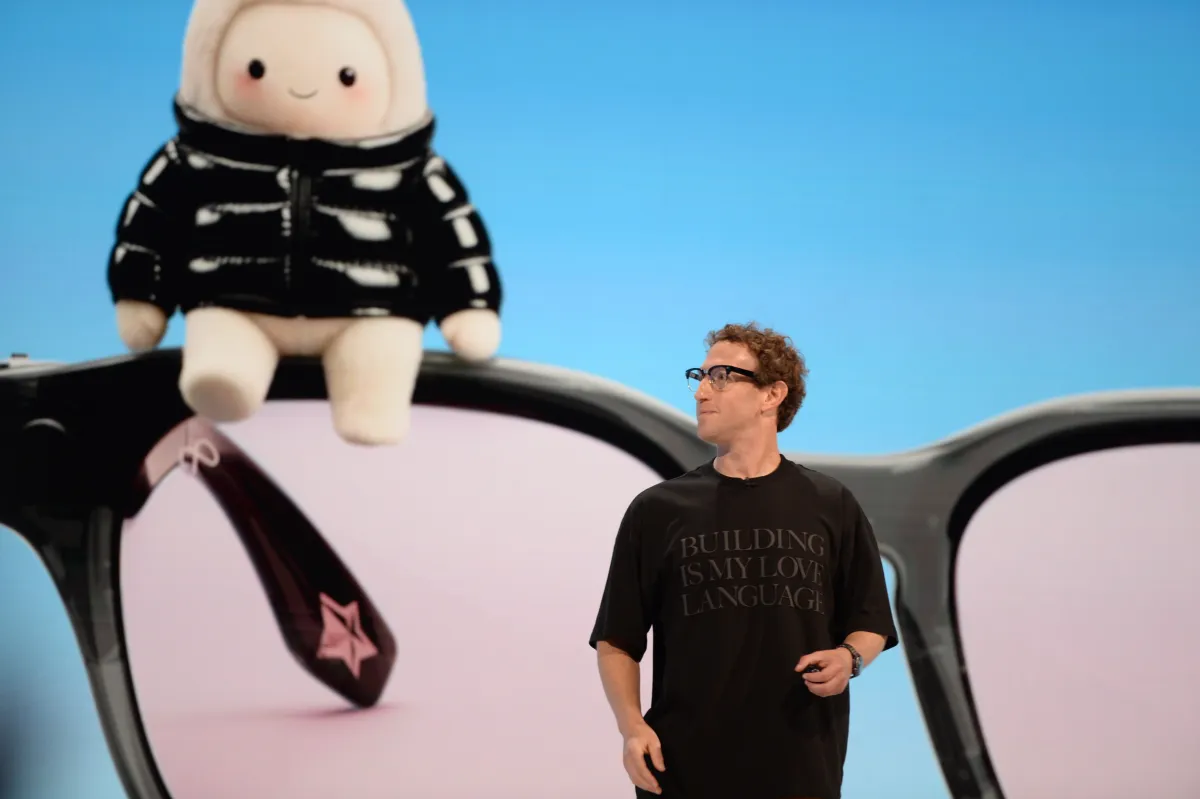
Meta’s hardware push fits into a long-running effort to own the next major computing interface. The company has already spent heavily on smart glasses and mixed reality, and Muse appears to extend that thinking into a more personal AI layer that can travel with a user.
A Tamagotchi-style device may sound playful, but it also hints at a serious strategic goal: creating a lightweight, always-available AI presence that people might interact with throughout the day. If successful, that could make Meta’s AI less dependent on app-store behavior and more tied to physical products.
What could smart glasses add to Muse?
Smart glasses could add context, convenience and hands-free access. In practical terms, that means the agent could potentially respond to what a user sees or hears, making the interaction feel more natural than typing into a phone.
For Meta, glasses also provide a distribution channel it controls more tightly than a generic mobile app. If Muse becomes useful in eyewear, Meta may be able to create a combined software-hardware ecosystem that is harder for rivals to replicate.
Why startups should care about Meta’s AI consumer push
Startups should care because any company that helps define the dominant interface for AI can reshape where money flows. If consumer AI shifts toward wearables and ambient assistants, founders building isolated chat experiences may find themselves squeezed by platform players with built-in reach.
The TechCrunch panel’s discussion highlighted a familiar pattern in tech: when the platform changes, startup opportunity changes with it. Founders that once would have built around chat windows may now need to think about voice, sensors, glasses, companion devices and other physical touchpoints.
- Distribution may matter more than model size for consumer adoption.
- Hardware integration could narrow the space for standalone AI apps.
- Startups may need to build niche tools instead of broad assistants.
- Consumer trust and daily usefulness will likely decide winners.
How might the funding landscape change?
The funding landscape may change by favoring companies that combine AI software with hardware, sensors or unique data access. Investors often back the biggest narrative, and at the moment the story is moving away from “best model wins” toward “best product experience wins.”
That shift could increase interest in startups working on device software, voice interfaces, on-device inference and specialized AI companions. It may also make it harder for generic chatbot businesses to raise capital unless they have a distinctive distribution edge.
How did AI become a hardware story again?
AI became a hardware story again because the most promising uses of the technology increasingly depend on being close to the user. Cameras, microphones, wearables and glasses offer richer context than a text box alone, which makes assistants more capable and more useful.
That does not mean software is losing importance. On the contrary, the underlying models still power the experience. But the competitive edge is shifting toward the way those models are delivered and the devices that shape how often people interact with them.
| Company | Latest movement | Strategic focus | Why it matters |
|---|---|---|---|
| Meta | Muse reportedly gaining early traction | Consumer AI, smart glasses, companion device | Could define how everyday users experience AI |
| OpenAI | Model updates released | Frontier model performance | Continues benchmark leadership and platform reach |
| Anthropic | Opus 5.5 rollout | Frontier model performance | Shows the pace of top-tier model competition |
What the latest model launches mean for the market
The flurry of model launches from OpenAI and Anthropic shows that the frontier is still moving quickly, but the market is also maturing. As more companies reach impressive performance levels, differentiation is becoming harder to sustain through models alone.
That is why Meta’s approach may resonate beyond its own product line. It suggests that the next phase of AI competition will be defined not just by who has the most capable system, but by who can make that system indispensable in a user’s daily life.
For consumers, that could mean less focus on choosing a chatbot and more on buying into an ecosystem. For companies, it could mean the next big battle is not over prompts or benchmarks, but over distribution, devices and user habits.
What happens next for Muse and Meta’s AI bet?
The next step is likely to be a broader rollout of Meta’s consumer AI features across devices and products. If Muse continues to gain traction, the company could use its existing hardware ambitions to turn the agent into a mainstream entry point for AI.
At the same time, rivals will keep racing on model quality, pricing and enterprise use cases. The interesting question is whether consumers will continue to gravitate toward standalone chat products or whether embedded AI assistants, especially those paired with hardware, become the default format.
Meta’s bet is that people do not want AI to feel like a separate destination. They want it to be present, lightweight and useful across the day. If Muse is indeed outperforming early expectations, that theory may be proving out faster than some competitors anticipated.
Background: why this story is bigger than one product
This story is bigger than one product because it captures a broader transition in AI. The first wave of public excitement centered on what large language models could do. The next wave may center on where those models live and how invisibly they fit into everyday life.
Meta’s push into a personal AI agent, combined with wearables and compact devices, suggests the company is betting that the future of AI is not merely conversational. It is contextual, ambient and tied to physical objects people already use.
If that proves true, the companies that win may be the ones that make AI feel less like software and more like a companion. For now, Meta is making the loudest move in that direction.
Key developments at a glance:
- OpenAI and Anthropic released new model updates in rapid succession.
- Meta’s Muse is reportedly outperforming ChatGPT’s early mobile launch pace.
- Meta is planning to expand Muse into smart glasses and a Tamagotchi-like device.
- Investors and startups are watching whether consumer AI shifts toward hardware-led experiences.
As the model race continues, the more consequential contest may be happening above it: who gets AI into people’s hands, faces and routines first.
Frequently asked questions
What is Meta’s Muse AI agent?
Meta’s Muse AI agent is a personal assistant product the company is building around consumer use, with plans to connect it to devices such as smart glasses and a small companion wearable. The idea is to make AI more ambient, useful and part of everyday routines.
Why is Meta’s AI strategy important?
Meta’s AI strategy is important because it focuses on distribution and hardware, not just model performance. If Muse succeeds, Meta could shape how consumers experience AI day to day and create a stronger bridge between software, wearables and social products.
How do OpenAI and Anthropic fit into this story?
OpenAI and Anthropic are still driving the frontier with frequent model updates, but their launches also show that model quality alone may not be enough. The market is increasingly focused on which companies can turn strong models into products people actually keep using.
Could Meta’s AI agent hurt startups?
Yes, Meta’s AI agent could pressure startups that rely on generic chatbot experiences. If consumers shift toward built-in assistants on glasses or wearables, smaller companies may need to specialize, build for niche workflows or find channels that avoid direct competition with platform giants.