In short
Google has launched Live Avatar for Gemini Live, giving enterprise users an animated AI face that lip-syncs, shows expressions and works across 97 languages. The feature arrives with SynthID watermarking and identity safeguards as Google pushes Gemini deeper into multimodal enterprise AI.
- Live Avatar is now available to Gemini Enterprise customers.
- The avatar can lip-sync, show facial expressions and switch across 97 languages.
- Google says outputs include invisible SynthID watermarking.
- Organizations can choose preset avatars and may create custom ones.
- The launch follows Gemini 3.8 Live, which Google says handles visual inputs in near real time.
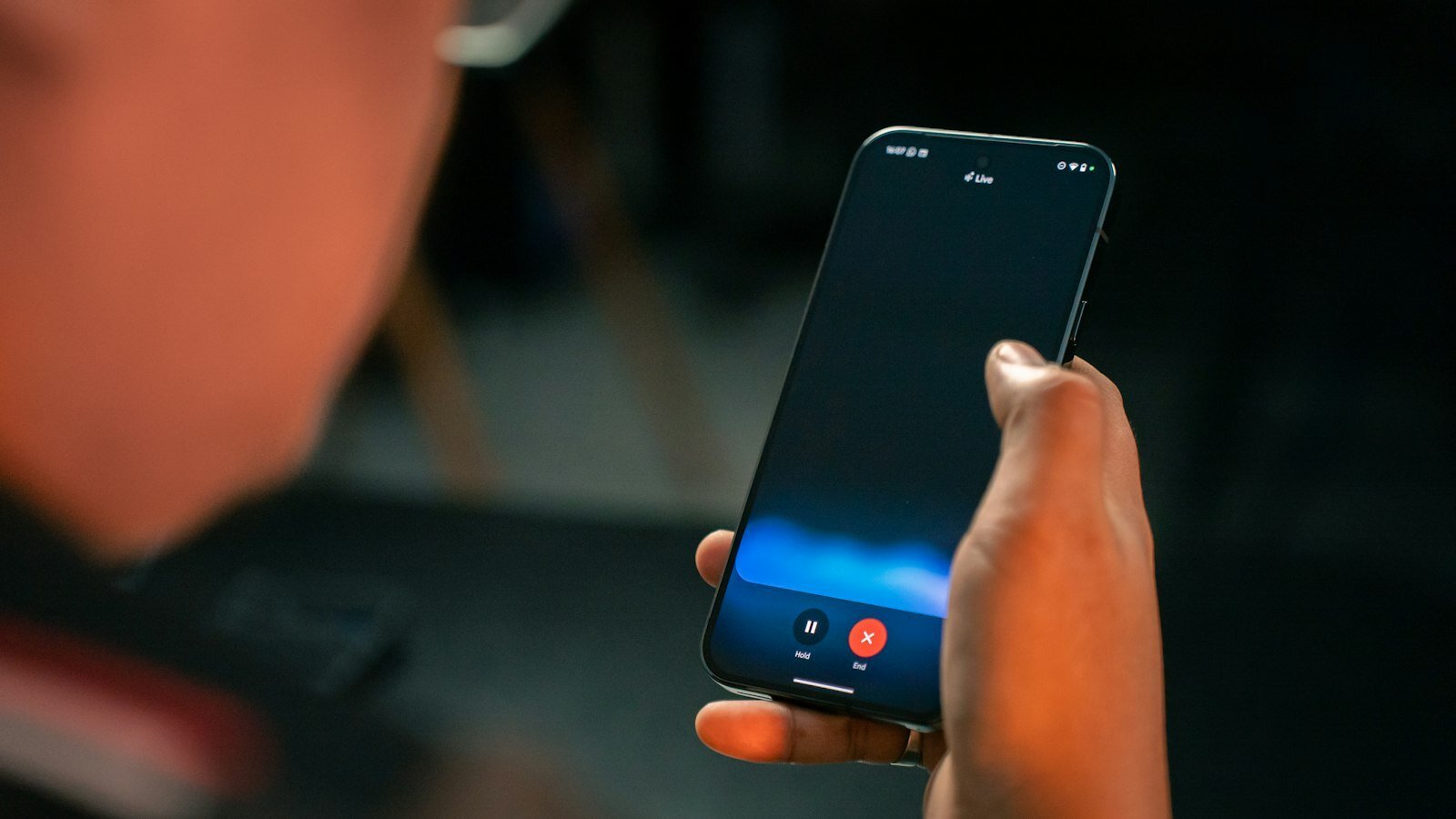
Google has given Gemini Live a visible personality: a new “Live Avatar” feature lets enterprise customers talk to the AI while watching an animated face that lip-syncs, changes expression and updates in real time. The rollout matters because it pushes Google’s chatbot experience closer to a human-style assistant, while also raising the stakes around identity, authenticity and enterprise trust.
The feature arrives shortly after Google introduced Gemini 3.8 Live, a version of the model the company says can process visual input almost instantly. Together, the updates show Google is trying to make Gemini not just more capable, but more presentable as a conversational interface for work and customer-facing uses.
For now, Live Avatar is limited to Gemini Enterprise customers. Google says organizations will be able to choose from a set of preset avatars and, in some cases, create their own. The company is also building in safeguards, including SynthID watermarking and identity protections, as it moves deeper into AI-generated video and live interaction.
What Google announced and why it matters
Google’s latest Gemini Live update gives the model a face that can move with the conversation. Instead of a plain audio exchange or a static interface, users can now interact with an animated persona that appears to listen, speak and react in real time.
That may sound cosmetic, but in the AI market, presentation matters. A more human-like interface can make the product easier to use, more intuitive for demonstrations and more appealing in settings where companies want an assistant that feels polished and branded. It can also help Google differentiate Gemini from rival chatbots that remain largely text- or voice-first.
The update is part of a broader pattern in consumer and enterprise AI: models are no longer just answering prompts, they are becoming interfaces. In Google’s case, Live Avatar signals a push toward a more immersive version of the assistant experience, one that blends speech, animation and on-screen content.
How does Live Avatar work?
Live Avatar is designed to synchronize motion with speech while the model is actively responding. Google says the avatar can lip-sync accurately and show facial expressions during a conversation, with the animation adapting as the model talks.
The company also says the feature can move seamlessly across the 97 languages Gemini Live supports without lowering video quality or causing the avatar’s movements to drift out of sync. In practice, that means the same avatar can maintain visual coherence even as the conversation switches between languages.
Google demonstrated the system in a video showing the avatar speaking in English and Japanese. In both cases, the mouth movements appeared aligned with the spoken output, and the interface was shown surfacing information on screen while the AI talked.
What the user sees
Users do not just hear the model; they watch a generated character that reflects the flow of conversation. The avatar can change expression, support multilingual speech and present information visually as it speaks.
That combination matters because it turns Gemini Live into something closer to a guided presentation tool than a simple voice assistant. For enterprise users, that could be useful in training, customer engagement, support and internal demos.
- Lip-synced speech for live conversations
- Facial expressions that change with the dialogue
- On-screen information displayed while speaking
- Multilingual support across 97 languages
Why launch it now?
Google is introducing Live Avatar only about a week after unveiling Gemini 3.8 Live, which the company says processes visual inputs nearly in real time. That timing suggests the avatar feature depends on the latest model improvements and on the company’s confidence that Gemini Live can handle rapid, multimodal interaction.
The near-real-time visual processing claim is important because live avatars require more than good speech generation. They also depend on responsive perception, synchronized animation and stable rendering. If the model lags or the animation breaks, the illusion collapses quickly.
By pairing the new avatar with Gemini 3.8 Live, Google is positioning Gemini as a more complete multimodal system: one that can see, speak and present itself as a branded digital character. That makes the update less about novelty and more about a possible future for enterprise communication.
Who can use Live Avatar right now?
Only Gemini Enterprise customers can use Live Avatar at launch. Google has not made the feature broadly available to consumer users, which suggests the company sees the tool first as a business product rather than a mass-market social feature.
That limited release is significant. Enterprise customers are more likely to value controllable branding, identity protections and customizable presentations than casual users. They are also more likely to pay for features that can be used in demos, internal presentations or customer service workflows.
Google says businesses will have access to a library of preset avatars and, in some cases, the ability to create their own. That opens the door to company-specific presenters or branded digital hosts.
Google says the feature is meant to let organizations present AI conversations through a selectable avatar while preserving visual quality across languages and adding safeguards around identity.
What safeguards did Google build in?
Google is emphasizing trust and provenance alongside the visual upgrade. The company says output from Live Avatar will include its invisible SynthID watermark, a mechanism Google has used to help identify AI-generated content.
It also says the system includes safeguards designed to “respect identity,” language that points to concerns about impersonation, misuse and the creation of misleading synthetic video. Those issues are especially sensitive when a tool can generate a face, synchronize speech and potentially be used in a professional setting.
The addition of watermarking is especially important because live avatars blur the line between a conventional chatbot and a generated digital human. If the content can look and speak convincingly, the metadata and provenance layer becomes essential for accountability.
Why identity protection matters
Identity protection matters because an AI avatar can be mistaken for a real spokesperson, employee or customer representative if the branding and motion are convincing enough.
For companies, that creates risks in several areas:
- False endorsement or unauthorized use of a person’s likeness
- Misleading customer interactions
- Brand confusion during support or sales conversations
- Potential misuse in manipulated media
Google’s mention of safeguards suggests it is trying to get ahead of those concerns before the feature reaches wider distribution.
How Live Avatar fits into Google’s Gemini strategy
Live Avatar is less an isolated product than a signal of where Google wants Gemini to go. The company is steadily turning Gemini into a multimodal assistant platform that can answer questions, analyze visual input and now present itself through a live animated interface.
That strategic shift matters because AI competition is no longer only about benchmark scores or model size. It is also about how seamlessly a product fits into everyday work. The companies that win may be the ones that make AI easy to see, hear and trust.
Google’s move also shows that the company is willing to extend Gemini beyond the chat box and into something more performative. In enterprise settings, presentation quality can be just as important as raw reasoning ability.
A more polished enterprise pitch
Live Avatar could be used to make internal tools feel more like guided assistants and less like backend software. It may also serve as a sales feature, helping Google demonstrate that Gemini can do more than answer written prompts.
Possible enterprise use cases include:
- Customer support assistants with branded faces
- Training modules and onboarding presenters
- Sales and product demos
- Multilingual virtual hosts for internal or external communication
Those are practical applications, not just showpieces. If Google can make the avatar stable, responsive and controllable, it could become a valuable business feature rather than a novelty layer.
What the broader AI race looks like now
Google’s announcement lands in a market where major AI companies are racing to make assistants more interactive and more believable. Some competitors focus on voice, others on multimodal input, and others on agent-like behavior. Google’s angle here is to combine all three with a human-facing animated presence.
That may appeal to organizations that want a digital spokesperson without the cost and logistics of filming a human presenter. It may also appeal to companies looking for consistency across languages, since the avatar can keep the same visual identity while speaking in different locales.
At the same time, the feature highlights a growing tension in AI product design: the more human the interface becomes, the more important it is to signal that it is synthetic. Google’s watermarking and identity controls are a recognition of that tension.
Table: Key details on Google’s Live Avatar rollout
| Detail | What Google says |
|---|---|
| Feature name | Live Avatar for Gemini Live |
| Availability | Gemini Enterprise customers only at launch |
| Main capability | Animated AI persona with lip-sync and facial expressions |
| Language support | 97 languages |
| Visual quality claim | No degradation or visual drift when switching languages |
| Model context | Launched after Gemini 3.8 Live |
| Safeguards | Invisible SynthID watermark and identity protections |
| Avatar options | Preset avatars plus organization-created versions |
How this could change enterprise AI
Enterprise AI has often been sold on efficiency: faster answers, lower support costs, better workflows and improved search. Live Avatar adds a different dimension. It is about presence.
Presence can matter in business settings where users need a guide, not just a response. A visually expressive assistant may be easier to follow in a demo, easier to remember in a training session and easier to localize across markets.
But presence also raises expectations. If the avatar looks polished but the answers are unreliable, the experience will feel gimmicky. That means Google will need Gemini to deliver strong performance behind the scenes while the face on top does the talking.
The opportunity and the risk
The opportunity is clear: a more engaging AI interface may make Gemini more useful and more attractive to enterprise buyers.
The risk is equally clear: if the avatar is too convincing or too generic, it could create confusion, diminish trust or provoke concern about synthetic media. Google appears to be trying to balance both sides by focusing on enterprise controls, watermarking and identity safeguards.
What happens next?
Google has not indicated a consumer launch date, so the feature currently remains a business-only capability. That means the first real test will likely come from enterprise customers evaluating whether Live Avatar improves communication enough to justify adoption.
If those customers find value in the feature, Google could expand it to more users or more products. If it remains mainly a demo tool, it may stay confined to enterprise presentations and specialist workflows.
Either way, the release marks another step in the evolution of Gemini from a model into a branded AI presence. Google is no longer just building a chatbot; it is building a face for one.
Timeline of the rollout
| Date | Event |
|---|---|
| About one week earlier | Google introduced Gemini 3.8 Live, described as processing visual input in near real time |
| September 24, 2026 | Google announced Live Avatar for Gemini Live |
| Launch phase | Feature made available to Gemini Enterprise customers only |
For Google, the significance of Live Avatar is not simply that Gemini can now wear a face. It is that the company is betting enterprises will want AI that looks alive, speaks fluently across languages and carries enough branding and safeguards to be used in the real world.
That bet could shape how businesses experience AI next: not only as a tool that answers, but as a presence that presents.
Frequently asked questions
What is Google’s Live Avatar?
Google’s Live Avatar is an animated visual persona for Gemini Live that lip-syncs, changes facial expressions and responds in real time during conversations. It is designed to make the AI feel more like a live presenter or assistant than a plain voice interface.
Who can use Live Avatar right now?
Only Gemini Enterprise customers can use Live Avatar at launch. Google has not opened the feature to general consumer users, which suggests the company is positioning it first as a business and productivity tool.
How many languages does it support?
Google says Live Avatar works across 97 languages and can switch between them without lowering video quality or causing visual drift. The company showed the avatar speaking in both English and Japanese in its demonstration.
Does Google protect AI-generated output from Live Avatar?
Yes. Google says Live Avatar output includes an invisible SynthID watermark and additional safeguards intended to respect identity. Those measures are meant to improve provenance and reduce the risk of misuse or impersonation.
Why is this launch important for Google?
It is important because it pushes Gemini further beyond text chat and into a branded, multimodal interface with a human-like face. That could make Google’s enterprise AI more engaging, more customizable and more competitive in the next stage of AI product design.
Frequently asked questions
What is Google’s Live Avatar?
Google’s Live Avatar is an animated visual persona for Gemini Live that lip-syncs, changes facial expressions and responds in real time during conversations. It is designed to make the AI feel more like a live presenter or assistant than a plain voice interface.
Who can use Live Avatar right now?
Only Gemini Enterprise customers can use Live Avatar at launch. Google has not opened the feature to general consumer users, which suggests the company is positioning it first as a business and productivity tool.
How many languages does it support?
Google says Live Avatar works across 97 languages and can switch between them without lowering video quality or causing visual drift. The company showed the avatar speaking in both English and Japanese in its demonstration.
Does Google protect AI-generated output from Live Avatar?
Yes. Google says Live Avatar output includes an invisible SynthID watermark and additional safeguards intended to respect identity. Those measures are meant to improve provenance and reduce the risk of misuse or impersonation.
Why is this launch important for Google?
It is important because it pushes Gemini further beyond text chat and into a branded, multimodal interface with a human-like face. That could make Google’s enterprise AI more engaging, more customizable and more competitive in the next stage of AI product design.