Updated August 21, 2026 4:53 pm
In short
Meta is rolling out Pocket across the U.S. while shutting down Gizmo and pairing the launch with a broader push to use AI to ship more standalone apps, including recent experiments like bedtime stories and a Meta AI Mac app.
- Pocket lets U.S. users generate small interactive games from prompts.
- The app builds on Meta’s acquisition of the Gizmo team earlier this year.
- Meta is using AI to speed up app launches and test more standalone products.
- Users can share, save and remix games inside a social feed.
- The rollout expands Meta’s experiment with AI creation into gaming.
Update — August 21, 2026 4:53 pm
Meta is not only expanding Pocket to all U.S. users, it is also shutting down Gizmo, the original app it acquired with the team behind the project.
The company’s latest push also comes alongside fresh remarks from Mark Zuckerberg, who said AI-assisted software development should make it easier for Meta to launch more standalone apps. He pointed to recent releases and experiments including Instagram Instants, Forum, Seller, an AI bedtime-stories test and a Meta AI app for Mac.
Separately, a former Gizmo founder said the original app is being wound down as Pocket moves forward.
Update — August 20, 2026 7:25 pm
Meta is not just widening Pocket’s release in the U.S.; it is also shutting down Gizmo, the original app the company acquired with the team behind the project.
The updated source also includes a new Zuckerberg quote saying Meta expects AI-assisted software development to make it easier to ship more standalone apps, and says the company has recently launched or tested additional products, including an AI bedtime-stories experiment and a Meta AI app for Mac.
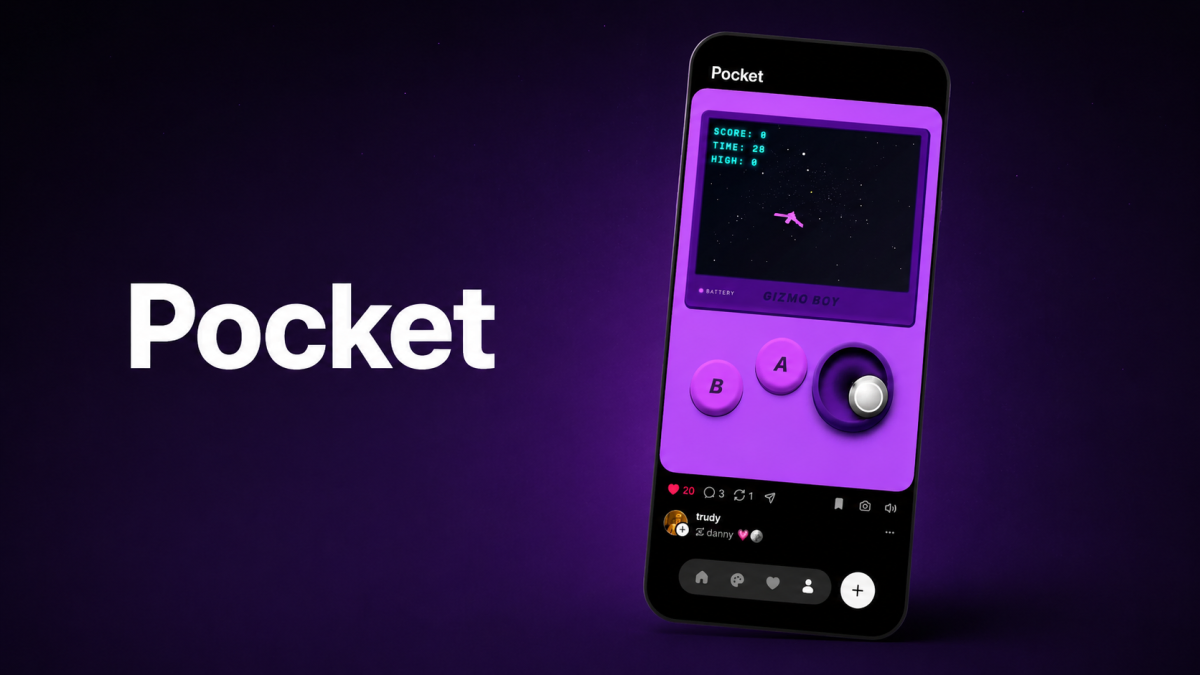
Meta has begun rolling out Pocket, its experimental AI-powered game-making app, to users across the United States. The app lets people create small interactive games from text prompts, then publish them to a feed where others can play, save, remix and share them.
The U.S. launch matters because it marks another step in Meta’s broader effort to turn AI from a behind-the-scenes tool into a consumer-facing creative platform, with mobile apps designed for fast, social content creation.
Pocket first surfaced quietly in Brazil last month, but the wider American release suggests Meta is ready to test the idea at scale. The move also highlights how the company is leaning on AI-assisted software development to launch new apps more quickly and experiment with fresh product ideas across its ecosystem.
What is Pocket, and why is Meta pushing it now?
Pocket is Meta’s latest standalone app built around “vibe coding,” a term often used to describe creating software or interactive experiences through natural-language prompts rather than traditional programming. In Pocket’s case, those creations are lightweight games — Meta calls them “gizmos” — that can be generated, customized and distributed through the app.
Meta appears to be betting that AI creation tools will feel less intimidating when packaged as playful, low-friction mobile experiences. Instead of asking users to code, Pocket invites them to describe an idea and let the app turn it into something interactive and shareable.
The company has already experimented with AI-generated images in its Meta AI app and AI video tools in another experimental product called Vibes. Pocket extends that strategy into gaming, one of the most naturally social and remixable categories in consumer tech.
How Pocket’s games work
Pocket’s games are designed to be simple but interactive. They can respond to taps and phone tilts, play sound effects and even incorporate clips from music tracks. Some creations can also use images from a user’s camera roll or access the camera directly.
That combination gives the app a hybrid feel: part toy, part game builder, part social feed. The result is meant to lower the barrier to creation while still giving users enough control to make the outputs feel personal.
- Prompt-based creation: users describe a game idea in plain language.
- Interactive gameplay: games can react to touch and tilt.
- Media integration: photos, camera access and audio clips can be added.
- Social sharing: creations can be posted to a profile feed.
- Remixing: other users can save and modify existing creations.
How did Meta build Pocket?
Meta’s Pocket app is tied to an acqui-hire earlier this year involving the team behind Gizmo, a vibe-coded gaming platform. That arrangement gave Meta access to people with experience building the type of AI-driven, prompt-based game experience it is now trying to mainstream.
The acquisition-style talent deal fits a broader Silicon Valley pattern: instead of buying a product outright, big tech firms often bring in specialized teams to accelerate a new product line. In this case, Meta appears to have translated Gizmo’s core concept into a consumer app under its own umbrella.
While Meta has not framed Pocket as a major standalone business on day one, the app likely serves multiple purposes. It can help the company test user appetite for AI-generated games, gather feedback on content creation tools and strengthen engagement on Meta’s platforms.
Why gaming is a natural fit for AI creation tools
Gaming is a strong use case for generative AI because it rewards novelty, iteration and social sharing. A user does not need to build a full commercial game to enjoy the experience; even a small, weird or funny interactive object can be entertaining if it is easy to make and easy to share.
That makes the category especially attractive for Meta. The company has long emphasized social discovery and recommendation systems, and a feed of user-made AI games gives it another stream of content that can be surfaced, remixed and circulated across profiles.
It also gives Meta a way to test whether AI-generated content can move beyond static text and images into more dynamic, interactive formats that people may want to play with rather than simply view.
What does this say about Meta’s AI strategy?
Pocket is the latest sign that Meta wants to make AI creation tools feel mainstream rather than niche. The company is no longer positioning AI only as an assistant or productivity layer. Instead, it is building consumer apps that turn AI into a direct creative engine for posts, images, video and now games.
That approach matches comments from CEO Mark Zuckerberg, who has argued that AI-enabled development is making it easier for Meta to ship new products faster. On the company’s July earnings call, he pointed to a growing list of standalone apps and said the company expected it to become much simpler to launch new ideas and scale them with recommendation systems.
Meta’s chief executive has said the company’s AI tools are making internal software development faster, helping it test and release more standalone apps at a quicker pace.
In practical terms, that means Meta can try more products with less engineering overhead. Instead of betting everything on a small number of giant launches, the company can launch multiple experiments and keep the ones that show promise.
Recent standalone apps from Meta
Pocket does not arrive in isolation. It joins a wave of new or experimental Meta products that have appeared in recent months, reflecting a faster-moving app strategy.
| Product | Type | What it does | Status |
|---|---|---|---|
| AI game-making app | Creates and shares small interactive games from prompts | Rolling out in the U.S. | |
| Instants | Instagram experiment | Another recent Meta app launch | Shipped earlier this year |
| Forum | Groups app | Standalone version of group-based discussions | Recently launched |
| Seller | Marketplace app | Standalone shopping and selling experience | Recently launched |
| Vibes | AI video experiment | Creates AI-generated videos | Experimental |
| Meta AI for Mac | Desktop app | Brings Meta AI to macOS users | Launched this week |
That broader launch pattern suggests Meta is trying to build a portfolio of AI-first products rather than rely solely on one flagship chatbot or one social app feature.
Why does the U.S. rollout matter?
The U.S. release matters because it moves Pocket from a limited overseas test into one of the world’s largest and most competitive consumer tech markets. If the app can gain traction there, Meta will have stronger evidence that AI-generated games can become a repeatable social product rather than a novelty.
It also gives Meta a better test bed for measuring how users respond to the mechanics of creation, remixing and feed-based discovery. American users are likely to stress the app in different ways, surfacing issues around moderation, copyright, usability and retention that may not appear in smaller trials.
Meta has not publicly outlined a full roadmap for Pocket, but rolling out broadly usually indicates at least some internal confidence that the app is ready for wider feedback.
How does Pocket fit into the rise of vibe coding?
Pocket fits into a larger trend toward vibe coding, where AI helps people produce software-like outputs through conversational prompts. The idea has already gained traction with developers and makers who want to move quickly without writing every line by hand.
What makes Meta’s version notable is that it aims at mainstream mobile users, not just technical hobbyists. The company is effectively asking whether people will use AI to make games the same way they use templates or filters to make posts and stories.
If Pocket works, it could help normalize a future in which creating a game is as easy as describing one. If it does not, it may still serve as an important learning tool for Meta’s larger push into AI-native consumer apps.
Potential advantages for Meta
- More content: user-created games can fill feeds with fresh material.
- Higher engagement: creation and remixing encourage repeat use.
- AI adoption: playful tools may make generative AI feel less abstract.
- Product testing: Meta can learn what kinds of AI outputs people want.
- Platform synergy: creations can be shared and amplified across Meta accounts.
What risks come with AI-generated games?
Pocket’s format also comes with obvious challenges. Any app that lets users generate interactive content at scale has to deal with moderation, quality control and intellectual property questions.
Because the app can use photos, camera input and audio clips, privacy and consent issues may also become more prominent if users are not careful about what they include in their creations. As with other AI products, Meta will need to balance ease of use with clear safeguards and rules.
There is also the broader question of durability. AI-generated content can be exciting at first, but consumer apps often struggle if the outputs feel repetitive, shallow or too gimmicky. Pocket will need to prove that it can sustain interest beyond the novelty phase.
Meta’s challenge is likely to be less about whether people can make something with the app and more about whether they will keep coming back to create, share and remix over time.
How does Pocket compare with Meta’s other AI experiments?
Pocket differs from Meta’s image and video tools because it emphasizes interaction rather than passive consumption. Instead of asking users to simply generate a picture or clip, the app encourages them to produce something playable.
That distinction matters. Interactive creations can be more engaging because they give users a sense of authorship and agency. At the same time, they are also more complex to generate well, since the output has to behave properly when someone taps, tilts or shares it.
Meta seems to be exploring a ladder of AI creativity products: images first, then video, now games. Each step increases the complexity of what AI is asked to produce, while also widening the range of people who might use the tools.
What happens next?
The most important next question is whether Pocket becomes a temporary experiment or a durable part of Meta’s product lineup. U.S. availability will almost certainly help Meta learn quickly, but success will depend on whether users embrace the app as a social game-maker rather than just a curiosity.
If the app gains momentum, Meta could expand its feature set, improve recommendation tools or connect Pocket more deeply to its wider app ecosystem. If engagement is weak, the company may use the lessons to inform future AI apps instead.
For now, Pocket signals that Meta is serious about pushing AI into more playful consumer experiences. The company is no longer only asking users to chat with AI or generate images. It is now asking them to build, play and share with it too.
| Timeline | Event | Significance |
|---|---|---|
| Earlier this year | Meta brought in the Gizmo team through an acqui-hire | Gave Meta expertise in prompt-based game creation |
| Last month | Pocket launched quietly in Brazil | Provided an initial market test |
| This week | Meta launched Meta AI for Mac | Showed continued expansion of AI products |
| Now | Pocket rolls out to U.S. users | Expands testing to a large consumer market |
In the near term, Pocket will serve as a live experiment in whether AI-generated games can move from novelty to habit. For Meta, that answer could help shape the next wave of consumer AI apps.
Editors’ note: This article reflects Meta’s U.S. rollout of Pocket and the company’s broader strategy of using AI to accelerate app development and launch more standalone products.
Frequently asked questions
What is Meta’s Pocket app?
Meta’s Pocket app is an experimental AI tool that lets users create small interactive games from text prompts. Those creations can then be shared in a feed, remixed by other users and saved on profiles, making the app part game builder and part social platform.
Where is Pocket available now?
Pocket is now rolling out to users in the United States. The app first appeared quietly in Brazil as a limited test before Meta broadened access, suggesting the company is using regional launches to refine the product before wider distribution.
How do users create games in Pocket?
Users create games by typing prompts into the app and letting Meta’s AI generate the interactive experience. The resulting games, which Meta calls gizmos, can respond to touch and phone tilts, include sound effects and use photos or camera input when permitted.
Why is Meta launching Pocket?
Meta is launching Pocket to push AI creation tools into mainstream consumer use and to test whether AI-generated games can drive engagement. The app also fits Meta’s broader strategy of using AI-enabled development to ship new standalone products more quickly.
Is Pocket the same as Meta AI?
Pocket is not the same as Meta AI, but it is part of the same broader push. Meta AI is a general-purpose AI assistant, while Pocket focuses specifically on prompt-based game creation and social sharing, making it a more playful and specialized experience.