Updated August 20, 2026 1:23 pm
In short
Vivodyne says its human-tissue labs are generating hundreds of thousands of experiments, working with unnamed major pharma partners, and could eventually feed AI models built to reason about causal biology and combination therapies.
- Vivodyne argues AI drug discovery is limited by a lack of human-relevant biological data.
- Its HIVE platform grows and tests 20 kinds of human tissue autonomously.
- The company says its tissue models show strong predictive performance in toxicity and chemotherapy testing.
- Vivodyne recently opened what it calls the world’s largest human data center near San Francisco.
- The startup has raised just under $80 million, led by Khosla Ventures.
Update — August 20, 2026 1:23 pm
Vivodyne now says its robotic labs are already tracking hundreds of thousands of active experiments, where diseased tissue is exposed to different stimuli.
The company also says it is working with multiple major pharmaceutical firms, though it is not publicly naming any of them. Georgescu says the long-term goal is to use that causal human-tissue data not just for testing drugs, but to help train future AI models on how biology actually responds.
He also argues the approach will matter most for combination therapies, where the search space becomes too large for conventional trial-and-error methods.
Update — August 19, 2026 4:24 pm
Vivodyne now says it has raised just under $80 million across two rounds led by Khosla Ventures, and that it is already running about twice as many experiments as all U.S. animal trials combined.
The company also says it is working with several major pharmaceutical firms, though it is not naming them publicly. Georgescu says the goal is not just better preclinical testing, but eventually training new AI models on causal data from living human tissue.
He added that the system is now tracking hundreds of thousands of ongoing experiments, and argued that this kind of setup will be especially important for combination therapies, where the number of possible drug interactions quickly becomes too large for conventional trial-and-error approaches.
Vivodyne, a biotech startup spun out of the University of Pennsylvania, says the biggest obstacle to AI-powered drug discovery is not model size but biology data — and it has built a robotic tissue platform it believes can fix that gap. The company opened what it calls the world’s largest human data center near San Francisco this month, aiming to generate the kind of causal human-tissue data that current AI systems largely lack and that could materially improve drug development.
The broader significance is clear: despite years of hype from AI leaders promising breakthroughs in cancer and other diseases, most drug candidates still fail because training data from animals, cells, and proteins is not enough to predict what happens in real human tissue. Vivodyne argues its automated lab system could change that by making human biology more measurable, more scalable, and eventually more useful for AI models.
At a moment when prominent figures including Anthropic’s Dario Amodei are publicly tempering expectations around AI and cancer, Vivodyne is positioning itself as a company that can supply the missing ingredient — not a larger model, but better data grounded in living human tissue.
Why Vivodyne thinks AI drug discovery is stuck
Vivodyne’s central argument is that today’s AI drug-discovery tools are learning from the wrong kinds of biological data. Modern models are typically trained on static snapshots of cells, molecular assays, protein structures, or results from animal studies. That information can be useful, but it often falls short when researchers need to understand how a drug will behave in an actual human body.
Andrei Georgescu, Vivodyne’s co-founder and chief executive, says the problem is not just technical sophistication, but the absence of biological context. In his view, models can identify patterns in isolated data, but they do not yet understand how one state of human tissue leads causally to another.
Georgescu’s view is that current AI systems do not have enough human-relevant evidence to reason through biology in the way drug developers need. He says that without real human testing data, even the best models risk producing results that look promising in animals but fail in people.
The concern is not abstract. Pharma companies already know that animal testing is a poor predictor of human outcomes. As a rule of thumb, a large majority of compounds that look effective in animals still fail once they enter human clinical development. That failure rate makes the drug pipeline slow and expensive, and it is one of the main reasons biotech investors are so focused on better preclinical tools.
In that context, the AI hype around curing cancer has begun to sound premature. Amodei recently suggested that the phrase “AI will cure cancer” has become more slogan than serious forecast. That does not mean AI has no role in medicine — but it does mean the field still lacks the evidence base needed to move from promise to reliable outcomes.
How does Vivodyne’s HIVE system work?
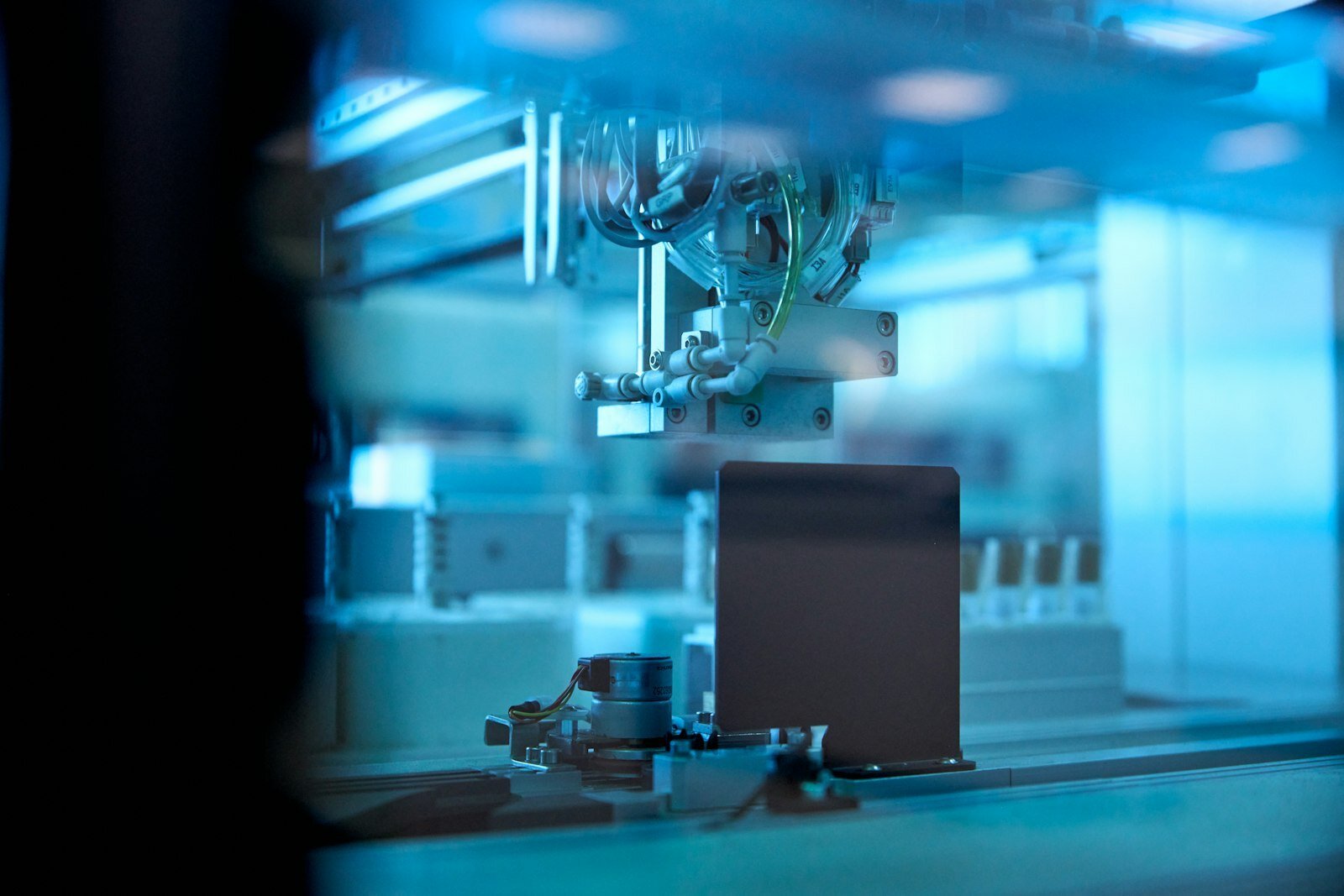
Vivodyne’s answer is a robotic platform called HIVE, a modular lab system designed to grow and test human tissue at scale. The company says the machines can produce 20 different kinds of human tissue, then automatically apply compounds, monitor the response, and collect large volumes of experimentally useful data.
The goal is to move beyond passive observation and into active experimentation. Instead of feeding AI models historical records or one-off snapshots, Vivodyne wants to generate continuous, intervention-based datasets showing how tissue responds to stimuli over time.
That matters because many current systems can tell you what a cell looked like at a moment in time, but not how it got there. Vivodyne says its platform is designed to track the process itself: the chain of cause and effect that links a disease state, an intervention, and the resulting biological response.
What makes this data different?
It is different because it is meant to be causal, not merely descriptive. Vivodyne says the human-tissue experiments happening inside HIVE produce a richer picture of biology than the data typically used to train drug-discovery models.
Georgescu argues that this is exactly the kind of evidence AI systems need if they are ever going to reason about human disease rather than just fit patterns from incomplete datasets. He said existing models are often trained on observations that resemble labels — “cell state A” and “cell state B” — without learning the process connecting them.
In practical terms, this means Vivodyne is trying to turn biology into a kind of experimental engine for AI. The platform does not just observe tissue; it runs thousands of experiments designed to reveal how human tissue behaves under stress, exposure, and treatment.
What evidence does Vivodyne say supports its approach?
Vivodyne says its tissue models have shown strong performance in comparisons with human clinical data. According to the company, its liver tissue has reached 94% predictive accuracy in toxicity testing, its airway tissue has matched human behavior 96% of the time, and its bone marrow model has achieved perfect agreement in tests involving 20 chemotherapy drugs.
Those figures are important because they speak to the company’s core claim: that human-tissue systems can outperform conventional preclinical methods when the goal is to forecast what a drug will do in people. If those results hold up at scale, they could help drugmakers deprioritize failed candidates earlier and reduce the number of expensive human trials that never pay off.
Still, the company’s own claims should be read in context. Predictive accuracy in selected tests does not automatically mean a platform will generalize across all diseases, drug classes, or tissue types. But the numbers are substantial enough to suggest the approach has moved beyond pure theory.
Selected performance claims from Vivodyne
| Human tissue model | Reported result | Why it matters |
|---|---|---|
| Liver tissue | 94% predictive accuracy | Used to assess toxicity before clinical testing |
| Airway tissue | 96% match to human tissue behavior | Helps model respiratory responses to treatments |
| Bone marrow | 100% concordance in 20 chemotherapy-drug tests | Suggests strong potential for oncology screening |
Why human biology still defeats many AI models
The challenge, Vivodyne says, is that biology is not a simple scaling problem. More data alone does not necessarily produce better predictions if the data does not capture the right mechanisms.
That view is increasingly common among researchers who study how machine learning performs in the life sciences. A paper published in Nature Methods last month found no clear evidence that current generative models trained on cellular data obey the same scaling laws seen in other AI domains. In other words, throwing more of the same data at the problem may not deliver the expected improvements.
Vivodyne’s argument is that human tissue experiments can fill that gap by introducing experimental causality. Instead of training models only on end states, the company wants to provide them with the sequence of events that leads to those states.
That distinction could matter enormously for drug development, where the outcome depends on interactions among tissues, pathways, and side effects that are difficult to infer from simplified lab systems.
How big is the commercial opportunity?
The commercial case for Vivodyne is rooted in one of the most expensive inefficiencies in biotech: drug candidates often make it far into development before failing. Clinical trials typically cost tens of millions of dollars, and most compounds do not make it through the regulatory process.
Drugmakers therefore have a strong incentive to improve the quality of their preclinical predictions. If they can eliminate weak candidates earlier, they save time, money, and trial capacity. Vivodyne says its platform could help do exactly that by providing better signal before companies commit to large human studies.
Georgescu compares the situation to automotive engineering. Before a vehicle goes through formal crash tests, automakers generally have a good sense of whether it will pass. In drug development, by contrast, companies often enter clinical trials with far less confidence.
That asymmetry is expensive. It also creates a market opportunity for platforms that can make human relevance more measurable before a trial begins.
Why pharma companies care
Vivodyne says it is already working with multiple large pharmaceutical companies, though it is not publicly identifying them. The appeal for those firms is straightforward: better preclinical data can improve decision-making across a pipeline.
- It can reduce avoidable trial failures.
- It can improve lead prioritization.
- It can help identify toxicity earlier.
- It can support combination-therapy research.
For drugmakers, even modest gains in predictive power can have major financial value. A platform that meaningfully improves early screening could become part of the standard workflow for oncology, immunology, respiratory medicine, and other fields where trial failure is common.
What did Vivodyne launch near San Francisco?
Vivodyne says it recently opened the world’s largest human data center just outside San Francisco. The site is built around its HIVE robotics and tissue-testing infrastructure and is intended to run experiments continuously and at high volume.
According to Georgescu, the facility is already operating at a scale that surpasses all U.S. animal-trial throughput combined on some measures. That is a striking claim, and one that underscores how seriously the company is trying to position its platform as infrastructure rather than just a specialized lab.
The phrase “human data center” is also strategically important. It frames the company less as a traditional biotech and more as a data engine for the next generation of AI systems in medicine.
That branding reflects a broader shift in artificial intelligence: the most valuable breakthroughs may depend as much on controlling data generation as on designing better models.
How much money has Vivodyne raised?
Vivodyne has raised just under $80 million across two funding rounds, both led by Khosla Ventures. That level of backing places it among a growing group of biotech companies that are betting on automation, machine learning, and advanced lab systems to reshape drug discovery.
The company’s capital base is meaningful but not extravagant relative to the size of the problem it wants to solve. Building, validating, and scaling a human-tissue experimentation platform is likely to require substantial additional investment in hardware, wet-lab operations, data systems, and regulatory-grade validation.
Still, the funding suggests investor confidence that the approach addresses a real bottleneck. In biotech, a company that can reduce uncertainty in early development can become valuable very quickly, even before it produces a blockbuster therapeutic result of its own.
What does this mean for the future of AI in healthcare?
Vivodyne’s thesis is that healthcare AI will not advance simply by making models larger or by feeding them more synthetic or historical data. The field may need an entirely new class of training material rooted in living human systems.
That could be especially important for complex diseases, where treatment increasingly depends on combining multiple drugs or targeting several pathways at once. Single-target therapies have already transformed some areas of medicine, but many diseases — including many cancers — resist simple solutions.
Georgescu says that if researchers want combination therapies, they will need to search a vastly larger design space than today’s experiments typically cover. That search, he argues, cannot be solved by brute force alone.
Georgescu’s broader claim is that the real challenge is to identify the right cause, not merely measure the resulting effect. In his view, human biology will only become tractable for AI when experiments can reveal causality at scale.
That vision places Vivodyne at the intersection of several fast-moving trends: robotic automation, wet-lab AI infrastructure, predictive biology, and the race to make drug discovery more deterministic.
What is happening in the market around this story?
Vivodyne’s announcement comes during a moment of both optimism and skepticism in AI-driven biotech. Investors continue to pour money into tools that promise to accelerate research, but high-profile leaders are also becoming more cautious about sweeping claims.
Recent comments from major AI executives have made clear that “AI will cure cancer” is no longer a convincing sound bite by itself. The market is now asking a sharper question: what exactly is missing between a model and a medicine?
Vivodyne’s answer is that the missing piece is not ambition, but evidence. Its bet is that the next leap in AI-enabled healthcare will come from data generated in tissue that behaves like human tissue — and from the ability to use that data to teach models how biology really works.
Timeline of Vivodyne’s rise
The company’s path from academic spinout to high-profile infrastructure play has been rapid. The timeline below summarizes the main milestones reported so far.
| Year / Date | Milestone | Why it matters |
|---|---|---|
| 2021 | Vivodyne spun out of the University of Pennsylvania | Marked the transition from academic research to startup |
| 2021–2026 | Raised nearly $80 million | Provided capital to develop HIVE and tissue models |
| Last month | Nature Methods paper questioned scaling laws in cellular-data training | Supported the argument that current data may be insufficient |
| Last week | Opened the large human data center near San Francisco | Signaled the company’s move to industrial-scale experimentation |
Why this matters beyond one startup
Vivodyne is not just selling a lab tool. It is making a broader case about the future shape of biomedical AI: that models trained on weak proxies will keep hitting a ceiling, and that progress will depend on generating better biological observations from the start.
If the company succeeds, its platform could influence how pharmaceutical companies validate candidates, how researchers design experiments, and how AI systems learn from living tissue. If it falls short, it will still have helped sharpen a crucial debate about what kinds of data actually matter in medicine.
Either way, Vivodyne is challenging a popular assumption in the AI era: that more compute and more model scale are enough. In drug discovery, the company argues, the bottleneck is not only intelligence — it is biology itself.
And until AI systems are trained on the causal behavior of human tissue, the dream of curing cancer with a model may remain, as critics now increasingly suggest, a slogan waiting for proof.
Frequently asked questions
What is Vivodyne trying to do in AI drug discovery?
Vivodyne is trying to improve AI drug discovery by generating better human biology data. The startup says its robotic HIVE labs grow human tissue, run experiments autonomously, and produce causal data that current AI systems need to make more reliable predictions about drugs and disease.
How is Vivodyne different from other biotech AI companies?
Vivodyne is different because it focuses on human tissue experiments rather than relying mainly on animal studies, static cell data, or protein-level inputs. The company says its platform is designed to capture how tissue responds over time, which it believes gives AI a more realistic view of biology.
Why does Vivodyne say AI has not cured cancer yet?
Vivodyne says AI has not cured cancer because current models lack the human-relevant data needed to understand complex biology. The company argues that without experiments on living human tissue, models may look impressive but still fail to predict what will happen in real patients.
How much funding has Vivodyne raised?
Vivodyne has raised just under $80 million across two funding rounds. Both rounds were led by Khosla Ventures, giving the company enough capital to develop its tissue automation platform and expand its human data center operations.
What does Vivodyne mean by a human data center?
Vivodyne uses the term to describe a facility that generates large-scale experimental data from human tissue rather than digital information alone. The company says its new site near San Francisco is built to run continuous biological experiments that can train or validate AI models.