In short
Data centers have become a major political flashpoint as the AI boom drives resistance over energy use, water demand and local control. A Georgia event featuring anti-tech commentator Joe Allen showed how the backlash is merging environmental concerns with populist anti-AI politics.
- Data centers have shifted from invisible infrastructure to a major political target.
- AI growth is intensifying fears about electricity use, water consumption and local disruption.
- Resistance is emerging across the political spectrum, from environmental groups to MAGA populists.
- Joe Allen and Steve Bannon are helping frame anti-AI arguments for conservative audiences.
- Local fights over zoning and utilities are becoming a national debate over the future of AI.
Data centers have become one of the hottest political targets in the United States, fueling protests, moratoriums and a strange new alliance between populists, environmental activists and tech skeptics. The backlash matters because the AI boom is now colliding with local fears about power bills, water use, land grabs and the growing reach of Big Tech.
What was once quiet infrastructure for cloud storage and streaming has turned into a national fight over where AI will be built, who will pay for it and whether local communities have any power to stop it.
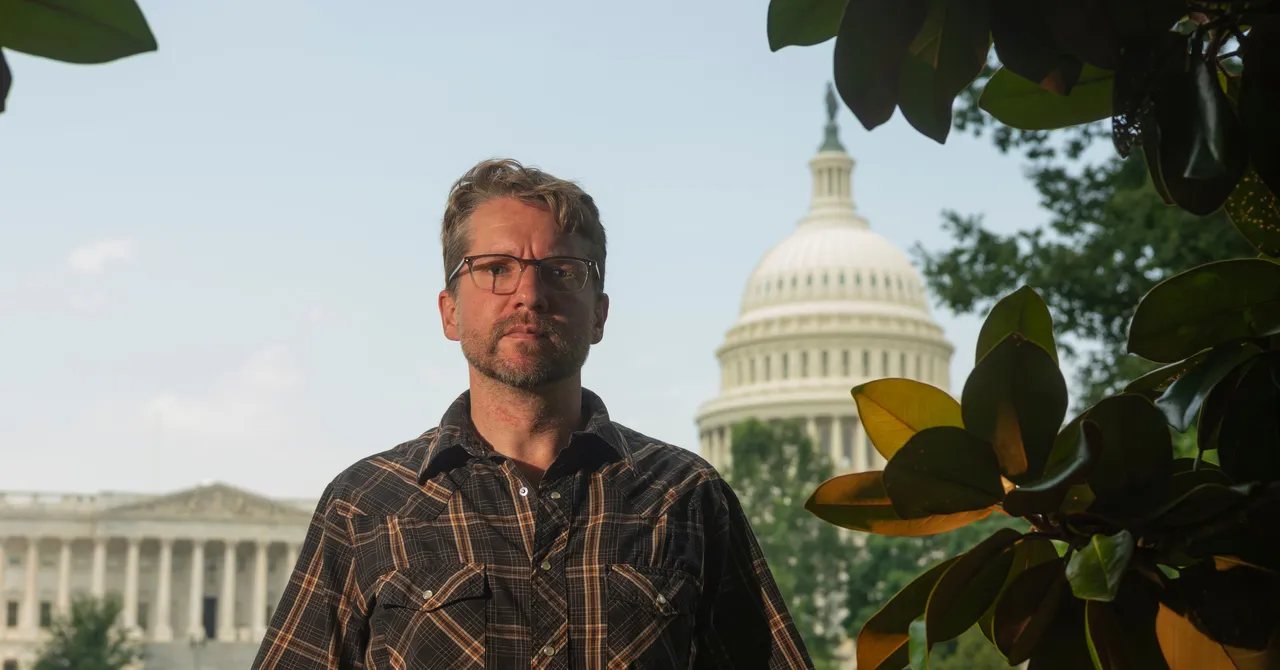
ATLANTA — Joe Allen, an anti-tech writer who has become a favorite voice on Steve Bannon’s War Room, wanted to know the name of the robot delivering food downtown. The question sounded like a joke at first, but it captured the larger anxiety running through the current debate over artificial intelligence: technology is no longer abstract, and people are meeting its physical presence in their neighborhoods, on their streets and, increasingly, in their politics.
Allen was in Georgia for one stop on a speaking tour aimed at helping build a broader anti-AI coalition. The event, organized under the “Humans First” banner, was part of a wider effort to turn vague unease about machines into a sustained political movement. Georgia has become an especially revealing battleground because it sits at the intersection of two major trends: a rapid expansion of data center construction and a growing conservative backlash against the infrastructure behind AI.
The scene in Atlanta was both surreal and revealing. Allen sprinted toward a delivery robot, read its name, and joked through a double whiskey as he tried to squeeze in one more conversation before a delayed flight. Later that evening, he spoke to a mixed audience at Georgia Tech, blending apocalyptic warnings, populist rhetoric and culture-war jabs into a message that was simple enough to travel: humans should come first in a machine age.
That message is resonating far beyond one lecture hall. Across the country, local fights over data centers have escalated into a broader political revolt against the AI buildout, with opposition surfacing in conservative suburbs, urban neighborhoods, rural counties and state capitols. The clash is no longer just about zoning or utility capacity. It is becoming a referendum on the direction of American technology policy and, in some places, on the legitimacy of AI itself.
Why are data centers suddenly a political problem?
Data centers became political because the AI boom changed them from unseen infrastructure into symbols of corporate power, resource consumption and social disruption.
For years, these facilities were mostly invisible to the public. They were built in places with strong fiber networks and access to cheap electricity, often near major tech hubs or outside Washington, D.C. They stored cloud files, ran streaming platforms and powered the digital services people use every day without much thought. Most communities barely noticed them.
That changed after ChatGPT and the AI race turned data center construction into a strategic priority. Tech companies began arguing that winning the future required enormous new computing campuses, especially hyperscale facilities built at unprecedented speed. The result has been a wave of proposals across the country, many in places chosen for inexpensive land, abundant power and, in some cases, weaker political resistance.
The speed of that buildout has become central to the backlash. Residents increasingly say they are being asked to accept major industrial projects with little explanation and few meaningful protections. Their concerns range from water consumption and noise to the visual impact of massive windowless buildings and the strain on already stressed electric grids.
In public discourse, data centers now stand for much more than server racks and cooling systems. To critics, they embody the idea that AI is being forced on ordinary people before society has had a serious debate about whether it should be.
How did AI supercharge the backlash?
AI supercharged the backlash because it turned data centers into the physical footprint of a technology many people already distrust.
Once the public began associating data centers with generative AI, the conversation shifted. These buildings were no longer just infrastructure for Netflix, cloud backups or business software. They became linked to fears about job loss, surveillance, environmental harm and the replacement of human work with machines.
That shift made the anger more intense and harder for industry advocates to manage. People who might have tolerated a warehouse-like building storing data are far less likely to welcome a massive AI campus promoted as essential to a future in which machines can write, code, generate art and answer nearly every question.
The backlash has also been fed by eye-catching stories. Elon Musk’s xAI project in Memphis drew criticism over unpermitted gas turbines reportedly brought in to support the site. Other reports have raised concerns about rising electricity demand and utility forecasts that suggest customers could face higher bills as large new facilities come online. Even a widely circulated claim that a single chatbot query uses a bottle of water helped crystallize the perception that AI is expensive not just economically, but environmentally.
At the same time, public warnings from AI executives have added to the unease. When leaders talk openly about AI systems replacing human creativity or taking jobs, they may be trying to sound visionary. To many listeners, however, those statements sound like a confession that the buildout is designed to displace people as quickly as possible.
What is driving the anger at local meetings?
The anger at local meetings is driven by a mix of mistrust, environmental concern and a sense that ordinary residents are being steamrolled by powerful companies.
For many Americans, the issue starts with a basic democratic complaint: they do not believe they are being asked for consent in any meaningful way. Data center projects often arrive as technical decisions wrapped in economic promises, leaving local residents to decode zoning changes, utility contracts and tax incentives while facing pressure to approve developments quickly.
That dynamic has sparked resistance in blue states and red states alike. Some communities view the projects as an assault on their environment. Others see them as an intrusion by corporate elites. Still others oppose them because they fear the facilities will transform their neighborhoods without delivering the promised jobs or benefits.
Recent polling suggests how widespread the concern has become. A Gallup survey found that roughly 70 percent of Americans would somewhat oppose or strongly oppose data center construction in their area. That level of resistance is striking for an infrastructure category that used to draw very little attention.
The opposition has also become increasingly visible in local politics. Across the country, officials have introduced moratoriums, cities have paused approvals and residents have packed hearings to challenge new projects. In some cases, demonstrators have been arrested or removed from meetings after confrontations with police or officials.
- Concerns about electricity use and utility bills
- Worries about water consumption and local shortages
- Distrust of Big Tech and corporate secrecy
- Fear that AI will replace workers and public services
- Anger over weak local control and rushed approvals
Who is Joe Allen, and why is he central to this movement?
Joe Allen is an anti-technology commentator who has become one of the more effective messengers linking AI, data centers and populist politics.
His path to the issue is unusual. Before he became a fixture on Bannon’s media ecosystem, Allen worked in the live music industry as a rigger for major acts and later earned a master’s degree in theology. He also spent years writing about technology from far-right and far-left corners of the internet before landing a national audience during the pandemic era.
That background matters because Allen does not sound like a conventional policy analyst. He sounds like a street preacher with an internet habit, mixing scripture, conspiracy references, body-horror imagery and culture-war instincts into a message designed to travel across class and ideological lines.
In book talks and podcast appearances, Allen frames AI as a civilizational threat rather than a technical one. He argues that humanity is drifting toward an “inverse singularity,” a collapse of intellect and creativity caused by dependence on machines. He also presents data centers not as neutral infrastructure, but as the physical signs of a broader dehumanizing transformation.
Allen told the Atlanta audience that people should keep fighting even if machines become more powerful, casting resistance as a moral duty in a machine age.
That language is extreme, but it is also politically useful. It gives local complaints about land use and utilities a larger meaning. Instead of just opposing a building, supporters are told they are defending humanity itself.
How did the right-wing anti-tech alliance take shape?
The right-wing anti-tech alliance formed because some populist conservatives realized that AI and data centers could be framed as threats to property rights, local autonomy and human dignity.
For years, opposition to Silicon Valley’s influence was mostly associated with labor activists, privacy advocates and left-leaning environmental groups. But the data center fight has created room for a different coalition, one that includes anti-establishment conservatives, nationalist commentators and MAGA-aligned media figures.
Steve Bannon has been especially important in this shift. On War Room, AI and data centers became recurring topics, often discussed through the language of sovereignty, elites and existential threat. Bannon also helped elevate Allen, using him as a connector to churches, grassroots groups and conservative gatherings around the country.
In that world, data centers are not just warehouses full of computers. They are proof that a remote, technocratic elite is building the future on land it does not own and with consequences it does not have to endure.
Some Republican lawmakers have also begun to treat the issue as a property-rights and anti-federal overreach concern. That has given the movement unexpected reach, especially in places where skepticism of Big Tech overlaps with distrust of Washington and fear of eminent domain.
What makes this coalition unusual is that it combines language from both environmental and nationalist politics. One side objects to industrial development. The other objects to cultural and political power being concentrated in the hands of tech firms and federal regulators. Together, they have become a serious obstacle to rapid AI expansion.
What happened at the Georgia Tech event?
The Georgia Tech event showed how the anti-AI message is being packaged for a wider audience.
Humans First staff members opened the evening by stressing concentration of power, fast-moving technology and the dangers of a small group controlling the future. Their tone was familiar to anyone who has attended climate or labor events, even though the subject matter was AI.
Allen then took the stage wearing a belt buckle with an American flag motif and leaned into a theatrically populist presentation. He mixed jokes, warnings and cultural references, playing clips of OpenAI chief executive Sam Altman alongside imagery associated with Heaven’s Gate, the cult whose members believed transcendence would come through leaving their bodies behind.
The point was not subtle. Allen was comparing the rhetoric of AI evangelists with a kind of digital salvation theology, suggesting that the industry imagines a future in which humans are merely temporary vessels for machine intelligence.
The performance worked because it fused different emotional registers. There were laughs, but also discomfort. There were far-right coded jokes, but also lines that sounded, to some listeners, like a call to defend human agency against corporate overreach.
By the end of the talk, Allen had pushed the audience toward a simple refrain: the future should be built around people, not machines.
Who was in the room?
The audience reflected the eclectic coalition forming around AI skepticism.
Some attendees were students, including members of a small AI safety club that had advertised the event. Others were local Atlantans who appeared to have arrived out of curiosity. A film crew from the left-leaning outlet More Perfect Union was also there, underscoring how strongly the anti-data-center issue has crossed partisan lines.
The mix of people in the room mirrored the broader movement: academic-minded skeptics, online influencers, local activists and politically heterogeneous observers trying to understand why the issue is suddenly everywhere.
| Development | What happened | Why it matters | Approximate timing |
|---|---|---|---|
| Quiet data center era | Facilities expanded near fiber and power hubs with little public attention | Data centers were treated as background infrastructure | 1990s–2010s |
| AI boom | Tech companies pushed for massive hyperscale buildouts | Data centers became tied to the AI race and energy demand | 2022 onward |
| Political backlash | Residents, activists and lawmakers began opposing projects and imposing moratoriums | The issue spread from zoning disputes to state and national politics | 2024–2026 |
| Populist alignment | Conservative media figures framed data centers as threats to communities and sovereignty | Anti-AI politics gained a new ideological base | 2025–2026 |
Why are data centers becoming a culture-war symbol?
Data centers are becoming a culture-war symbol because they sit at the intersection of technology, land use, energy policy and distrust of elites.
That combination makes them unusually easy to politicize. A local resident may start by worrying about a neighbor’s utility bills. Soon the argument widens into questions about whether the project will drain water, overwhelm infrastructure or enrich outside investors. From there, the issue can quickly become a debate about whether the country is surrendering too much authority to unelected tech executives.
The symbolism also works in reverse. For AI boosters, data centers represent competitiveness, innovation and national strength. For opponents, they represent extraction, secrecy and a future in which ordinary people absorb the costs while companies capture the gains.
That divide is why the issue has drawn unusually intense rhetoric. In some corners of the internet, data centers are now described with nearly mythic language, as if they were spiritual or apocalyptic objects rather than industrial facilities. On the other side, they are defended as essential infrastructure that will support economic growth and technological leadership.
The result is a fight over not just what gets built, but what kind of future the public is willing to accept.
What role does AI skepticism play in all this?
AI skepticism is the bridge connecting environmental resistance to deeper cultural unease about automation, control and human purpose.
Many people who oppose data centers do not separate the buildings from the technology they enable. They see the same companies, the same executive promises and the same unanswered questions about labor, energy and social impact. That is why the two issues increasingly reinforce each other.
Some opposition comes from people who are not especially ideological but are deeply alarmed by the pace of change. Others are motivated by a sense that AI will be deployed before the public understands what it can do. Still others are worried about the philosophical implications: if machines produce more of our language, images and decisions, what happens to human meaning?
Allen’s appeal lies in the way he translates those abstract concerns into vivid language. He does not simply warn about capacity planning or emissions. He describes an existential struggle between flesh-and-blood people and a system that wants to replace them with code.
That framing may be exaggerated, but it taps a genuine emotion: the feeling that many major decisions about AI are being made elsewhere, by people with no intention of slowing down.
How much of this is about politics versus place?
It is about both, because local fights over land and utilities are becoming the entry point for a national political realignment around AI.
At ground level, data center opposition often starts with highly specific grievances. Residents want to know about noise levels, water consumption, diesel backup systems, tax abatements and whether roads will be widened. They ask how long construction will last and whether emergency services are prepared for the new load.
But those practical questions are increasingly mixed with larger concerns about who gets to decide how America modernizes. In red counties, that can become a property-rights issue. In blue cities, it can become an environmental justice issue. In both places, it can become a rebuke to tech companies that appear to expect approval by default.
The political significance is that these local fights are now informing state-level and national debates. Moratoriums, zoning fights and utility disputes are no longer isolated. They are becoming part of the same contest over how aggressively the United States should pursue AI dominance.
That is why Georgia matters. It is not just a state with new data centers. It is a place where the anti-data-center argument is being tested as a durable political message.
What comes next for the anti-data-center movement?
The next phase will likely be a struggle over whether local outrage can be translated into lasting policy.
So far, the movement has had real success creating friction. At least a dozen states have seen moratorium proposals, and some local governments have paused or rejected projects outright. But stopping one development is not the same as reshaping the national AI buildout.
Industry groups and utility providers still have major advantages. They can argue that data centers create tax revenue, support high-paying technical jobs and keep the United States competitive with China and other rivals. They also have strong incentives to keep building, because the AI race rewards speed and scale.
The question is whether the opposition can move from protest to governance. That will require more than viral outrage or dramatic speeches. It will require model legislation, state-level organizing, local candidates and a message broad enough to win support from voters who do not think of themselves as anti-tech radicals.
For now, though, the movement has already achieved something important: it has made data centers visible. That alone has changed the politics of AI.
The bigger picture: AI is no longer an invisible industry
AI infrastructure has entered the public imagination, and with it the politics of everyday life.
The old arrangement depended on people not noticing where the digital world came from. Servers could sit quietly in industrial parks while the public enjoyed the services they enabled. AI has broken that bargain. The hardware needed to run large models is too big, too expensive and too energy-intensive to remain invisible for long.
That is why the fight over data centers feels bigger than a land-use dispute. It is a fight over whether the public can still shape the built environment when powerful companies decide a new technology demands speed above all else.
It is also a fight over narrative. AI companies talk about productivity and progress. Critics talk about extraction and control. Conservative populists talk about sovereignty and human dignity. Environmental activists talk about water, power and pollution. Each camp is describing the same buildings, but they are describing different futures.
Joe Allen’s message succeeds because it collapses those futures into one warning: if people do not resist now, they may discover that the machinery of the AI age has already been built around them.
Key facts at a glance
Below is a concise summary of the main developments driving the controversy.
| Issue | Details |
|---|---|
| Core dispute | Rapid expansion of data centers for AI has triggered local resistance over power, water and land use. |
| Political reach | Opposition now spans blue and red states, with moratoriums, hearings and protests nationwide. |
| Polling signal | A Gallup survey found about 70% of Americans would oppose a data center in their area. |
| Movement figure | Joe Allen has become a prominent anti-tech messenger through Bannon’s War Room and Humans First events. |
| Political significance | The issue is merging environmental concern, anti-corporate anger and skepticism about AI itself. |
In the end, the conflict over data centers is not just about where to put the computers. It is about whether the public will accept the physical expansion of AI before the social, environmental and political consequences are understood. That is why a once-obscure piece of infrastructure has become one of the most combustible issues in American politics.
Frequently asked questions
Why are Americans opposing data centers now?
Americans are opposing data centers now because the AI boom has made them visible symbols of higher power demand, water use, land-use conflict and corporate control. Many residents also worry that the projects are being pushed through with too little local input or accountability.
How are data centers connected to AI politics?
Data centers are connected to AI politics because they are the physical infrastructure needed to run large AI systems. As companies race to expand AI capacity, local communities are reacting to the real-world costs, turning a technical buildout into a political fight.
Who is Joe Allen in the anti-AI movement?
Joe Allen is an anti-technology writer and commentator who has become a prominent voice in conservative anti-AI circles. Through Steve Bannon’s War Room and his Humans First appearances, he frames AI as a civilizational threat and data centers as symbols of that threat.
Are data center protests only happening in blue states?
No, data center protests are happening in both blue and red states. Opposition has shown up in places such as Georgia, New York, Texas, New Jersey, Wisconsin, California and Indiana, which suggests the backlash crosses party lines and local political cultures.
What is the main concern about data centers?
The main concern about data centers is that they may consume large amounts of electricity and water while offering limited local benefits. Critics also worry about noise, pollution, zoning pressure, utility costs and the broader implications of building so much infrastructure for AI so quickly.