In short
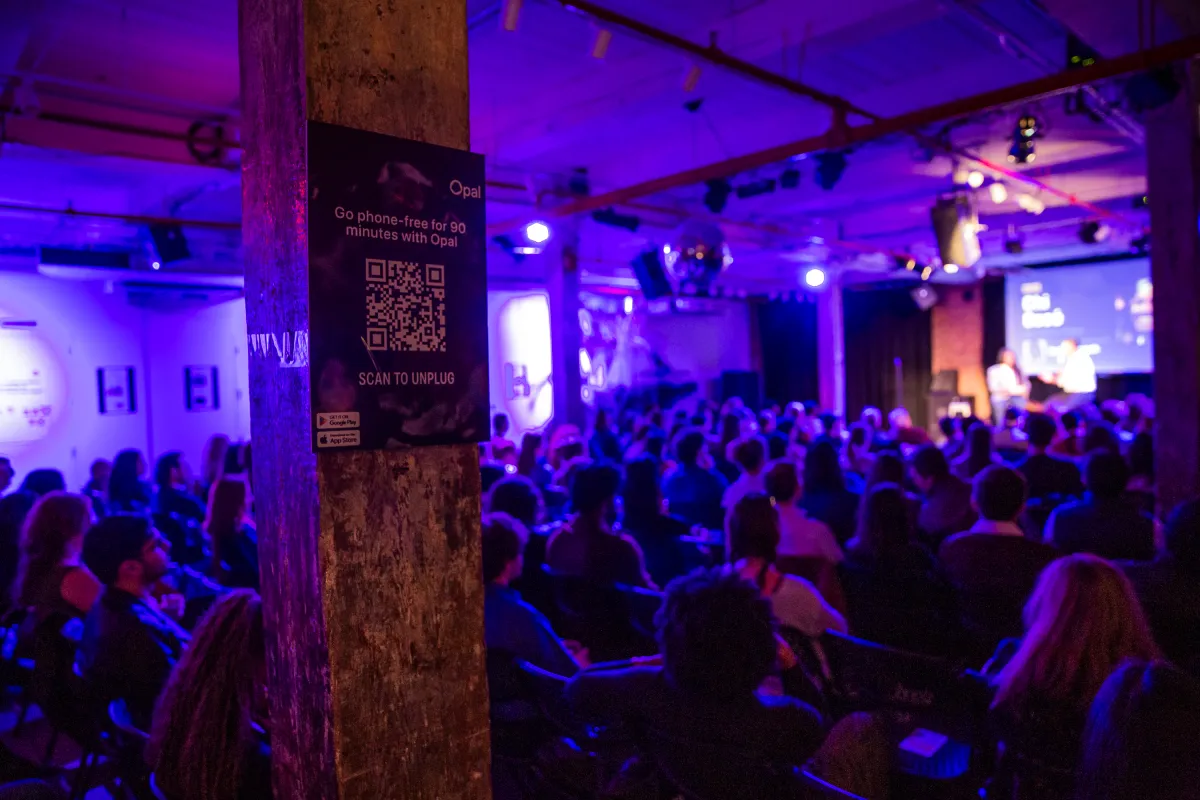
A Brooklyn midterm event hosted by Newsreel turned into a sharp anti-data-center, anti-AI forum, with residents voicing anger over secrecy, power use, jobs and community control. The reaction reflects a wider political backlash as states weigh tougher oversight of data centers.
- Brooklyn voters and activists turned an election event into a critique of data centers and AI infrastructure.
- Residents raised concerns about secrecy, zoning opacity, environmental harm and community displacement.
- Chi Ossé called for more accountability from tech executives and stronger taxation of extreme wealth.
- Data Center Watch says nearly $200 billion in projects were delayed, stalled or blocked in the first half of 2026.
Brooklyn’s midterm-election conversation turned sharply against data centers this week, as a Newsreel event meant to draw people offline before the Nov. 3 vote instead surfaced anger over AI infrastructure, secrecy, and local control. What began as a discussion about technology quickly became a public airing of fears about power use, opaque deals, and who actually benefits from the buildout.
Data centers became the center of the room
According to TechCrunch, the Thursday evening event in Brooklyn was supposed to get attendees to set aside their phones and talk about the election five days before Nov. 3. Instead, the crowd booed at pro-AI and pro-data-center framing, and the issue took over the night.
That reaction is notable not just for the temperature of the room, but for what it suggests about where the political debate is moving. Data centers are no longer being treated only as technical infrastructure. In this setting, they were discussed as a local power struggle: over electricity, land use, zoning, public process, and who gets a say when large tech projects arrive.
Why it matters
This matters because the politics around AI are broadening beyond chatbots, model releases, and Silicon Valley valuations. As TechCrunch reported from the Brooklyn event, the arguments around data centers now overlap with cost-of-living strain, fears of displacement, environmental concerns, and distrust of behind-closed-door decision-making.
That combination can make data centers a difficult sell for local officials and developers alike. A project framed as economic development can look very different to residents who believe big tech and local governments are striking private deals for billion-dollar builds without enough public scrutiny. In that sense, the Brooklyn event reflected a wider shift: AI infrastructure is becoming a neighborhood issue, not just an industry one.
The implications extend beyond New York. TechCrunch noted that Pennsylvania, Georgia, Texas, New York and Virginia are all weighing more guardrails and transparency for data centers. If those efforts gain traction, they could reshape how quickly projects move, what developers must disclose, and how much leverage communities have before construction begins.
What happened at the Brooklyn event?
Newsreel hosted the midterm-focused gathering, and by the end of the evening the audience’s most forceful reactions were aimed at the data-center conversation. TechCrunch reported that the room responded with boos to the pro-AI framing, underscoring how far the local debate had shifted from abstract technological optimism to concrete objections.
Data centers dominated both the stage discussion and the audience Q&A. The fact sheet indicates that panelists and attendees tied the facilities to secrecy around local deals and zoning opacity. That critique cut through the evening because it connected the physical presence of these buildings to the larger feeling that residents are learning about major changes after the real decisions have already been made.
The objections were not limited to one issue. Environmental and public-health concerns formed a major part of the backlash, alongside worries about the cost of housing, the pressure of gentrification, and a broader loss of community control. In Brooklyn, that mix was especially sharp because the borough is already familiar with the tension between development promises and neighborhood change.
Who was in the room?
TechCrunch identified New York City Council member Chi Ossé among the speakers. Ossé, who described himself as both a democratic socialist and a “law and order” one, argued that tech executives should face more accountability and that trillionaires should be taxed more.
Ossé also said CEOs should be called before Congress if they are making claims about technology that could deplete 10% of human civilization. His remarks placed the data-center and AI debate in a broader political frame: not simply whether the technology is useful, but whether the people building and profiting from it are being held responsible for the consequences.
Environmental and public health advocate Hilary Flint also appeared in the fact sheet’s quotes, pressing the human cost of development with a stark question:
What is a life worth?
The line captures how the discussion moved from engineering terms into moral ones.
Vox journalist Astead Herndon, another named voice in the fact sheet, framed the issue as one of consent, saying,
I just want to reinforce the lack of consent happening
. In context, the comment echoed a central complaint from residents: that communities are being asked to absorb the costs of infrastructure decisions they did not meaningfully approve.
How did data centers become such a political issue?
Data centers are large facilities that house the computing infrastructure used for cloud services and AI. That basic fact has long made them important to the technology sector, but the current political backlash comes from the way they affect places where they are built.
Local opposition commonly focuses on electricity use, water use, noise, land use, and opaque permitting. Those concerns were all present, in one form or another, in Brooklyn. Once a neighborhood sees a data center as a heavy industrial use rather than a neutral piece of digital infrastructure, the politics change quickly.
There is also a timing problem for the industry. The AI boom has pushed more attention onto the physical footprint required to support it, while residents are being asked to accept major construction with limited confidence that the benefits will stay local. The fact sheet suggests that some attendees saw those benefits as exaggerated, while the costs were immediate and visible.
What did the audience object to most strongly?
The strongest objections centered on secrecy, cost, and control. People in the room linked data centers to private deals between large tech companies and local officials, and they questioned whether those arrangements were being negotiated out of public view.
There was also a broader social critique. Residents connected the projects to cost-of-living pressure and fear of displacement, suggesting that a data-center buildout can intensify existing anxieties about who can afford to stay in a neighborhood and who decides what gets built there.
Finally, the event highlighted a recurring question in local development debates: whether the promised jobs are real in the long term. Some labor unions support data centers because of construction work, according to the fact sheet. But panelists disputed how durable those jobs would be once the building phase ends.
Background: how we got here
The political anger seen in Brooklyn did not emerge in a vacuum. The AI industry has been expanding its need for compute power, and with that expansion has come a wave of proposed data-center projects. In many places, the centers are pitched as essential infrastructure for the digital economy. To local residents, they can look like enormous land and energy consumers whose public costs are easier to measure than their local rewards.
Brooklyn is only one stop in a much larger policy fight. TechCrunch reported that Data Center Watch found nearly $200 billion in projects delayed, stalled, or blocked in the first half of 2026. That figure suggests that resistance is no longer isolated or symbolic. It is beginning to affect the pace of actual buildouts.
The resistance is also spreading across states that are central to the industry’s future. Pennsylvania, Georgia, Texas, New York and Virginia are all weighing more guardrails and transparency. That matters because these states sit at the intersection of fast-growing demand for compute and rising skepticism about the local tradeoffs.
Virginia is especially significant. The fact sheet says the state has hundreds of planned new data centers and is widely called the data center capital of the world. If political pressure is building there, it could be a leading indicator for the rest of the country.
By the numbers
The dispute around AI infrastructure is easier to grasp when the scale is laid out plainly. The table below pulls together the figures and dates referenced in the fact sheet.
| Figure | What it refers to | Why it matters |
|---|---|---|
| Nov. 3 | Midterm election date cited in the Brooklyn event backdrop | Shows the discussion was tied directly to election-season politics |
| five days | How far the event was held from Election Day | Explains why organizers wanted people focused on civic debate |
| almost $200 billion | Data center projects delayed, stalled, or blocked in the first half of 2026 | Indicates how large the policy and market headwinds have become |
| 10% | The share of human civilization Ossé referenced in his criticism of certain AI claims | Shows how politically charged the rhetoric around AI has become |
| hundreds | Planned new data centers in Virginia | Demonstrates the scale of the buildout in one key state |
What did the speakers say about accountability?
Accountability was the thread connecting the night’s most pointed remarks. Ossé argued that tech leaders should answer for the consequences of the claims they make, especially when those claims are tied to a technology with broad social reach. His call for executives to testify before Congress reflected a demand for public scrutiny rather than private influence.
That argument aligns with the broader skepticism in the room. If communities believe the biggest decisions are being made elsewhere, then calls for transparency become a way of demanding a seat at the table. In that sense, the Brooklyn event was not only about data centers; it was about who gets to govern the transition to an AI-heavy economy.
TechCrunch also reported that Brewster, Newsreel’s founder, said AI had become the second-most-common topic in RSVP questions before the event. That detail suggests the issue had already become a major draw—and a major concern—before anyone walked through the door.
Brewster said the issue lands differently depending on where people live. In rural places, he said, the concern is replacement. In Brooklyn, he said, it is who profits. That distinction helps explain why the same technology can produce very different kinds of resistance: in some places, the fear is of being left behind; in others, it is of being used.
Why this debate is spreading now
The speed of the AI rollout is one reason the backlash is growing. Infrastructure that once seemed abstract now has to show up somewhere, and the places that host it are increasingly asking what they get in return. As more residents connect data centers to noise, power demand, secrecy, and land use, the projects become harder to sell as purely beneficial.
The labor argument adds another layer. Construction jobs can be persuasive, and unions backing projects can give developers political cover. But the fact sheet makes clear that not everyone sees those jobs as durable. If a community is asked to accept long-term environmental and quality-of-life costs for short-term construction work, skepticism is likely to intensify.
There is also a broader political identity issue. The Brooklyn event brought together AI, elections, and local power in a way that made the technology feel less like an innovation story and more like a governance story. That shift can be consequential. Once a project becomes a question of consent, zoning, and accountability, the debate is no longer confined to industry experts.
What happens next?
The immediate next step is the Nov. 3 election, but the larger story is the policy response that may follow. TechCrunch noted that states including Pennsylvania, Georgia, Texas, New York and Virginia are weighing more guardrails and transparency for data centers. The open question is whether those ideas become actual rules that slow or reshape development.
Watch for three things in particular:
- Whether local races turn data centers into a campaign issue rather than a zoning footnote.
- Whether state lawmakers or regulators move from general concern to specific disclosure, environmental, or zoning requirements.
- Whether the reported nearly $200 billion in delayed or blocked projects grows as more approvals, revisions, or cancellations come in.
Virginia will remain one of the clearest indicators. With hundreds of planned new data centers and a reputation as the industry’s capital, any shift in public tolerance there could ripple across the country. If a state that central to the sector begins to tighten oversight, other regions may follow.
For now, the Brooklyn event stands as a useful snapshot of the mood around AI infrastructure. The technology may still be sold as progress, but in many neighborhoods the first question is no longer what it can do. It is who pays, who decides, and who lives with the consequences.
Timeline
The key moments in the fact sheet point to a fast-moving debate that has shifted from a local event to a broader policy question.
| Date | Event | Significance |
|---|---|---|
| Thursday evening | Newsreel hosts Brooklyn midterm event; AI and data centers dominate discussion | Shows the issue has become politically combustible at the neighborhood level |
| First half of 2026 | Data Center Watch says nearly $200 billion in projects were delayed, stalled or blocked | Signals growing resistance and slower project movement |
| Nov. 3 | Midterm elections referenced as the immediate backdrop | Ties the infrastructure debate to ballot-box politics |
Bottom line
The Brooklyn event showed that data centers have moved into the political mainstream as a local liability as much as a tech necessity. What was once a back-end infrastructure issue is now tied to neighborhood power, public trust, and election-season politics.
Frequently asked questions
Why are data centers becoming a political issue?
Data centers are becoming a political issue because communities are linking them to electricity use, water use, noise, land use, zoning opacity and secretive local deals. In Brooklyn, those concerns were tied directly to cost-of-living pressure and fears of losing community control.
What happened at the Brooklyn Newsreel event?
A Newsreel midterm event in Brooklyn meant to encourage people to talk about the Nov. 3 election instead turned into a heated debate over AI and data centers. The audience booed the pro-AI framing, and the issue dominated both panel discussion and audience questions.
Who spoke out against the data-center push?
New York City Council member Chi Ossé, environmental and public health advocate Hilary Flint and Vox journalist Astead Herndon were among the named voices in the fact sheet. Ossé called for more accountability from tech executives, while Flint and Herndon emphasized human and consent concerns.
How big is the data-center slowdown?
Data Center Watch found nearly $200 billion in data-center projects were delayed, stalled or blocked in the first half of 2026. That figure suggests the backlash is affecting real development timelines, not just public rhetoric.
Which states are considering new rules for data centers?
Pennsylvania, Georgia, Texas, New York and Virginia are all weighing more guardrails and transparency for data centers. The fact sheet says Virginia is especially important because it has hundreds of planned new facilities and is widely seen as the industry capital.