In short
Leopold Aschenbrenner’s Situational Awareness sold most of its public AI-related stock holdings to Citadel after sharp losses. The fund still holds a valuable Anthropic stake that could offset some of the damage.
- Situational Awareness sold the bulk of its public stock portfolio to Citadel after a steep monthly drop.
- The fund had surged earlier in 2026, with reported returns of 439% through June.
- AI infrastructure stocks in the portfolio fell sharply as investors questioned near-term returns from heavy spending.
- The fund still holds a reported $5 billion Anthropic stake and other private investments.
- Citadel’s move fits its pattern of buying when leveraged funds are forced to unwind.
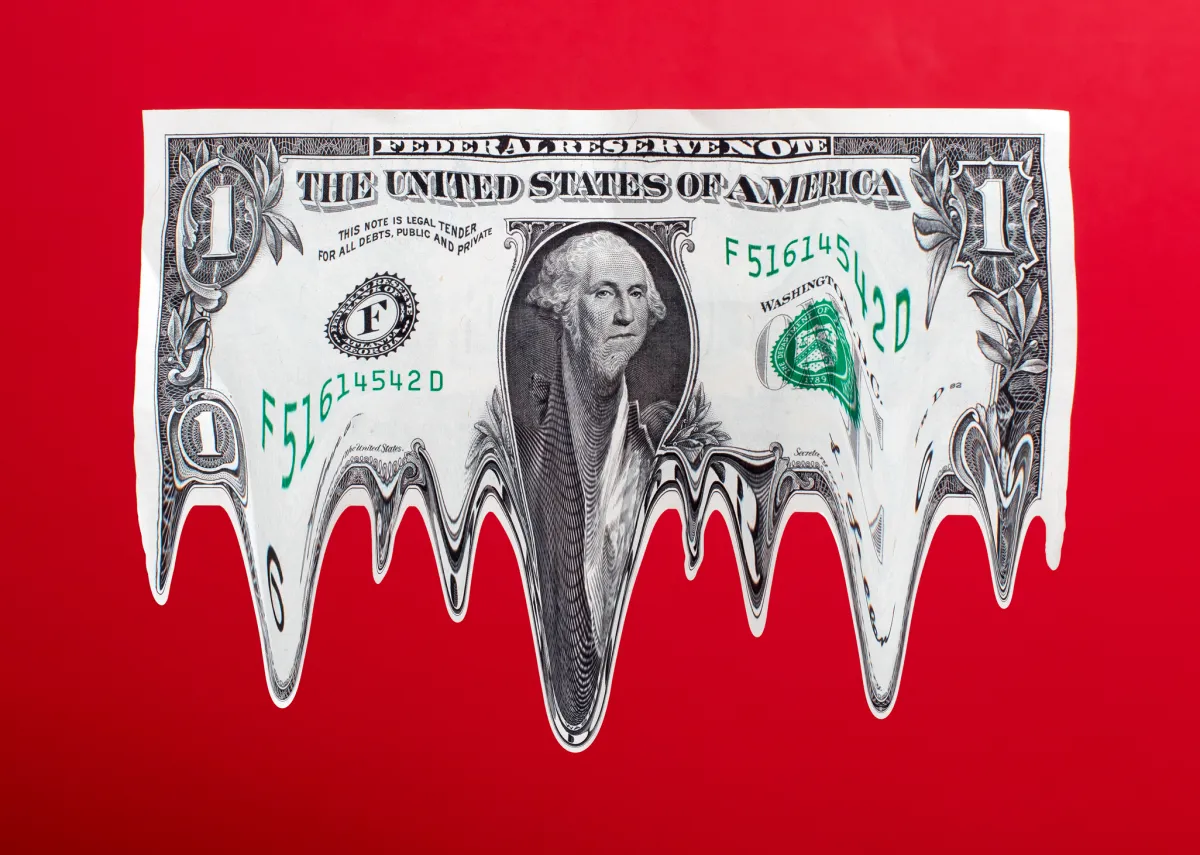
Leopold Aschenbrenner’s hedge fund, Situational Awareness, has sold most of its public-stock portfolio to Citadel after a steep drawdown in AI infrastructure names, but it still holds a valuable stake in Anthropic that could soften the blow. The move underscores how quickly sentiment has turned in parts of the AI trade and how private-company exposure can matter as much as public-market bets.
The deal, reported Thursday, marks a sharp reversal for one of the most closely watched new money managers in the AI ecosystem. Situational Awareness had surged earlier this year, only to see its gains hit by losses in chip, power, memory, and data-center plays tied to the artificial intelligence buildout.
Aschenbrenner, a former OpenAI researcher who became known for aggressively arguing that AI scaling would require huge new investments in semiconductors, compute, memory, and energy, launched the fund in 2024 with no prior trading background. His rapid rise, and equally rapid stumble, has made the firm a case study in both the excitement and volatility surrounding the AI infrastructure boom.
What happened to Situational Awareness?
Situational Awareness unloaded the bulk of its public equity positions to Citadel after suffering major losses over the past month, according to reporting from The Wall Street Journal. The sale reflects a forced or defensive unwind from a leveraged hedge fund that had been heavily exposed to the same AI infrastructure names that fueled its early success.
The fund’s portfolio had become concentrated in companies tied to the physical buildout of AI, including chipmakers, memory suppliers, power developers, and next-generation cloud providers. Those holdings were among the hardest hit as investors became more skeptical that massive spending on AI capacity would translate into near-term revenue.
Citadel’s acquisition is notable not just because it scooped up the positions, but because it appears to have bought them at a moment of dislocation. Ken Griffin’s firm has long been known for taking the other side of stressed leverage and stepping in when forced sellers need liquidity.
Why did the AI trade unwind so fast?
The selloff accelerated because the market started questioning whether AI infrastructure spending was running too far ahead of monetization. Investors who had previously rewarded anything linked to AI compute, data centers, and energy suddenly began asking how quickly those expenditures would generate profits.
That shift hit a basket of stocks that had been strong performers earlier in the year. It also mattered that hedge fund leverage magnified the decline: when borrowed capital is used to increase exposure, even modest drops can become severe losses.
According to the reports cited in the source material, several of the fund’s holdings fell more than 30% in the span of about a month. For a portfolio built around a highly thematic trade, that kind of drawdown can force managers to sell into weakness.
How did Aschenbrenner go from OpenAI to running a hedge fund?
Aschenbrenner’s path to asset management was unusually fast. Born in Germany, he entered Columbia University at 15, graduated as valedictorian at 19, and later joined OpenAI’s “superalignment” team in 2023. He was dismissed about a year later after OpenAI said he had improperly disclosed internal information.
That departure came at a moment of upheaval inside OpenAI. The superalignment team was then led by co-founder Ilya Sutskever and researcher Jan Leike. Sutskever would later leave to form a new company, and Leike joined Anthropic. Aschenbrenner then shifted into investing, turning his ideas about AI infrastructure into a fund strategy.
He became widely discussed not because of a long career in finance, but because his essays captured a dominant Wall Street narrative: that the next phase of AI would not just be about software models, but about the enormous real-world buildout needed to support them.
Aschenbrenner’s central thesis was that scaling artificial intelligence would require much more than model research; it would demand a massive expansion in chips, memory, energy, and compute capacity.
How big was the fund before the losses?
For a time, Situational Awareness looked like one of the hottest new funds in the market. The Financial Times reported that it returned 439% in the year through June, an extraordinary gain by any standard. At one point, CNBC reported, assets under management climbed as high as $45 billion before the recent selloff.
That level of growth is unusual for a young fund, especially one launched by a manager without previous trading experience. The combination of a powerful narrative, concentrated positioning, and heavy investor interest created a fast ascent.
But the same focus that helped the fund rise also made it vulnerable. Once enthusiasm cooled across the AI infrastructure complex, the exposure that had looked visionary started to look crowded.
| Milestone | What happened | Why it mattered |
|---|---|---|
| 2023 | Aschenbrenner joins OpenAI’s superalignment team | Builds credibility in AI research and safety |
| 2024 | Launches Situational Awareness | Turns AI thesis into a hedge fund strategy |
| Through June 2026 | Fund reportedly up 439% year to date | Signals huge early success |
| July 2026 | Public holdings sold to Citadel after losses | Shows sharp reversal in the trade |
| After the sale | Anthropic stake retained | Leaves the fund with a valuable private asset |
What stocks were hit hardest?
The most damaged positions were concentrated in the kinds of businesses that power AI behind the scenes. Among the names singled out in reporting were SK Hynix, Sandisk, Bloom Energy, and Nebius Group. Each is tied in some way to the broader AI infrastructure stack, whether through memory chips, energy, or cloud capacity.
Those companies had benefited from investor enthusiasm about AI demand, but they also became vulnerable when the market began to question whether the capital spending cycle was sustainable. Once that doubt spread, the selloff was severe.
- SK Hynix — memory chip maker exposed to AI demand
- Sandisk — storage and memory-related play
- Bloom Energy — power and energy infrastructure name
- Nebius Group — neocloud and AI infrastructure provider
The common thread across those holdings is that they are part of the “picks and shovels” layer of AI. If the market believes that layer is over-earning or overbuilt in the short term, valuations can compress quickly.
Why Citadel stepped in
Citadel’s purchase fits the firm’s well-known style. Griffin’s hedge fund has a reputation for buying assets from forced sellers when leverage breaks down elsewhere. That can mean taking positions in sectors that have temporarily fallen out of favor, especially when the underlying thesis still appears intact over a longer horizon.
In this case, Citadel was not stepping into a sector it had ignored. Before the deal, its portfolio already included some of the same AI infrastructure names that figured in Situational Awareness’s bets. That suggests Citadel may share the view that the sector is still promising, but can afford to wait through volatility.
For Citadel, the move may be less about a bold new thesis than about balance-sheet strength, patience, and timing. For Aschenbrenner, by contrast, the sale appears to have been a necessity brought on by market pressure and leverage.
What is still left in the portfolio?
Although the fund has largely exited its public holdings, it has not sold its private-company investments, according to multiple reports. That matters because the private side of the portfolio may still hold substantial upside.
The most valuable remaining position is said to be Anthropic, where the fund’s stake is reportedly worth about $5 billion based on Bloomberg’s reporting. If accurate, that single asset could play an outsized role in determining whether the fund’s overall performance remains strong despite the public-market losses.
Anthropic itself has become one of the most closely watched companies in AI. The startup was valued at $965 billion in a Series H round in May, according to the source material, and it is expected to go public as early as October, potentially at an even higher price.
That creates a possible offset to the fund’s pain. If Anthropic’s valuation continues to climb, or if an IPO crystallizes gains, the fund could recover a meaningful portion of what it lost in public equities.
Other private bets in the portfolio
Situational Awareness is also said to hold stakes in MatX, a chipmaker, and Fluidstack, an AI data-center startup. Fluidstack was reportedly in discussions in April to raise capital at an $18 billion valuation, showing that the fund’s private-book exposure is still tied to the most aggressive corner of the AI market.
Private assets can be both a cushion and a risk. They may carry higher unrealized value, but they are also harder to price, harder to exit, and harder to use as a source of liquidity when public losses force action.
What does this mean for the AI investment boom?
The story is a reminder that AI has entered a more selective phase. Investors are still willing to back the technology, but they are increasingly discriminating between businesses with near-term earnings power and those whose value depends on a long-dated buildout thesis.
That distinction matters across the sector. Companies supplying chips, memory, power, and data-center capacity may remain essential to AI’s future, but their stocks can still suffer when valuations become disconnected from current financial results.
Aschenbrenner’s fund had been the embodiment of a strong, almost macro-level AI bull case. The recent reversal suggests that even strong thematic arguments can be overwhelmed by positioning, leverage, and a market mood swing.
How unusual is Aschenbrenner’s rise and fall?
It is unusual because it compresses several careers into a very short span. In just a few years, Aschenbrenner went from elite student to OpenAI researcher to controversial departure to hedge fund founder to one of the most talked-about newcomers in the AI investing world.
He also entered finance at a time when AI was not merely a technology theme but a full-blown capital cycle. That meant his views resonated with investors looking for a way to trade the infrastructure needed to support large language models and future AI services.
But the same environment that rewarded boldness also punished overexposure. In a volatile sector, even a correct long-term thesis can face painful interim losses.
Early supporters of the fund reportedly included Jane Street, Stripe founders Patrick and John Collison, and Meta executives Daniel Gross and Nat Friedman, underscoring the high-profile enthusiasm behind the launch.
What comes next for Situational Awareness?
The immediate question is whether the fund can stabilize after shifting most of its public holdings to Citadel. The presence of large private stakes means the firm is not starting from zero, but it may need time for those assets to appreciate or liquidate before the overall picture improves.
The other question is whether the AI infrastructure market has merely paused or whether it is entering a longer period of consolidation. If demand catches up with spending, the sector could recover quickly. If not, managers who built highly leveraged bullish positions may continue to face pressure.
Aschenbrenner’s July 24 letter to investors, in which he reportedly described the decline as a strong buying opportunity and sought fresh capital beginning August 1, shows that he did not view the setback as a structural failure. But the later reports that commitments did not materialize indicate that investor appetite was not as resilient as he had hoped.
Key numbers at a glance
Here are the figures that define the latest turn in the story:
- 439% — reported year-to-date return through June
- $45 billion — peak reported assets under management
- About $10 billion — current estimated assets after the sale
- $5 billion — reported value of the Anthropic stake
- More than 30% — decline in several key AI infrastructure stocks over the past month
Why the Anthropic stake may be the most important asset left
Anthropic could ultimately determine whether Situational Awareness is remembered as a blown-up momentum trade or as a fund that took volatility on the chin but retained one of the sector’s most valuable private holdings.
Unlike the public positions, the Anthropic stake has the potential to reprice dramatically if the company goes public at a premium valuation. That means the fund’s fate may rest less on the stocks it sold and more on the startup it kept.
For now, the broader lesson is clear: in AI investing, the biggest winners may not be the ones with the cleanest public-market performance, but the ones that can survive long enough for their thesis to mature.
Situational Awareness was built around a simple idea: AI’s future would be capital-intensive, and the companies providing the picks and shovels would benefit. That idea still has supporters. But the fund’s recent forced sale shows that timing, leverage, and market sentiment can matter just as much as being right about the long run.
TechCrunch said it reached out to Aschenbrenner for comment.
This is a developing story and will be updated if additional details emerge.
Frequently asked questions
Why did Situational Awareness sell most of its public holdings?
Situational Awareness sold most of its public holdings after suffering steep losses in AI infrastructure stocks. The move appears tied to leverage and a sharp reversal in market sentiment, which likely forced the hedge fund to reduce risk and raise liquidity.
Does Situational Awareness still own Anthropic shares?
Yes, Situational Awareness still holds its Anthropic stake. Reports say that position is currently valued at about $5 billion, making it the fund’s most important remaining asset and a possible offset to losses in public markets.
Who founded Situational Awareness?
Situational Awareness was founded by Leopold Aschenbrenner, a former OpenAI researcher. He became known for essays arguing that the AI boom would require major investment in chips, compute, memory, and energy infrastructure.
Why did Citadel buy the portfolio positions?
Citadel bought the positions because it has a history of stepping in when leveraged investors are forced to unwind. The purchase also fits Citadel’s broader exposure to AI infrastructure, suggesting it sees long-term value in the sector.
How well was the fund performing before the selloff?
The fund was performing extremely well before the reversal. Financial Times reported a 439% return for the year through June, and CNBC reported assets under management had reached as much as $45 billion at their peak.