In short
Station F is expanding its F/ai accelerator as it tries to make Paris a stronger launchpad for AI startups in Europe. The program is focused on helping young companies reach revenue quickly, backed by major tech partners and a tightly curated selection process.
- Station F is launching a second F/ai accelerator cohort in September.
- The program aims to help AI startups reach €1 million in revenue within six months.
- The first cohort raised $34 million in pre-seed funding collectively.
- Selection is by recommendation only, not open application.
- Station F is positioning Paris as a serious alternative to U.S. AI startup programs.
Station F is sharpening its role as one of Europe’s most visible proving grounds for artificial intelligence startups. The Paris-based campus, founded by billionaire Xavier Niel, is preparing a second cohort of its F/ai accelerator this September, extending a program designed to help young AI companies move from promising prototypes to measurable revenue in a matter of weeks.
The move comes as Europe’s startup ecosystem is under pressure to show that it can do more than produce technical talent and early-stage ambition. Investors, founders and policymakers are all asking the same question: can European AI companies build fast enough, sell quickly enough and scale ambitiously enough to compete with U.S. rivals? Station F is betting that a tightly curated accelerator, backed by a deep bench of industry partners, can help tilt the odds.
Roxanne Varza, the director of Station F, said the initiative is about more than offering desks, demo days and networking access. In her view, the campus now functions as a strategic node in Europe’s AI ecosystem, connecting founders to major technology companies, investors, senior operators and international visitors who increasingly treat Paris as a serious stop on the global tech circuit.
From co-working space to startup pipeline
Station F is often described as the world’s largest startup campus, but its significance goes well beyond size. The Paris facility spans 538,000 square feet and houses a broad mix of programs, investors, support services and startup communities. Over time, it has evolved into a gateway for founders hoping to access customers, talent and capital in Europe and beyond.
That broader role is especially visible in the campus’s annual Future 40 selection, which highlights the most promising companies among roughly 1,000 startups that pass through Station F each year. In recent years, AI has taken center stage in that pipeline. By 2024, nearly every company in the Future 40 class had AI at the heart of its business model, underscoring how deeply the technology has reshaped the kinds of startups the campus attracts and promotes.
Varza has said that Station F’s influence is not limited to the real estate it occupies. The organization has also become an investor in some of the startups it supports. According to her, Station F has been making investments in Future 40 companies since 2022, a sign that the campus is looking to benefit from the growth of its own alumni network as well as from the momentum of the companies passing through its doors.
Why the F/ai accelerator matters now
The F/ai accelerator was launched in January with a clear objective: help a select group of AI startups move from early product development to revenue generation quickly, and do so from Europe rather than forcing founders to relocate to the United States. Its second batch is now set to begin in September, adding momentum to a program that Station F believes can help European AI founders close the commercialization gap with their American peers.
Varza said the concept was shaped by feedback from investors and broader criticism that European startups often take too long to convert technical progress into actual sales. The program’s goal, she explained, is to put companies on a timeline that is closer to what backers in the U.S. expect from ambitious early-stage AI ventures.
The accelerator is built around a simple idea: bring the right people together and make it much easier for AI startups to connect with major technology companies, customers and investors while staying in Europe, according to Station F director Roxanne Varza.
That emphasis on commercial traction is notable. Rather than focusing solely on research, product polish or prestige, F/ai is explicitly looking for companies that can generate meaningful revenue within months. Station F says the target for participants is €1 million, or about $1.14 million, within six months.
The companies behind the program
The first cohort of F/ai was supported by a large roster of recognizable technology names. Partners included AMD, Anthropic, AWS, Clay, Google, G42, Hugging Face, Lovable, Meta, Microsoft, Mistral AI, OpenAI, OVHcloud, Snowflake and Qualcomm, alongside several venture capital firms. The presence of so many major players was intended to do more than add prestige; it was meant to create direct lines of access for startups seeking model providers, cloud infrastructure, customers and strategic relationships.
For the second cohort, Station F is adding more industry weight. TechCrunch reported that the latest group will include ElevenLabs, Nebius, Rippling, OpenRouter, HubSpot and GitHub among its supporters. That mix broadens the program’s reach across AI voice tools, cloud infrastructure, HR software, developer platforms and business software, giving founders access to partners that reflect the practical realities of building and selling AI products today.
| Program | Launch | Objective | Notable partners | Reported outcome |
|---|---|---|---|---|
| F/ai first cohort | January 2026 | Help AI startups reach revenue quickly | AMD, Anthropic, AWS, Google, Meta, Microsoft, OpenAI, Mistral AI, Hugging Face, Qualcomm | $34 million in pre-seed funding raised collectively |
| F/ai second cohort | September 2026 | Expand access to major industry players in Europe | ElevenLabs, Nebius, Rippling, OpenRouter, HubSpot, GitHub | Applications by recommendation only |
Early signs of momentum
Station F says the first F/ai cohort has already shown promising signs of traction. Two teams from the inaugural group have won high-profile competitions, helping raise their profiles beyond France’s borders.
Alpic and Rippletide stand out
Alpic won the global final of The Pitch, a startup competition organized by Deel. Rippletide, meanwhile, took home the OpenAI Codex Hackathon. While awards do not guarantee commercial success, they can help young companies gain visibility, attract investors and signal technical credibility in crowded markets.
More importantly for Station F, the accelerator is trying to shift the conversation away from symbolic wins and toward sales. That distinction matters in an AI market where press attention and investor enthusiasm often arrive before sustainable business models do. F/ai wants participating founders to prove that they can turn technical advantage into contracts, usage and recurring revenue.
How the first cohort performed
By Station F’s account, the initial class of 20 AI startups has already raised $34 million in pre-seed funding. That is a significant early outcome for a new accelerator, especially one focused on companies that are still shaping product-market fit.
The group also appears unusually experienced. Station F says 80% of the startups in the first cohort were founded by repeat entrepreneurs, and about one-third of the founders hold PhDs. That profile helps explain the accelerator’s emphasis on advanced technical ability and founder credibility.
But it also points to a recurring debate in European tech: whether access to elite startup networks is widening or narrowing. F/ai does not accept open applications. Instead, companies are selected through recommendations from founders, partners and investors. That approach may help Station F identify strong teams quickly, but it could also reinforce the perception that the continent’s startup ecosystem remains relatively closed to outsiders.
Selection by recommendation only
The referral-based model reflects Station F’s view that the best AI teams are often already known to the ecosystem. It also mirrors the relationship-driven nature of startup investing, where trusted introductions often matter as much as product quality.
Still, the approach has drawn scrutiny in a broader European tech scene that is sometimes criticized for being too concentrated in a few hubs, too dependent on elite networks and too comfortable recycling the same founder archetypes. F/ai appears to be leaning into those networks rather than away from them.
- Founders cannot apply directly to F/ai.
- Candidates are typically referred by trusted ecosystem contacts.
- Alumni may also become a source of recommendations in future cohorts.
- Station F says the campus still offers roughly 30 other programs with open access.
Why Paris is becoming part of the AI conversation
Station F’s rise has been helped by two advantages: scale and connectivity. The campus is large enough to host major events, dozens of programs and a dense community of builders. It is also anchored by Xavier Niel’s relationships across French business and politics, which have helped Station F become a recurring destination for high-level visitors.
That status has made the campus a symbolic centerpiece of “la French Tech.” It has also brought unusually frequent political attention. Station F has hosted 11 presidential visits since Emmanuel Macron first toured the site in 2017, a record that underlines its role as a showcase for France’s technology ambitions.
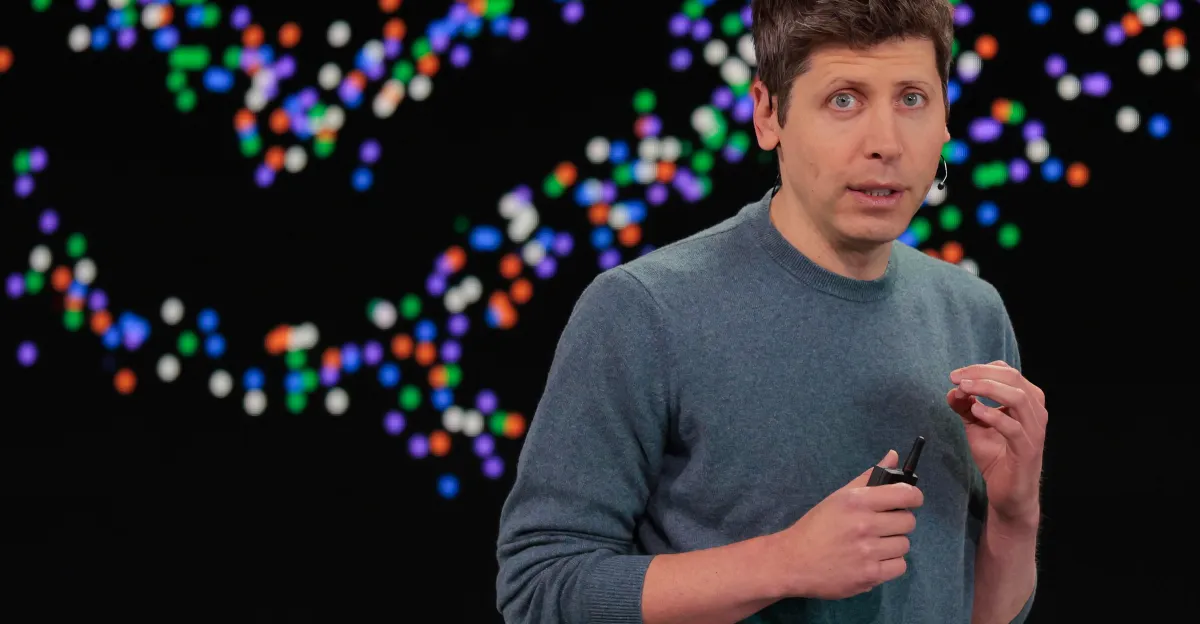
International figures from the AI world have also passed through the campus, including OpenAI chief executive Sam Altman. Those visits matter because they signal that Paris is no longer simply a European outpost in the AI race; it is increasingly part of the global circuit where talent, capital and policy intersect.
Varza has argued that too many founders still assume that reaching world-class AI networks requires leaving Europe for the U.S., and that Station F wants to prove otherwise by helping teams access those networks from Paris.
That message is especially important as Europe looks for ways to keep more of its best founders at home. If the region wants to produce durable AI companies rather than just talented researchers or prototype-heavy startups, it will need more places where access, distribution and commercialization come together. Station F is attempting to be one of those places.
What F/ai is really trying to solve
At first glance, F/ai may look like another accelerator in an already crowded market. But its design suggests a more specific ambition. The program is not just about mentoring founders; it is about helping them navigate the full stack of early AI company building, from product development and technical partnerships to sales strategy and market entry.
That is why the program’s partner list matters so much. Startups building AI products often need access to several layers of support at once:
- foundation model providers or infrastructure vendors,
- cloud and compute resources,
- enterprise software or distribution partners,
- legal, financial and hiring support, and
- investors who understand how quickly the AI market changes.
By convening that network in one place, Station F is trying to reduce the time founders spend chasing introductions and negotiating access. In theory, that should let them focus on product-market fit and customer conversion.
The revenue test
The 6-month, €1 million revenue target is perhaps the clearest expression of F/ai’s philosophy. It is ambitious enough to force prioritization, but realistic enough to fit the kind of momentum an early AI startup might generate if it finds a strong market wedge.
That target also highlights a shift in investor expectations. In the first wave of generative AI excitement, many companies could raise money on demos, talent and narrative. Now, founders are increasingly expected to show that users will pay, and pay quickly. Station F is aligning itself with that shift.
Station F’s broader bet on Europe
F/ai is part of a larger effort to make Station F indispensable to Europe’s startup economy. The campus has long offered more than office space: it provides an address, a network and a stage. With AI, it is now trying to provide a pathway to scale.
That effort matters because Europe’s AI ecosystem faces structural challenges. The region has strong universities, a deep pool of technical talent and a growing list of capable founders. But it still struggles with fragmented markets, slower procurement cycles and less abundant growth capital than the U.S. If accelerators like F/ai can help startups prove commercial momentum earlier, they may improve the region’s odds of retaining more category-defining companies.
There is also a branding dimension. Station F’s success in drawing global names and high-profile visitors helps Paris present itself not just as a charming capital with startup ambitions, but as a practical place to build frontier technology businesses. That image can be self-reinforcing: the more founders, investors and executives see Paris as a serious AI stop, the easier it becomes for the city to attract the next cohort.
Key numbers behind the program
| Metric | Figure | What it means |
|---|---|---|
| Station F campus size | 538,000 square feet | Large enough to operate as a startup ecosystem, not just a workspace |
| Annual startup intake | About 1,000 companies | Shows the scale of Station F’s funnel |
| Future 40 investment activity | Since 2022 | Signals Station F’s move into startup investing |
| First F/ai cohort size | 20 startups | A selective pilot-style batch |
| Collective pre-seed raised | $34 million | Early validation from investors |
| Revenue target | €1 million in 6 months | The accelerator’s commercialization benchmark |
| Presidential visits | 11 since 2017 | Illustrates the campus’s political visibility |
What to watch next
The second F/ai cohort will test whether the accelerator can convert its strong partner network into repeatable business outcomes. The key question is whether a carefully curated group of AI startups can use Station F’s ecosystem to win customers faster than they otherwise would, and whether those customers are in Europe or beyond.
Observers will also be watching whether the program’s referral-only model continues to produce strong teams without narrowing access too much. If it succeeds, F/ai could become a blueprint for how European startup hubs build deeper support systems around high-growth AI companies. If it stumbles, it may be seen as another example of Europe’s tendency to organize excellent networks around a limited set of already-connected founders.
For now, Station F’s bet is clear. The campus wants to show that Europe does not need to imitate Silicon Valley to produce serious AI companies. It can instead offer something different: access to major names, proximity to a dense startup ecosystem and a path to revenue that begins in Paris.
That is a persuasive pitch, especially at a moment when AI founders are under pressure to demonstrate not just technical sophistication, but business discipline. If Station F can keep helping startups make that leap, it may strengthen its place as one of the continent’s most important launchpads for the next generation of AI companies.