In short
Goose, a gay dating and friendship app, rocketed into the App Store charts while an unusual network of Instagram accounts promoted it. Investigators and users say many of those accounts appear to be fake or AI-generated, raising questions about deceptive marketing and disclosure.
- Goose’s launch was boosted by Instagram DMs and Close Friends stories that appeared to come from fake or AI-generated accounts.
- The app briefly reached No. 4 in the App Store’s free lifestyle category before settling lower in the charts.
- Lawyers say fake user-style promotion can raise serious FTC and disclosure concerns.
- Meta’s rules require AI disclosure, but private messaging and Close Friends posts are harder to police.
A new gay dating and friendship app called Goose has surged into the spotlight after a wave of suspicious Instagram promotion pushed it into the App Store charts. But what began as a glossy launch for a “for the boys” social platform has quickly turned into a broader debate about transparency, AI-generated personas, and whether marketers crossed a line by using apparently synthetic influencers to generate sign-ups.
The app, which says it helps gay men “meet guys through the life you already have,” has been promoted through a network of polished Instagram accounts that appear to be fake, newly created, or heavily AI-generated. Several of those accounts used the same invitation language, the same emotional framing, and in some cases nearly identical profile images, according to analysis of their posts and avatars.
For some users, the campaign felt like clever growth marketing. For others, it looked like deception in plain sight.
What Goose says it is — and why it got attention
Goose is pitched as a dating and friendship app for gay men who want more than a quick hook-up. Its founders frame it as a relationship-forward alternative to more established apps in the category, with a social-network twist aimed at meeting people through shared routines, interests, and communities rather than only through swipes.
The app was created by Derek Chadwick, a model and influencer, along with David Aliagas, who previously worked in growth and community at BeReal. That pairing helped Goose stand out before launch: one founder with a built-in social-media presence and another with app-growth experience.
But the concept also drew immediate skepticism. A gay dating app that promises deeper connection is, on paper, a familiar pitch. To many observers, the target audience seemed likely to use the app for the same reason they use similar products: to meet people quickly, romantically, or casually. The company’s branding — including its “for the boys” slogan — only intensified the reaction online.
Some early commentary mocked the app as a disguised hook-up product, rather than a genuine attempt to reshape how gay men connect online.
How the app climbed the charts
Despite the cynicism, Goose appears to have attracted enough curiosity to generate a strong launch. After going live last Thursday, the app rose as high as No. 4 in the free lifestyle category on the App Store. It has since settled to around No. 33 in lifestyle app downloads globally, a sign that interest remained meaningful even after the first wave of novelty.
That kind of chart movement matters. For startup apps, early visibility can create a feedback loop: better rankings drive more downloads, which create more rankings, which then attract more media and social attention. In Goose’s case, the app’s apparent momentum likely benefited from a coordinated promotional push that reached gay men directly through Instagram’s more intimate features, especially Close Friends stories and direct messages.
But as users began tracing those invitations back to the accounts behind them, the campaign looked less like organic enthusiasm and more like a coordinated synthetic network.
The Instagram accounts raising alarms
The most striking element of the Goose rollout was not the app itself but the cast of people seemingly endorsing it.
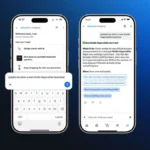
One Instagram Close Friends story, posted by an account using the handle @miles.sumrall, showed a man with curly dark hair and a styled mustache relaxing in water. The caption told recipients that they were being contacted because they were “exactly the type of person” the company was building for, and it included an invitation code to a members-only community.
On the surface, it looked like a personalized invite from a desirable, socially connected gay man. But several details made that appearance suspect.
- The account was created in May 2026.
- It had fewer than 10 posts.
- Its follower-to-following ratio looked unusually high for a normal personal account.
- Its profile image was assessed by AI Image Detector as more than 90% likely to be AI-generated.
- A Google Gemini-based SynthID check suggested that most or all of the profile photo had been created with Google AI.
Another account, @danielmmulugeta, used nearly identical language in its Close Friends story and appeared similarly suspect. Like Miles, it showed many of the signs of an inauthentic profile: new creation date, minimal posting history, and an avatar that machine analysis flagged as AI-generated.
A third account, @alistaircrombbie, came to the attention of Ryan Cheam, an account executive in marketing and public relations. Cheam said the profile initially seemed plausible because the bio suggested that the person worked in public relations at a respected art gallery. That changed after the account messaged him with an invite to a “curated network of guys” on Goose.
According to Cheam, the account’s invitation language and the underlying image analysis both pointed in the same direction: a polished but likely fabricated identity designed to feel authentic enough to persuade.
A pattern of similar invites
WIRED identified more than two dozen accounts that appeared to fit the same pattern. They were all created in May or June 2026, most had only a few posts, and many seemed to follow one another while trading the same heart and fire emojis in comments.
That kind of mutual engagement is common in ordinary social circles, but in suspicious networks it often serves a different purpose: creating the impression of a lively, real community. The accounts also used a repetitive promotional playbook. Some followed targets and added them to Close Friends stories. Others sent direct messages containing nearly identical wording.
One of those messages, received by marketing professional Dalton Bauer, opened with a casual line — “Hey! Okay this might feel random but felt you’d be interested :)” — before inviting him to Goose. Bauer said the wording matched other messages he had received that week from brand-new accounts.
The account behind that message, @lucalepkowski, also showed the same warning signs as the others: a May 2026 creation date, a small amount of content, and a profile image that analysis suggested was likely artificial or AI-assisted.
Bauer said the messages felt less like genuine outreach and more like a deceptive campaign, especially because the volume and repetition made the tactic visible at scale.
What the founders were doing behind the scenes
While the public-facing campaign unfolded, Aliagas appears to have been advertising openings for “ambassadors” to manage unspecified social media accounts. Those Instagram stories, still visible in his highlights under the label “AMBASSADORS,” offer a glimpse into how the promotional effort may have been structured.
In one story posted about six weeks ago, Aliagas said he needed help with a new app and promised priority access to his followers. He described an ambassador role that would involve managing three Instagram accounts for four hours a day over more than two months. The monthly pay ranged from $1,800 to $2,100.
He also made clear that cultural fluency was useful, writing that familiarity with gay culture would be a plus. The post added a more provocative line suggesting that applicants could “monetize” their own experiences, and it included an offer to buy fake Instagram accounts for $100.
A second call for applicants, posted three weeks later, extended the commitment to three months and suggested the company was scaling up. Aliagas wrote that the project was going big, reinforcing the idea that the promotional push was not a one-off stunt but a coordinated growth effort.
Why the campaign feels different from normal influencer marketing
Brands routinely work with creators to build awareness. Startups frequently seed products with social media personalities before a launch. What makes the Goose case unusual is not that it involved marketing, but that the promotion appears to have relied on accounts that may not have been real people at all.
That distinction matters. A paid creator, even one with a curated online persona, is still a human being with a disclosed or at least identifiable relationship to the company. A synthetic profile, by contrast, can mimic organic enthusiasm while hiding the fact that no person actually stands behind it.
The approach also appears to have been tailored to intimacy. Rather than traditional ads, the accounts used DMs and Close Friends stories — formats designed to feel personal, exclusive, and semi-private. That can make them especially persuasive because the messages arrive with a sense of trust and discretion.
For a dating app, that strategy is particularly potent. Users are already vulnerable to social validation, curiosity, and the possibility of romantic connection. A message from an attractive, seemingly like-minded peer may carry more weight than a banner ad or sponsored post.
The legal and regulatory questions
The Goose campaign raises issues that go beyond brand taste or internet ethics. According to advertising attorney Rob Freund, using fake personas to drive attention to a product can trigger serious legal concerns under existing U.S. rules.
Freund pointed to Federal Trade Commission guidance that prohibits deceptive advertising and misleading impersonation. He also noted that New York has recently introduced a law requiring disclosure when advertising content is generated by AI, with an initial penalty of $1,000 for violations.
In Freund’s view, a campaign built around fake users or fake promoters is not just questionable; it may run afoul of the law if it is designed to make a product appear more popular or desirable than it really is.
Freund said that intentionally fabricating user-like accounts to promote a service could clearly fall under deceptive advertising concerns, regardless of whether the app charges money or is free to download.
The FTC declined to discuss any specific company’s practices, and Goose did not respond to repeated requests for comment. That silence leaves the public with a familiar modern problem: a high-velocity digital campaign, a cluster of synthetic identities, and limited transparency from the people behind the product.
How platform rules fit into the picture
Meta, which owns Instagram, says users must label artificially generated content and can remove posts that are not properly disclosed. On paper, that seems straightforward. In practice, campaigns like Goose’s can be hard to police.
First, the content may not be posted publicly. Close Friends stories are visible only to selected followers, and direct messages remain private unless recipients choose to share them. Second, the accounts themselves may be thin, short-lived, and designed to evade simple pattern-based moderation. Third, AI-generated faces can make detection harder because they look convincingly human even when built from synthetic elements.
That combination creates a gray zone where platform rules, disclosure standards, and detection tools all struggle to keep up. Even when some AI-generated material is mislabeled or flagged, it can still slip through long enough to shape impressions and drive downloads.
Why the story resonated online
The public reaction to Goose has been fueled by more than technical concerns. It taps into a broader sense of fatigue about digital authenticity, especially on social platforms where everything from romance to commerce can feel engineered.
For gay men in particular, the issue carries extra weight because dating apps already sit at the intersection of identity, desire, and community. Many users are highly attuned to signals of safety, sincerity, and social proof. If those signals are manufactured, the trust gap can feel personal.
That is part of why the campaign prompted not just skepticism but a kind of resigned humor. Users online joked about the app’s promise of relationship-building while imagining that it would function like yet another hookup platform. At the same time, the fake-account allegations gave the launch a darker undertone: not simply overhyped, but possibly manipulative.
Goose’s growth playbook, in context
If the allegations are accurate, Goose may have borrowed from a wider playbook that is becoming more common in consumer marketing: create believable social proof first, then let curiosity do the rest.
That approach can include:
- creating fresh social accounts with attractive, highly polished avatars;
- posting just enough content to appear real;
- using the same copy across multiple accounts to push the same product;
- leveraging private channels such as DMs and Close Friends stories;
- exploiting an audience’s desire to belong to an exclusive network.
Seen through that lens, Goose’s launch was less like traditional advertising and more like constructing an illusion of community. The goal would not simply be awareness but the impression that the app was already attracting the very people it was designed for.
That impression can be extremely effective. People are more likely to join a platform they believe is already populated by attractive, like-minded peers. In dating, where network effects matter enormously, the appearance of density can be almost as important as actual density.
Why the details matter for the app industry
The Goose case may become a reference point for startups testing the limits of AI marketing. The industry has embraced synthetic media for product visuals, ad creatives, and support content. But using AI to simulate actual users or advocates is a different proposition.
That shift changes the ethics of the campaign and, potentially, the legal exposure. A generated image in an ad is one thing. A generated person posing as a community member is another. The latter can distort the perceived size, diversity, and desirability of a product’s user base.
For social apps in particular, the temptation will remain strong. These products live or die on network effects, and the fastest way to make a new platform seem lively is often to make it look already active. But the risk is that a growth tactic can become a trust liability the moment users realize the community was staged.
What happens next
At the moment, Goose sits in an awkward position: successful enough to gain attention, but controversial enough to invite scrutiny from users, reporters, and potentially regulators. The company has not publicly addressed the concerns surrounding the accounts that promoted it, and neither Chadwick nor anyone else at Goose has responded to requests for comment.
The unanswered questions are straightforward but important. Who created the accounts? Were they human-run, AI-assisted, or both? Were they paid ambassadors, contractors, or something closer to a scripted promotional network? And, perhaps most importantly, did the campaign violate platform rules or advertising law?
Until those questions are answered, Goose remains a case study in the new ambiguity of online promotion. The app may still find its audience. But the way it found attention may prove harder to shake than the app itself.
Timeline of the Goose controversy
| Date | Event | Why it mattered |
|---|---|---|
| May 2026 | Multiple Instagram accounts tied to the campaign are created. | Most of the suspect profiles appear newly minted rather than established community accounts. |
| June 2026 | Additional accounts begin posting similar content and commenting on one another. | The activity suggests a coordinated network rather than independent users. |
| Weeks before launch | Aliagas posts “ambassador” recruitment stories on Instagram. | The stories hint at a larger, organized social-media operation. |
| Last Thursday | Goose launches on the App Store. | The app quickly climbs into the free lifestyle charts. |
| After launch | Users and reporters begin identifying suspicious promotional accounts. | The marketing campaign becomes a story in its own right. |
Key facts at a glance
| Item | Detail |
|---|---|
| App name | Goose |
| Target audience | Gay men seeking dating and friendship |
| Founders | Derek Chadwick and David Aliagas |
| Launch result | Reached No. 4 in free lifestyle downloads on the App Store |
| Current rank cited | No. 33 in lifestyle app downloads globally |
| Promotional channel | Instagram Close Friends stories and direct messages |
| Main concern | Possible use of AI-generated or fake influencer accounts |
The bigger lesson
Goose may or may not succeed as a dating platform. But its launch already illustrates a larger shift in how products are sold online. As AI makes it easier to fabricate images, personalities, and even whole social graphs, the line between authentic community building and manufactured demand is getting thinner.
For users, that means a new skepticism may be necessary: not every flattering invite comes from a real person, and not every thriving online community is what it appears to be. For companies, the lesson is simpler and harsher: growth tactics that depend on deception can work briefly, but they can also undermine the very trust that social products need most.
In the case of Goose, the app’s first major success may be impossible to separate from the question of whether the people promoting it were real. That uncertainty may end up defining the company’s public identity more than its product pitch ever did.