In short
Amazon has begun rolling out text-message shopping for Alexa for Shopping in the US, starting with a small group of invited customers. The company says millions more will get access in the coming weeks as it pushes Alexa toward a more conversational shopping role.
- Amazon is adding text-message shopping to Alexa for Shopping in the US.
- A small group of customers gets access first, with millions more coming in the following weeks.
- Users can text product descriptions or photos, compare options and complete purchases.
- Amazon says the feature includes preference memory and price-drop alerts.
Amazon has started rolling out text-message shopping for Alexa for Shopping in the United States, giving a small group of customers a way to search, compare and buy products by texting the assistant instead of speaking to it or opening the app. The company says millions more US users will gain access in the coming weeks, making the feature a broader push to turn Alexa into a shopping agent that works over text.
What Amazon launched
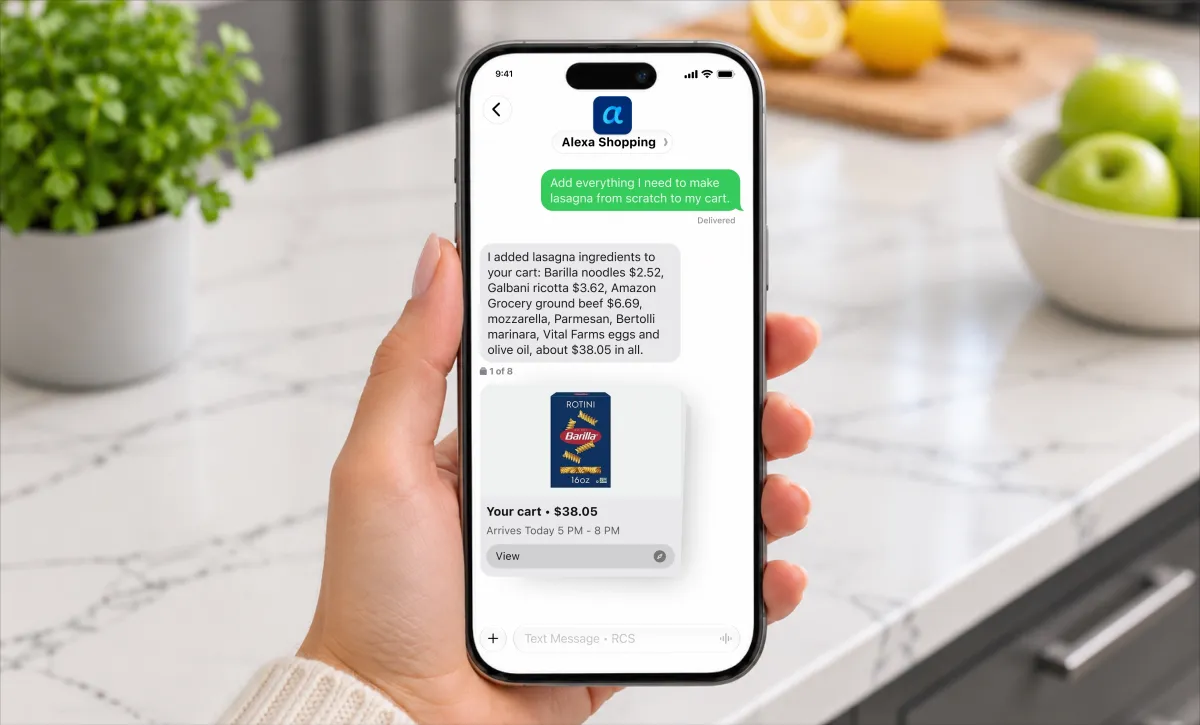
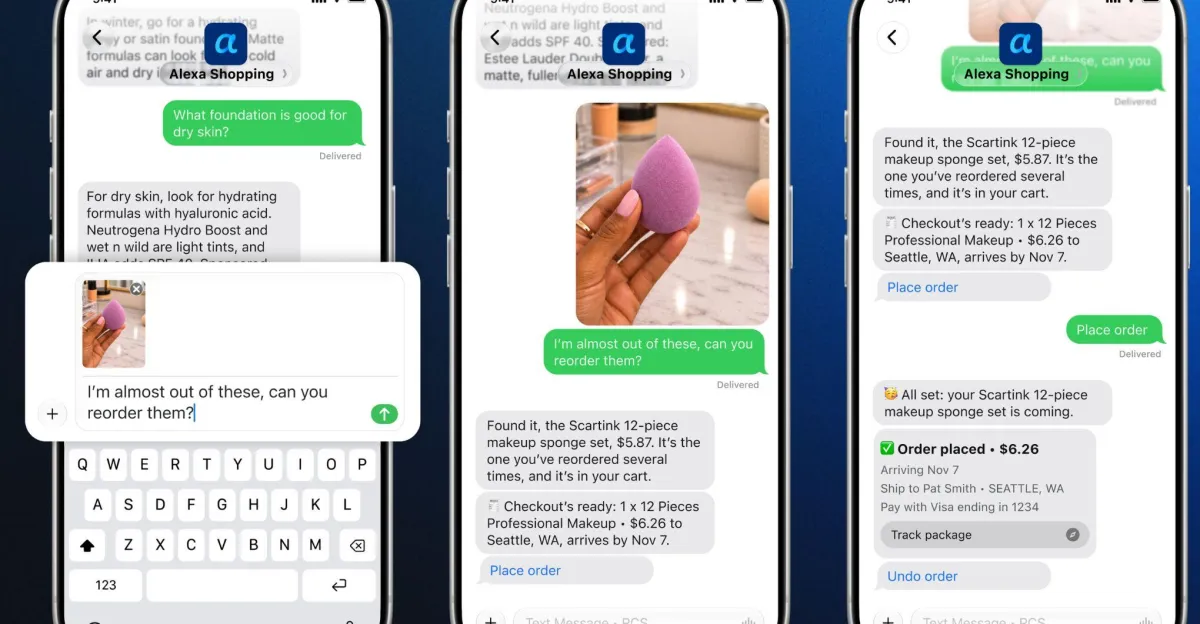
The new feature lets customers send shopping requests by text and have Alexa respond with product matches from Amazon listings, according to The Verge. Users can describe an item in words, send a photo, and ask for recommendations or similar products. The assistant can also compare options and complete purchases.
Amazon says the service is designed for moments when typing is simpler than using the app or website. That matters because shopping often happens in small gaps of attention: on a commute, during a work break, or while trying to remember the exact name of an item already seen elsewhere.
The feature also extends beyond simple product lookup. The Verge reported that it supports grocery orders, gift ideas and searches for similar items, while Amazon has built in personal preference memory so earlier requests can shape future suggestions. Deal and price tracking are part of the package as well, with the assistant able to text users when watched items fall in price.
How the text shopping experience works
Amazon says customers who receive access will be invited by text, and the Alexa contact will appear on phones as “Amazon Alexa.” That setup is meant to make the interaction feel like a normal conversation thread, rather than a separate app workflow.
The company is framing the tool as a shopping agent, not just a search box. Rajiv Mehta, Amazon’s vice president of Conversational Shopping, described it this way:
“Now with Alexa for Shopping, your personal shopping agent is just a text away.”
He added:
“Message it what you need and Alexa goes to work on your behalf”
Those lines capture Amazon’s ambition: make Alexa feel less like a device feature and more like a persistent shopping helper that can remember what a user likes, surface deals and carry out purchases with minimal friction.
Why it matters
This rollout is important because it pushes voice assistant commerce into a lower-friction format that many people already use every day: text messaging. If Amazon can make shopping requests feel as natural as sending a short message, it may reduce the steps between product discovery and purchase.
That has implications for users, Amazon’s marketplace and the wider retail AI race. For shoppers, the promise is convenience: no need to search manually, switch apps or repeat preferences from scratch. For Amazon, text-based shopping could increase repeat buying and impulse purchases by making the assistant easier to use in everyday situations. For the market, it shows how conversational shopping is shifting from novelty to infrastructure.
There is also a competitive angle. The Verge noted that Amazon is joining OpenAI and DoorDash among companies offering text-based chatbot shopping or ordering. OpenAI launched text messaging with its personal AI agent Dot last month, while DoorDash introduced a text-based ordering feature in September. The common thread is clear: companies are trying to make ordering products and services feel more conversational and less app-dependent.
Background: how Amazon got here
Alexa has long been Amazon’s voice assistant, but the company has been steadily expanding it beyond pure voice interaction. Alexa for Shopping is the shopping-focused version of that effort, and Amazon launched the existing experience in May, according to the fact sheet. The new text-message function builds on that earlier work rather than replacing it.
That broader shift reflects the direction of consumer AI interfaces. Instead of requiring people to know exactly what they want and where to find it, these tools aim to infer intent from loose descriptions, images and past behavior. In shopping, that can mean turning “I need the same charger I bought last year” or a quick photo into an actionable result without forcing the user to do the lookup manually.
Amazon’s approach also fits its core business. The company has spent years trying to make shopping more seamless across devices and channels. Adding SMS-style interaction is a logical extension: it removes one more barrier between a customer and an Amazon listing.
By the numbers
Amazon’s rollout is small at first, but the expansion plan is broad. Here is the timeline and scale from the company’s announcement and the reporting around it.
| Item | Detail | Source context |
|---|---|---|
| Initial rollout | Today | A small set of US customers receives invite texts |
| Broader rollout | Millions more customers | Amazon says access will expand in the coming weeks |
| Earlier launch | May | Existing Alexa for Shopping experience launched |
| Comparable OpenAI move | Last month | OpenAI launched text messaging with its personal AI agent Dot |
| Comparable DoorDash move | September | DoorDash introduced a text-based ordering feature |
How does Amazon compare with rivals?
Amazon’s move is part of a wider industry push to make ordering easier through chat-based interfaces. The Verge said the company now sits alongside OpenAI and DoorDash in offering some form of text-based shopping or ordering. The difference is that Amazon is tying the feature directly to its retail ecosystem, which gives it a built-in catalog, pricing engine and order fulfillment system.
That advantage could matter. OpenAI’s Dot and DoorDash’s text ordering show the interface trend, but Amazon owns the shopping environment end to end. If the company can get customers into a conversation with Alexa, it can guide the full journey from discovery to checkout without leaving the Amazon ecosystem.
At the same time, the reporting leaves room for distinction. Amazon’s launch is focused on shopping through Alexa for Shopping, while the Times of India piece referenced in the fact sheet appears to point to Alexa losing a shopping feature, though the provided snippet gives no details. On the available information, The Verge’s reporting is the clearer account of a new text-shopping capability arriving in the US.
What the feature can do
The reported capability set is broad for a messaging-based shopping tool. Based on The Verge’s reporting, users can do the following:
- Text product descriptions to find matching Amazon listings
- Send photos to identify similar products
- Ask for recommendations and compare options
- Shop for groceries and gifts
- Track watched items for price drops
- Complete purchases through the assistant
That list suggests Amazon is trying to cover both planned shopping and the more opportunistic kind. Someone might use it to find a replacement item, but also to react quickly to a deal or finish a half-formed gift search.
Why this could change shopping behavior
The likely shift is not just technological but behavioral. Texting an assistant lowers the effort needed to start a purchase. That matters because many shopping decisions begin with uncertainty: a vague need, a missing product name, or a photo saved from a store shelf or social post. If the assistant can interpret that input well enough, it can shorten the path from intent to order.
Personal preference memory is especially important here. If Alexa can remember repeated requests and use those signals to refine recommendations, the experience becomes more useful over time. That kind of memory can reduce repetitive search behavior and make the assistant feel less generic.
The price-tracking feature may be just as valuable. Text alerts for watched items create a direct channel back to the customer, potentially bringing them into Amazon’s ecosystem at the exact moment they are ready to buy. That is powerful retail behavior, even if the mechanics are simple.
What happens next
The immediate next step is rollout. Amazon says only a small group of US customers is getting the feature today, with millions more set to receive it in the coming weeks. The company has not said which specific customers are included in the first wave.
Several questions remain open:
- Which US customers are included in the first rollout?
- Will access be limited by product category or Prime status?
- Will the feature expand beyond the United States?
- What shopping capability, if any, The Times of India was referring to in its separate coverage?
Those unknowns matter because they will determine how fast Amazon can scale the feature and how much utility it actually offers. A broad rollout could make text shopping a routine part of Alexa use. A narrower one would suggest Amazon is still testing the product before a wider launch.
What is already clear is that Amazon sees messaging as a better entry point for some shopping tasks than voice or app-based navigation. If the rollout performs well, text shopping could become a standard part of Alexa’s identity rather than a side feature.
The bigger picture
Amazon’s launch is one more sign that consumer AI is moving toward practical, transaction-focused uses. The attention may often go to chatbots that answer questions, but some of the most commercially important tools are the ones that help people buy something. That is why this release matters beyond a single feature update.
For Amazon, the opportunity is straightforward: make shopping so easy that a customer barely has to think about the interface. For users, the appeal is speed and convenience. For competitors, the message is that conversational commerce is no longer confined to a voice prompt or a standalone app. It is becoming part of everyday messaging.
As Amazon broadens access in the coming weeks, the real test will be whether customers find the experience helpful enough to use repeatedly. If they do, text shopping could become one of the clearest examples yet of how AI is changing the mechanics of retail without changing the basic goal: getting the right product in front of the right person at the right time.
Frequently asked questions
What is Amazon's new text shopping feature for Alexa?
Amazon's new text shopping feature lets customers message Alexa for Shopping instead of using voice, the app or the website. Users can send product descriptions or photos, get recommendations, compare options and complete purchases through text.
Who can use Alexa for Shopping text messaging right now?
A small group of US customers can use it first, based on invite texts from Amazon. The company says millions more US customers will gain access in the coming weeks, but it has not said which specific users are included in the initial rollout.
What can Alexa for Shopping do by text?
Alexa for Shopping can search Amazon listings from text descriptions or photos, recommend products, compare choices, support grocery orders and gift ideas, track prices and, in some cases, complete purchases.
Why is Amazon adding text shopping to Alexa?
Amazon says text shopping is meant for moments when typing is easier than using the app or website. The broader goal is to make Alexa a more convenient shopping agent and reduce friction between a user's intent and a purchase.