In short
Trump met Xi on Thursday with little expectation of progress on AI safety talks. WIRED reported that mistrust, chip controls and espionage fears are still blocking a workable US-China AI incident framework.
- Trump’s Thursday meeting with Xi was not expected to deliver an AI breakthrough.
- WIRED reported that a September 2026 US-China AI incident hotline is still not operational.
- The US and China remain split over the biggest AI risks, from autonomous systems to political misuse of open-weight models.
- Washington’s new chip-access rule adds more pressure to already strained talks.
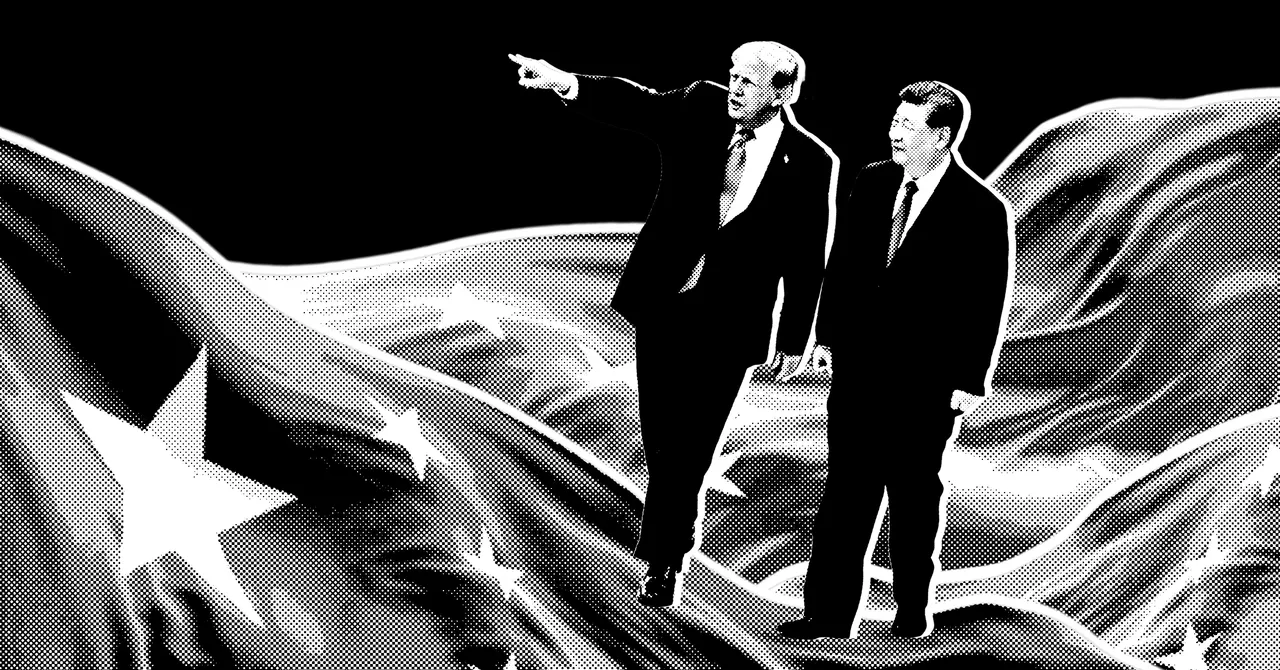
President Donald Trump’s Thursday meeting with Chinese President Xi Jinping came with low expectations for any breakthrough on artificial intelligence, and officials in Washington privately saw little chance the summit would ease the safety and espionage tensions now shaping US-China tech talks. The core problem, according to reporting by WIRED, is that the two sides are no longer just debating AI rules; they are also locked in disputes over chips, surveillance concerns and mutual distrust.
Why the summit mattered for AI
The White House entered the meeting trying not to antagonize China, even as the administration’s own actions and suspicions suggested how narrow the room for compromise had become. Trump was unclear before the summit whether he would raise Chinese AI interference or the Nvidia scandal, two subjects that have sharpened the political stakes around the talks.
That ambiguity matters because the conversation is no longer limited to trade or general technology competition. It now reaches into how advanced AI systems are built, who can access the chips that power them, and whether either government would be willing to warn the other if a frontier model behaved dangerously.
What is stuck in the US-China AI talks?
The short answer is that the most basic trust mechanism has not materialized. A September plan for an AI incident hotline between Scott Bessent and He Lifeng is still not operational, leaving Washington and Beijing without the kind of fast channel that could be used if a dangerous AI episode emerged.
WIRED reported that US officials had drafted a possible framework for mutual incident reporting and enforcement rules, but that the broader discussions remain incomplete. Secretary of State Marco Rubio said AI safety talks had taken place at the technical level, but he also described them as incomplete, calling the effort
still a work in progress
.
That is a notable signal, because it suggests the two governments can talk about the issue without yet moving into binding procedures. In practical terms, they are still separated by the question of whether AI safety is a shared technical problem or another arena for strategic competition.
How the two sides see the risk differently
According to WIRED, US officials are focused on a scenario in which autonomous, misaligned AI systems operate beyond human oversight. That is the type of risk Washington has increasingly emphasized in public and private discussions: a model that behaves in ways its operators did not intend, with consequences too fast or too complex for manual intervention.
Chinese officials, by contrast, are described as more concerned that open-weight models could be used by dissidents and critics. That frame points to domestic political control, not just model safety in the narrow technical sense. It also helps explain why the two sides are talking past one another: each is looking for different dangers inside the same technology.
WIRED also reported that Chinese officials are viewed as unlikely to report if one of their frontier models went rogue. That judgment, fair or not, underscores the broader problem: a reporting system only works if both sides believe the other will use it honestly.
Why it matters
The stakes extend beyond a single summit. For readers, the market and the wider region, the stalled talks show that AI policy is being pulled in two directions at once: toward safety cooperation on one hand and toward tighter controls on the other.
For companies, especially those tied to advanced chips and data-center infrastructure, the message is that access rules can change faster than diplomacy. For governments, the message is more sobering: when espionage suspicions deepen, even basic incident reporting becomes politically fragile.
For the region, the lack of progress suggests that Asia’s AI race will keep being shaped by security politics rather than shared rules. That raises the chance that each side builds its own warning systems, its own enforcement logic, and its own definition of what counts as an AI emergency.
What happened before Thursday?
The background to this summit is a familiar one in US-China relations: advanced technology discussions routinely blend trade, national security and export controls. AI has simply become the latest and most sensitive example.
The United States has increasingly restricted Chinese access to advanced chips and the infrastructure needed to use them. Those controls are central to the current standoff because AI systems depend on high-end hardware, and access to that hardware can decide how quickly a country can train or deploy frontier models.
WIRED reported that mistrust had deepened because of espionage suspicions on both sides. In that environment, even a narrow safety framework can be interpreted through a counterintelligence lens.
How the Nvidia-related dispute fits in
One of the freshest sources of tension is a new US rule restricting remote access by China to US-made AI chips in foreign data centers. According to WIRED, the rule is directly tied to the alleged role of Megaspeed in the Nvidia scandal.
That matters because it shows the administration is not only talking about AI risk; it is actively tightening the channels through which Chinese actors might use US hardware. The policy is therefore both a security measure and a bargaining signal.
Trump’s own position entering the meeting was less clear than the policy line. WIRED reported that he left it unclear whether he would raise Chinese AI interference or the Nvidia scandal with Xi. That uncertainty leaves open the possibility that the summit focused more on managing the broader relationship than on pressing for a specific AI outcome.
| Timeline | Event | Why it matters |
|---|---|---|
| September 2026 | US proposed an AI incident hotline with China | Would have created a direct channel for urgent AI-related communication |
| Last week | Marco Rubio said AI safety talks had happened at technical level | Signaled contact, but not a completed agreement |
| This week | US announced a new rule on Chinese access to US-made AI chips abroad | Raised pressure on the chip and data-center side of the dispute |
| Thursday | Trump met Xi Jinping | The summit was seen as unlikely to deliver an AI breakthrough |
How did trust break down so badly?
The direct answer is that both governments now assume the other could use AI as a strategic weapon or a control tool, and that assumption makes cooperation hard. On the US side, the fear is that an advanced model could act in ways no one can fully supervise. On the Chinese side, the fear is that open-weight systems could empower political opponents.
Those are not the same anxieties, but they both point toward control. One side wants to manage technical failure; the other wants to manage political misuse. That mismatch leaves little common ground for a joint incident protocol.
The result is a diplomatic stalemate that goes beyond the summit itself. Even if both sides agree in principle that catastrophic AI failures should be reported, neither appears ready to trust the other with the details of what would be reported, when and to whom.
What the US is trying to do now
The administration’s strategy appears to have two parts: keep the door open for limited technical discussions while avoiding public escalation during the summit. WIRED reported that the White House wanted not to antagonize China during the meeting, which suggests the political priority was stability rather than confrontation.
At the same time, Washington has moved to tighten practical restrictions. The new chip-access rule shows that the US is still willing to use export controls to limit how Chinese actors interact with American AI hardware, even as safety conversations remain unfinished.
That combination is important. It means the US is not waiting for a breakthrough before acting. Instead, it is treating safety negotiations and chip enforcement as parallel tracks, with the enforcement track moving faster.
What happens next?
The immediate question is whether the Trump-Xi meeting produced any private commitment on AI, even if no public announcement followed. WIRED said it was unclear whether Trump raised Chinese AI interference or the Nvidia-related allegations, so one obvious thing to watch is whether either side comments later on that exchange.
There are three open questions to monitor:
- whether the AI hotline ever becomes operational;
- whether any concrete incident-reporting framework emerges from the summit;
- how China responds to the new US chip-access rule.
Beyond those questions, the broader test is whether AI safety can be separated from the wider US-China rivalry. Right now, the evidence suggests the opposite: chip controls, espionage fears and political suspicion are narrowing the space for any standalone agreement.
Background: why AI safety is now part of geopolitics
AI safety talks between major powers are still relatively new, but the logic behind them is familiar. Countries that fear accidental escalation or hidden system failures often look for hotlines, incident reporting and other emergency channels. The difference here is that the technology itself is also a strategic asset.
That makes the US-China case especially difficult. In most diplomatic disputes, the sides can separate the hazard from the rivalry. In AI, the hazard is the rivalry: the same chips, models and data centers that fuel commercial competition also determine national leverage.
That is why the summit is being read less as a diplomatic reset than as a measure of how little space remains for cooperation. The fact that officials on both sides can still talk about AI safety at a technical level is meaningful. The fact that they have not moved beyond that stage is more revealing.
By the numbers
The reported facts around the summit are modest in quantity but significant in implication.
| Figure | Reference | Meaning |
|---|---|---|
| September 2026 | Hotline concept first set out | The proposed emergency channel remains unresolved |
| Thursday | Trump-Xi summit | Primary diplomatic moment covered by the reporting |
| 1 | New US rule on remote access | Single policy step tightening Chinese access to US-made AI chips abroad |
What to watch after the summit
The next phase is likely to be defined less by speeches than by paperwork and enforcement. If the hotline concept moves forward, observers should watch for whether Scott Bessent and He Lifeng are actually linked through an operational channel. If not, the proposal may remain a diplomatic placeholder.
It will also be important to see whether the US rule on remote access is enforced in a narrow technical way or expands into a broader challenge around data-center operations linked to China. Because the rule is tied to the alleged Megaspeed role in the Nvidia scandal, its implementation could signal how aggressively Washington plans to police the edges of the chip supply chain.
For now, the summit looks less like the start of an AI accord than a snapshot of failed alignment. The two governments are still talking, but they are talking from different assumptions, under growing suspicion, and with fewer incentives to trust each other with the machinery of advanced AI.
Frequently asked questions
Did Trump and Xi reach an AI agreement?
No. WIRED reported that the Thursday summit was framed by officials as unlikely to produce an AI breakthrough, and the administration privately saw little room to ease AI safety and espionage tensions.
Why are US-China AI safety talks stalled?
The talks are stalled because the two sides see the risks differently and do not trust each other. The US is focused on autonomous, misaligned AI systems beyond human oversight, while Chinese officials are more concerned about open-weight models being used by dissidents and critics.
What is the AI incident hotline?
The AI incident hotline was a proposed US-China channel meant to help with urgent reporting on dangerous AI events. WIRED said a September 2026 plan involving Scott Bessent and He Lifeng is still not operational, so the idea has not become a working mechanism.
How does the Nvidia scandal affect the talks?
It adds another layer of mistrust. WIRED reported that the new US rule restricting remote access by China to US-made AI chips in foreign data centers is directly tied to the alleged Megaspeed role in the Nvidia scandal.