Updated October 2, 2026 6:25 pm
In short
Blackstone’s Jas Khaira will speak at Disrupt 2026 about how investors judge which AI companies can turn early momentum into durable businesses, as Blackstone’s AI bets and the event’s scale highlight how capital-intensive the sector has become.
- Jas Khaira will speak at TechCrunch Disrupt 2026 on building durable AI companies.
- Blackstone’s recent AI investments show how capital needs are rising across the sector.
- The session will focus on how founders should think about financing, scale and staying power.
- Disrupt 2026 runs Oct. 13-15 at Moscone West in San Francisco with 200+ sessions.
Update — October 2, 2026 6:25 pm
TechCrunch’s updated post adds a few new details about Khaira’s background. It says he joined Blackstone in 2004, now leads Blackstone N1, Blackstone Growth and Tactical Opportunities Americas, and serves on several investment committees.
The source also spells out that Blackstone N1 is the firm’s platform for growth, hybrid and perpetual private equity investing across AI and other next-generation high-growth companies.
TechCrunch additionally notes the scale of Disrupt 2026 itself: more than 10,000 attendees are expected, alongside 250+ speakers, 300+ startups, and networking and matchmaking opportunities during the Oct. 13-15 event in San Francisco.
Blackstone global head of N1 Jas Khaira will appear at TechCrunch Disrupt 2026 in San Francisco on Oct. 13-15 to explain what separates durable AI companies from those riding temporary hype. His session matters because the AI boom is forcing founders to make expensive infrastructure and financing decisions earlier than previous startup waves.
At a moment when compute, data centers, talent and enterprise sales all demand serious upfront spending, Khaira’s perspective offers a rare look at how one of the world’s largest alternative asset managers evaluates whether an AI startup can become a long-term category leader.
Why Blackstone’s view of AI funding matters now
AI startups are growing faster than many past technology companies, but that speed has changed the economics of building a business. Founders are no longer just financing software engineering and customer acquisition; they are also making bets on inference capacity, data pipelines, cloud contracts and, in some cases, physical infrastructure.
That shift is reshaping how investors think about scale. In the AI era, a company can gain traction quickly and still struggle to translate that momentum into a stable business model. The result is a tougher question for founders: how much capital is enough, and when does raising more stop being an advantage?
Khaira, who leads Blackstone N1 and Blackstone Growth and oversees tactical opportunities across the Americas, will address those questions on Disrupt’s Builders Stage in a session titled “Building the Next Generation of AI Giants.”
What Khaira will discuss on the Builders Stage
He will focus on how investors decide which AI companies deserve capital, how founders should think about financing growth, and what traits point to staying power rather than short-lived momentum.
The discussion comes as many founders are learning that strong early demand is only one part of the equation. A company can attract users, press attention and venture interest while still lacking the infrastructure or business discipline needed to survive a more competitive market.
Khaira’s appearance is designed to give founders a practical investor’s view of what Blackstone looks for when backing companies that could define new categories in AI.
Blackstone’s investment lens is likely to center on the question every AI founder now faces: whether the company’s early traction can be supported by economics, infrastructure and execution strong enough to last.
How AI has changed the capital equation
AI has made startup financing more complex because the cost of growth is tied to infrastructure as well as product development.
In earlier software eras, scaling often meant hiring engineers, adding cloud spend and expanding sales. AI companies, by contrast, may need substantial compute commitments and custom infrastructure far earlier in their life cycles. That can push funding needs well beyond what many founders initially expect.
Blackstone’s recent activity shows how large some of those bets have become. The firm and its co-investors agreed to commit up to $600 million in primary equity to Neysa, an Indian AI infrastructure company, which also planned to raise another $600 million in debt financing. The deal illustrates how AI infrastructure is drawing capital on a scale once associated with much larger and more mature technology businesses.
Blackstone has also been active on the implementation side of the AI market. In July, Anthropic launched Ode with Anthropic, an AI implementation company backed by a $1.5 billion joint venture involving Blackstone, Hellman & Friedman, Goldman Sachs and others. The move points to a broader thesis: the AI economy is not only about model development, but also about the layers of services, infrastructure and deployment that sit around it.
Why this matters for founders
AI entrepreneurs often face a dilemma that is more capital intensive than it first appears. The same growth that attracts investors can also force founders to raise larger rounds sooner, potentially on less favorable terms, before they know whether their product will become indispensable.
For many startups, the challenge is not whether capital is available. It is whether that capital is being deployed in a way that builds enduring value rather than simply extending a growth sprint.
| Event or Investment | What Happened | Why It Matters |
|---|---|---|
| TechCrunch Disrupt 2026 | Jas Khaira will speak on the Builders Stage in San Francisco on Oct. 13-15 | Offers founders an investor’s framework for scaling AI companies |
| Neysa funding | Blackstone and co-investors committed up to $600 million in primary equity | Shows the scale of capital needed for AI infrastructure |
| Neysa debt plan | The company planned an additional $600 million in debt financing | Highlights how leverage is becoming part of AI expansion |
| Ode with Anthropic | A $1.5 billion joint venture backed by Blackstone and other firms | Demonstrates investor interest in AI implementation businesses |
What separates momentum from staying power?
Durable AI companies are the ones that can turn early demand into repeatable economics, reliable infrastructure and a long-term competitive position.
That distinction is crucial because momentum alone can be misleading. A startup may be growing quickly due to novelty, a favorable market or temporary customer interest. But if the business cannot support that growth with efficient operations, a clear product moat and a disciplined capital strategy, the company may struggle once the market normalizes.
Khaira is expected to address exactly that tension: the difference between a company that looks impressive in its earliest stages and one that can keep compounding over years.
Founders attending the session are likely to hear that fundraising should be treated as a strategic tool, not just a victory lap. More money can help a startup build faster, hire better and expand more aggressively, but it can also lock the company into expectations that are hard to meet if the underlying economics are weak.
How founders can think about scaling capital
Founders should treat financing as a plan for resilience, not just expansion.
That means understanding how much capital the company truly needs to support its product roadmap, customer adoption, model deployment and infrastructure obligations. It also means being honest about whether growth is driven by genuine product-market fit or by temporary enthusiasm in a hot sector.
- Match funding strategy to the real cost of AI operations.
- Separate temporary user growth from repeatable revenue.
- Build infrastructure assumptions into the fundraising plan early.
- Consider whether the business can scale without eroding margins.
- Use capital to strengthen the moat, not only to accelerate velocity.
That framework helps explain why large investors are paying close attention to the AI stack. The market is no longer just rewarding model innovation; it is also rewarding companies that can industrialize AI deployment at scale.
Who is Jas Khaira?
Jas Khaira is a senior Blackstone executive who has spent more than two decades at the firm and now leads several growth-oriented investment platforms.
Khaira joined Blackstone in 2004 and now serves as global head of Blackstone N1 and Blackstone Growth, as well as head of tactical opportunities in the Americas. He sits on multiple investment committees and founded Blackstone N1, the firm’s platform for growth, hybrid and perpetual private equity investments focused on AI and other next-generation high-growth companies.
His background is relevant because it combines experience in large-scale capital allocation with a focus on newer technology categories. That makes him an especially useful guide for founders trying to understand how sophisticated investors view an AI company beyond its product demo or headline growth numbers.
Khaira’s role at Blackstone places him at the intersection of growth equity, long-term ownership structures and the rapidly changing AI ecosystem.
How TechCrunch Disrupt is framing the AI debate
TechCrunch Disrupt 2026 is using the session to spotlight one of the biggest unanswered questions in AI: how to build companies that last.
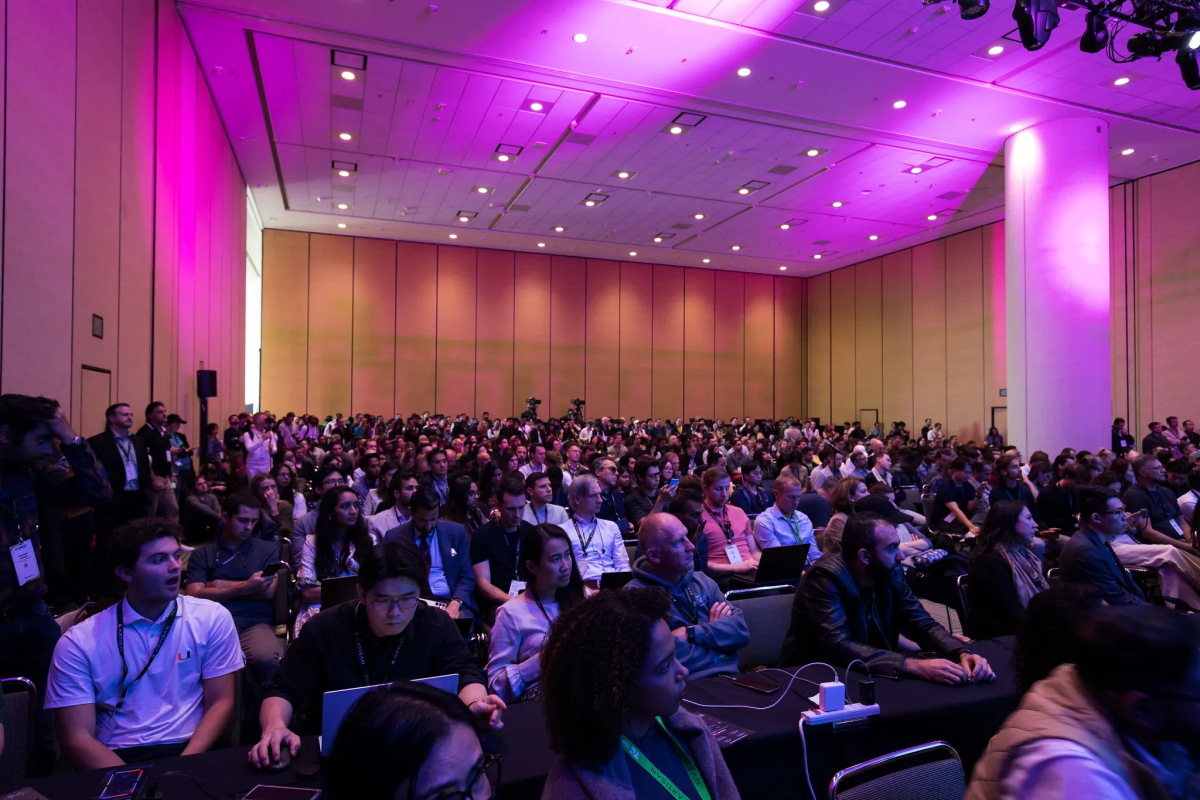
The conference runs Oct. 13-15 at Moscone West in San Francisco and will feature more than 200 sessions across six industry stages, along with roundtables and breakout discussions. Organizers say more than 10,000 founders, investors, operators and tech leaders are expected to attend, alongside 250-plus speakers and 300-plus exhibiting startups.
The event is not only about presentations. TechCrunch says its format also emphasizes matchmaking, dealmaking and spontaneous networking, giving attendees a chance to connect with investors, customers and potential partners.
For AI founders in particular, that environment reflects the reality of the market. Building a company now often requires more than a great model or product. It also requires access to capital, strategic partners and operational insight about how to keep spending aligned with long-term value creation.
What attendees can expect
Disrupt’s AI-focused conversations are likely to explore the practical side of the boom, including where money is going, which business models are drawing interest and how the sector is separating enduring companies from opportunistic plays.
- Investor perspectives on AI infrastructure and scale.
- Advice on financing growth through different market phases.
- Discussion of the traits that distinguish durable companies.
- Opportunities for founders to network with capital providers and partners.
TechCrunch is also promoting ticket discounts for attendees who bring a second pass, which is designed to encourage founders and collaborators to attend together and make more of the conference’s networking opportunities.
Why the Blackstone perspective is especially important
Blackstone’s size and reach make its AI investments a useful signal about where the market may be headed next.
As one of the world’s largest alternative asset managers, Blackstone is not making small experimental bets. When a firm of that scale allocates capital to AI infrastructure or implementation, it often suggests the market has moved beyond speculative interest and into a phase where the economics are becoming serious enough for large institutional money.
That does not mean every AI startup needs to follow the same path or raise the same kind of funding. But it does mean founders must think carefully about whether they are building a software company, an infrastructure company or a hybrid business requiring a much more complex financial structure.
For many startups, that strategic clarity will be as important as technical innovation. The market may be moving quickly, but the companies that endure are likely to be the ones that combine ambition with capital discipline.
What this means for the next generation of AI startups
The next wave of AI winners will likely be defined not only by model quality, but by business durability.
That includes the ability to fund compute efficiently, design products that customers keep using, and build operating models that remain resilient if growth slows or competition intensifies. It also means being prepared to answer tougher investor questions earlier in the company’s life cycle.
Khaira’s session comes at a time when AI founders are being asked to show they can do more than launch quickly. They need to prove they can scale intelligently, allocate capital wisely and build businesses that remain relevant after the initial excitement fades.
For attendees at Disrupt, that makes the session a timely opportunity to hear how a major institutional investor assesses the gap between hype and permanence in AI.
In short: Blackstone’s Jas Khaira will use TechCrunch Disrupt 2026 to explain how investors separate fast-growing AI startups from companies built to last, at a time when the sector’s capital needs are rising fast.
Frequently asked questions
Who is Jas Khaira at Blackstone?
Jas Khaira is a senior Blackstone executive and global head of Blackstone N1 and Blackstone Growth. He also leads tactical opportunities in the Americas and has been at the firm since 2004, giving him a long view on growth investing and AI-era capital allocation.
What will Jas Khaira talk about at TechCrunch Disrupt 2026?
He will discuss how investors evaluate AI companies, what founders should think about when raising capital, and how to tell the difference between early momentum and a business that can last. The session is titled “Building the Next Generation of AI Giants.”
Why is AI startup funding more expensive now?
AI startup funding is more expensive because companies often need to pay for compute, data centers, cloud infrastructure and specialized talent much earlier than software startups traditionally did. Those costs can force larger rounds sooner and make capital strategy a core part of the business model.
When and where is TechCrunch Disrupt 2026?
TechCrunch Disrupt 2026 takes place Oct. 13-15 at Moscone West in San Francisco. The event will include more than 200 sessions, 250-plus speakers and 300-plus exhibiting startups, according to the organizer.
Why does Blackstone’s AI investing matter to founders?
Blackstone’s involvement matters because it signals where large institutional capital sees opportunity in AI. Its investments in infrastructure and implementation businesses suggest that durable AI companies may need stronger economics, more disciplined financing and a clearer long-term strategy than many early-stage startups assume.