Updated September 12, 2026 9:54 pm
In short
Garry Tan is calling for U.S. open-weight AI labs to legally distill frontier models from American providers, while opposing deceptive access methods and warning against a future dominated by a single AI company.
- Tan wants American open-weight labs to be able to distill frontier models through legitimate access.
- Anthropic says some Chinese labs are using deceptive methods to extract model knowledge.
- The dispute centers on competition, model ownership, and the future of open AI ecosystems.
- Tan argues the biggest AI risk is one company monopolizing frontier intelligence.
- Regulators may soon have to decide whether to police distillation or preserve more openness.
Update — September 12, 2026 9:54 pm
Tan has now framed his view more explicitly as a call for U.S. open-weight labs to use the same kind of distillation techniques on American frontier models, so the domestic ecosystem is not left relying on Chinese alternatives.
He also spelled out that he does not want American labs using stolen credentials or other deceptive methods. In his telling, the practice should stay on the right side of the door: allowed access, but not abuse.
Tan further argued that closed-model providers should not be able to fully control what customers do with the information returned through API calls, and he linked that to a broader case for treating access to broadly trained intelligence more like a public good.
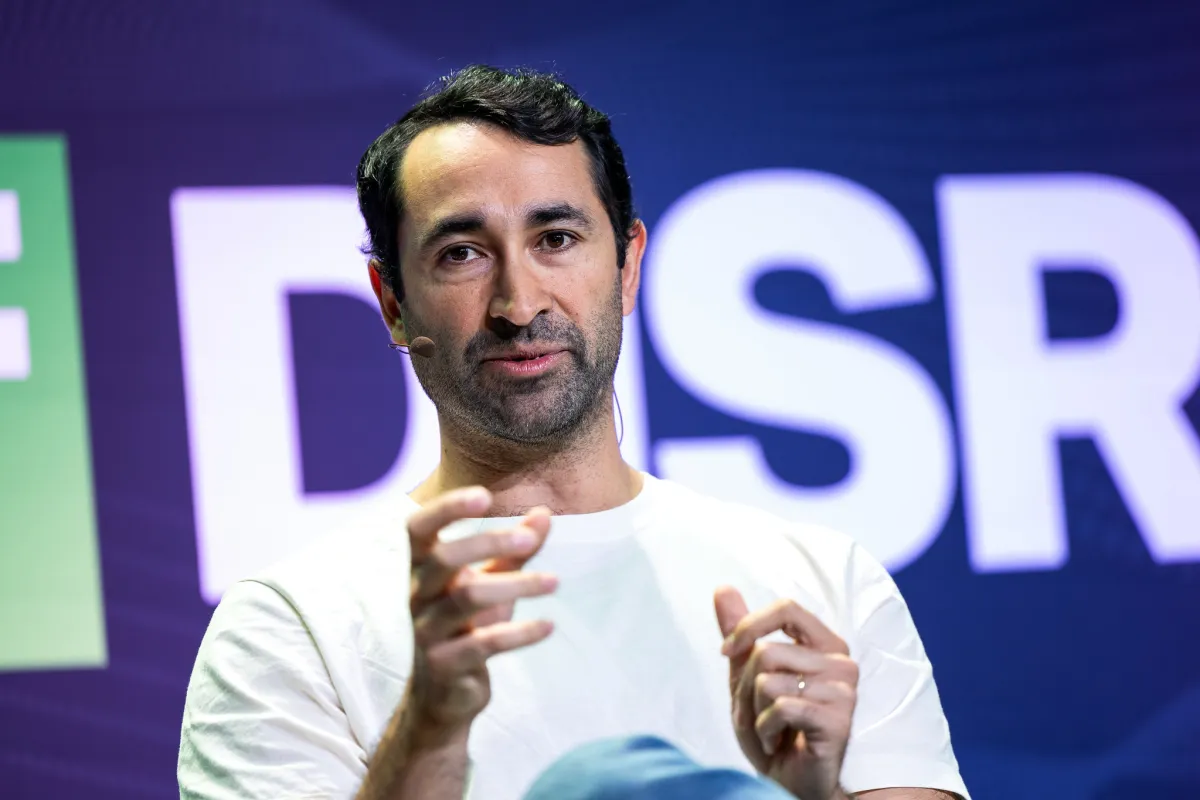
Y Combinator chief Garry Tan says U.S. open-weight AI labs should be allowed to distill frontier models in the open, arguing that American companies need more competitive alternatives to Chinese AI systems. His comments, made in interviews this week, put him at odds with Anthropic CEO Dario Amodei, who has warned regulators about unauthorized model distillation by Chinese labs.
Tan’s position matters because the debate is no longer just about model quality. It is now about who gets to reuse frontier AI capabilities, how much control model makers should have over downstream use, and whether the United States can sustain a broad ecosystem of open-weight systems without ceding ground to rivals abroad.
What Garry Tan is arguing
Tan is not calling for theft or credential abuse. Instead, he wants American open-weight labs to be free to learn from frontier models through legitimate access, the same way many AI systems are trained by probing other models with large numbers of prompts and carefully analyzing their responses.
In Tan’s view, regulators should not rush to clamp down on the practice so aggressively that only the largest proprietary labs retain the ability to build and improve the most advanced systems. He says the U.S. should allow a kind of domestic distillation environment that helps smaller labs produce competitive, openly available models.
Tan told CNBC that he would “do nothing” and floated the idea that there could be an American distillation regime. He later clarified to TechCrunch that his preferred outcome is for U.S. labs to operate through legitimate access rather than covert methods.
That stance is notable because it comes from the head of one of Silicon Valley’s best-known startup accelerators, an institution that has helped shape the direction of the tech industry for years. When the leader of Y Combinator argues that more model copying, not less, may be necessary, the policy discussion shifts from abstract AI ethics to practical market structure.
Why the distillation fight matters now
The distillation debate has become sharper as major AI labs face off over what counts as fair competition versus unauthorized extraction of model knowledge. Distillation is widely used in machine learning to transfer capabilities from a larger, more expensive model into a smaller one. In legitimate settings, it can improve efficiency, reduce inference costs, and make AI more accessible to developers and businesses.
But the same technique can also be used in ways that frontier labs consider abusive, especially if a competitor hides its identity, ignores platform rules, or uses fraudulent access to collect outputs at scale. Anthropic has argued that some Chinese labs are doing exactly that, describing the tactic in its latest report as an “illicit” attack on model makers.
Anthropic CEO Dario Amodei has previously urged U.S. regulators to intervene. Tan, by contrast, appears to believe that overregulation could freeze the market in place and make closed, proprietary systems even more dominant.
What is model distillation?
Model distillation is a training method in which one AI model is used as a teacher and another as a student. The student model studies the teacher’s outputs in order to approximate its behavior, often at lower cost and with fewer parameters.
In simple terms, distillation can help a smaller model capture some of the reasoning patterns, stylistic tendencies, or task performance of a more powerful one. It is a standard technique in AI research and product development. The dispute is not about whether the method exists, but about who may use it and under what conditions.
- Legitimate use: an AI lab uses permitted access to study another model’s outputs.
- Abusive use: a lab disguises its identity, violates terms, or uses stolen credentials to scrape outputs at scale.
- Policy question: whether frontier labs should be able to stop all downstream learning from their systems.
How Tan frames the issue
Tan’s broader argument has two parts. First, he says it is too restrictive for closed model providers to dictate what users can do with the information those models reveal through API calls. Second, he argues that frontier labs were themselves built by training on massive quantities of publicly accessible human knowledge, including copyrighted materials that were often not individually licensed.
His point is not that model developers should ignore ownership entirely. Rather, he believes the AI industry should be more honest about the public foundations of today’s systems and should avoid creating a world where intelligence is locked behind a small number of proprietary gatekeepers.
In his explanation to TechCrunch, Tan said that access to intelligence trained on broad public data should function more like a public good than something constrained by restrictive terms of service.
That line of thinking reflects a familiar Silicon Valley tension: open ecosystems can spur competition, but they can also make it easier for rivals to copy valuable work. Tan appears to believe the benefits of openness outweigh the risks, especially if the alternative is a market dominated by a few giant AI companies.
What Anthropic says about illicit distillation
Anthropic’s warning is rooted in a different fear: that state-backed or foreign competitors may use deceptive methods to siphon off the hard-won intelligence embedded in frontier systems. In its latest report, the company said Chinese AI labs are allegedly hiding their identities to obtain model outputs and relying on fraud or stolen credentials to do so.
That claim has made distillation a geopolitical issue as well as a technical one. For frontier labs, unauthorized copying is not simply a terms-of-service problem. It can also raise concerns about national competitiveness, security, and the sustainability of large-scale AI investment.
Amodei has been among the most vocal executives pushing for stronger guardrails. His position reflects a broader industry view that model developers need more protection if they are going to keep spending billions of dollars on compute, talent, and data.
Tan’s response is effectively a rebuttal: if the only way to preserve a healthy AI ecosystem is to let one or two companies monopolize frontier capability, then the cure may be worse than the disease.
Why Tan says a single AI monopoly would be dangerous
Tan’s clearest warning is that the worst-case scenario for AI is not overuse by consumers or too many startup experiments. It is a world in which a single firm controls the best models, the best researchers, and the most capital, leaving the rest of the market dependent on one dominant provider.
He described that outcome as the true doomsday scenario: one company with a runaway advantage and little meaningful competition. In his view, that would be bad for innovation, bad for customers, and bad for the broader economy.
This argument resonates well beyond the AI sector. In many technology markets, concentration can lead to higher costs, weaker interoperability, and fewer opportunities for startups. Tan appears to believe the same dynamic could play out in advanced AI unless open-weight models are allowed to catch up.
Open-weight versus closed-weight systems
Tan’s comments also touch a deeper debate in AI: whether the future should be built around open-weight models that others can adapt, or closed-weight systems controlled tightly by a single vendor.
Open-weight systems can be downloaded, modified, and deployed by outside developers. Closed systems, by contrast, are usually available only through an API or a managed product layer. Each approach has advantages, but they serve very different market structures.
- Open-weight models promote flexibility, customization, and wider access.
- Closed-weight models can be easier to monetize and may be more tightly managed for safety.
- Tan’s view: the U.S. needs both, rather than a market where only closed frontier labs dominate.
How the U.S. and China are shaping the AI race
The distillation controversy sits inside a larger competition between American and Chinese AI ecosystems. U.S. labs have led many of the most visible breakthroughs in frontier AI, but China’s model makers have been highly aggressive in deploying and iterating on their own systems, especially in open-weight formats.
For American policymakers and entrepreneurs, that creates a strategic dilemma. Protecting frontier labs too aggressively could slow downstream innovation and make open systems less competitive. But leaving model reuse entirely unregulated could make it easier for foreign actors to benefit from American breakthroughs without paying the costs of original research.
Tan’s solution is essentially to double down on domestic openness. If distillation is happening anyway, he argues, American labs should be the ones doing it through lawful, transparent channels so that U.S.-based open-weight models remain competitive.
| Issue | Tan’s view | Anthropic’s view |
|---|---|---|
| Distillation | Should be allowed for U.S. labs through legitimate access | Should be constrained when used without permission or through deception |
| Risk | Too much restriction could entrench a monopoly | Unauthorized copying weakens frontier innovation and security |
| Goal | A diverse American open-weight ecosystem | Stronger protections for model makers |
| Policy posture | Let the market and government normalize broader access | Regulate or deter illicit extraction |
What this means for startups and the broader AI market
Tan’s argument carries particular weight in startup circles because Y Combinator’s portfolio companies rely on affordable, adaptable AI infrastructure. If only a small number of firms can supply cutting-edge intelligence, startups may face higher costs and less room to differentiate.
Open-weight models can lower the barrier to entry for builders who want to fine-tune systems for specific industries, languages, or workflows. That is especially important in sectors where customization matters more than having the absolute latest frontier benchmark score.
At the same time, if every new model can rapidly absorb and imitate the capabilities of the best proprietary systems, the economics of frontier research could become harder to justify. That is the core tension at the heart of the current debate.
Why startups care
Startups usually benefit when the underlying platform market is broad rather than tightly controlled. Tan’s view suggests that the next generation of AI companies will thrive if they can access powerful models without being permanently locked into a few closed vendors.
That may be one reason his comments landed so strongly. He is not simply defending an academic principle. He is describing a market structure that could determine where innovation happens and who gets paid for it.
How regulators could respond
Regulators now face a difficult balancing act. If they step in too aggressively, they could inadvertently strengthen incumbent AI providers by making open-weight competition harder. If they stay hands-off, they may permit practices that frontier labs and policymakers view as exploitative or even dangerous.
One possible path is to distinguish clearly between illicit extraction and lawful model comparison. That would mean targeting fraud, credential theft, impersonation, or other deceptive behavior while allowing transparent research, benchmarking, and permitted distillation.
Another option is to focus on disclosure and licensing rather than outright bans. In that model, labs might retain some control over commercial use, but with clearer rules for interoperability, access, and downstream development.
Tan’s comments suggest that the current framework may be too tilted toward restriction, especially if it gives frontier labs broad power to decide how the knowledge their models reveal can be used.
How this debate could shape the next phase of AI
The real significance of Tan’s intervention is that it broadens the argument over AI safety into an argument over AI market structure. The central question is no longer only whether model copying can be abused. It is whether a healthy U.S. AI ecosystem requires more copying, more openness, and more competition than some frontier labs are comfortable with.
If Tan’s view gains traction, policymakers may become more skeptical of calls to criminalize or broadly restrict distillation. If Anthropic’s interpretation prevails, the industry could move toward tighter controls on API use, model access, and downstream imitation.
Either outcome will shape not just the future of large language models, but also the startup ecosystem that depends on them.
Timeline of the debate
The dispute has escalated quickly as AI labs and regulators wrestle with the implications of model reuse. The following timeline summarizes the recent turning points.
| Date | Development | Why it matters |
|---|---|---|
| Earlier this year | Anthropic and other labs raised concerns about model copying and unauthorized access | Distillation became a security and competitive issue |
| This week | Anthropic released a second report accusing Chinese labs of “illicit distillation attacks” | The company pressed for stronger caution around model reuse |
| This week | Garry Tan told CNBC he would largely leave distillation alone | He signaled resistance to tighter restrictions |
| This week | Tan expanded his view to TechCrunch, arguing for a U.S. open-weight distillation path | The debate turned into a question of American competitiveness |
The bottom line
Tan is effectively arguing that the United States should not try to win the AI race by locking down its best systems so tightly that only a handful of companies can learn from them. He wants American open-weight labs to have room to compete, even if that means allowing more legal distillation of frontier models.
Anthropic and its allies see the issue differently, warning that unauthorized copying and deceptive access could weaken the economics and security of AI research. The result is a high-stakes policy fight over openness, competition, and control—one that is likely to intensify as frontier models become more powerful and more valuable.
For now, Tan’s message is clear: if distillation is going to happen, U.S. labs should not be the ones left on the outside.
Frequently asked questions
What is AI distillation?
AI distillation is a training method where a smaller model learns from the outputs of a larger model, often to gain similar capabilities at lower cost. It is a common machine-learning technique, but it becomes controversial when used without permission, through deception, or in violation of platform rules.
Why is Garry Tan supporting AI distillation?
Garry Tan is supporting AI distillation because he believes U.S. open-weight labs need a lawful way to learn from frontier models and stay competitive. He argues that too much restriction could leave the market dominated by a small number of closed, proprietary AI providers.
What is Anthropic accusing Chinese AI labs of doing?
Anthropic says some Chinese AI labs are using illicit distillation tactics, including hiding their identities, relying on fraud, and using stolen credentials to extract model knowledge. The company argues those practices justify stronger caution and potentially tighter regulation.
Could regulators ban AI distillation?
Regulators could try to restrict or ban certain forms of distillation, but enforcement would be difficult because the practice can be legitimate in many settings. A more targeted approach would likely focus on fraud, stolen access, and deceptive use rather than all model-to-model learning.
Why do startups care about this debate?
Startups care because open-weight models can reduce costs and make AI easier to customize, while closed systems can create dependence on a few large vendors. The outcome of the distillation debate could affect how much access new companies have to powerful AI tools.