In short
TechCrunch Disrupt 2026 will feature a fireside chat with Colossal Biosciences CEO Ben Lamm on whether AI and synthetic biology can help bring back extinct species. The session will also explore the wider ethical and conservation debate around AI biology.
- TechCrunch Disrupt 2026 will feature a session on AI, synthetic biology, and de-extinction.
- Colossal Biosciences CEO Ben Lamm will discuss how AI is being applied to biology and conservation.
- The debate extends beyond science to ethics, ecosystem protection, and public policy.
- Disrupt 2026 runs October 13–15 at Moscone West in San Francisco.
- The session highlights AI’s growing role in physical-world scientific research, not just software.
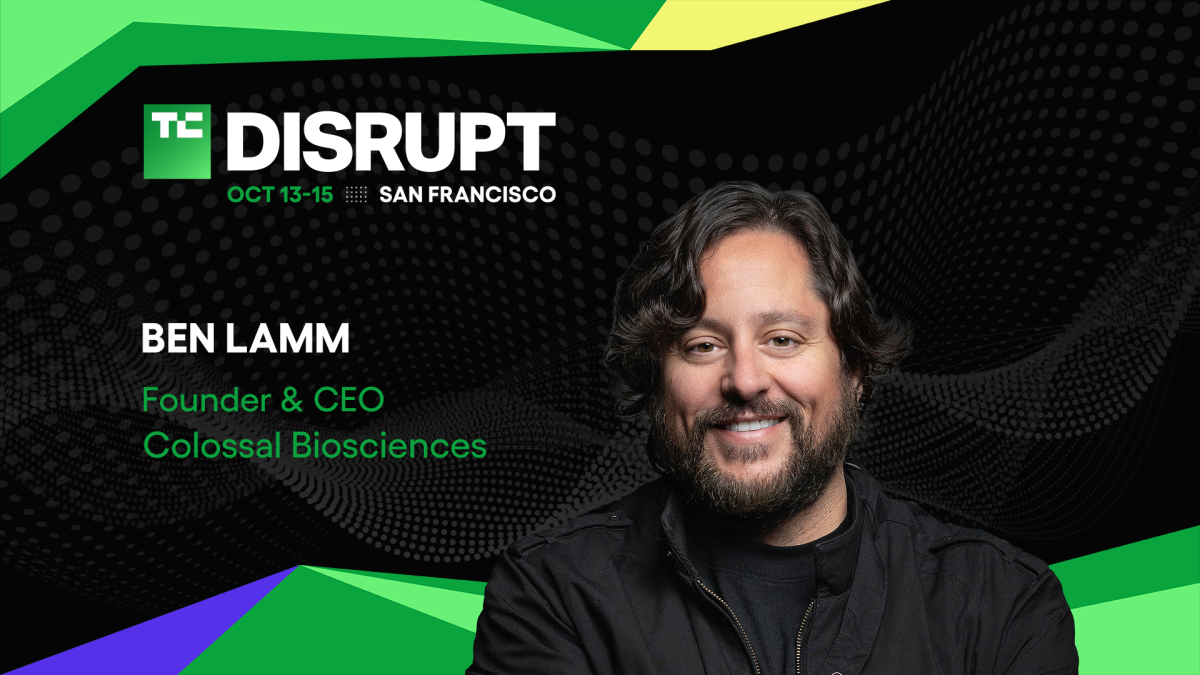
TechCrunch Disrupt 2026 will feature a high-profile discussion on whether artificial intelligence and synthetic biology can help revive extinct species and reshape conservation. The session, titled “Can We Engineer Nature’s Comeback?”, puts Colossal Biosciences CEO Ben Lamm on stage to explain why de-extinction has become one of the most controversial frontiers in tech and life sciences.
The conversation matters because it goes beyond science-fiction-style headlines. It will examine how AI is being used in biology today, what de-extinction technologies actually involve, and whether pouring advanced tools into rebuilding lost species is a meaningful conservation strategy or a distraction from protecting endangered ecosystems now.
TechCrunch says the talk is part of the Real World AI Stage lineup at Disrupt 2026, which returns to Moscone West in San Francisco from October 13 to 15. The conference expects more than 10,000 founders, investors, and operators across 250-plus sessions focused on the technologies and markets shaping the next wave of innovation.
Why this AI and biology conversation stands out
AI is already embedded in software products, robotics, and research labs. What makes this session notable is that it addresses a frontier where digital intelligence is being applied to living systems, genetic data, and ecological restoration.
That shift is important because the use of AI in biology is moving quickly from theory to practical experimentation. Researchers are using machine learning to interpret biological complexity, model genes and proteins, and speed up discovery. Colossal Biosciences is among the most visible companies pushing those capabilities into the much more provocative realm of de-extinction.
For many attendees, the attraction will not just be the science but the broader debate: when does technological ambition become ecological stewardship, and when does it become overreach?
What will the session cover?
The discussion is expected to focus on three connected questions: how AI is being integrated into modern biology, what synthetic biology can realistically achieve, and whether restoring extinct species should be treated as a conservation tool at all.
Rather than centering only on the technical milestones, the event will probe the ethical and strategic trade-offs. That makes it relevant not only to life sciences founders, but also to investors, researchers, policymakers, and climate-focused operators trying to understand where AI’s next major applications may emerge.
According to TechCrunch’s description of the session, the goal is to look past the headline-grabbing promise of de-extinction and assess the technologies, risks, and arguments behind it.
Who is Ben Lamm, and why is he central to the debate?
Ben Lamm is the co-founder and chief executive of Colossal Biosciences, the company at the center of the de-extinction conversation. He is also a veteran entrepreneur whose career has repeatedly crossed the boundaries between emerging technology, AI, and large-scale infrastructure problems.
Before Colossal, Lamm founded several tech companies, including Hypergiant, Conversable, and Chaotic Moon. Those businesses were later acquired by Trive Capital, LivePerson, and Accenture, respectively. His background gives him a reputation as a builder who moves into difficult, sometimes speculative markets and tries to turn them into operational businesses.
That experience helps explain why Colossal has drawn intense attention. The company is not merely trying to advance one lab technique. It is attempting to assemble AI, genetics, and synthetic biology into a platform for rethinking the relationship between extinction, conservation, and engineered ecosystems.
How does Colossal fit into the wider AI story?
Colossal fits into the wider AI story because it represents a move from software intelligence into biological intelligence. In practical terms, that means using computational systems to work with genetic information, search for biological patterns, and help design outcomes that would be impossible to manage manually at scale.
That approach is becoming more common across scientific disciplines. But Colossal is unusual because its mission is so ambitious and so publicly discussed. It sits at the intersection of research, startup culture, climate anxiety, and bioethics, which makes it one of the most closely watched private companies in the field.
| Key detail | Information |
|---|---|
| Event | TechCrunch Disrupt 2026 |
| Session title | Can We Engineer Nature’s Comeback? |
| Featured speaker | Ben Lamm, co-founder and CEO of Colossal Biosciences |
| Theme | AI, synthetic biology, de-extinction, and conservation |
| Dates | October 13–15, 2026 |
| Venue | Moscone West, San Francisco |
| Conference scale | 10,000+ attendees and 250+ sessions |
Why de-extinction is more than a headline-grabber
De-extinction captures attention because it sounds extraordinary, but the implications are larger than restoring a single species. If technologies can be used to recreate traits, recover lost DNA, or engineer organisms with ecological functions once found in extinct animals, the debate becomes one about the future of biodiversity itself.
Supporters argue that such work could one day help restore damaged ecosystems, recover lost genetic diversity, and accelerate scientific learning. Critics counter that the money, talent, and attention could be better spent protecting species that still exist but are under immediate threat from habitat loss, climate change, and human activity.
That tension is one reason the TechCrunch session may resonate well beyond a startup audience. It touches on the growing question of whether AI should primarily optimize the world we already have or help create versions of nature that no longer exist.
What are the main arguments on both sides?
The case for de-extinction usually starts with conservation innovation. Proponents say advanced biology may eventually offer new tools for repairing ecosystems, restoring resilience, and bringing back functional roles lost when species disappeared.
The case against it is more cautious. Opponents worry that “bringing back” extinct species can oversimplify complex ecological systems, create unrealistic public expectations, and distract from the harder work of habitat preservation, anti-poaching efforts, and emissions reduction.
- Supporters: see a possible new conservation tool, enabled by AI and genetics.
- Critics: view it as scientifically fascinating but strategically misplaced.
- Neutral observers: want stronger evidence before treating it as a viable policy solution.
How AI is changing modern biology
AI is changing modern biology by making it possible to process enormous volumes of genetic and experimental data faster than traditional methods can manage. That can speed up analysis, improve pattern recognition, and help researchers model biological systems with more precision.
In the context of de-extinction, those capabilities could help scientists identify relevant DNA sequences, compare genomes, and simulate traits that would be useful in restoration projects. In broader life sciences, the same tools are helping with drug discovery, protein research, diagnostics, and environmental modeling.
The result is a field where computational tools are no longer limited to back-office support. They are increasingly part of the scientific method itself.
What makes this frontier different from other AI use cases?
This frontier is different because the output is not a text prompt, a recommendation, or a code suggestion. The output could be a living organism, an ecosystem intervention, or a new biological capability with real-world consequences.
That raises the stakes. Unlike many AI applications, errors here are not merely software bugs. They can become ecological, ethical, and regulatory problems that are difficult or impossible to reverse.
Why TechCrunch is putting this on the Real World AI Stage
TechCrunch appears to be framing the session as a real-world example of how AI is leaving the screen and entering industries with physical consequences. The Real World AI Stage is meant to spotlight practical, high-impact applications rather than abstract demos or hype cycles.
In that context, de-extinction is a natural fit. It is scientifically ambitious, commercially interesting, and ethically fraught. It also embodies a broader trend in which AI companies are moving into sectors once dominated by pharma, agriculture, climate science, and industrial R&D.
By placing Colossal’s CEO in a prominent fireside chat, Disrupt is signaling that the most consequential AI stories may not come from familiar chatbot features or enterprise automation products. They may come from the collision of computation with biology, chemistry, and the natural world.
TechCrunch’s framing suggests the conversation will not be limited to laboratory methods; it will also examine whether engineering nature is a breakthrough worth pursuing or a gamble with uncertain benefits.
What attendees can expect at Disrupt 2026
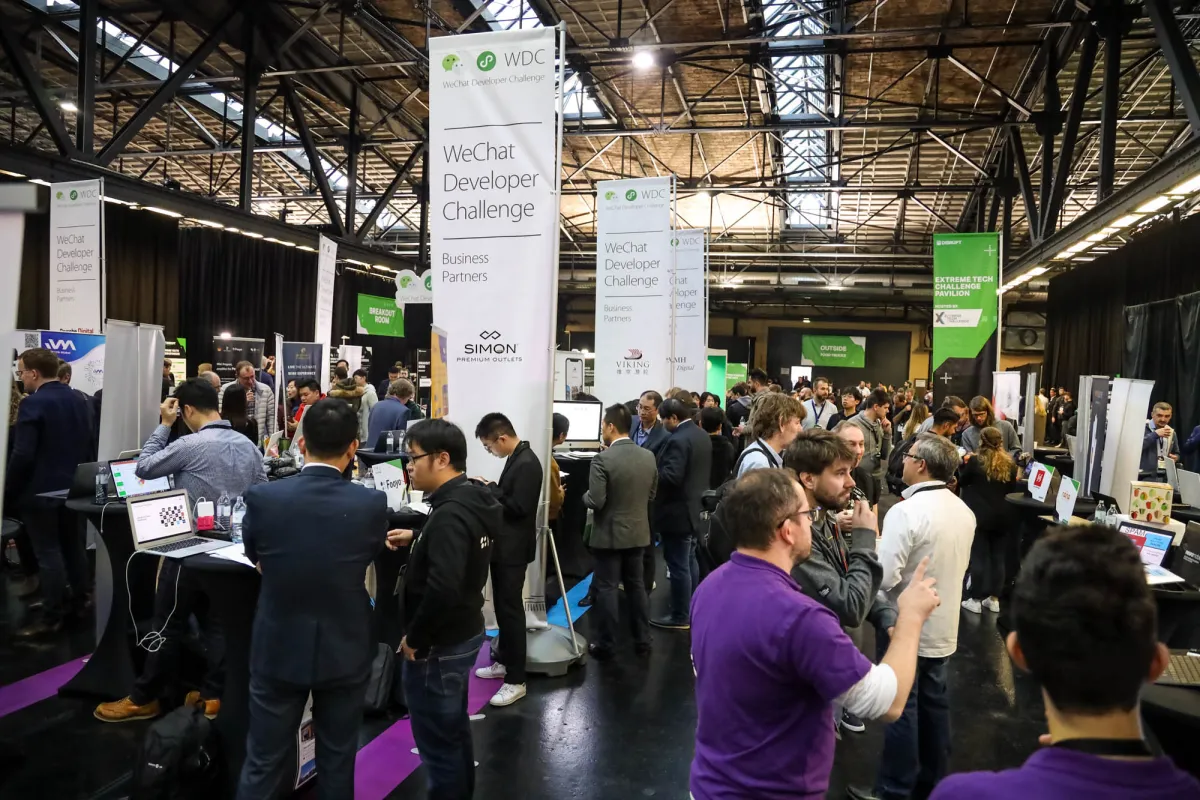
Disrupt 2026 is expected to draw a large mix of startup founders, investors, and operators to San Francisco for three days of product announcements, networking, and industry discussion. With more than 250 sessions, the conference typically mixes headline interviews with tactical advice and emerging-tech showcases.
The event runs from October 13 through 15 at Moscone West. TechCrunch says more than 10,000 people are expected to attend, making it one of the company’s biggest live gatherings of the year.
For companies tracking the future of AI, the conference offers both a roadmap and a market signal. Topics that once sounded experimental are now moving into mainstream startup discourse, and biology is increasingly part of that conversation.
Why founders should pay attention
Founders should pay attention because biology-driven AI is creating new categories of products, partnerships, and regulatory questions. Even if de-extinction never becomes a mass-market business, the underlying methods could influence fields such as drug development, conservation technology, and computational biology platforms.
The session also offers a window into how ambitious science companies pitch their vision to capital markets. A company like Colossal must persuade investors that speculative frontier work can be structured into a credible long-term enterprise.
- It shows how AI investment is broadening beyond software.
- It highlights the growing importance of bioinformatics and synthetic biology.
- It surfaces the ethical debates that may shape future regulation.
How should readers think about de-extinction?
Readers should think about de-extinction as both a scientific possibility and a policy question. The technology is interesting not only because it may be achievable, but because its success or failure could influence how society decides to allocate resources in conservation and biotechnology.
The most useful framing is not whether the idea sounds futuristic, but whether it can deliver measurable ecological value. That is the standard most technologies must eventually meet once they leave the lab and enter the public conversation.
For now, the core issue is not whether AI can help engineer nature’s comeback in theory. It is whether the tools, institutions, and incentives around that effort can be aligned to produce real benefits without compromising the ecosystems already under strain.
Timeline of the story
The path from science-fiction concept to conference-stage debate has been fast, and the timeline helps explain why this session is drawing attention now.
| Date | Milestone |
|---|---|
| Past decade | AI expands rapidly across software, research, and automation |
| Recent years | Machine learning becomes more deeply embedded in biological research |
| 2026 | TechCrunch schedules “Can We Engineer Nature’s Comeback?” at Disrupt |
| October 13–15, 2026 | Disrupt 2026 takes place at Moscone West in San Francisco |
The bigger picture
The discussion TechCrunch is elevating at Disrupt 2026 reflects a broader shift in the AI industry. The most important questions are no longer limited to what machines can write, recommend, or predict. Increasingly, the debate is about what AI should be allowed to shape in the physical world.
That shift makes the Colossal conversation unusually relevant. De-extinction is dramatic, but it also serves as a case study for a wider trend: AI systems are becoming tools for scientific intervention, not just digital productivity.
Whether the public ultimately sees that as a conservation breakthrough or a warning sign may depend on the evidence that emerges in the years ahead. For now, TechCrunch Disrupt 2026 is offering a stage where those disagreements can be aired in public, in front of the people most likely to fund, build, or regulate the next wave of bio-AI innovation.
In that sense, the session is about more than resurrecting species. It is about deciding how far society wants to go when artificial intelligence starts to help redesign life itself.
Frequently asked questions
What is the TechCrunch Disrupt 2026 session about?
It is about whether AI and synthetic biology can help engineer nature’s comeback by supporting de-extinction and conservation research. The fireside chat will also examine the ethical and practical questions surrounding the use of advanced technology in living systems.
Who is speaking at the Disrupt 2026 de-extinction session?
Ben Lamm, the co-founder and CEO of Colossal Biosciences, is the featured speaker. He has built several technology companies and now leads one of the most closely watched startups working at the intersection of AI, genetics, and synthetic biology.
Why is this AI biology discussion important?
It is important because it shows AI moving beyond software into biology, ecology, and conservation. The conversation may help shape how founders, investors, and policymakers think about the use of AI in scientific discovery and environmental restoration.
When and where is TechCrunch Disrupt 2026 taking place?
TechCrunch Disrupt 2026 will be held October 13 to 15 at Moscone West in San Francisco. The event is expected to bring together more than 10,000 attendees and feature more than 250 sessions.