In short
YouTube Music is introducing two new AI features: Ask Music, which lets users search in natural language, and Your Podcast Lineup, which generates personalized podcast previews. The updates are designed to improve discovery for songs, artists and podcasts across YouTube Music’s massive catalog.
- Ask Music lets users search YouTube Music with natural-language prompts instead of fixed keywords.
- Your Podcast Lineup creates a weekly AI-generated spoken briefing for podcast discovery.
- The features roll out soon to YouTube Music and YouTube Premium subscribers worldwide.
- YouTube is expanding AI beyond commentary into core discovery and recommendation tools.
- The launch puts YouTube Music in closer competition with Spotify’s AI-driven audio features.
YouTube is rolling out new AI features in YouTube Music that let listeners search more naturally, uncover deeper context about songs and artists, and get personalized podcast recommendations. The update matters because it pushes YouTube Music closer to a conversational assistant for audio discovery at a time when rival platforms are racing to make AI a core part of listening.
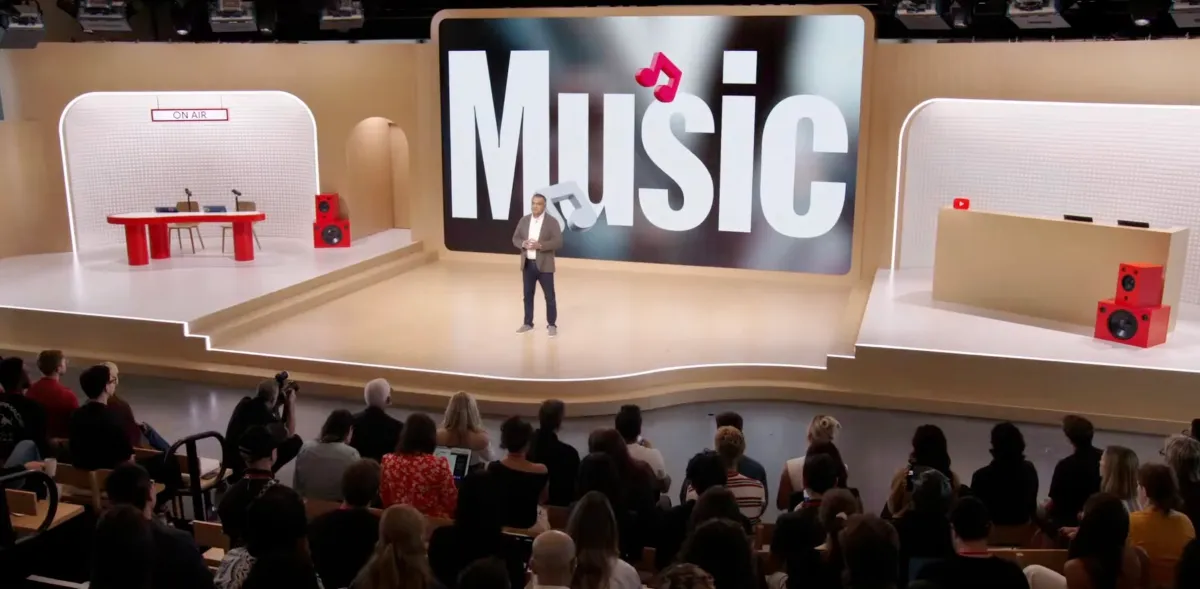
Announced at the company’s Made on YouTube event on Sept. 23, 2026, the new tools include Ask Music, a chat-like feature for music and podcasts, and Your Podcast Lineup, an AI-generated guide designed to surface shows users may otherwise never find.
Instead of relying only on keywords, playlists, or standard recommendations, YouTube Music is trying to make discovery feel more like talking to someone who knows your taste. The move also reflects a broader shift across streaming platforms, where AI is increasingly being used not just to generate content, but to organize and personalize the way people consume it.
What YouTube Music is launching
YouTube Music is adding two major AI-driven features that target two of the most frustrating parts of digital listening: finding the right music and keeping up with podcasts.
The first feature, Ask Music, lets users describe what they want in ordinary language. The second, Your Podcast Lineup, creates a spoken weekly briefing that highlights recommended podcasts and explains why they may be a fit for the listener.
| Feature | What it does | Where it appears | Who can use it |
|---|---|---|---|
| Ask Music | Lets users ask for songs, artists, context, and custom mixes using conversational prompts | YouTube Music app | YouTube Music and YouTube Premium subscribers |
| Your Podcast Lineup | Generates a personalized spoken podcast preview and suggests episodes | Podcast page in YouTube Music | YouTube Music and YouTube Premium subscribers |
| AI music discovery | Surfaces songs across a catalog of more than 300 million tracks and audio versions | YouTube Music app | YouTube Music and YouTube Premium subscribers |
How Ask Music changes music search
Ask Music is designed to replace rigid search behavior with a conversational prompt that resembles texting a friend. Rather than typing a song title or artist name, a listener can ask for a mood, a style, a story behind a track, or even a deeper connection between songs.
YouTube says the tool works across its music library of more than 300 million tracks. That collection includes official releases, remixes, live cuts, covers, and DJ sets, which gives the feature a wide enough surface area to build highly specific listening experiences.
In practical terms, a user could ask for a mix inspired by songs that shaped a particular track, request background on an artist’s creative process, or ask a question such as who played bass on a certain recording. The aim is to make the platform feel less like a static search engine and more like an on-demand music guide.
Why this matters for listeners
The feature addresses a common problem in streaming: users often know a feeling or a reference point, but not the exact keywords needed to find it. Conversational AI can bridge that gap by translating loose intent into a usable recommendation.
That may be especially helpful for listeners who want context around what they are hearing. Music fans frequently want to know which influences shaped a song, what version they are actually hearing, or how one track connects to another. Ask Music is meant to make that kind of discovery immediate.
YouTube’s pitch is that users should be able to ask for music the same way they would ask a knowledgeable friend, using plain language instead of search terms.
How Your Podcast Lineup works
Your Podcast Lineup is YouTube Music’s new answer to the podcast discovery problem. The company is betting that many listeners want more than a queue of algorithmic suggestions; they want a curated explanation that tells them why a show is worth their time.
The feature will live on the podcast page inside the app. Each week, it will generate a short spoken preview of recommended podcasts, then explain the appeal of each show before moving into suggested episodes.
That format is aimed at a real bottleneck in podcast listening. There are more shows available than most people can follow, and even loyal podcast fans often struggle to keep up with new episodes from their existing subscriptions, let alone discover something new.
Why podcast discovery is a tough problem
Podcast discovery has long been a challenge because the format is both expansive and fragmented. Unlike music, where listeners can easily sample a song in seconds, podcasts often require a bigger time commitment before someone knows whether a show is worth following.
AI-generated overviews may lower that barrier. By giving listeners a weekly spoken briefing and a reason to click, YouTube is trying to compress the decision-making process into a more manageable format.
That could make the podcast page feel more like a personalized audio briefing than a static catalog. It also mirrors how many listeners already choose shows: by hearing recommendations from a trusted source that explains the appeal, not just the title.
What does this mean for YouTube’s AI strategy?
These features are part of YouTube’s wider effort to weave AI into more of its products and user experiences. The company has already been experimenting with AI-assisted formats inside YouTube Music, and this launch extends that approach into discovery and curation.
Last year, YouTube Music tested AI music hosts that offered stories, fan trivia, and commentary tied to what a listener was playing. The new features build on that concept, but with a more practical emphasis on navigation, recommendation, and conversation.
The strategy reflects a larger industry trend. Major streaming platforms increasingly want AI to do more than generate content. They want it to reduce friction, personalize interfaces, and help people spend less time searching and more time listening.
How YouTube compares with Spotify
YouTube’s new move lands in the same neighborhood as Spotify’s recent experiments with AI-powered podcast experiences. Spotify has been developing features that generate podcast-style content based on user interests and prompts, showing that the race to own AI-driven audio discovery is now well underway.
Both companies are responding to a common belief: listeners are overwhelmed by choice. If AI can filter, summarize, or explain that choice in a more natural way, platforms may be able to boost engagement and retention.
That competition also suggests that conversational discovery could become a standard expectation rather than a novelty. If a listener can ask for a themed playlist, a historical music deep dive, or a quick podcast briefing, the old search bar may start to look limited by comparison.
Why now?
YouTube is moving now because recommendation has become a key battleground in streaming. With millions of songs and an ever-expanding podcast ecosystem, the platform needs new tools to help users make sense of its catalog.
AI offers a way to personalize that experience more dynamically than traditional search and recommendation engines can. Instead of simply matching a keyword or following a listening history, conversational tools can interpret intent, context, and curiosity.
The timing also fits a broader consumer shift. Users have become increasingly comfortable asking AI assistants for summaries, suggestions, and explanations. Bringing that behavior into a music app is a logical next step, especially for younger listeners who already expect software to respond in plain language.
What users will actually be able to do
For everyday listeners, the most useful part of the launch may be the flexibility of the prompts. Ask Music is not limited to standard playlist requests. It is meant to handle open-ended questions and more nuanced requests about music history and song creation.
- Create custom mixes based on a song’s influences
- Ask for details about who played on a track
- Explore an artist’s motivations or creative background
- Discover versions of songs such as remixes, live performances, and covers
- Get weekly podcast recommendations with spoken explanations
That range matters because it gives the app more ways to be useful than a simple “recommend similar songs” tool. The more specific the prompt, the more likely users may feel the app understands their taste.
How it could affect music discovery
Ask Music may help expose listeners to the less visible parts of YouTube’s catalog, including niche recordings and alternate versions. Because the feature searches across more than 300 million tracks and audio variants, it could highlight content that is easy to miss in standard playlists.
For artists and labels, that may create new pathways for discovery beyond conventional chart-driven listening. Remixes, live recordings, and covers often get less attention than mainstream singles, but they are central to the way many fans explore music on YouTube.
The same logic applies to podcasts. A weekly AI-generated lineup could encourage listeners to sample new shows they would not have actively searched for, especially if the explanation is specific enough to feel personally relevant.
What is still unclear?
There are still open questions about how the features will perform in practice. YouTube has described the general experience, but it has not detailed how the system handles edge cases, how conversational prompts are ranked, or how transparent the recommendation logic will be.
It is also unclear how much editorial oversight will exist, if any, around the spoken podcast summaries. AI-generated recommendations can be useful, but they also raise concerns about accuracy, tone, and overreliance on automated curation.
Still, the direction is clear: YouTube wants its music app to feel less like a library and more like a guide.
When will the features be available?
YouTube says both features are coming soon to YouTube Music and will be available to YouTube Music and YouTube Premium subscribers worldwide. The company did not attach a more precise public release date in its announcement.
That broad rollout suggests YouTube sees the tools as part of the core product, not a narrow experiment for a single market. A global launch also means the company is confident the features can scale across a massive audience with different listening habits and different levels of AI familiarity.
Timeline of YouTube Music’s AI push
These updates are the latest step in a gradual expansion of AI inside YouTube Music. The company has been testing and refining AI-assisted experiences for more than a year, and the new launch marks a more explicit push into conversational discovery.
| Time period | Development | Significance |
|---|---|---|
| Last year | YouTube Music tested AI music hosts with stories, trivia, and commentary | Showed early interest in AI as a listening companion |
| Sept. 23, 2026 | YouTube announced Ask Music and Your Podcast Lineup at Made on YouTube | Expanded AI from commentary into search and discovery |
| Soon | Features roll out to YouTube Music and YouTube Premium subscribers worldwide | Moves AI into the core user experience |
What this says about the future of streaming
The bigger story is not just that YouTube Music is adding another feature. It is that the app is becoming a test case for how AI may reshape streaming interfaces over the next few years.
Traditional streaming products were built around search boxes, playlists, and recommendation feeds. The next generation may be built around questions, spoken summaries, and personalized explanations that act like a guide sitting beside the listener.
If these tools catch on, they could reduce the distance between curiosity and playback. Instead of searching, filtering, and guessing, users may simply ask for what they want and let the platform handle the rest.
That could make music and podcast apps feel far more intuitive. It could also make them more influential, since the platform would be deciding not only what to recommend, but how to frame the choice for the listener.
For YouTube, that is a strategically important shift. The company has long been a major destination for music and podcasts, but the addition of conversational AI could help it compete more directly on discovery with Spotify and other audio platforms.
Whether listeners embrace the change will depend on how accurate, useful, and natural the tools feel. But the direction of travel is unmistakable: YouTube wants users to stop searching and start asking.
Frequently asked questions
What is Ask Music in YouTube Music?
Ask Music is a new YouTube Music AI feature that lets users describe what they want to hear in plain language. It can build custom mixes, answer questions about songs or artists, and surface tracks across YouTube’s catalog of more than 300 million songs and audio versions.
What is Your Podcast Lineup?
Your Podcast Lineup is a personalized AI-generated podcast discovery tool inside YouTube Music. It provides a weekly spoken preview of recommended shows, explains why they may appeal to the listener, and then moves into suggested episodes.
Who can use YouTube Music’s new AI features?
YouTube says the new AI tools will be available soon to YouTube Music and YouTube Premium subscribers worldwide. The company has not announced a separate standalone release for non-subscribers.
Why is YouTube adding AI to music discovery?
YouTube is adding AI to reduce friction in searching, browsing and discovering audio content. The company wants users to ask for music and podcasts naturally, while the app handles recommendations, context and curation more intelligently.
How does YouTube Music compare with Spotify on AI features?
YouTube Music is moving in a similar direction to Spotify, which has also experimented with AI-driven podcast experiences. Both companies are trying to make audio discovery more conversational and personalized rather than relying only on traditional search and playlist tools.