In short
Spotify has launched a beta AI chatbot for Premium users in the US, Ireland and Sweden that can find and play music, podcasts and audiobooks through conversation. The feature uses personal listening data to make recommendations and is Spotify’s latest attempt to make discovery more intuitive.
- Talk to Spotify is now in beta for Premium users in the US, Ireland and Sweden.
- The chatbot can reference listening history, playlists and repeat plays to personalize responses.
- Users can type or speak requests to find music, podcasts and audiobooks.
- Spotify says the feature is still a work in progress and may not always be accurate.
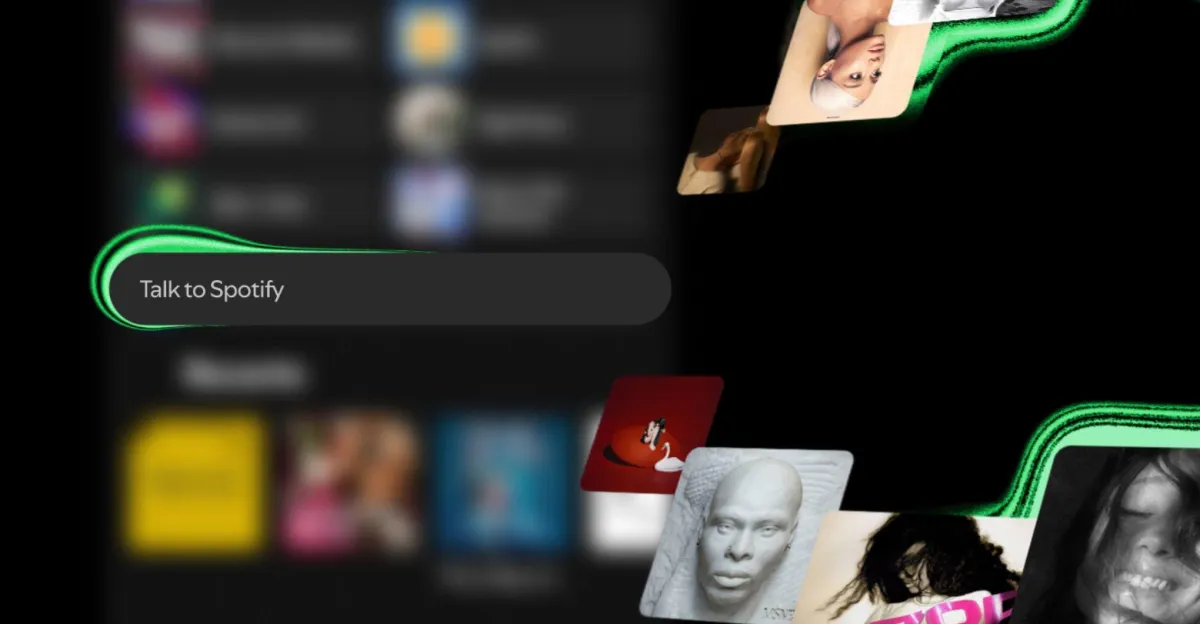
Spotify has begun testing a new AI chatbot for Premium subscribers that lets users search for and play music, podcasts and audiobooks by talking or typing with the app. The beta feature, called Talk to Spotify, matters because it turns Spotify into a more conversational discovery tool that can use a listener’s own habits, not just generic recommendations, to answer requests.
The rollout is starting in beta for Premium users in the United States, Ireland and Sweden who are 18 or older, with support in English on iOS and Android. Spotify says the feature is still a work in progress and warns that the chatbot’s answers will not always be accurate.
What Spotify is testing
Spotify’s new AI layer adds a conversational front end to the streaming service’s search and recommendation engine. Instead of relying only on keywords, genre filters or prebuilt playlists, users can ask the app for music and spoken-word content in natural language and get a response that can be refined in follow-up prompts.
The feature appears in both the Home screen and the Now Playing view on the mobile app. Users can type into a text field that resembles the AI chat interfaces now common across consumer software, or tap a microphone icon to speak their request aloud.
According to Spotify, the idea is to make the service feel more personal and useful. That is a notable positioning statement at a time when many streaming subscribers complain that recommendation systems can feel repetitive, opaque or overly optimized for engagement rather than taste.
How does Talk to Spotify work?
Talk to Spotify works by turning a simple search or recommendation request into a conversation. A listener can ask the chatbot to play something they have not heard before, request a change in mood or pace, or ask for recommendations tied to a specific artist, genre or topic.
The system is more than a generic music assistant because it can reference each user’s own listening behavior. That means it may draw on playlists, repeat listens, favorite artists and broader listening history when responding.
In practical terms, that allows the chatbot to answer personalized questions that go beyond basic recommendations. A user could ask when they first heard a track, what genres they have been streaming most often lately, or what songs fit a certain vibe without having to scroll through menus or manually build a playlist from scratch.
Examples of what users can ask
The feature is designed around natural, follow-up-style queries. Spotify’s examples suggest a broad range of use cases across music, podcasts and audiobooks.
- Play songs I have not heard before.
- Make it more upbeat.
- Only include a particular artist.
- When was this song released?
- What else has this audiobook author written?
- Has this podcast guest appeared on other shows?
That last group is important because it shows Spotify is not just trying to sell this as a music tool. The company is also positioning the chatbot as an assistant for spoken-word discovery, which could help listeners explore a much larger portion of the platform’s catalog.
Why this matters for Spotify
Spotify has spent years refining algorithmic recommendations, but the company still faces regular criticism that its suggestions can become stale or predictable. Talk to Spotify is another attempt to make discovery feel more responsive to real conversation and less dependent on static interface choices.
The move also reflects a broader shift in consumer tech. Major platforms are increasingly adding chat-based controls to familiar products, hoping that AI can reduce friction and make large content libraries easier to navigate. In Spotify’s case, the opportunity is especially clear: music, podcasts and audiobooks are all highly search-driven categories where people often know the feeling they want, but not the exact title.
Spotify has already experimented with AI-assisted playlist tools, including Prompted Playlist, which could generate playlists from text descriptions. Talk to Spotify goes further by making the interaction iterative. Rather than issuing a one-time prompt and accepting the output, users can keep refining the request in a back-and-forth exchange.
How it compares with other streaming services
Spotify is not the first streaming company to add a conversational layer to content discovery. Amazon Music introduced a similar feature last year through its integration with Alexa Plus. But Spotify’s approach is more tightly tied to the user’s personal listening data, which may make the results feel more tailored than a voice assistant that is mainly built to respond to broad commands.
That distinction matters because recommendation quality is often the difference between a clever demo and a feature people use every day. If Spotify can reliably combine conversational prompts with meaningful context from a listener’s history, it could create a more useful discovery workflow than traditional search alone.
| Key detail | What Spotify announced | Why it matters |
|---|---|---|
| Feature name | Talk to Spotify | Signals a conversational interface for discovery and playback |
| Available to | Premium beta users | Limits access while Spotify tests reliability and user response |
| Regions | US, Ireland and Sweden | Shows a staged rollout rather than a global launch |
| Platforms | iOS and Android | Matches Spotify’s largest mobile user base |
| Language | English | Suggests a limited initial model deployment |
| Age requirement | 18 and older | Reflects the company’s current beta and policy boundaries |
What is Spotify trying to fix?
Spotify is trying to make discovery feel less mechanical and more responsive to individual taste. The company has a huge catalog, but scale can become a usability problem if listeners cannot quickly translate a mood or memory into something they want to hear.
AI chat gives Spotify a way to bridge that gap. A person can describe a feeling instead of a title, ask a question instead of using a filter, or modify a playlist in plain language. That could help casual listeners, but it may be just as useful for power users who want to dig into listening patterns or quickly adapt what is playing.
The company’s description of the feature as more personal and useful also hints at a competitive need. The streaming market is crowded, and differentiation increasingly comes from user experience, not just library size or price. A conversational assistant may not solve all of Spotify’s recommendation complaints, but it gives the platform a new interface story at a time when AI is reshaping how consumers expect to interact with software.
Can the chatbot answer questions about your own listening?
Yes, that is one of the feature’s most distinctive capabilities. Spotify says the assistant can use a listener’s own activity data, including repeats, favorites and playlists, to respond to personal questions about listening behavior and history.
That means users may be able to ask when they first played a particular song, what they have been listening to most lately or which artists dominate their recent activity. For many subscribers, that turns Spotify from a passive library into something closer to a personalized archive.
What the rollout looks like
Spotify is starting cautiously. The company says the beta is being released gradually, which is standard for a feature that depends on both AI responses and a user’s private listening data. Limiting the audience gives Spotify room to monitor performance, fix edge cases and reduce the risk of poor answers or confusing interactions.
For now, the feature is confined to Premium users, which suggests Spotify may view it as part of the paid value proposition rather than a universal free-tier tool. That also gives the company another incentive to tie experimental AI features to subscription upgrades, a strategy several tech companies have used to justify premium pricing.
Spotify also cautions that responses may not always be perfect. That warning is important because conversational AI systems can produce confident but incorrect answers, especially when asked to combine product data, catalog metadata and personal history.
Why is Spotify leaning into conversational AI now?
Spotify is leaning into conversational AI now because chat has become a familiar way for consumers to discover and direct software. Instead of learning app-specific menus, users increasingly expect to ask for what they want in plain language and have the service do the work.
That shift has been accelerated by the rise of general-purpose AI tools like ChatGPT and Gemini, which have normalized conversational interfaces across search, productivity and entertainment. Spotify appears to be borrowing that pattern and applying it to a domain where the stakes are lower than in business software but the daily usage is much higher.
There is also a clear product logic behind the move. When a platform is trying to keep users engaged for longer sessions, reducing the friction between intent and playback is valuable. A chatbot can shorten the path from “I want something new” to a finished listening session, which is exactly the sort of interaction Spotify wants to own.
How it fits into Spotify’s broader product strategy
Spotify has been steadily layering AI features into the app rather than betting on a single massive redesign. Prompted Playlist was one earlier example of this approach, using a description to assemble music into a playlist. Talk to Spotify is a more ambitious step because it adds memory, follow-up prompts and cross-format search.
That broader strategy suggests the company sees AI less as a standalone product and more as an operating layer for discovery. In that model, AI is not just for novelty. It is a utility that sits between the listener and the catalog, helping translate vague preferences into immediate action.
If successful, Spotify could extend the same approach across other parts of the app, giving users more natural ways to navigate releases, queue management, podcast episodes and audiobook chapters. For now, though, the company is keeping the experiment limited while it gauges whether listeners actually use it and trust what it says.
How the feature could change listening habits
The feature could change listening habits by making experimentation easier. If users can ask for a mood, a tempo or a similar artist in conversational language, they may be more willing to try unfamiliar tracks or explore new formats.
It could also make Spotify more useful in everyday moments. A listener at the gym might ask for upbeat songs, while someone commuting might want a calm podcast recommendation or an audiobook tied to a favorite author. The interface is built to make those small decisions feel immediate.
At the same time, there is a trade-off. More automation can sometimes mean less serendipity, depending on how tightly the AI anchors its suggestions to past behavior. Spotify will need to balance relevance with discovery so that the chatbot does not merely reproduce the user’s existing habits.
Timeline of Spotify’s AI push
Spotify’s latest beta does not come out of nowhere. It follows a series of moves that show the company testing how AI can reshape search, playlists and personalized playback.
| Period | Development | Implication |
|---|---|---|
| Earlier AI experimentation | Spotify tested Prompted Playlist | Demonstrated that users could build playlists from descriptions |
| Last year | Amazon Music added Alexa Plus integration | Raised pressure on streaming services to adopt conversational tools |
| Now | Talk to Spotify enters Premium beta | Moves from one-shot prompt generation to ongoing dialogue |
What users should expect in beta
Users should expect a feature that is useful but imperfect. Beta tests are meant to reveal where AI systems stumble, especially when they are asked to combine catalog search with personal data and natural language instructions.
Spotify’s warning that responses will not always be perfect is worth taking seriously. A chatbot may misunderstand a request, choose the wrong track or answer a factual question with incomplete information. The test phase will likely focus on reducing those failures while preserving the convenience that makes the feature appealing.
There is also a privacy-adjacent layer to watch, even though Spotify has not framed the feature as a security issue. When AI begins referencing a person’s listening patterns in direct conversation, the company must make sure the experience feels helpful rather than invasive. That will shape whether users embrace the chatbot as a smart assistant or dismiss it as another gimmick.
Spotify says the new conversational experience is intended to make the service more personal and useful for every listener, but it also acknowledges that the early version will not always get everything right.
The bigger picture
Spotify’s move is part of a broader race to make AI the default interface for digital services. The pattern is now familiar: search boxes become chat boxes, filters become conversations and recommendation engines become more context-aware assistants. In entertainment, where engagement is often driven by small moments of choice, that transformation could be especially powerful.
Whether Talk to Spotify becomes a daily habit will depend on execution. If the chatbot reliably understands requests, respects user intent and surfaces genuinely better results, it could become one of the company’s most practical AI features. If not, it may end up as another short-lived experiment in the crowded world of streaming product tests.
For now, Spotify is betting that listeners want a simpler way to talk to the service rather than tap through it. The company’s beta suggests that the next phase of streaming discovery may look less like browsing and more like a conversation.
Frequently asked questions
What is Spotify’s new AI chatbot?
Spotify’s new AI chatbot is Talk to Spotify, a beta feature that lets Premium users search, play and refine music, podcast and audiobook choices through conversation. It works in the mobile app and supports both typed and spoken requests.
Who can use the Spotify AI chatbot right now?
The Spotify AI chatbot is currently rolling out to Premium subscribers who are 18 or older in the United States, Ireland and Sweden. It is available in English on both iOS and Android, but only as a gradual beta release.
Can Spotify’s chatbot use my listening history?
Yes, Spotify says the chatbot can reference your own listening activity, including playlists, favorite artists and repeat listens. That allows it to answer more personal questions, such as when you first heard a song or what genres you have been playing most.
Is Spotify’s AI chatbot the same as a voice assistant?
No, it is more like a conversational discovery tool than a basic voice command system. You can ask it to play something new, adjust the mood of what is playing or ask contextual questions about songs, authors and podcast guests.
Will the Spotify AI chatbot always be accurate?
No, Spotify says the beta is still a work in progress and warns that responses will not always be perfect. Like many AI products, it may occasionally misunderstand requests or return incomplete or incorrect information.