In short
inDrive, Pony.ai and Nvidia signed an exploratory MOU to test robotaxis in Astana, Kazakhstan, starting in the first half of 2027. The plan is not a commercial launch, but it could make Kazakhstan a proving ground for cold-weather autonomous driving and a capital-light robotaxi model.
- The companies signed an exploratory MOU, not a commercial deployment deal.
- Testing in Astana is expected to begin in the first half of 2027.
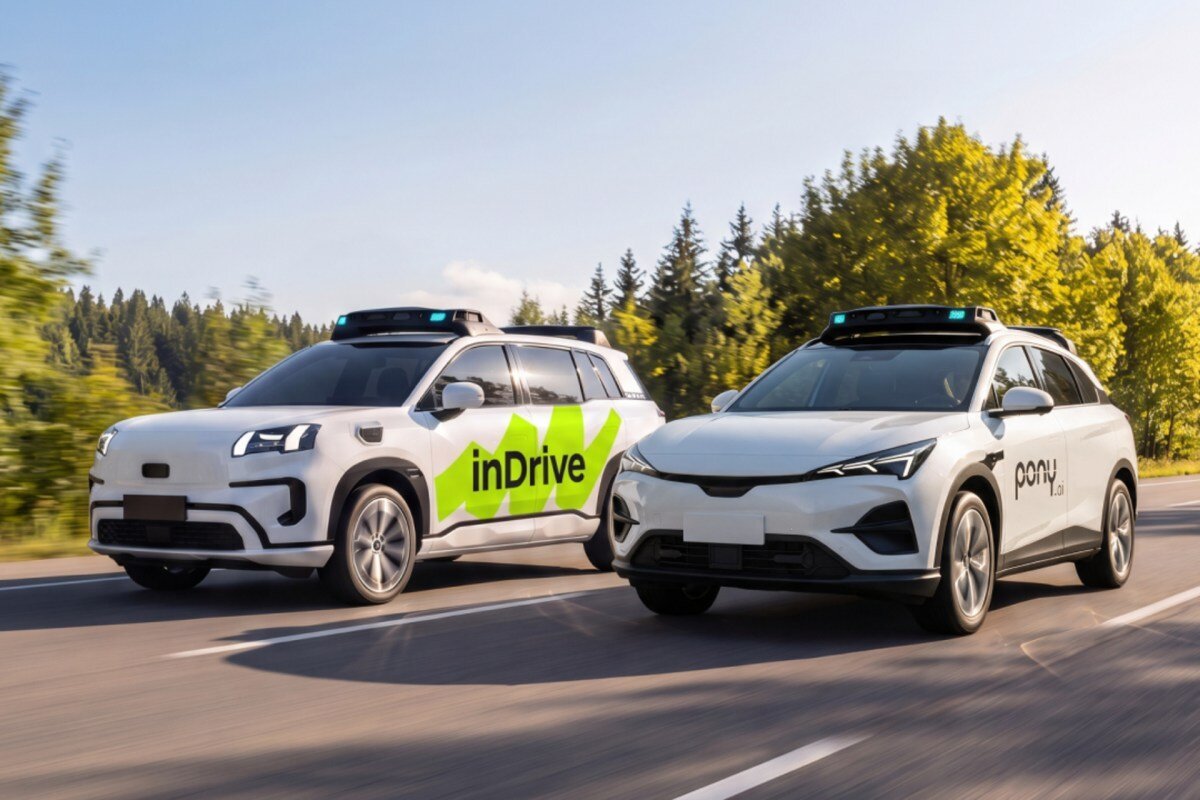
- Pony.ai would supply Gen-7 robotaxis, while Nvidia would provide AI systems and inDrive would operate the service through its app.
- Kazakhstan has already set rules for autonomous vehicles on some public roads and plans autonomous taxi services in 2027.
- The deal could test whether a capital-light ride-hailing model can work in emerging markets.
inDrive, Pony.ai and Nvidia have signed a memorandum of understanding to test robotaxis in Astana, Kazakhstan, with trials expected to begin in the first half of 2027. The plan matters because it would put a lower-cost ride-hailing platform, an autonomous driving developer and a major chip supplier together in an emerging market that is actively preparing for self-driving taxis.
What the companies agreed
According to TechCrunch, the agreement is exploratory rather than a commercial deployment contract. That distinction is important: the companies are not announcing a live robotaxi service, but a framework to test whether Pony.ai’s vehicles can operate through inDrive’s platform in Kazakhstan, with Nvidia providing the AI systems behind the stack.
TechCrunch reported that Pony.ai would supply Gen-7 robotaxis, while inDrive would operate them through its app in Kazakhstan. Nvidia, meanwhile, would contribute automotive AI technology, including its Hyperion platform and Halos safety system. Initial trials would include a safety operator, with driverless rides presented as the longer-term goal.
How the partnership is structured
Each partner is bringing a different layer of the service.
- inDrive would handle the consumer-facing ride-hailing platform and local market access.
- Pony.ai would supply the autonomous vehicles and core self-driving technology.
- Nvidia would provide compute and safety software used in autonomous driving systems.
That split lines up with inDrive’s broader strategy. Yuri Misnik, inDrive’s CTO, said, “Our approach is capital-light by design.” The company has repeatedly signaled that it prefers to work with outside specialists rather than build every part of the autonomous stack itself.
Why Kazakhstan, and why Astana?
Kazakhstan has become an unusually active test case for autonomous mobility. TechCrunch reported that the government announced plans last month for autonomous taxi services in 2027, including trials in Astana and two other cities. The country has also introduced rules for autonomous vehicles on certain public roads, creating at least a partial legal foundation for testing.
Astana is a logical starting point for another reason: weather. Arsen Tomsky, inDrive’s founder and CEO, said, “Launching here will provide an important opportunity to evaluate autonomous driving technology in challenging winter conditions”
For autonomous driving companies, that is not a small detail. Snow, ice, poor visibility and extreme cold can expose weaknesses in sensors, mapping and decision-making software. If a vehicle can perform in Astana, it may build credibility for similar climates elsewhere.
How the timing lines up
The first-half-2027 target does not appear to be an accident. It follows Kazakhstan’s own push to create an autonomous taxi framework for 2027, and it gives the three companies a runway to set up testing, permits, fleet logistics and on-road safety procedures.
El Ecosistema Startup, however, stressed that the memorandum is only exploratory. Its reporting also said 2027 refers to testing, not a commercial launch. That caveat matters because the language around robotaxis can often blur pilot programs, closed-course demonstrations and paid public service.
What inDrive is trying to prove
For inDrive, the deal is as much about business model as technology. The company operates in more than 1,200 cities across 47 countries, and its ride-hailing business is known for negotiated fares and low commissions. That structure has helped it compete in price-sensitive markets, particularly in Latin America, which El Ecosistema Startup said accounts for more than half of its business.
A capital-light robotaxi strategy could be a way to enter autonomy without taking on the enormous cost of building a full self-driving stack. Instead of owning the core technology end to end, inDrive can try to assemble a service from specialized partners and then judge whether the economics work in markets where consumers are highly price-conscious.
Ali Kani, Nvidia’s vice president of automotive, framed the appeal in direct financial terms, saying, “Those savings are particularly relevant in emerging markets”
That point is central to the entire arrangement. Robotaxis are expensive to develop, deploy and maintain, but a platform that can avoid much of the upfront hardware and software burden may find a more workable path in developing markets than in richer cities where competition is intense and regulatory hurdles are higher.
Why it matters
This agreement matters for three reasons. First, it shows how robotaxi expansion is no longer confined to the best-known US testbeds. Companies are now looking at cities where winter weather, lower operating costs and regulatory openness may create a better starting point.
Second, it highlights a new model for autonomy: not every company entering robotaxis needs to own every layer of the stack. inDrive is openly pursuing a partnership-first strategy, and if it works, other ride-hailing platforms may follow the same route.
Third, the deal could help Kazakhstan position itself as a regional testing hub for autonomous vehicles. A successful pilot in Astana would not guarantee a commercial rollout, but it would show that the country can support advanced mobility testing under real-world conditions.
For readers, the practical implication is simple: robotaxis may arrive through local platforms and partnerships, not just through Silicon Valley-style one-company deployments. For the market, that could open more routes to scale — especially where cost discipline matters more than prestige.
Background: how the companies got here
Pony.ai is not new to autonomous driving, but it has been pushing beyond China as it grows its footprint. TechCrunch said the company aims to have more than 3,500 robotaxis in over 20 cities worldwide by the end of 2026. It also reported that Pony.ai’s fleet stood at 1,975 vehicles at the end of June.
El Ecosistema Startup gave a slightly different figure, saying Pony.ai had 1,159 robotaxis at the start of 2026. The discrepancy may reflect different reporting dates or fleet definitions, but both numbers point in the same direction: Pony.ai is scaling quickly, yet it is still in the middle of a growth phase rather than operating at mass-market scale.
The company’s recent financials underscore that point. El Ecosistema Startup said Pony.ai reported first-quarter 2026 revenue of US$34.3 million, up 145% year over year, while its net loss widened to US$53.5 million. That combination is typical of a company spending heavily to expand operations while revenue growth remains far from covering costs.
inDrive, by contrast, is in a different business lane. It is already a global ride-hailing platform with a large geographic footprint, but its model is built around fare negotiation rather than the kind of tightly controlled supply system common to many transportation apps. El Ecosistema Startup said the company reported 2025 net revenue of US$601.6 million, up 31% year over year, suggesting a business that is growing but still highly sensitive to unit economics.
Nvidia’s role also fits a broader pattern. The company is increasingly central to autonomous vehicle development because robotaxis need heavy compute, model processing and safety systems. In this case, Nvidia is not the operator or vehicle maker; it is the infrastructure layer that helps make the stack work.
By the numbers
| Metric | Figure | What it refers to |
|---|---|---|
| Planned test start | First half of 2027 | Astana robotaxi trials |
| Kazakhstan’s autonomous taxi target | 2027 | Government plan for autonomous taxi services |
| Astana population | 1.7 million | Capital city where testing is planned |
| inDrive footprint | More than 1,200 cities in 47 countries | Ride-hailing network reach |
| inDrive 2025 net revenue | US$601.6 million | Reported annual revenue |
| Pony.ai Q1 2026 revenue | US$34.3 million | Quarterly revenue reported by El Ecosistema Startup |
| Pony.ai Q1 2026 net loss | US$53.5 million | Quarterly loss reported by El Ecosistema Startup |
How does this compare with other robotaxi moves?
In one sense, the Kazakhstan plan is part of a much wider global race. TechCrunch noted that Uber is also moving on robotaxis, including Pony.ai tests in London and supervised Wayve rides there. El Ecosistema Startup likewise said Uber announced Pony.ai robotaxi tests in London this month.
That means Pony.ai is simultaneously appearing in multiple international test plans, a sign that the company is trying to broaden its geographic presence while the market for autonomous mobility is still in its early stages. The London work and the Astana plan are not the same type of deployment, but both suggest that robotaxi firms are chasing regulatory footholds where they can.
inDrive is also looking beyond Kazakhstan. TechCrunch reported that the company is pursuing robotaxi opportunities in other markets, including Saudi Arabia. El Ecosistema Startup added that inDrive signed a separate Saudi Arabia agreement with AI Driver and WeRide in December. Taken together, those moves show that the company is not treating Kazakhstan as a one-off experiment.
What makes the Astana test different?
The Astana pilot stands out because it brings together an operator with a low-cost consumer brand, a Chinese autonomous driving developer and a top-tier chip supplier in a market that is not yet synonymous with robotaxi innovation. That mix may be the point. Each partner is using the test to answer a different question.
- Can autonomous driving technology handle harsh winter conditions reliably?
- Can a ride-hailing app sell robotaxi rides without building the self-driving stack itself?
- Can a capital-light partnership model make autonomy economical in an emerging market?
The answers will not arrive in one day, and they may not arrive in 2027 either. But the pilot could reveal whether the economics of robotaxis are becoming flexible enough to fit markets outside the usual early-adopter cities.
What happens next
The immediate next step is regulatory and operational preparation. The companies will need to turn an MOU into a working test program, which usually means vehicle approvals, route planning, safety protocols, local coordination and a clear definition of what the pilot can and cannot do.
Watch for three questions in particular:
- Whether the Astana tests receive the necessary authorization on schedule.
- How large the initial fleet will be.
- Whether the pilot stays limited to supervised testing or moves toward a broader commercial service.
There is also a broader market question hanging over the deal. If inDrive can show that a lower-cost ride-hailing platform can plug into robotaxi technology through partners, it could influence how other mobility companies think about autonomy. If the test stalls, it may reinforce the idea that robotaxis still require too much capital, too much regulation and too much technical certainty to scale quickly in new markets.
For now, the message is narrower but still significant: Kazakhstan is preparing to test autonomous taxis, and inDrive, Pony.ai and Nvidia want to be part of that first wave.
Timeline
| When | What happened |
|---|---|
| Last month | Kazakhstan announced plans for autonomous taxi services in 2027, with trials in Astana and two other cities. |
| Friday | inDrive, Pony.ai and Nvidia said they signed an MOU to explore robotaxi testing in Kazakhstan. |
| First half of 2027 | Testing in Astana is expected to begin. |
| This month | Uber announced plans to test Pony.ai robotaxis in London. |
| December | inDrive signed a separate Saudi Arabia agreement with AI Driver and WeRide. |
Even with the caveats, the deal gives Kazakhstan a place in the global robotaxi map. And it gives inDrive a chance to test whether a platform built on negotiated fares can evolve into a host for autonomous rides without taking on the full cost of building the future itself.
Frequently asked questions
Is the inDrive-Pony.ai-Nvidia deal a commercial robotaxi launch?
No. The answer is that the companies signed an exploratory memorandum of understanding, not a commercial deployment contract. El Ecosistema Startup said the 2027 timing refers to testing in Astana, not a paid public launch.
Why is Astana being used for robotaxi testing?
Astana is being used because Kazakhstan has started creating rules for autonomous vehicles, and the city’s winter weather offers a hard test for self-driving systems. TechCrunch reported that inDrive’s CEO sees those conditions as useful for evaluating the technology.
What will each company do in the Kazakhstan robotaxi plan?
inDrive would operate the service through its app, Pony.ai would supply Gen-7 robotaxis, and Nvidia would provide AI technology including its Hyperion platform and Halos safety system. The initial trials are expected to include a safety operator.
How big is inDrive’s business today?
inDrive is already a large ride-hailing platform, operating in more than 1,200 cities across 47 countries. El Ecosistema Startup said the company reported 2025 net revenue of US$601.6 million, with more than half of its business in Latin America.
How big is Pony.ai’s robotaxi fleet?
TechCrunch said Pony.ai’s fleet stood at 1,975 vehicles at the end of June, while El Ecosistema Startup said it had 1,159 robotaxis at the start of 2026. Both figures point to a fast-growing fleet, though the outlets cited different reporting dates.