Updated September 24, 2026 6:53 pm
In short
At Disrupt 2026, Shield AI, Waabi and GM leaders will discuss when physical AI is ready for deployment, with the updated source adding notes about safety culture, regulation, trust and new ticketing details for the event.
- Disrupt 2026 will host a panel on building AI systems where failure is not an option.
- Shield AI, Waabi and General Motors bring defense, autonomous driving and robotics perspectives.
- The discussion will focus on validation, safety culture, regulation and trust.
- Physical AI requires far more than strong model performance; it needs operational proof.
- TechCrunch says the event runs October 13-15 in San Francisco with 200+ sessions.
Update — September 24, 2026 6:53 pm
TechCrunch’s updated source adds a new emphasis on the practical hurdles behind deploying physical AI: safety culture, regulatory hurdles and earning trust are now called out as part of the discussion, not just testing and validation.
The source also includes fresh promotional details for Disrupt 2026, including a September 25 ticket deadline, a claim that buyers can save up to $200, and an offer of a second pass at 50% off select ticket types.
It additionally restates the event’s scale with the venue name, Moscone West, and says there will be 200+ sessions across six industry stages, roundtables and breakouts.
Shield AI, Waabi and General Motors will share the stage at TechCrunch Disrupt 2026 to examine a problem that defines the next era of robotics and autonomous systems: when does AI become trustworthy enough to operate in the real world? The session matters because, unlike chatbots, mistakes in aircraft, vehicles and robots can cause immediate physical harm, mission failure or costly damage.
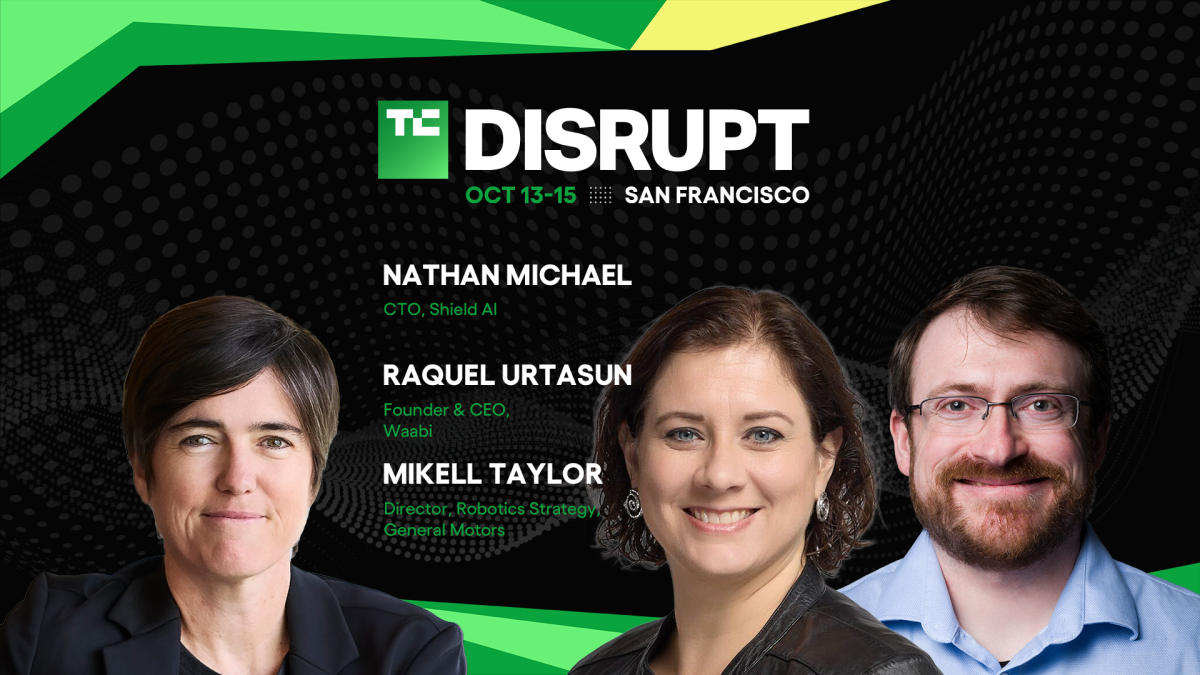
The discussion, titled “Building AI Systems When Failure Is Not an Option”, will take place on the Real World AI Stage and bring together leaders from defense autonomy, self-driving trucking and industrial robotics. The panel is designed to go beyond hype and focus on the engineering, testing and deployment discipline required to move from promising prototypes to systems people can rely on.
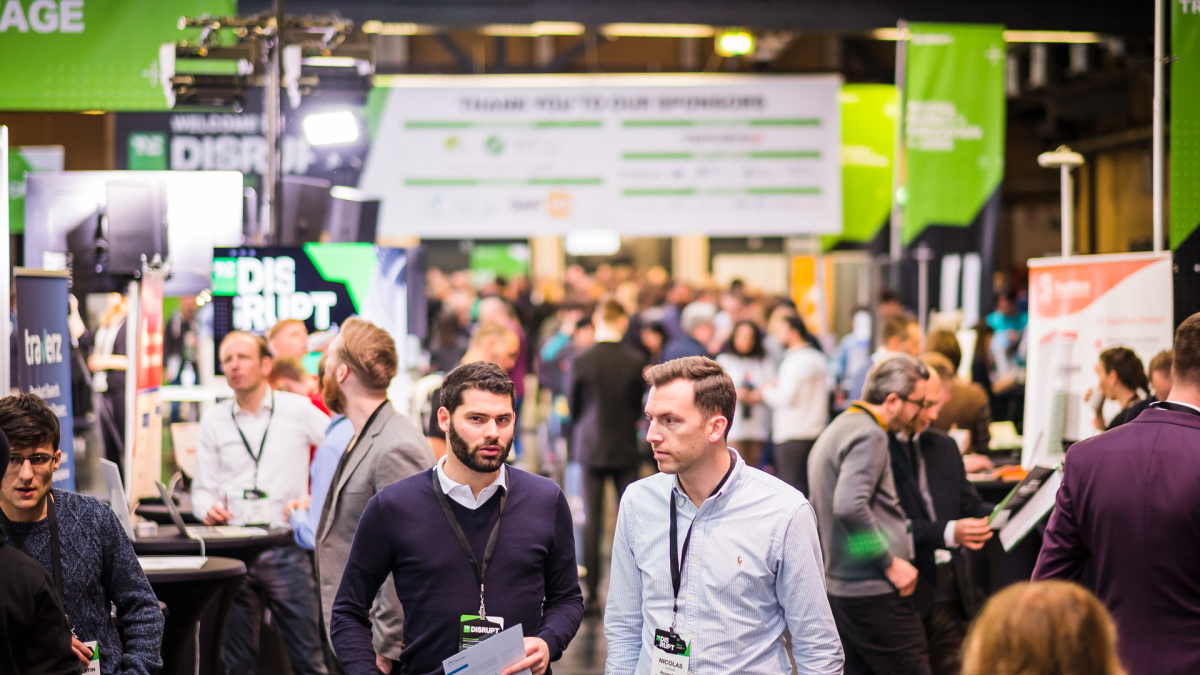
TechCrunch is positioning the session as one of the marquee conversations at Disrupt 2026, where more than 10,000 founders, investors, operators and technologists are expected to gather in San Francisco from October 13 to 15. Organizers say the event will include 200-plus sessions, 250-plus speakers and 300-plus exhibiting startups.
Why physical AI raises the stakes
AI tools that generate text or images can be frustrating, inaccurate or misleading. AI systems embedded in aircraft, vehicles or robots are different because failures are no longer just digital errors — they are mechanical, operational and potentially dangerous.
That distinction is becoming more important as companies race to deploy autonomy in domains where safety, reliability and regulatory scrutiny are non-negotiable. Whether the task is flying a drone, hauling freight or moving equipment in a warehouse, the same question follows every pilot program: how much evidence is enough to trust the machine?
The Disrupt panel is built around that question. The three speakers each bring a different lens on how autonomy moves from controlled testing into operations where there is little room for error.
Who is speaking at the session?
The panel will feature Nathan Michael, chief technology officer at Shield AI; Raquel Urtasun, founder and chief executive of Waabi; and Mikell Taylor, director of robotics strategy at General Motors. Each has worked on autonomy in a different setting, but all are confronting the same basic challenge: proving that AI can perform safely, consistently and at scale.
Together, they represent three major slices of physical AI:
- defense and mission autonomy
- autonomous trucking and robotaxis
- industrial robotics and human-machine collaboration
Nathan Michael and the mission autonomy problem
Michael leads development and deployment of Hivemind, Shield AI’s platform-agnostic mission autonomy software. His background spans AI, control systems, perception and multi-robot systems, and he previously directed Carnegie Mellon University’s Resilient Intelligent Systems Lab.
Shield AI has been making rapid progress in defense autonomy. In February, Hivemind was selected as an autonomy provider for the U.S. Air Force’s Collaborative Combat Aircraft drone prototype program. In March, the company said it had raised $1.5 billion in Series G financing at a $12.7 billion post-money valuation.
That combination of public-sector demand and private-sector capital has made Shield AI one of the most closely watched players in military autonomy. Michael’s role at Disrupt will likely center on a core defense question: how do you prove a system is ready when the consequences of failure could affect a mission, a platform or human lives?
Raquel Urtasun and the validation challenge
Urtasun brings decades of experience in AI and autonomous vehicles. Before starting Waabi, she served as chief scientist and head of research and development at Uber ATG. She is also a professor of computer science at the University of Toronto, co-founded the Vector Institute for AI and has published more than 200 papers.
Waabi has become known for leaning heavily on simulation to test and refine its autonomous-driving stack. The company’s Waabi World simulator is intended to train, stress-test and validate Waabi Driver before the system ever reaches the road.
In January, Waabi announced a $1 billion funding round and a partnership with Uber aimed at supporting deployment of 25,000 or more robotaxis powered by Waabi Driver. Even so, Urtasun has been careful to say the company’s autonomous trucks still require full validation before they can operate without a driver.
Her perspective will likely speak to a central issue in autonomy: simulation can accelerate development, but it cannot replace the evidence required for deployment. For self-driving systems, the gap between “works in a demo” and “ready for the road” can be enormous.
Mikell Taylor and robotics that work around people
Taylor now leads robotics strategy for General Motors’ Autonomous Robotics Center, where the focus is on practical systems that can function in real-world settings and around human workers. Before joining GM, she led the Amazon Robotics team that developed Proteus, Amazon’s first autonomous mobile robot.
Her background is unusually broad. Over more than 20 years in robotics, Taylor has worked on autonomous underwater vehicles, industrial systems and human-centered machines. She also once built a robotic prom date, a story that reflects how early experiments can evolve into serious engineering careers.
Taylor’s experience makes her a natural fit for a discussion about adoption, user experience and trust. In industrial robotics, performance is only part of the equation. If people do not understand, accept or trust the machine, deployment can stall even if the hardware works.
How do companies decide AI is ready?
The short answer is that they do not rely on a single test or milestone. Instead, readiness usually comes from a layered process that combines simulation, controlled trials, safety analysis, field testing, operational oversight and repeated validation under edge cases.
For physical AI, “ready” means something different depending on the use case. A defense system may need to demonstrate mission assurance under contested conditions. An autonomous truck must prove it can operate safely on public roads. A warehouse robot has to move around people without creating new hazards.
The common thread is confidence under uncertainty. Teams must know not only whether the system performs in normal conditions, but also how it behaves when sensors fail, environments change or rare events appear.
What testing usually matters most?
Testing for physical AI typically extends beyond standard software QA. The most relevant checks often include:
- simulation across thousands or millions of scenarios
- hardware-in-the-loop and system-level testing
- stress tests for rare or dangerous edge cases
- fail-safe and fallback mode verification
- limited real-world pilots with close human supervision
Those steps help teams answer a deceptively simple question: if something goes wrong, what happens next?
How the three companies illustrate different kinds of risk
Although Shield AI, Waabi and General Motors work in different sectors, each is wrestling with a version of the same problem. The difference lies in how failure is defined and who carries the risk.
| Company | Focus area | Key challenge | Recent milestone |
|---|---|---|---|
| Shield AI | Defense autonomy | Proving mission-ready performance in high-stakes environments | Hivemind chosen for U.S. Air Force drone prototype program |
| Waabi | Autonomous driving | Validating safety before driverless deployment | $1 billion raised; Uber partnership for robotaxi deployment |
| General Motors | Robotics strategy | Building robots that work reliably alongside people | Leadership shaped by Amazon Robotics experience |
Each company also reflects a different route to commercialization. Shield AI has benefited from defense procurement and strategic investment. Waabi is pairing simulation with a deployment partnership. GM’s robotics work sits inside a large industrial enterprise where integration and workplace fit matter as much as technical novelty.
Why trust is now a product requirement
For physical AI, trust is not a branding exercise. It is part of the product itself.
When a company ships software to a phone or browser, users can often ignore a bad answer or switch products quickly. When an autonomous system controls a vehicle or robot, trust has to be earned before deployment and maintained after it is in use.
That is why the panel’s focus on safety culture, validation and regulation is so important. Leaders in this field are no longer only selling capability; they are selling confidence that the capability will hold up in messy, unpredictable conditions.
According to TechCrunch’s event preview, the speakers are expected to dig into the disciplines that sit behind real-world deployment, including safety culture, testing, validation, regulation and trust.
That framing reflects a broader shift in the AI market. Investors, regulators and customers are increasingly demanding proof that systems can operate reliably before they are widely deployed. The era of demo-driven enthusiasm is giving way to an era of evidence.
What makes Disrupt 2026 a relevant venue?
Disrupt has long been a meeting point for startup founders, venture investors and technology operators. In 2026, the conference is leaning into the practical side of AI by placing autonomy, robotics and deployment questions on major stages.
TechCrunch says the event will include six industry stages, roundtables and breakouts, along with networking and matchmaking designed to help companies find customers, partners and investors. That mix matters because physical AI is not just a technical category. It is also a supply chain, a capital-intense business and a regulated industry.
For attendees, the session offers a rare comparison of how three different sectors manage the same essential risk: what happens when the machine is allowed to act without constant human correction?
Why this conversation matters now
Autonomy is moving from a research promise into commercial deployment, but the standards for success are rising at the same time. Defense organizations need systems they can trust in mission scenarios. Logistics and trucking companies need systems that can run for long periods with high reliability. Manufacturers and warehouse operators need robots that can fit into human workflows without causing disruption.
In each case, the cost of a mistake is real. That is why the question behind the session — when is AI ready to leave the lab? — is one of the most consequential questions in the industry.
What to expect from the session
The most likely outcome of the panel is not a single universal answer. Physical AI does not become safe or deployable through one magical threshold. Instead, the speakers are likely to describe different frameworks for risk management, testing and operational confidence.
For defense autonomy, the emphasis may fall on mission assurance and fault tolerance. For autonomous driving, the discussion may center on validation, scenario coverage and regulatory acceptance. For robotics in industrial environments, the key issue may be human factors, usability and system behavior around people.
That diversity is the point. Real-world AI is not one market but many, each with its own failure modes and its own rules for acceptance.
Timeline of the companies and milestones
| Date | Company | Milestone | Why it matters |
|---|---|---|---|
| February 2026 | Shield AI | Hivemind selected for U.S. Air Force drone prototype program | Shows defense autonomy is moving into procurement |
| March 2026 | Shield AI | $1.5 billion Series G at $12.7 billion valuation | Signals major investor confidence in mission autonomy |
| January 2026 | Waabi | $1 billion funding round and Uber partnership | Supports robotaxi scale-up and deployment planning |
| 2026 | General Motors | Robotics strategy led by Mikell Taylor | Shows how legacy manufacturers are investing in practical robotics |
Bottom line
TechCrunch Disrupt 2026 will bring together leaders from defense, autonomous driving and industrial robotics to answer a question that is increasingly central to the AI industry: when can a machine be trusted to act on its own?
For companies building aircraft autonomy, self-driving vehicles and workplace robots, the answer depends on more than model quality. It depends on validation, safety culture, human factors, regulation and the ability to prove performance under stress. That is why this panel stands out: it addresses the gap between AI that impresses people in a demo and AI that can safely function in the real world.
The session is also a snapshot of where the industry is headed. The next competitive advantage in AI may not be who can build the most impressive system, but who can prove it is ready for the consequences of real use.
Disrupt 2026 runs October 13-15 at Moscone West in San Francisco. TechCrunch says discounted tickets are available through September 25 at 11:59 p.m. PT.
Frequently asked questions
What is the Disrupt 2026 session about?
It is about how to build and deploy AI systems for aircraft, vehicles and robots when failure can have real-world consequences. The panel will focus on safety, testing, validation, regulation and the trust needed before autonomous systems are released.
Who is speaking at the panel?
The panel features Nathan Michael of Shield AI, Raquel Urtasun of Waabi and Mikell Taylor of General Motors. Each speaker brings experience from a different area of physical AI, including defense autonomy, self-driving systems and industrial robotics.
Why is physical AI harder than chatbot AI?
Physical AI is harder because mistakes can cause crashes, mission failures or injuries, not just incorrect answers. Systems that control vehicles, aircraft or robots must prove they can handle rare events, sensor failures and unpredictable environments safely.
What recent milestones have Shield AI and Waabi reached?
Shield AI’s Hivemind was selected for the U.S. Air Force’s Collaborative Combat Aircraft drone prototype program, and the company later disclosed a $1.5 billion Series G round. Waabi raised $1 billion in January and partnered with Uber on a robotaxi deployment plan.
When and where is TechCrunch Disrupt 2026?
TechCrunch says Disrupt 2026 will take place October 13-15 at Moscone West in San Francisco. The conference is expected to include more than 10,000 attendees, 250-plus speakers and 300-plus startups.