In short
Meta has unveiled Muse Charm, a keychain-style AI wearable for its Muse agent, with a possible December release. The device is meant to make Meta’s assistant faster and easier to use without opening a phone app.
- Meta unveiled Muse Charm, a small wearable designed to access its Muse AI agent.
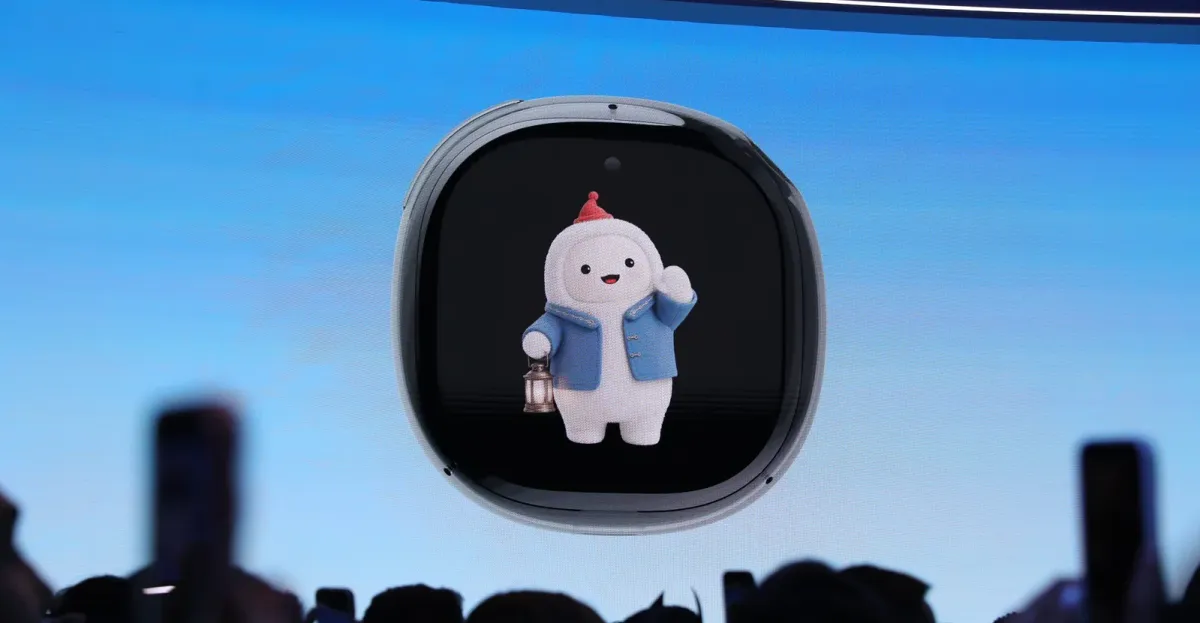
- The device includes a tiny screen, a fingerprint sensor and an avatar called Jolly.
- Meta says the wearable could ship in time for the December holiday season.
- The launch reflects Meta’s broader push to find a consumer-friendly AI hardware form factor.
Meta has introduced a new AI wearable called Muse Charm, a small keychain-style device built to keep users connected to its Muse personal assistant, with shipping planned for December if development stays on schedule. The gadget matters because it marks Meta’s latest attempt to make AI feel more immediate, portable and socially acceptable after years of skepticism around so-called AI pendants.
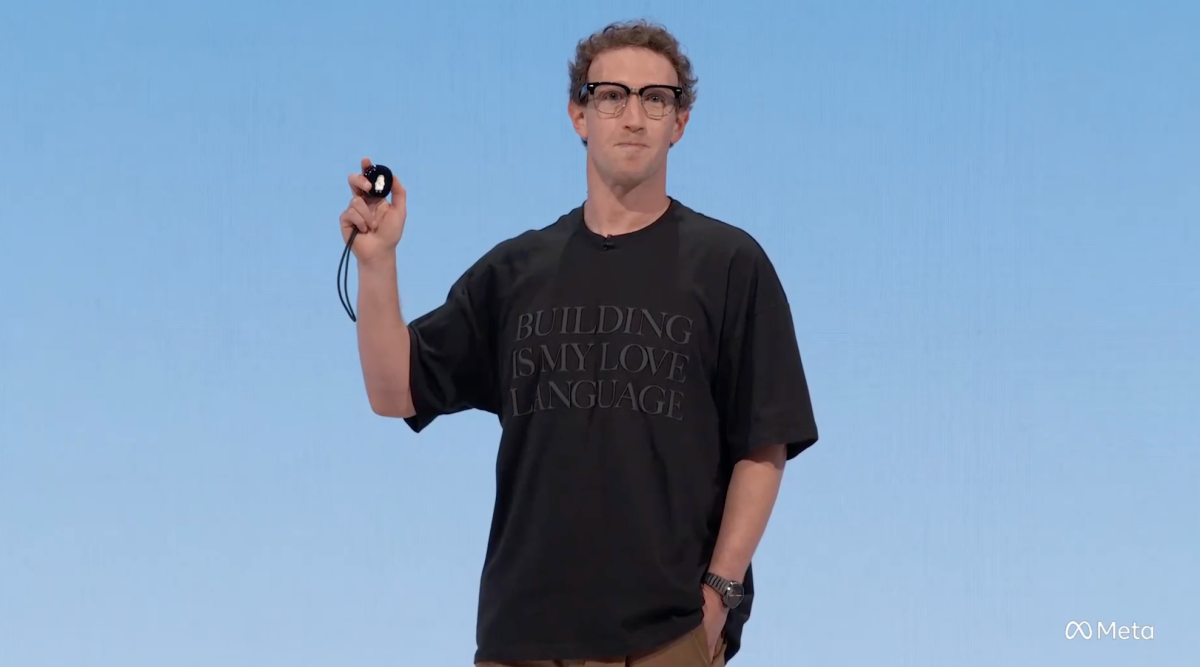
Unveiled during the company’s annual Connect event, the device is designed as a companion to Muse, Meta’s recently launched personal AI agent. The company says the wearable will let people talk to the assistant without opening a phone, launching an app or relying on glasses, placing Meta squarely in the middle of the growing race to invent a new hardware form for AI.
The announcement arrived in a market that has already seen plenty of ridicule for AI jewelry and necklace-like gadgets. But Meta appears to be betting that a more playful, lower-stakes version of the concept could work, especially if it helps spread Muse to a wider audience.
What Meta announced at Connect
Meta used a late-stage keynote reveal to show off Muse Charm, framing it as a compact way to access the company’s AI agent from nearly anywhere. CEO Mark Zuckerberg introduced the product in a classic “one more thing” moment, signaling that the hardware is meant to complement the software rather than replace the phone entirely.
The device is not yet on sale. Zuckerberg said the team still needs to finish arranging the internal components, but he indicated the company expects it to be ready for the holiday season in December. That timeline suggests Meta is moving quickly, though it remains unclear how many units the company plans to produce or how broadly it will launch.
According to Meta’s presentation, Muse Charm includes a tiny screen that shows Jolly, the digital avatar associated with the Muse agent. Users can speak to the wearable, which then responds through the agent’s voice and interface stack. The result is meant to be a fast, always-available doorway into Meta’s AI system.
Meta says it has compressed the full Muse experience, including real-time voice and avatar features, into a device small enough to clip to a keychain and keep with you throughout the day.
How does Muse Charm work?
Muse Charm is designed to be simple: tap, talk and get a response. Meta says users can activate the wearable with a fingerprint sensor built into the corner of the device, removing the need to wake a phone or open an app first.
That design choice is important because convenience is the main selling point of almost every consumer AI hardware product. If a person still needs to pull out a handset, unlock it and find the right app, the wearable risks becoming redundant. Meta’s pitch is that Muse Charm makes interaction feel closer to a spontaneous conversation than a software task.
The company is also positioning the gadget as an alternative for users who are not wearing AI glasses. Zuckerberg suggested that in those cases, the wearable would be the quickest way to talk to Muse and show what is happening around the user.
Key features Meta highlighted
- Keychain-sized body that can fit in a pocket or attach to personal items
- Tiny screen displaying the agent’s avatar
- Fingerprint sensor for quick activation
- Real-time voice interaction with the Muse agent
- Designed for always-on, portable access to Meta’s AI system
Why is Meta making an AI charm now?
Meta is making Muse Charm because hardware remains one of the hardest problems in consumer AI, and the company wants more than phone apps to distribute its assistant. A pocket device or pendant can give users a physical relationship with software, which may help AI feel more personal and habitual.
There is also a strategic element. Meta already has massive distribution through social apps, but those platforms do not guarantee that people will build a daily relationship with the company’s assistant. A dedicated wearable gives Muse a more distinct identity and could help Meta test how much people actually want an AI companion they can carry around.
That said, the category is far from proven. Many consumers have already rolled their eyes at AI devices that promise intimacy but deliver awkwardness. For that reason, Meta seems to be aiming for a more charming, less intimidating product than some of the more ambitious AI companions previously floated by the industry.
Why the form factor matters
The physical shape of an AI device influences how people use it. A phone is powerful but distracting. Glasses can feel futuristic but intrusive. A small wearable on a keychain sits somewhere in between: visible enough to feel novel, but unobtrusive enough to blend into everyday life.
That middle ground may be exactly what Meta is trying to exploit. Muse Charm appears to be less about replacing existing devices and more about making AI interaction feel lighter, friendlier and more frequent.
| Feature | Muse Charm | Why it matters |
|---|---|---|
| Form factor | Keychain-sized wearable | Makes the device easy to carry and use throughout the day |
| Interface | Tiny screen with avatar | Provides a more playful, recognizable identity for the AI |
| Activation | Fingerprint sensor | Speeds up access without needing a phone unlock |
| Primary function | Voice access to Muse | Turns Meta’s agent into a portable assistant |
| Availability | Planned for December | Suggests a holiday launch window if development stays on track |
Who is Muse for?
Muse Charm appears aimed at consumers who want quick access to an AI assistant without treating it like a work tool. That could include early adopters, tech enthusiasts and users who enjoy novelty products that also serve a practical purpose.
The device’s design suggests Meta wants to make AI feel approachable rather than corporate. The Jolly avatar, the small screen and the keychain format all point toward a product intended to look friendly, not industrial.
That could be a smart choice. One of the biggest challenges in the AI hardware market is not simply building a capable assistant, but making the hardware feel worth wearing, carrying or touching every day. If the product looks like a toy, people may dismiss it; if it looks too serious, they may hesitate to use it in casual settings. Meta seems to be searching for a sweet spot between those extremes.
How does this fit into the broader AI wearable race?
Meta’s move lands in a crowded and still uncertain category. Several companies have tried to build wearable AI devices that sit somewhere between fashion accessory and intelligent companion. Few have fully broken through with mainstream consumers, and many have become shorthand for overhyped tech concepts.
That history explains why the idea of an AI amulet or pendant has become something of a punchline. Consumers have often questioned whether these gadgets solve a real problem or simply create another screen-adjacent object to charge and carry. Meta’s challenge is to prove that Muse Charm offers something meaningfully different from a phone app or a smart speaker.
Still, Meta has advantages that smaller startups do not. It already has large-scale software distribution, deep experience in consumer interface design and a sizable incentive to integrate AI into everyday behavior. If the company can make a wearable feel natural, it may have a better chance than many of the startups that came before it.
What Meta may be testing with this product
- Whether users will regularly talk to an AI agent through a dedicated wearable
- Whether a charm-like design reduces the awkwardness of AI hardware
- Whether a tiny physical interface increases engagement with Muse
- Whether the company can create a new consumer habit around ambient AI access
What Zuckerberg’s reveal suggests about Meta’s strategy
The framing of the announcement says as much as the product itself. By tucking the wearable into a keynote surprise, Zuckerberg signaled that Meta sees AI hardware as an expanding part of its platform vision, not a side experiment. The company is clearly trying to move beyond software-only AI experiences and into objects people can wear, carry and notice.
That broader ambition fits Meta’s long-running pattern of pushing into new hardware categories when the company believes the platform shift is large enough. It has done that before with virtual reality and smart glasses. Now it is trying to see whether AI can support a new family of everyday devices.
At the same time, the company’s language around Muse Charm suggests caution. This is not being positioned as a futuristic must-have or a replacement for the smartphone. Instead, it is being presented as the fastest way to reach Muse if you are not using glasses. That practical framing may help keep expectations grounded while Meta learns what people actually want.
Zuckerberg said the wearable was built to let people talk to Muse quickly, without unlocking a phone or opening an app first.
How much does the timing matter?
The promised December availability is significant because it places the product in the crucial holiday shopping window. If Meta does manage to ship on schedule, Muse Charm could become one of the season’s more visible AI gadget launches. If not, the device risks fading into the long list of hardware teasers that generated buzz but never quite reached shelves.
That makes the development timeline especially important. A product like this depends heavily on polish, battery life, voice responsiveness and build quality. Even small flaws could make a novelty wearable feel gimmicky rather than useful.
For Meta, the next few months will likely determine whether Muse Charm becomes a real consumer product or just another glimpse of where the company wants AI hardware to go.
Meta’s AI hardware in context
Meta has already been pushing AI across its platforms, but a dedicated wearable gives the company a more personal form factor to experiment with. That is part of a bigger industry conversation about how users will interact with AI in daily life: through phones, earbuds, glasses, watches, pins, charms or some future device that has not yet become mainstream.
In that sense, Muse Charm is not only about Meta’s assistant. It is also about a broader bet that artificial intelligence will eventually need its own consumer hardware layer, just as social media once did.
If the device works, it could help normalize the idea that AI should be nearby all the time. If it fails, it will reinforce the view that people prefer intelligent software to stay in the background unless it solves an urgent problem.
What happens next?
For now, the biggest question is whether Meta can convert curiosity into adoption. The company has built attention around Muse already, and the charm-format wearable may increase that interest by giving the assistant a physical personality. But the real test will come when people decide whether they want to carry it, use it and keep it charged.
Meta’s history suggests it is willing to keep iterating if the first version does not break through. But the December target means the company is clearly trying to move quickly from concept to consumer product. That urgency reflects the competitive pressure in AI, where product categories are still being defined and companies are racing to own the first credible version of each one.
For now, Muse Charm stands as a concise expression of Meta’s current hardware philosophy: make AI smaller, faster and more present in daily life, then see whether people actually want to keep it close.
Bottom line
Meta’s Muse Charm is a tiny, keychain-style AI wearable built to make the company’s Muse agent easier to access on the go, with a potential holiday launch in December. The device may be modest in scale, but it represents a larger bet that people will embrace AI companions if they arrive in a form that is playful, portable and always within reach.
Frequently asked questions
What is Meta’s Muse Charm?
Meta’s Muse Charm is a keychain-sized AI wearable built to provide quick access to the company’s Muse personal assistant. It includes a tiny screen for an avatar, voice interaction features and a fingerprint sensor for easy activation without opening a phone app.
When will Muse Charm be available?
Meta says Muse Charm is expected to be ready for shipping in December, which would place it in the holiday shopping season. The company still needs to finalize some internal components, so the launch timing could depend on development progress.
How is Muse Charm different from an AI app?
Muse Charm is different because it is a physical device you can carry or clip to a keychain, making the assistant available without unlocking a phone. Meta is betting that a dedicated wearable will feel faster, more immediate and more personal than a standard app.
Why is Meta launching an AI wearable now?
Meta is launching an AI wearable now because it wants new ways to distribute and normalize its Muse assistant. The company appears to think a portable device could make AI feel more natural in everyday life and help it stand out in a crowded hardware race.