In short
Meta is developing the Muse Charm, a standalone wearable AI gadget built to work with the Muse agent without a phone. Zuckerberg said the device could ship by December, but the hardware is still early and only a few units exist.
- Meta has previewed the Muse Charm, a standalone device for its Muse AI agent.
- The gadget appears to include a fingerprint sensor, camera and microphones for direct interaction.
- Zuckerberg said Meta wants to ship the device by December, but production is still very limited.
- The product suggests Meta is betting on AI-first hardware rather than phone-based use.
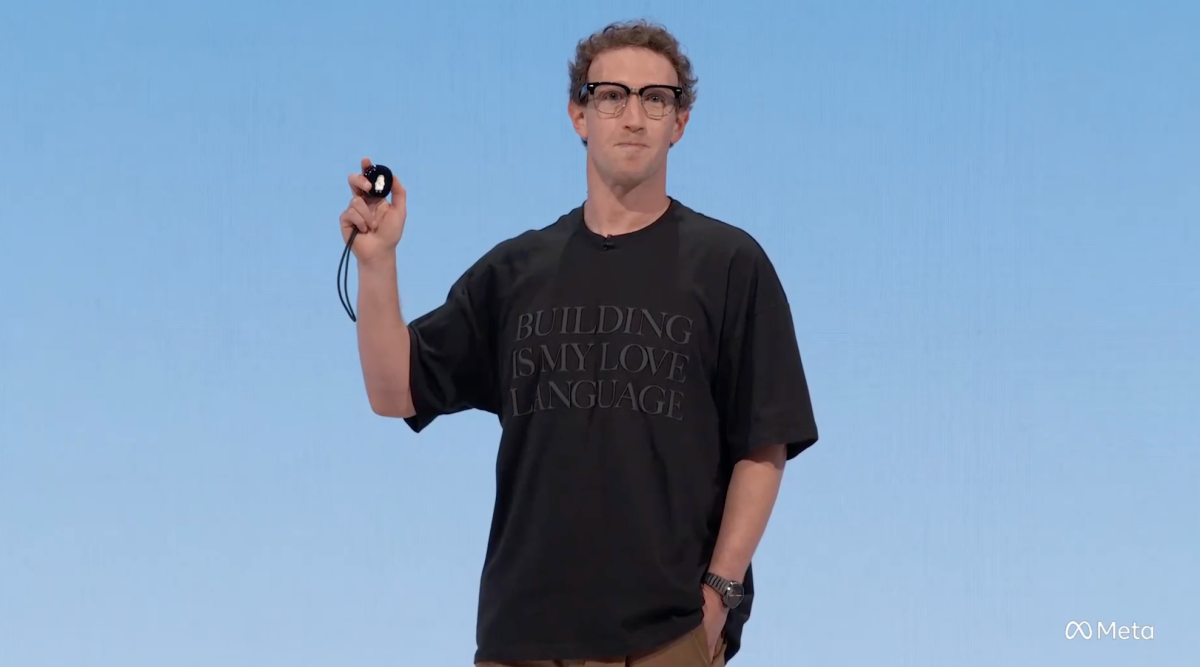
Meta is building a dedicated wearable called the Muse Charm, a standalone AI device designed to talk to the company’s new Muse agent without requiring a phone or app. Mark Zuckerberg briefly previewed the gadget at Meta Connect and said the company hopes to ship it by December, though it has only made a handful of units so far.
The move signals Meta’s push to make AI more ambient and immediate, with hardware that can summon an assistant at the press of a finger rather than a tap on a smartphone screen. It also gives the company another shot at defining a consumer AI category before rivals settle the market shape.
What Meta showed at Connect
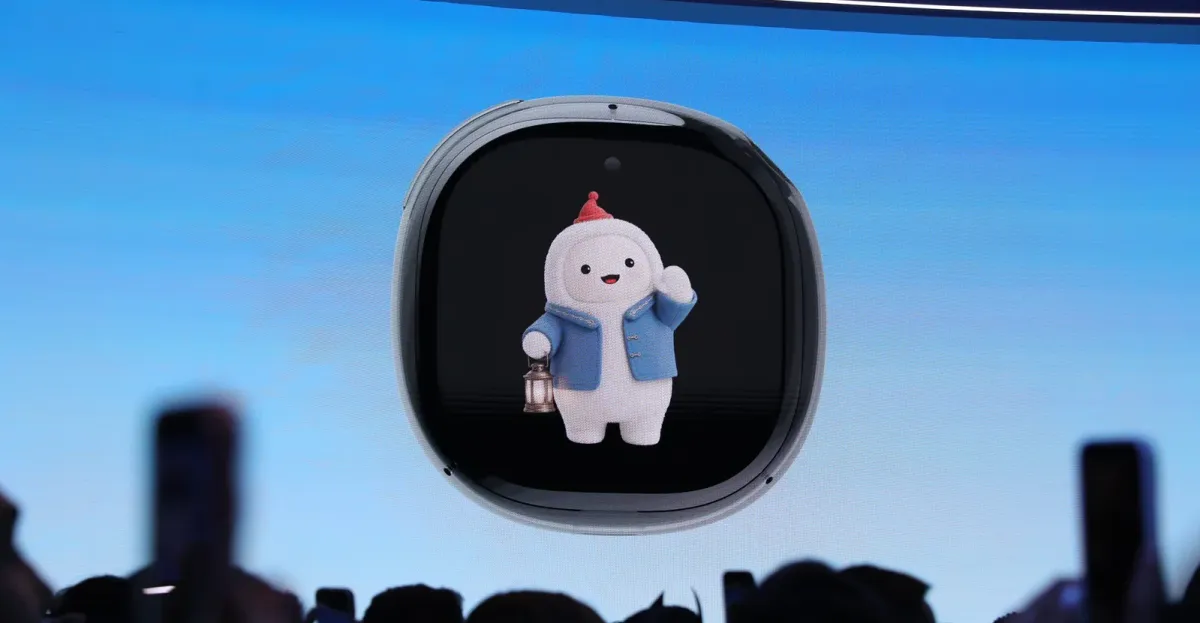
Meta did not fully unveil the Muse Charm as a finished consumer product, but the company did provide enough detail to suggest where it is headed. The device appears to be a compact, screen-equipped wearable with a chunky form factor similar to a smart watch body, only without the band. A small lanyard lets the user carry it, making it look more like a pocketable pendant than a traditional wrist device.
At the end of Zuckerberg’s Meta Connect presentation, the Charm was shown only briefly, but the glimpse was enough to make it clear that Meta sees it as a purpose-built interface for the Muse AI agent. Rather than using a phone as the middleman, the hardware is meant to let users interact directly with Meta’s assistant in a more natural and less interruptive way.
How the Muse Charm is supposed to work
The Muse Charm includes a fingerprint sensor near the top-right corner, which is used to wake the device and start a conversation with the agent. Meta also appears to have built in at least one camera and multiple microphones, suggesting the device is intended to hear and possibly see the user’s surroundings while acting as an AI companion.
Zuckerberg said people would not need to unlock a phone or launch an app to use the Charm. That is the core promise of the product: instant access to AI, always available in a small device that can be activated with a touch.
Meta has not yet explained how the device connects to its servers, how much of the AI processing happens locally, or what privacy controls will be available. Those unanswered details matter, because hardware that constantly listens and occasionally sees the world around it raises obvious questions about data collection and security.
Zuckerberg described the product as part of a more refined “hacker” aesthetic, and said Meta is still deciding on the final material finish, including a translucent look that would reveal the gadget’s internals.
Why Meta is making a standalone AI gadget
Meta’s answer is that AI should not feel trapped inside a phone screen. The company appears to believe that the most useful assistants will be the ones that are easy to reach in the moments when users actually need them, whether that is asking a question, capturing a note, or getting an immediate response while moving around.
A standalone device also gives Meta the chance to create a new product category around its AI agent rather than depending on mobile operating systems controlled by Apple and Google. If the Muse Charm succeeds, Meta would gain a direct hardware channel for its services and a stronger foothold in consumer AI.
The timing is also notable. Consumer interest in AI assistants is shifting from novelty chat to more practical, always-on uses. Meta is trying to position itself not just as a model builder, but as a company that can package AI into a physical object people may want to carry every day.
How is this different from a smartwatch?
It is different because Meta seems to be designing the Charm around AI-first interactions rather than health tracking, notifications, or a general-purpose app ecosystem. While it resembles a watch without a strap, its purpose is closer to an always-ready assistant than a wrist computer.
That distinction could matter. Smartwatches compete on battery life, app support, and fitness features. The Muse Charm, by contrast, appears to be centered on speed, voice interaction, and ambient access to the Muse agent.
What Zuckerberg revealed about the timeline
Zuckerberg said Meta plans to ship the Muse Charm in time for the December holidays, but he also made clear that the device is still early. According to his remarks, the company has only produced a few units so far, which suggests the hardware is still in prototype or pilot-stage development.
He also said the company has not finalized the finishing material, indicating that the industrial design remains in flux. In other words, the Charm is far enough along to show on stage, but not yet mature enough to be treated as a polished launch product.
That gap between demo and delivery is important. It shows Meta is willing to talk about a product that is still being refined, likely to gauge reaction and build anticipation before the company commits to a broader rollout.
| Key detail | What Meta has said or shown | Why it matters |
|---|---|---|
| Product name | Muse Charm | Signals a consumer-facing device tied to Meta’s Muse agent |
| Form factor | Small screen device with a lanyard, similar to a strapless smartwatch | Suggests portable, always-accessible AI use |
| Activation | Fingerprint sensor to wake the device and start speaking | Creates a quick, direct interaction model |
| Inputs | Camera and multiple microphones | Points to voice and environmental awareness |
| Launch timing | Targeted for December holiday shipping | Shows Meta is aiming for a near-term consumer release |
| Production status | Only a few units have been built so far | Indicates the device is still in early development |
How the Muse Charm fits Meta’s broader AI strategy
The Muse Charm is best understood as part of Meta’s larger attempt to turn its AI investments into products people touch every day. Meta has spent heavily on models, infrastructure, and consumer software, but a dedicated device would give the company something more tangible: a physical front door to its AI.
That is especially relevant for Meta, whose core businesses already live on personal devices and in social apps. A standalone assistant can extend that relationship beyond a feed or a chat window and make AI feel like part of daily behavior rather than an occasional feature.
There is also a strategic defensive reason to build hardware. If Meta can create a successful AI companion that doesn’t depend on a phone app, it reduces reliance on other companies’ platforms and puts more of the user experience under its own control.
Why the design language matters
The translucent styling Zuckerberg teased is not just cosmetic. In consumer hardware, design is often how a company communicates identity before the product has proven itself. By leaning into an “elevated hacker aesthetic,” Meta is trying to make the Charm feel experimental, modern, and technically adventurous rather than bland or corporate.
That kind of styling could help the product stand out in a market where most consumer AI devices are still trying to explain what they are for. If the Charm looks unlike ordinary gadgets, it may help Meta sell the idea that this is a new class of device rather than a slightly altered accessory.
What questions remain unanswered?
Several essential questions remain open. Meta has not said whether the Muse Charm will require a smartphone for setup, whether it will work over Wi-Fi or cellular data, what the battery life will be, or whether the hardware will be sold widely or in limited quantities first.
Pricing has also not been announced. That omission is important because the market for experimental AI gadgets has already shown that consumers can be skeptical of devices without a clear use case or a price that matches the value.
Meta also has not explained whether the Charm will be marketed as a general consumer product, a developer preview, or a limited early-adopter device. Each of those paths would imply a very different launch strategy.
How much of a risk is this for Meta?
It is a meaningful risk because the company is entering a category where novelty alone will not sustain demand. A successful AI gadget needs to be useful, reliable, private enough for users to trust, and distinctive enough to justify carrying yet another device.
At the same time, the upside is large. If Meta can make the Muse Charm feel indispensable, it could create a new recurring relationship with users that is deeper than an app and more personal than a feed. That is the sort of product outcome tech companies chase for years.
How the consumer AI hardware race is evolving
The Muse Charm arrives at a time when several companies are searching for the next major form factor for artificial intelligence. Phones remain the dominant interface, but many firms are experimenting with accessories, wearables, and dedicated devices that make conversation with AI easier and more continuous.
What Meta is proposing is not simply another smart speaker or smartwatch. It is a more personal, screen-forward wearable that could live near the body and turn AI into a constant companion rather than an app you launch when needed.
That approach reflects a broader shift in the industry. As model quality improves, the bottleneck moves from intelligence itself to interface design. The companies that win may be the ones that make AI feel effortless, timely, and physically close.
What would success look like?
Success would mean users routinely reaching for the Charm because it saves time, helps them stay organized, or gives them immediate access to Meta’s Muse agent in situations where a phone feels cumbersome. If the device can become part of a daily routine, Meta could justify the hardware investment and build a foundation for future versions.
Failure, by contrast, would look like another well-publicized AI gadget that generates curiosity but limited long-term usage. That outcome would not be unusual in emerging hardware categories, especially when the product is still being finalized only months before its expected ship date.
What happens next?
Meta says more information is coming soon, and that matters because the company has not yet answered many of the practical questions that consumers and developers will care about. A fuller product announcement would need to cover pricing, availability, connectivity, battery life, privacy safeguards, and the specific capabilities of the Muse agent itself.
If Meta does manage to ship the Muse Charm before the end of the year, it would mark one of the company’s first serious attempts to pair a branded AI agent with dedicated consumer hardware. Even if the first version is limited, it could give Meta valuable feedback on what people want from an AI wearable.
For now, the Charm remains more promise than product. But Meta’s willingness to show it on stage suggests the company believes the next phase of AI will not be defined only by software breakthroughs. It will also be defined by the devices people choose to hold, wear, and carry.
Timeline of the Muse Charm announcement
- During Meta Connect: Zuckerberg briefly reveals the Muse Charm at the close of the presentation.
- In the keynote remarks: He says the device can be activated directly without opening a phone app.
- Design details emerge: Meta teases a translucent finish and a compact wearable shape with a lanyard.
- Production status disclosed: Zuckerberg says only a few units exist so far.
- Launch target set: Meta says it hopes to ship the device by December.
As Meta moves from demo to development, the Muse Charm is shaping up to be a test of whether consumers want a dedicated AI companion badly enough to carry another device. The company’s answer will likely depend less on hype than on whether the Charm delivers something a phone cannot.
Frequently asked questions
What is Meta’s Muse Charm?
Meta’s Muse Charm is a standalone AI hardware device designed to interact with the company’s Muse agent without needing a phone or app. It appears to be a small wearable with a screen, microphone array, camera and fingerprint sensor.
When will the Muse Charm be released?
Meta says it is aiming to ship the Muse Charm in December, around the holiday season. However, the company has also said it has only built a few units so far, which means the product is still in very early development.
How does the Muse Charm work?
The Muse Charm is designed to be activated by pressing a fingerprint sensor, which wakes the device and starts a conversation with the Muse agent. Meta says users won’t need to unlock a phone or open an app to use it.
Why is Meta building a standalone AI gadget?
Meta is building the device to make AI more immediate and portable, and to give its assistant a direct hardware interface. A standalone gadget also helps Meta reduce dependence on smartphones controlled by other platform companies.