In short
Apple is reportedly set to announce the HomeView, a Siri-powered smart home hub with a display and A18 chip. The launch could mark Apple’s most serious attempt yet to break through in the connected-home market.
- Apple is expected to unveil the HomeView on Tuesday as a new smart home hub.
- The device is reportedly Siri-powered, display-equipped and built on an A18 chip.
- Apple will also reportedly refresh the Apple TV and HomePod mini.
- A reported LG partnership could expand Apple’s home lineup with a smart lock, thermostat and doorbell.
- The launch is a major test of whether Apple can finally gain traction in the smart home.
Apple is preparing to announce a new smart home hub called the HomeView on Tuesday, a device that could become the company’s most important push yet into the connected-home market. According to reporting from Bloomberg’s Mark Gurman, the product will combine a display, Siri integration and an A18 chip, giving Apple a fresh chance to compete in a category where it has struggled for years.
The new hardware matters because Apple has long seen the home as a place where its ecosystem should extend beyond the iPhone, but its efforts have never fully caught on. The HomeView appears designed to change that, while Apple also reportedly readies updated versions of the Apple TV and HomePod mini and expands its smart-home ambitions through new partnerships.
What Apple is expected to announce
Apple’s upcoming product reveal is centered on the HomeView, a smart home hub that reportedly includes a screen, voice control through Siri and Apple’s A18 processor. If the reporting proves accurate, the device will serve as a control center for connected lights, locks, thermostats, doorbells and other accessories already in or near the Apple ecosystem.
Unlike a speaker alone, the HomeView seems intended to blend visual controls with voice commands. That makes it more versatile than the HomePod line and potentially more useful in the everyday routines of a kitchen counter, hallway wall or family room.
Bloomberg’s account says the hub will come in two forms: one model meant to sit on a countertop and another built for wall mounting. That detail suggests Apple is treating the product less like a niche accessory and more like a device that should fit into different parts of a home.
| Item | Reported details | Why it matters |
|---|---|---|
| HomeView | Siri-powered smart home hub with display and A18 chip | Apple’s most ambitious home control device to date |
| Form factors | Countertop model and wall-mounted version | Broadens where the product can be used |
| Apple TV | Updated version expected | Refreshes Apple’s living-room hardware |
| HomePod mini | Updated version expected | Strengthens Apple’s audio and assistant strategy |
| LG partnership | Smart lock, thermostat and doorbell reportedly in development | Extends Apple’s home reach through hardware partners |
Why the HomeView matters for Apple
The HomeView is significant because Apple has repeatedly failed to establish a clear smart-home winner. The company’s HomeKit platform has been useful as a framework for device compatibility, but it never became a breakout consumer brand. HomePod, meanwhile, won praise for sound quality but did not turn Apple into a dominant smart-speaker force.
That history makes the HomeView more than just another product launch. It is a test of whether Apple can convert its strengths — premium hardware, tight software integration and a huge installed base of customers — into a category where convenience and interoperability often matter more than brand loyalty.
Apple’s challenge is familiar: smart-home devices are only compelling when they work quickly, reliably and across multiple products from different vendors. If HomeView truly becomes a central controller for the home, Apple will need to prove that Siri can manage that complexity better than rivals’ assistants and app ecosystems.
How does HomeView fit into Apple’s broader strategy?
It fits as an effort to make Apple’s ecosystem more visible in the physical spaces where people spend time every day. Apple has already built strong positions in phones, tablets, computers, watches and streaming devices. A home hub would extend that reach into a room-by-room control surface.
That approach could also help Apple make Siri more relevant. Voice assistants have often felt peripheral on smartphones, but a dedicated device in the kitchen or living room can make assistant-driven interactions more natural and frequent.
Bloomberg’s Mark Gurman has reported that the HomeView will be a Siri-powered hub with a display and Apple’s A18 chip, and that it will arrive in countertop and wall-mounted versions.
How does the HomeView compare with Apple’s earlier home products?
It is a more serious and more explicit attempt to own the smart-home experience. HomeKit was mostly a software and compatibility layer. HomePod was mainly a smart speaker with some home control functions. The HomeView appears to sit at the center of the category rather than on its edge.
That distinction matters. By pairing a display with voice control, Apple can offer users two ways to interact with the same system. A screen can show cameras, device status or controls at a glance, while Siri can handle hands-free commands.
If Apple executes well, the device could become the kind of everyday household interface the company has long lacked outside its core consumer electronics. But if it feels too limited, too expensive or too dependent on Apple-only hardware, it could follow the same path as earlier home efforts.
What else is Apple reportedly updating?
Apple is also expected to unveil refreshed versions of the Apple TV and HomePod mini during the same event, according to Gurman. Those products may not draw the same attention as the HomeView, but they remain important to Apple’s home and media strategy.
The Apple TV is one of the company’s strongest footholds in the living room, serving as a bridge between streaming, gaming and Apple services. A new version could reinforce that position and keep the device aligned with the rest of Apple’s ecosystem.
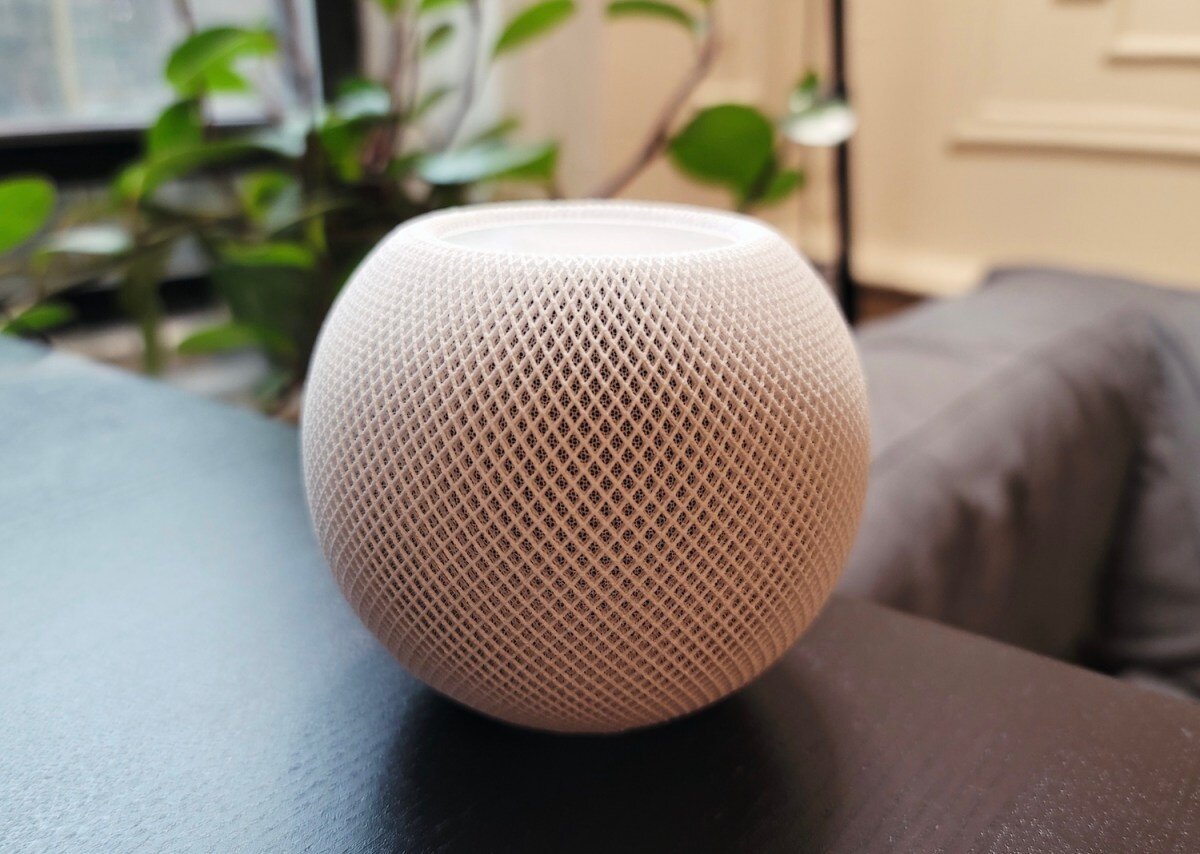
The HomePod mini, meanwhile, continues to represent Apple’s more affordable audio-and-assistant option. A refresh could help maintain interest in Siri-powered home audio while Apple works on a more ambitious hub.
Why refresh older devices now?
Refreshing existing products alongside a new hub gives Apple a better chance to present the home as a coordinated category rather than a one-off experiment. It can also encourage customers to think of the living room, kitchen and hallway as interconnected parts of the same Apple system.
That kind of bundle effect matters in smart home sales, where individual devices often compete on convenience and compatibility as much as on features. A refreshed Apple TV or HomePod mini can support the broader narrative that Apple is investing seriously in home automation.
Apple’s reported LG partnership adds another layer
Earlier this week, Gurman said Apple planned to announce a partnership with LG to create a smart lock, thermostat and doorbell. If accurate, the agreement would represent a notable expansion of Apple’s home ambitions through a major hardware partner rather than only through Apple-branded devices.
Such a move would fit a practical reality of the smart home market: no single company owns every category. A hub alone cannot secure a household if the surrounding ecosystem is thin. Pairing the HomeView with partner-made devices could help Apple fill the gaps faster.
LG’s involvement also hints that Apple may want a more polished hardware lineup around the hub from day one. That could make setup easier for consumers and create the sense of a broader, more complete home platform.
What would that partnership mean for consumers?
It could mean less friction and more interoperability, at least if Apple and LG design the products to work seamlessly with HomeView and Apple’s home software. Consumers might be able to control the lock, thermostat and doorbell through a single interface while still relying on Apple’s privacy and ecosystem promises.
For Apple, the partnership would help shift the smart-home conversation from isolated gadgets to a connected system. That is crucial in a market where people often buy one device at a time and need confidence that each purchase will continue to be useful later.
Why Apple’s smart-home push has been difficult
Apple’s home ambitions have faced a mix of timing problems, product gaps and competitive pressure. Smart-home adoption has grown, but the market has also been fragmented by multiple standards, rival ecosystems and uneven user experiences.
Apple has tended to favor polished, controlled environments. The home market often rewards openness, broad compatibility and fast iteration. That mismatch may help explain why HomeKit and HomePod never became the kind of must-have products Apple enjoys elsewhere.
At the same time, the company’s core advantage has always been integration. If Apple can tie the HomeView tightly to iPhone setup, Siri, Apple TV, HomePod mini and third-party accessories, it could create a system that feels more coherent than competing offerings.
- Apple’s past home efforts were useful but not dominant.
- The HomeView is being positioned as a central control point, not just an accessory.
- Success will depend on usability, ecosystem breadth and Siri performance.
- Updated Apple TV and HomePod mini devices could support the launch.
- A reported LG partnership suggests Apple wants a fuller smart-home lineup.
What challenges will the HomeView face?
The biggest challenge is whether consumers want another screen in the home that overlaps with phones, tablets and smart speakers they already own. Apple will need to justify the device as more than a convenience item and make it feel indispensable for daily routines.
Price could also be a major factor. Apple rarely competes at the low end, but smart-home categories often depend on affordable entry points. If HomeView is positioned as a premium device, it will need to deliver premium value through design, responsiveness and a polished experience.
Another issue is Siri itself. Apple’s voice assistant has improved over time, but it has also lagged rivals in some areas of flexibility and natural-language performance. A smart-home hub is only as good as the assistant that runs it.
How important is Siri to HomeView?
Siri is central to the product because the device is reportedly built around voice-first interaction as well as on-screen control. If Siri struggles with multi-step commands, home automation routines or simple follow-up requests, the HomeView will lose much of its appeal.
That makes this launch a high-stakes test not just for hardware, but for Apple’s assistant strategy more broadly. A better home device could give Siri a new role; a weak one could reinforce long-running doubts about Apple’s AI and voice capabilities.
What the timing suggests
The fact that Apple is expected to announce the HomeView now suggests the company believes the market is ready for a more polished, all-in-one smart-home controller. It may also reflect pressure from rival ecosystems that have spent years building connected-home experiences around speakers, displays and automation platforms.
Apple has often entered categories later than competitors, then tried to win on quality and integration. The HomeView looks like another example of that strategy. Whether it succeeds will depend on whether the company can do more than simply arrive late — it will need to arrive with a clear reason for people to buy in.
If the device delivers on its reported features, Apple could finally have a product that gives its smart-home ambitions shape and clarity. If not, HomeView may become another example of the company’s difficulty turning strong ideas into durable home-market momentum.
Timeline of Apple’s reported smart-home push
| Period | Reported development | Context |
|---|---|---|
| Past several years | Multiple reports of a new Apple smart-home product | Apple has been rumored to be building a more serious home device |
| Earlier efforts | HomeKit and HomePod | Useful products, but limited mainstream breakout |
| Earlier this week | LG partnership reported | Potential expansion into smart lock, thermostat and doorbell products |
| Tuesday | HomeView announcement expected | Apple’s reported next major smart-home reveal |
Bottom line
Apple’s reported HomeView announcement is important because it signals a more ambitious and more coherent attempt to win in the smart home than the company has made before. With a display, Siri, the A18 chip and multiple form factors, the device is aimed squarely at becoming the control center for Apple-powered homes.
But the stakes are high. Apple has the brand, the ecosystem and the design reputation to matter in this market. What it still needs is proof that it can turn those advantages into a product people will actually make part of their daily lives.
Frequently asked questions
What is Apple’s HomeView?
Apple’s HomeView is reportedly a new smart home hub with a display, Siri integration and an A18 chip. It is expected to help users control connected home devices such as lights, locks and thermostats from a central interface.
When will Apple announce the HomeView?
Apple is expected to announce the HomeView on Tuesday, according to Bloomberg’s Mark Gurman. The timing places the product at the center of Apple’s latest push into smart-home hardware.
Why is the HomeView important for Apple?
The HomeView is important because it represents Apple’s most serious attempt yet to succeed in the smart home. Previous efforts like HomeKit and HomePod did not become breakout hits, so this device could determine whether Apple can finally gain traction in the category.
Will Apple update any other home devices?
Yes, Apple is also reportedly preparing updated versions of the Apple TV and HomePod mini. Those refreshes would help support the company’s broader home strategy and keep its ecosystem hardware more closely aligned.
Is Apple working with LG on smart home products?
Apple is reportedly partnering with LG on a smart lock, thermostat and doorbell. If confirmed, that partnership would broaden Apple’s smart-home ecosystem beyond its own branded devices and add more pieces around the HomeView hub.



![Three men seated on stage discussing at Human[X] event, with branded backdrop and one holding a notepad.](https://superintelligencenews.com/wp-content/uploads/2026/10/superintelligencenews.com-voice-ai-voice-ai.jpg)