Updated October 2, 2026 1:53 pm
In short
Suno’s Speech beta now includes a more candid warning about its imperfections, with the company saying accents, pacing and other outputs can still behave unpredictably.
- Suno’s Speech beta generates voice and music together in one track.
- Users can create from prompts or custom scripts and disable music if needed.
- The launch moves Suno into competition with established AI voice tools.
- Suno says the feature is still rough and will improve through beta feedback.
Update — October 2, 2026 1:53 pm
Suno says Speech is still a work in progress, and the company is now giving a more specific sense of where it can stumble. Jack Brody said British accents can drift, pauses can become exaggerated, and the model may produce surprises that even the team did not anticipate.
The company is also positioning those quirks as part of the beta’s creative upside, suggesting some of the unpredictability could be useful for poems, dramatic reads and other stylized audio rather than just standard narration.
Suno has launched Speech, a public beta feature that generates spoken-word audio with built-in background music, marking the company’s most ambitious move yet beyond AI music generation. The release matters because it positions Suno against established text-to-speech and voice-generation rivals while also offering a more cinematic, all-in-one audio tool for creators.
The feature is rolling out across Suno’s web and mobile apps and lets users create voiceovers from either a prompt or a custom script. Suno says Speech can produce a voice performance and accompanying music in a single track, with users able to disable the music if they only want clean narration.
What Suno is launching and why it matters
Speech is Suno’s attempt to blend two separate creative tools — synthetic narration and AI-generated music — into one workflow. Instead of using one platform for voice and another for soundtrack, users can ask Suno to create both at once, which could appeal to podcasters, marketers, educators, social media creators and anyone making short-form audio content.
The company is presenting the feature as a natural extension of its core product, but also as a broader play for the future of generative audio. Suno chief product officer Jack Brody said the company still sees music as its foundation, while also framing Speech as an expansion into other forms of human expression. He described it as Suno’s first audio model designed to generate voice and music together as a single cohesive track.
According to Suno, the new feature is designed to make spoken-word generation feel more like a finished production than a dry voice clip, with optional music adding mood and atmosphere to the result.
That pitch makes Suno distinct from many speech tools that focus purely on narration. The company’s approach is more stylized: it wants generated voices to feel like part of a soundscape, not just a line of audio dropped onto a blank track.
How does Suno Speech work?
Speech is accessed from Suno’s Create tab, where users can choose a new Speech mode and then decide whether to write a prompt or provide a full script. The system offers two creation paths: Simple mode and Advanced mode.
Simple mode
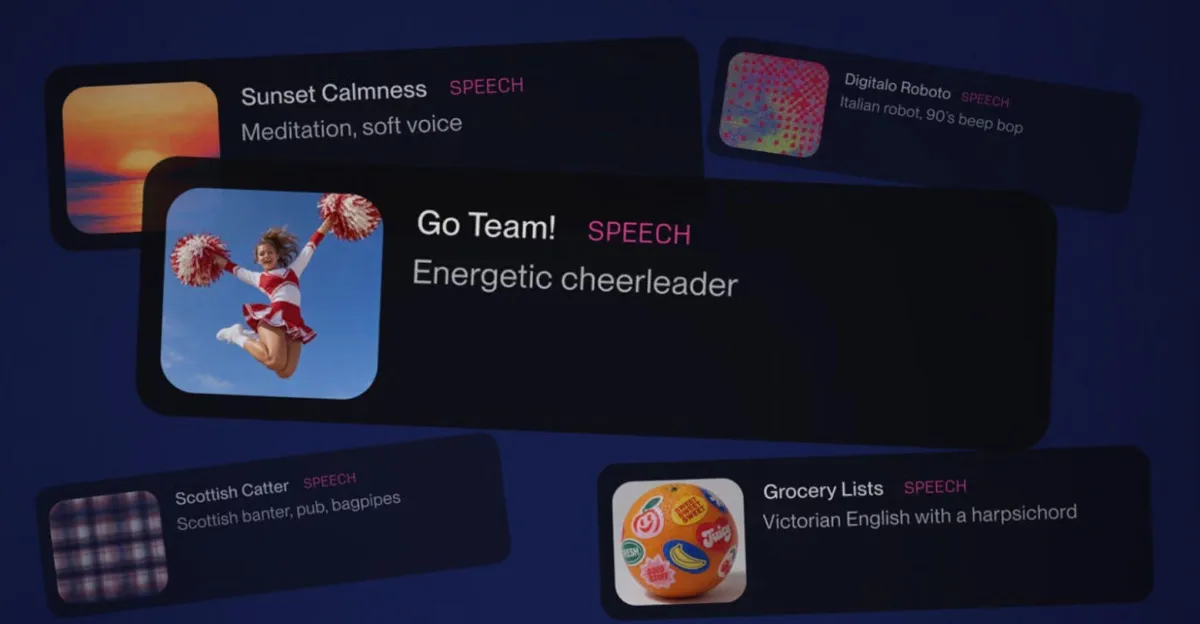
Simple mode is designed for users who want the AI to improvise the performance from a short text prompt. Suno’s example use case is the kind of descriptive request that gives the model a persona and tone, such as a pirate captain addressing a crew. That makes the feature feel closer to creative direction than conventional speech synthesis.
Advanced mode
Advanced mode is for users who already know the exact wording they want spoken. It supports custom scripts and gives additional controls over voice gender, speech style and the amount of variation in each generation. That makes it more practical for creators who need consistency across multiple clips or episodes.
Speech has a maximum runtime of about eight minutes, which places it squarely in the range of short narrative pieces, explainers, voiceovers and promotional content rather than long-form audio production.
What makes Suno Speech different from regular text-to-speech?
Suno Speech is different because it is built around presentation, not just pronunciation. Traditional text-to-speech tools are usually designed to convert text into understandable audio as efficiently and clearly as possible. Suno instead combines speech with music by default, so the result is meant to feel polished, emotional and ready for publishing.
That optional soundtrack is one of the feature’s defining details. If users want a clean voice file, they can switch the music off with a toggle. If they want drama, atmosphere or energy, they can keep it on.
This design opens up obvious creative uses:
- poetry readings with ambient backing
- dramatic monologues with cinematic underscoring
- motivational speeches with energetic accompaniment
- character-driven storytelling with mood-setting sound design
- short-form social clips with quick production value
In other words, Suno is not simply chasing the speech market. It is trying to define a niche inside it, one that mixes voice generation with musical texture.
Why is Suno moving into speech now?
Suno’s timing reflects both opportunity and pressure. AI speech generation is not a new category, and the company is entering a market already populated by strong competitors and years of technical development. But the move also gives Suno a way to broaden its product offering at a moment when the company is facing intense scrutiny over its music-generation business.
DeepMind has been working on speech synthesis for years, Adobe offers text-to-speech tools, and ElevenLabs has become one of the best-known names in the space since its launch in 2023. That means Suno is arriving after the market has already matured in several directions, from enterprise narration tools to highly expressive voice cloning systems.
From a business perspective, Speech may help Suno reduce dependence on one category. The company’s music generator has drawn considerable legal attention, and expanding into adjacent audio products could strengthen its broader platform story. It also gives Suno more reasons for users to stay inside its ecosystem rather than hopping between separate tools for music, voice, and editing.
How Suno is positioning the beta
Suno is being unusually candid about the feature’s rough edges. The company is calling Speech a beta and warning users that it is still experimental. That matters, because public beta launches often signal both confidence and caution: Suno wants feedback, but it also wants to set expectations before users encounter glitches.
Brody said the beta label should be taken seriously, noting that the system can sometimes mishandle accents, overdo pauses and produce results that surprise even the company’s own team.
Those admissions are useful for users because they reveal where Suno expects the model to struggle. Accents drifting, timing becoming unnatural, and output varying more than intended are all common issues in generative audio. By flagging them upfront, Suno is essentially telling users that the feature is still being tuned.
That said, the company is also signaling that some unpredictability is part of the creative value. In generative systems, inconsistency can be a bug in one context and a feature in another. A voice that sounds slightly theatrical, exaggerated or uneven may be unwelcome in a corporate explainer, but useful in a character monologue or poetic performance.
Who is Speech for?
Speech appears aimed at creators who want quick, expressive audio without moving into complex production software. That includes independent makers, digital storytellers, educators, streamers, social media publishers and small teams that need voice content with a strong aesthetic identity.
The product could also appeal to users who already rely on AI tools for brainstorming or content creation and want a single platform to turn written ideas into narrated, soundtrack-backed clips. Because the feature is available on both web and mobile, it may fit especially well into fast, lightweight workflows.
Potential use cases include:
- narrated social videos
- audible poetry and fiction excerpts
- training snippets and explainer clips
- brand voiceovers for lightweight marketing assets
- concept demos for audio-first storytelling
Still, the feature’s value will depend on how believable the voices sound and how flexible the audio engine becomes over time. If the voices feel generic or the music distracts from the speech, users may treat it as a novelty. If Suno improves fidelity and control, Speech could become a useful production shortcut.
How does this compare with rivals?
Suno is entering a crowded field, but its pitch is different from the leaders around it. Companies like ElevenLabs have built reputations on high-quality voice synthesis and cloning, while Adobe’s tools are rooted in creative software workflows and DeepMind’s research lineage focuses on the technical foundations of speech generation.
Suno’s advantage is its combination of creativity and convenience. Rather than optimize solely for realism or enterprise usability, it is packaging speech as part of a broader generative audio experience. That may be more attractive to creators who care about mood, composition and speed more than microphone-level realism.
| Company | Main strength | How it differs from Suno Speech |
|---|---|---|
| Suno | AI music plus voice generation | Combines spoken words and background music in one track |
| ElevenLabs | Expressive voice synthesis | Focuses more on speech quality and voice control than soundtrack design |
| Adobe | Creative software tools | Offers text-to-speech features inside a broader content ecosystem |
| DeepMind | Speech research | Known more for foundational work than a consumer-facing creator product |
The comparison suggests Suno is not trying to win on one narrow metric. Instead, it is building a differentiated product that sits between voice generation, music composition and creative automation.
What the beta could mean for Suno’s future
Speech may be more than just another feature update. It hints at a wider strategy in which Suno becomes an audio creation platform rather than only a music generator. If the company can successfully merge speech, soundtrack creation and script-driven generation, it could carve out a broader place in the creator economy.
That broader position may matter as the company navigates legal and competitive pressure. Diversification can be valuable for any AI company, but especially one whose most visible product is already tied to major disputes. New features do not erase those challenges, yet they can help shift the conversation toward product breadth and utility.
There is also a product-design implication. If users embrace Speech, Suno could use the feature as a bridge to other audio tools, perhaps including more control over pacing, character voices, emotional tone, editing and scene-based composition. The more the platform can support full creative workflows, the more difficult it becomes for users to leave.
What Suno said about the limits of the feature
The company’s own messaging suggests it is not promising perfection. Instead, Suno is leaning into a familiar AI launch strategy: ship early, gather feedback and improve fast. That approach is especially common in generative products, where user experimentation can reveal unexpected strengths and weaknesses more quickly than lab testing alone.
Brody’s comments also imply that Suno expects people to push Speech in directions the team did not anticipate. That is often how generative tools find their audiences. A product designed for one use case can become unexpectedly valuable in another, especially when users discover that the model is better at atmosphere, style or improvisation than precise utility.
For now, the most important point is simple: Suno has moved beyond music and into synthetic narration, and it is doing so with a feature that treats speech and score as one creative output. Whether that becomes a meaningful new category or just another experiment will depend on how quickly the beta improves and how many creators decide the combo is worth using.
Timeline of Suno Speech
| Date | Development | Why it matters |
|---|---|---|
| 2023 | ElevenLabs launches and becomes a major voice AI competitor | Sets a high bar for expressive AI speech tools |
| Over the past decade | DeepMind works on speech synthesis research | Shows that AI voice generation has long been a serious research area |
| 2026-10-02 | Suno releases Speech in public beta | Marks Suno’s expansion from AI music into voice-and-music generation |
Bottom line
Suno’s Speech feature is a clear signal that the company wants to become more than an AI music app. By combining voice generation with optional background music, it is betting that some creators want audio that feels authored, dramatic and ready-made rather than purely functional.
Whether the feature catches on will depend on quality, control and speed of improvement. For now, Suno has opened a new front in generative audio — and given itself another way to compete in a crowded, fast-moving market.
Frequently asked questions
What is Suno Speech?
Suno Speech is a new public beta feature that generates spoken words and can add AI background music at the same time. It is available on Suno’s web and mobile apps and is designed for voiceovers, narration and other creative audio uses.
How is Suno Speech different from normal text-to-speech?
Suno Speech is different because it combines voice generation with optional music in one workflow. Instead of producing only a clean narration clip, it can create a more atmospheric, produced-sounding track that feels closer to a finished audio piece.
Can users turn off the music in Suno Speech?
Yes. Suno lets users switch off the background music with a toggle if they want only the spoken voice. That makes the feature flexible for both polished soundscapes and straightforward narration.
Who is Suno Speech designed for?
Suno Speech is designed for creators who want fast, expressive audio for content such as short videos, poems, dramatic monologues, explainers and brand voiceovers. Its prompt-based and script-based modes make it useful for both casual and more controlled workflows.
Is Suno Speech ready for professional use?
Not fully. Suno says the feature is still in beta, which means it is experimental and may produce odd accents, dramatic pauses or inconsistent results. The company says it will keep improving the model based on user feedback.