In short
Carnegie Mellon PhD student Daehwa Kim unveiled OATs, tiny E Ink AI avatars for everyday objects, at an HCI conference in Detroit. The low-cost system drew attention for its playful design and for the ethical questions it raises about anthropomorphizing objects.
- OATs are tiny E Ink AI avatars for everyday objects.
- Daehwa Kim presented the project at ACM UIST in Detroit in early November 2026.
- The prototype costs about $20 for the main module and runs for about 3–4 days on battery.
- The system uses sensors and Google Gemini’s Nano Banana to generate expressive object behaviors.
- The demo won two Honorable Mention awards and sparked ethics debate.
Carnegie Mellon PhD student Daehwa Kim unveiled OATs — short for Object Agent Twins — at a UI conference in Detroit in early November 2026, pitching tiny E Ink AI avatars that let household objects signal what they are doing, needing or feeling. The prototype drew strong interest, won two Honorable Mention awards, and reopened a familiar question in human-computer interaction: when does a helpful interface become an object people start to treat like a pet?
What Kim showed in Detroit
Kim, a fifth-year PhD student in Carnegie Mellon’s Future Interfaces Group, presented OATs at the ACM Symposium on User Interface Software and Technology, one of the field’s major conferences. The project wraps small, sensor-driven objects in expressive digital personalities that react to conditions in the physical world.
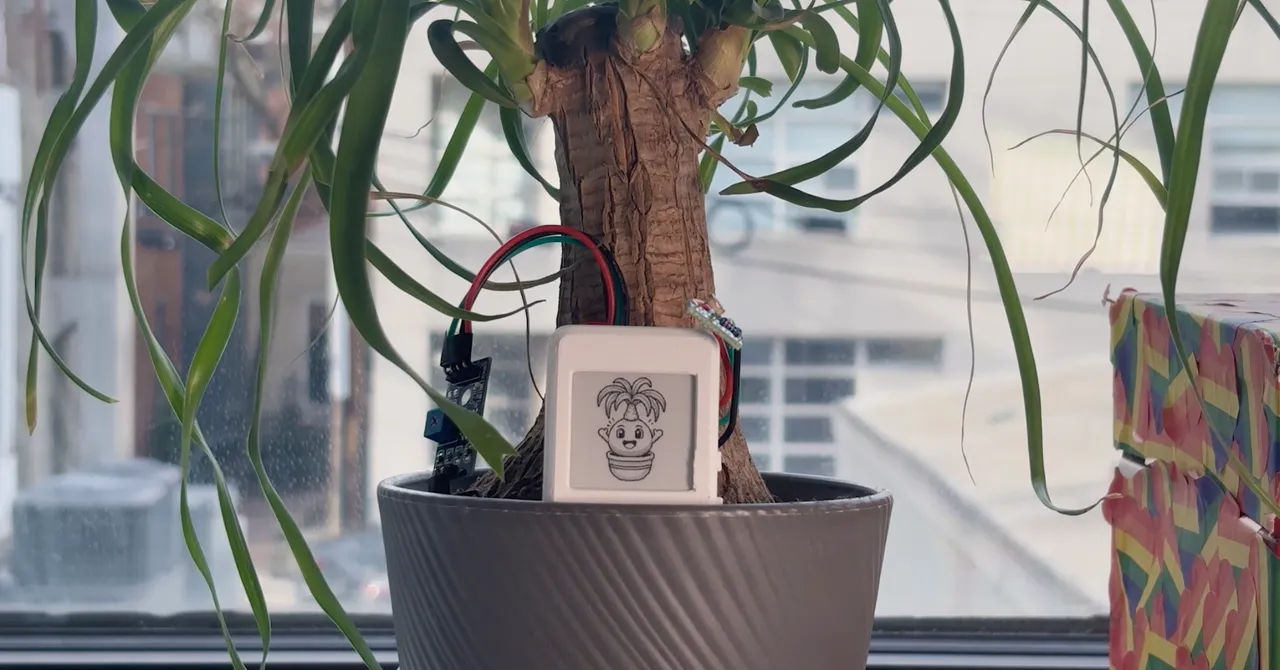
According to WIRED’s report from the conference, each OAT is built around a tiny E Ink display and a low-cost module. The system is designed to give an ordinary object a face, mood and behavior pattern that changes in response to data from internal and external sensors.
The hardware cost of the main module is roughly $20, Kim said, putting the concept in a range that could make experimentation accessible to researchers, hobbyists and product designers if the system moves beyond prototype form. The avatar itself is generated from sensor data using Google Gemini’s Nano Banana image tool.
How OATs work
OATs use a web portal that lets a user name the object and choose which sensors to attach. The software then auto-generates positive and negative behaviors based on the object’s name and description, giving each device a kind of personality profile.
The sensor inputs include moisture, temperature, humidity, light, occupancy and motion. That means the object can “react” to whether it has been watered, used, left still for too long or placed in the wrong environment.
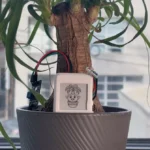
Kim’s examples were deliberately ordinary. A plant avatar may appear sad if it has not been watered and cheerful after watering. A skateboard avatar can look lonely after days without motion. A coffee machine can signal use tracking, a 3D printer can warn nearby people, and a dumbbell can help track exercise habits.
Why it matters
OATs sit at the intersection of artificial intelligence, interface design and behavior change. The project shows how AI can be pushed off the screen and into physical objects people already live with, opening a new model for ambient computing that is both playful and persuasive.
That matters for more than novelty. If a small animated avatar can make a person notice a neglected plant, a machine left running or a habit they want to build, then the design could become a lightweight prompt system for daily life. In other words, the object is no longer passive hardware; it becomes a social cue.
But the same qualities that make OATs appealing also raise ethical questions. Anthromorphic design can increase attachment and make interactions feel more natural, yet it can also distort trust and moral judgment. A cute face on a device may encourage people to care more, or to care in ways that are not fully rational.
That tension helps explain the debate the demo sparked. The project was not simply treated as a technical trick; it became a test case for how far researchers should go in giving objects emotional cues, especially when AI is doing the interpreting and the signaling.
How does OATs differ from a normal smart device?
OATs differ from typical smart devices because they are built to be emotionally legible, not just functional. Instead of presenting a numeric dashboard or an app alert, the system uses a tiny avatar that behaves like a pet or companion.
That design choice connects the project to older forms of digital companionship, including 1990s Tamagotchis, but with a more practical purpose. Kim’s objects are not meant only to entertain. They are meant to react to real-world conditions and, in some cases, nudge action.
Kim said people used OATs in three main ways: tracking use, warning nearby people, or self-monitoring habits. Those categories suggest the system is flexible enough to serve as a reminder, a signal and a feedback loop all at once.
Background: how we got here
AI anthropomorphism is hardly new, but the tools for making it feel immediate have improved. E Ink displays are already known for their low power draw and simple, readable appearance, which makes them suitable for small devices that do not need bright animation or constant refresh. Put that together with compact sensors and generative image tools, and an object can be given a face without requiring a large screen or complex hardware.
Kim’s work also lands inside a long-running HCI debate about whether giving systems personality helps people use them better. In some settings, anthropomorphism can make technology feel less intimidating and easier to understand. In others, it can blur the line between a useful interface and an entity users may overtrust.
The history of digital pets offers a useful comparison. Tamagotchis taught a generation that a tiny screen creature could shape behavior by demanding attention. OATs update that idea for a sensor-rich environment, where a plant, printer, bike, skateboard or dumbbell can become its own responsive character.
ACM UIST is an especially fitting stage for that idea. The conference is one of the central venues for user interface research, where new interaction techniques are often shown in prototype form long before they become products. That is part of why Kim’s project attracted notice even before any commercial path was clear.
By the numbers
OATs is a small project on paper, but the reported numbers show why it made an impression: it is cheap, portable and designed to run on modest hardware.
| Metric | Reported figure | What it means |
|---|---|---|
| Main hardware module cost | About $20 | Suggests a relatively low barrier for prototype experimentation |
| Typical battery life | 3–4 days | Shows the prototype can run for multiple days between charges |
| Battery life with sound sensor | About 1 day | Extra sensing comes with a steep power penalty |
| Honorable Mention awards | 2 | Signals strong conference recognition |
| Conference timing | Early November 2026 | Places the unveiling at a major fall HCI event |
What the demo revealed about the hardware
The prototype is intentionally small, but the constraints are still visible. Kim said the system runs on a lithium-ion polymer battery and charges over USB-C. That makes the device convenient to power, but the battery life remains limited, especially when a sound level sensor is included.
That limitation matters because the most compelling use cases for ambient devices often depend on them being present all the time. A battery that lasts only a few days may be fine for a demo or a lab study, but it becomes a product challenge if the goal is to keep objects expressive without constant maintenance.
Those trade-offs are typical of interface research. A system can be compelling in the room where it is first shown and still face serious obstacles around durability, setup friction and long-term ownership. Kim’s project appears to be no exception.
Why the audience reacted so strongly
Part of the appeal is obvious: OATs are cute. But the deeper draw is that they make abstract sensor data emotionally readable. Instead of telling a user that humidity changed or motion stopped, the object’s expression turns the data into a story.
Kim said the concept is rooted in the idea that people can care for physical objects the way they care for living things. As he put it, “We bring this joy of caring from virtual to physical objects.”
“We bring this joy of caring from virtual to physical objects.”
The presentation also raised the familiar question of whether that joy comes at a cost. If a device looks more alive than it is, does that help people behave better, or does it encourage projection and over-attachment? The conference buzz suggests both reactions were present.
Kim’s comments point to a pragmatic view of that issue. He said, “Anthropomorphism can be very useful in certain ways, like helping people to change their behaviors.” That argument puts OATs in the camp of design interventions that are not simply decorative; they are meant to influence conduct.
“Anthropomorphism can be very useful in certain ways, like helping people to change their behaviors.”
What users might do with it
Kim’s examples show three clear user patterns.
- Tracking use: A coffee machine avatar can show whether the machine has been used.
- Warning others: A 3D printer avatar can signal to nearby people that it is active or needs attention.
- Self-monitoring: A dumbbell avatar can help users track exercise habits over time.
That mix of use cases is important because it suggests the system is not built around a single category of object. It can be attached to plants, tools, appliances and equipment, as long as a sensor can report something meaningful about their condition or use.
In the plant example, the behavior is almost instinctive: missed watering leads to a sad avatar, and care leads to a happy one. In the skateboard example, the object’s social cue becomes more playful, with loneliness standing in for disuse. Those cues are simple, but they are easy to read at a glance.
Background and context
Kim’s project arrives at a moment when AI systems are increasingly asked to be more than invisible tools. Designers and researchers are experimenting with ways to make them visible, social and legible in everyday life. OATs is a particularly compact version of that trend.
It also highlights the role of research labs in shaping the future before industry settles on a product category. Carnegie Mellon’s Future Interfaces Group has long been associated with unusual interface ideas, and Kim’s work fits squarely in that tradition: low-cost, sensor-aware and visually direct.
There is also a cultural subtext. The idea that people give names to cars and bikes, but not necessarily to phones, suggests that some objects are already socially upgraded in daily life. OATs tries to make that impulse systematic. In Kim’s words, “People name their car, and they name their bike. I rarely see people who name their iPhone.”
That observation captures the gap the project is trying to exploit. Some objects already invite attachment because they move, age or accompany their owners. OATs pushes the same logic onto objects that are normally treated as mute utility items.
What happens next?
The biggest open question is whether Kim will commercialize OATs. He has not decided whether to turn the system into a business, leaving the project in a research phase for now.
Several other questions remain unresolved:
- Whether the prototype can become durable enough for daily use outside a lab or demo setting.
- Whether the interface continues to change behavior once the novelty wears off.
- Whether users embrace the emotional design or grow uncomfortable with it.
- How researchers and the public judge the ethics of making AI appear more alive than it is.
Those questions matter because OATs is more than a neat object demo. It is a test of whether small, inexpensive displays and sensor-driven AI can create an entirely new category of companionship for ordinary things — and whether people actually want that relationship.
For now, the project has a conference audience, two Honorable Mention awards and a fresh set of debates about the future of human-computer interaction. The next step will be whether the idea stays a compelling research prototype or becomes something people can buy, build and live with.
Frequently asked questions
What are OATs in AI research?
OATs are Object Agent Twins, tiny E Ink AI avatars that give everyday objects an expressive face and behavior. Carnegie Mellon PhD student Daehwa Kim presented the idea at ACM UIST in Detroit in early November 2026.
How do OATs work?
OATs work by combining small sensors, a low-power E Ink display and software that generates behaviors from the object’s name and description. The system can respond to moisture, temperature, humidity, light, occupancy and motion.
How much does an OAT prototype cost?
The main hardware module costs roughly $20, according to WIRED’s report on the project. That low cost is part of what makes the prototype notable for research and experimentation.
Why are researchers interested in AI anthropomorphism?
Researchers are interested because anthropomorphism can make technology feel more legible and can help people change behavior. But it can also raise concerns about trust, attachment and moral judgment when devices seem more alive than they are.
Will OATs become a commercial product?
It is not clear yet. Daehwa Kim has not decided whether to commercialize OATs, so the project remains a research prototype for now.