Updated October 26, 2026 5:54 pm
In short
Kevin Roose and Casey Newton say Machine Gods is a video-first, YouTube-centered experiment built to cover the AI boom sustainably, with Roose serving as CEO after a coin flip.
- Machine Gods launched last week as a video-first AI podcast from Kevin Roose and Casey Newton.
- The show is distributed on YouTube, Apple Podcasts and Spotify and is partnered with NPR.
- Roose says the project is meant to make AI coverage sustainable while giving the hosts more audience and business control.
- He says his new book, The AGI Chronicles, focuses on the deep learning revolution and frontier labs.
- The launch reflects a broader shift toward creator-driven, platform-native journalism.
Update — October 26, 2026 5:54 pm
Roose also revealed that he and Newton settled the CEO question with a coin flip, and that Roose won the title.
He said the team sees Machine Gods as a deliberate bid to build a sustainable YouTube-and-video operation, not just an audio podcast with cameras added later, and added that they plan to test multiple formats and bring in other hosts.
Roose further described the launch as part of a broader platform shift around AI, arguing that the story itself and the way it is packaged are changing at the same time.
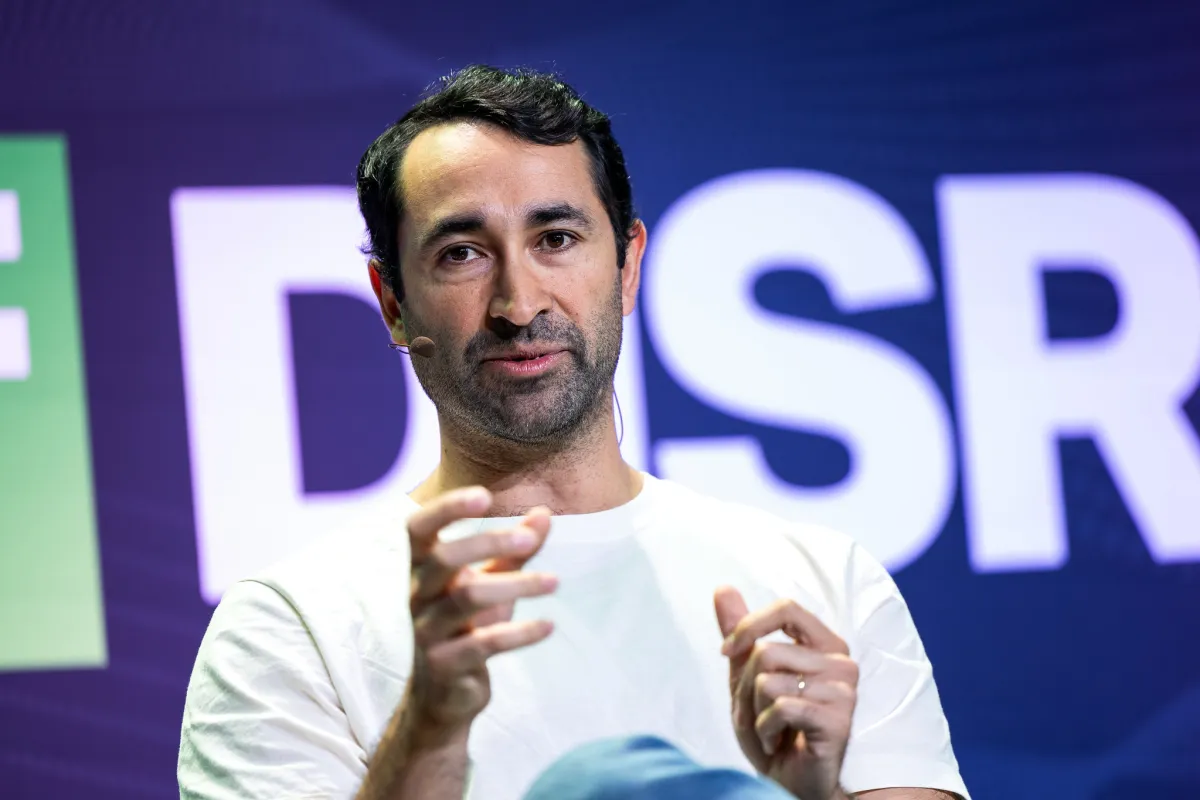
Kevin Roose and Casey Newton have left The New York Times to launch Machine Gods, a new video-first AI podcast that went live last week and is being distributed on YouTube, Apple Podcasts and Spotify. The project marks a notable shift in AI journalism: two of the field’s best-known reporters are betting that creator-style video, not traditional audio alone, is the most durable way to reach an audience hungry for serious coverage of artificial intelligence.
The move matters beyond one podcast launch. Roose says the show is designed as a sustainable experiment in journalism, a way to meet listeners and viewers where they already spend time online while also giving its founders more direct control over their audience and business model. At the same time, Roose is using the launch to promote a new book that tries to explain the AI boom without either cheering it on blindly or dismissing it outright.
What Machine Gods is and why it launched now
Machine Gods is the latest sign that high-profile journalists are adapting to a media environment increasingly shaped by YouTube, platform-native video and audience relationships that are less dependent on legacy newsrooms. According to The Verge, Roose and Newton have both exited The New York Times to start the show, which launched last week and is being offered across YouTube, Apple Podcasts and Spotify.
Roose describes the project as video-first, not an audio-only podcast with a camera pointed at it as an afterthought. That distinction is important. He said the aim is to build something that can work as a journalism product and as a format that can survive financially, rather than one that depends entirely on a traditional newsroom structure.
The show also arrives with a partner: NPR. The fact sheet does not spell out the terms of that relationship, but the partnership suggests that a public-media organization sees potential in a format built for both broad discovery and longer-form explanation.
How did Roose frame the bet?
Roose’s central argument is simple: if journalism about AI is going to reach a mass audience, it has to adapt to the way people actually consume information now. He told The Verge that “
You pivot to video or you sort of waste a bunch of money doing things that don’t pay for themselves.
”
That line captures the practical logic behind the launch. The audience for AI coverage is no longer just a niche of technologists and policy specialists. Roose says the people he wants to reach are curious, resigned or excited about AI — not necessarily dismissive of it, but looking for guidance on what it means for work, media, daily life and the future of software.
He also framed the move as a recognition that the media business itself is changing. Video, especially on YouTube, has become one of the clearest paths to scale for individual journalists and creator-led outlets. By moving into that world, Roose and Newton are making a public wager that AI reporting can be both analytically serious and platform-native.
Why it matters
This is more than a talent move between media institutions. It is a test case for how serious journalism about AI may be packaged, distributed and monetized in the years ahead.
For readers, the significance is in access. A video-first format can make dense reporting feel more approachable, especially for audiences who do not read long-form tech coverage but do watch interviews, explainers and talk shows on YouTube. If Machine Gods works, it could widen the audience for nuanced AI reporting at a moment when the subject is often flattened into hype, panic or marketing language.
For the media industry, the launch is a proof point for a broader trend: established journalists are increasingly building on platforms where they can own the relationship with viewers more directly. Roose’s comments suggest that audience and business control are part of the motivation, not just format experimentation. That matters because it changes who captures the value from a journalist’s reputation — the newsroom, the platform or the creator.
For the AI sector, a show like this could become a more durable place for explanation and scrutiny. Roose said the project is meant to explain the AI moment rather than hype it up or dismiss it. That may sound modest, but in a field dominated by speed, secrecy and narrative warfare, explanation itself is a scarce commodity.
Background: Roose, Newton and the AI boom
Roose is not coming at this project from the outside. He has spent a long time covering technology, and his new book, The AGI Chronicles, is part of the same reporting universe as the podcast. According to The Verge, the book documents the deep learning revolution and the frontier labs — the private companies that are leading the race to build increasingly powerful AI models.
The subject matter explains why Roose says the reporting felt urgent. He told The Verge that some of the most important AI conversations are happening in auto-deleting Signal and Slack messages, which can make later reporting and documentation much harder. In his telling, that creates a major problem for journalists trying to reconstruct how the industry makes decisions, sets strategy and frames safety concerns.
Roose also contrasted the AI era with earlier technological revolutions, saying the industry lacks the kind of archival paper trail that researchers and reporters might expect to find elsewhere. That observation helps explain the reporting model behind both the book and the show: if the record is disappearing in real time, the reporting has to keep pace in real time too.
Newton’s participation gives the project additional credibility and reach. The two journalists have long been associated with sharp, accessible coverage of the tech industry, and their move out of The New York Times underscores how much the center of gravity in media has shifted toward independent, personality-driven formats.
What is AGI, and why does it show up here?
AGI stands for artificial general intelligence, a term used to describe AI systems with broadly humanlike general capabilities. It is one of the most loaded ideas in the current AI debate because it sits at the intersection of technical ambition, commercial strategy and existential speculation.
Roose’s book title, The AGI Chronicles, signals that his reporting is aimed at the long arc of the field, not just the latest product launch. The fact sheet does not detail the contents of the book beyond its focus on the deep learning revolution and frontier labs, but the title itself suggests an effort to map the buildup toward systems that many companies believe could transform work and society.
How the format changes the journalism
Roose described Machine Gods as a video-first show, and that choice is about more than branding. It affects how stories are told, how audiences find them and how much room the hosts have to experiment.
Unlike a conventional radio-style podcast, a video-first program can be clipped, shared and surfaced in the feeds where younger and more tech-savvy audiences already spend time. That matters because AI coverage often needs demonstration as much as explanation. Viewers may want to see the interface, the model behavior or the reaction of the hosts as they unpack a complicated development.
Roose also said the project is meant to support sustainable YouTube/video experimentation for journalism. That phrase suggests a larger ambition than one podcast. It points to a model in which journalism products are designed from the start to travel across platforms without losing their editorial shape.
By the numbers
| Metric | What the fact sheet says | Why it matters |
|---|---|---|
| Launch timing | Last week | The show is new enough that its audience and format are still being tested. |
| Distribution platforms | YouTube, Apple Podcasts and Spotify | The project is built for discovery across both video and audio ecosystems. |
| Roose’s description of his CEO stint | About five minutes | He is joking about the shift from reporter to media founder, but the point is that the role is new and fluid. |
| Example format that worked | Half an hour | Roose cited a longer AI walkthrough as a sign that substantive video can perform well. |
The most revealing number may be the shortest one: about five minutes. Roose used that phrase to joke about how long he expected to feel like a CEO, which hints at the tension in this kind of move. Journalists who become founders often want the freedom of independence without pretending the business part is easy. In that sense, the joke is part confession, part strategy.
What Roose thinks the audience wants
Roose’s description of the audience is notably broad. He does not talk only about industry insiders, policymakers or engineers. Instead, he divides the likely audience into people who are curious, resigned or excited about AI. That framing is useful because it captures the range of emotions surrounding the technology.
Some people are optimistic about new tools and the productivity gains they may bring. Others feel they have little choice but to adapt. Still others are simply trying to understand what is happening fast enough to keep up. A show like Machine Gods is trying to sit in the middle of those reactions.
That positioning could help explain why Roose is leaning into an explanatory format rather than a pure news podcast. If the audience already feels overloaded by AI headlines, the value proposition is not more noise. It is interpretation.
He also appears to believe that the best AI journalism has to avoid both worship and cynicism. That is where his phrase “AI realism” fits, even as a shorthand rather than a slogan. The point is not to declare AI either salvation or catastrophe, but to report honestly on what the technology is doing and where it is heading.
Business control and the creator economy
Roose’s comments make clear that editorial freedom is not the only consideration. He said part of the project is about reclaiming direct audience and business control, a sentiment that increasingly resonates among journalists who feel that platform dynamics and newsroom economics both limit experimentation.
That idea reflects a broader shift in the creator economy. A single recognizable voice can now carry a media product across a range of channels, often with fewer intermediaries than a large newsroom would require. The upside is agility. The downside is that the economics, distribution and production burdens fall more heavily on the creators themselves.
For Roose and Newton, the calculation seems to be that the upside outweighs the risk. Their reputations give them a built-in audience, and the launch on multiple major platforms gives the show several routes to discovery. Whether that becomes a durable business is another question entirely.
The involvement of NPR may help with legitimacy and reach, but the fact sheet leaves open the structure of that partnership. That omission matters, because in creator-led journalism, distribution deals can shape everything from ad sales to editorial independence to growth strategy.
What happens next
Several questions will determine whether Machine Gods becomes a meaningful media brand or simply an interesting experiment launched by two prominent reporters.
- How large an audience will it attract? The show’s early reach will be the clearest measure of whether AI-focused video journalism can scale beyond a niche tech audience.
- Will the video-first format improve engagement? Roose clearly believes it will, but the real test is whether viewers stay for deeper reporting rather than stopping at clips.
- How will the NPR partnership work? The structure of the relationship could affect distribution, editorial control and long-term growth.
- What exactly is in The AGI Chronicles? Roose says the book documents the deep learning revolution and frontier labs, but its reporting revelations remain a major open question.
- Which platform becomes the main growth engine? YouTube may be the most important discovery channel, but Apple Podcasts and Spotify remain significant for habitual podcast listeners.
One early clue to the show’s direction is that Roose cited a half-hour AI walkthrough as a format that performed well. That suggests there is an audience for longer, more explanatory video when the topic is complicated enough and the pacing is strong enough. If that holds, Machine Gods may find a lane between short-form social clips and the slower rhythms of traditional audio podcasting.
The launch also raises a bigger question about the future of AI coverage itself. If some of the best-known reporters in the field believe the most effective reporting now happens through video-first, creator-driven distribution, then other journalists may follow. That could reshape not only where AI stories are told, but how they are framed, edited and sold to audiences.
The larger signal for media and AI coverage
For now, the most important takeaway is that Roose and Newton are making a deliberate bet on form as much as substance. They are not simply changing jobs; they are testing a different model for how serious journalism can exist in a platform economy.
The launch of Machine Gods also reflects a deeper reality about the AI beat. The subject is moving so quickly, and so much of the action happens in private channels, that reporters are under pressure to invent new ways to keep up. Roose’s concern about disappearing messages in Signal and Slack is not just a complaint about one reporting obstacle. It is a clue about why journalists are looking for fresh approaches in the first place.
Whether this show becomes a reference point for AI coverage or just a well-timed experiment will depend on the audience, the business model and the quality of the reporting. But the premise is clear enough: in a field defined by speed, secrecy and hype, explanation still has value — especially when it arrives in a format people actually want to watch.
Frequently asked questions
What is Machine Gods?
Machine Gods is a new video-first AI podcast launched by Kevin Roose and Casey Newton after leaving The New York Times. It is distributed on YouTube, Apple Podcasts and Spotify, and it is described as a journalism project built for sustainable video experimentation.
Why did Kevin Roose and Casey Newton start a video-first show?
Roose says the move is about reaching audiences where they already are and making journalism more financially sustainable. He also framed it as a way to reclaim more direct audience and business control while covering AI in a format that can travel on platforms like YouTube.
How is Machine Gods different from a normal podcast?
Machine Gods is positioned as video-first rather than audio-only. That means the show is designed around visual presentation and platform-native distribution, not just a spoken conversation later uploaded as a podcast feed.
What is The AGI Chronicles about?
The AGI Chronicles is Roose’s new book, which he says documents the deep learning revolution and the frontier labs. The fact sheet does not give a full chapter breakdown, but it is tied closely to his reporting on the AI industry.
What does the NPR partnership mean?
The fact sheet says Machine Gods is in partnership with NPR, but it does not explain the structure of the deal. What is clear is that the partnership adds a major public-media name to the project as it launches.