In short
Spotify has launched a beta AI music assistant for Premium users that allows conversational voice or text prompts to find songs, podcasts, and audiobooks. The feature starts in the U.S., Ireland, and Sweden and expands Spotify’s growing AI toolkit.
- Spotify is rolling out a beta AI music assistant to Premium users in the U.S., Ireland and Sweden.
- The feature lets users type or speak natural-language requests and refine them through follow-up prompts.
- Spotify says the assistant uses a mix of its own AI and models from multiple providers.
- The tool can save songs, queue tracks, follow artists, and answer questions about listening history and music context.
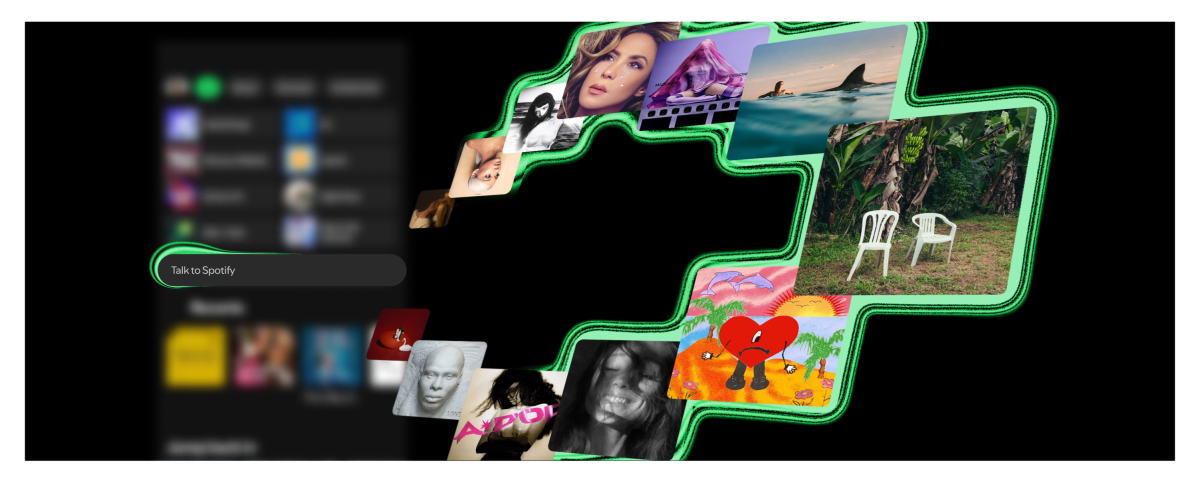
Spotify has begun rolling out a ChatGPT-like AI music assistant that lets Premium subscribers talk or type to the app and get personalized recommendations, playlist help, and answers about their listening habits. The beta feature is launching first in the U.S., Ireland, and Sweden, underscoring Spotify’s push to make AI a core part of how people discover music and audio.
The new tool expands Spotify’s existing AI features beyond the company’s AI DJ and prompt-based playlist tools, giving users a more conversational way to control what plays next. Spotify says the assistant is designed to work across its Home and Now Playing screens on mobile, and it can help users save songs, queue tracks, follow artists, and explore music, podcasts, and audiobooks more deeply.
What Spotify launched and why it matters
Spotify’s latest update introduces an interactive assistant that behaves more like a general-purpose chat interface than a traditional search bar. Instead of relying only on keywords, users can describe what they want in plain language, refine the request with follow-up questions, and receive suggestions that adjust in real time.
For Spotify, the launch is another step toward turning its app into a smarter discovery platform rather than a static catalog. For users, it could reduce the friction of finding something to play, especially when they do not want to build a playlist manually or scroll endlessly through recommendations.
The timing also reflects a broader industry trend. Streaming platforms, consumer apps, and search products are racing to add conversational AI in hopes of making interfaces more natural, more personal, and harder to switch away from.
How does Spotify’s AI assistant work?
The assistant works by letting Premium users ask for music or audio in their own words and continue the conversation as they narrow down the request. Spotify says the experience supports both typed and spoken prompts, making it useful whether someone is commuting, cooking, or simply browsing the app.
According to the company, the assistant can respond to requests based on what a user is currently listening to, their prior listening history, and the broader catalog of music, podcasts, and audiobooks available inside Spotify. It can also help answer contextual questions about songs, albums, artists, and genres.
Examples of what users can ask
Spotify is encouraging people to treat the feature like an ongoing conversation. A listener can ask for a certain mood or style, then refine the results by adding constraints such as tempo, release date, or familiarity.
- Ask for artists you have not heard before.
- Make the selection more upbeat or more relaxed.
- Limit results to newer tracks.
- Add a specific artist to the mix.
- Save a song, queue a track, or follow an artist directly from the chat.
The assistant can also answer questions about listening history, such as when a user first played a particular song, or help listeners explore genre patterns in their own account. In practice, that means Spotify is blending recommendation, memory, and search into one interface.
Where is the feature available?
The beta rollout is limited at first. Spotify says the feature is now available to Premium users in the U.S., Ireland, and Sweden on iOS and Android, provided they are 18 or older and use English.
That narrow launch gives Spotify room to test the product with a smaller audience before expanding to more countries and languages. Beta releases also allow the company to collect user feedback, identify weak spots, and adjust how the assistant responds to conversational prompts.
Spotify has acknowledged that beta software may not always behave perfectly, a reminder that AI-powered features can still struggle with interpretation, accuracy, and edge cases even when the underlying product experience feels polished.
| Feature | Details | Why it matters |
|---|---|---|
| Product | ChatGPT-style music assistant inside Spotify | Lets users interact with Spotify conversationally instead of only through search or menus |
| Availability | Premium users in the U.S., Ireland, and Sweden | Signals a cautious beta rollout before wider expansion |
| Platforms | iOS and Android mobile apps | Targets the most common listening environment for on-the-go use |
| Eligibility | English-speaking users aged 18 and above | Limits the test population while Spotify refines the experience |
| Capabilities | Recommendations, follow-up prompts, listening-history questions, queueing, saving, following artists | Combines discovery and action inside one conversational flow |
Why Spotify is leaning harder into AI
Spotify has spent years trying to make discovery feel less mechanical and more intuitive. The company’s recommendation engine has long been one of its most important competitive advantages, and AI gives it new ways to package that strength into a more accessible interface.
That strategy is visible in several products already live inside the app. Spotify offers an AI DJ that presents music in an AI-generated voice and can be engaged with directly. It also has prompt-based playlist creation tools and integrations that let users connect Spotify with third-party chatbots, including ChatGPT.
The newest assistant widens that approach by letting users talk to Spotify across the app itself, not just inside a single feature or mode. In other words, Spotify is moving from isolated AI experiments toward a more connected experience that could sit at the center of how people use the service.
What makes this different from the AI DJ?
This new assistant is different because it is designed for open-ended back-and-forth interaction. The AI DJ presents music and commentary in a guided format, while the new feature allows users to ask questions, steer recommendations, and revise their request as the conversation develops.
That matters because music taste is often contextual. A user may want one type of playlist for a workout, another for focus, and another for winding down. A conversational interface can handle those shifts more naturally than a series of static filters.
How Spotify is using multiple AI models under the hood
Spotify has not provided a full technical breakdown of the assistant’s architecture, but the company confirmed that it uses a combination of its own AI technology and models from multiple external providers. Spotify says it selects whatever tool is best suited for the task at hand.
That hybrid approach is increasingly common across the AI industry. Consumer companies often mix in-house systems with third-party foundation models to balance performance, cost, safety, and flexibility. It also helps companies avoid becoming dependent on a single provider for every use case.
For Spotify, the mix likely reflects the complexity of the product. A music assistant needs to handle retrieval, personalization, conversational understanding, and action execution, all while preserving relevance and speed inside a mobile app that people expect to feel immediate.
Spotify says the assistant is still in beta, and user feedback will help shape future improvements as the company refines how the system responds to prompts and follow-up questions.
Why conversational music discovery could change listening habits
Conversational AI could change how people browse audio by lowering the effort required to find something new. Instead of filtering manually through genres, playlists, or artist pages, a listener can simply describe a mood, a setting, or a sonic preference.
That shift may sound small, but it has real implications for engagement. The easier it is to ask for something specific, the more likely users may be to explore beyond the same familiar albums and playlists. For a subscription service, that can deepen time spent in the app and strengthen the perception that the platform “understands” the listener.
Spotify also appears to be betting that conversational search can surface latent demand. A listener may not know the exact song name, artist, or podcast episode they want. A chat interface gives them a way to describe the idea instead, which can be more intuitive than typing a precise query.
Potential benefits for users
- Faster discovery of new music, podcasts, and audiobooks.
- More natural refinement of recommendations.
- Better access to personal listening history.
- Less friction when building queues and playlists.
- More control without leaving the app.
What questions can the assistant answer?
The assistant is meant to be useful both as a recommendation engine and as an information layer. Spotify says users can ask about inspiration behind songs, album-release dates, and related artists, as well as deeper context around podcasts and audiobooks.
That gives the tool a dual role: it can recommend what to play next and explain what you are already hearing. For music fans, this may feel similar to having a knowledgeable companion inside the app who can connect the dots between artists, tracks, and genres.
In a broader sense, this is also another example of how consumer AI products are moving toward “answer plus action.” It is not enough for the system to talk back; it also has to do something useful, like queue a track, save a song, or follow a performer.
How the rollout compares with Spotify’s earlier AI features
Spotify has been testing AI in stages rather than making a single leap. The company first introduced features that helped with playlist generation and AI-based audio presentation. The new assistant builds on those earlier experiments by making the experience more general and more conversational.
The progression shows a clear product strategy: start with narrower tools, learn how users respond, and then broaden the AI surface area inside the app. That approach reduces risk while still allowing Spotify to adapt quickly as consumer expectations around AI keep changing.
| Spotify AI feature | Main function | User interaction style |
|---|---|---|
| AI DJ | Plays music with AI-generated commentary | Guided, voice-led |
| Prompt-based playlists | Builds playlists from text prompts | Single-request input |
| Third-party chatbot integrations | Connects Spotify to external AI tools | Platform-to-platform integration |
| New conversational assistant | Handles recommendations, history, and playback actions | Back-and-forth dialogue |
What does the beta label signal?
The beta label tells users that Spotify is still learning how people use the feature in real-world settings. Beta products often reveal problems that internal testing misses, such as awkward phrasing, misunderstood prompts, or inconsistent suggestions across different kinds of audio content.
It also signals that Spotify may expand the feature gradually, adding languages, regions, and capabilities over time. A limited launch is common for AI products because quality can vary depending on the prompt, the context, and the task the model is expected to perform.
For a company with hundreds of millions of users, even a small mistake can be visible at scale. A staged rollout gives Spotify more control over the pace of adoption and more room to tune the experience before it becomes a flagship part of the product.
Why this move matters for the streaming market
Spotify’s update is important because it raises the bar for what users may come to expect from music apps. If conversational discovery becomes normal, other streaming services may need to respond with similar tools or risk appearing less intuitive by comparison.
It may also intensify competition around personalization. Music platforms have long relied on algorithmic recommendations, but conversational AI could make those systems feel more transparent and interactive. That could become a differentiator in an industry where catalog size alone no longer sets companies apart.
Just as importantly, AI-driven discovery could reshape the relationship between listeners and metadata. Questions about release dates, inspiration, and listening history suggest users want more than passive playback. They want context, memory, and an assistant that understands the shape of their taste.
What comes next for Spotify?
Spotify has not announced a full global launch timeline, but the company’s current rollout suggests expansion is likely once testing matures. The key questions now are how well the assistant handles nuanced requests, how often users rely on it, and whether the feature becomes a habit rather than a novelty.
If adoption is strong, Spotify could deepen the assistant’s role across more surfaces in the app and potentially broaden it to more languages and markets. It could also integrate the feature more tightly with podcasts and audiobooks, which are increasingly important parts of the company’s ecosystem.
For now, the launch shows that Spotify sees AI not as a side project but as a central product layer. The company is clearly trying to make the app feel less like software and more like a responsive companion for music discovery.
Key details at a glance
Here are the main facts about Spotify’s new assistant rollout:
- Who: Spotify Premium users.
- What: A ChatGPT-like conversational music assistant.
- When: Rolled out beginning Tuesday, July 14, 2026.
- Where: The U.S., Ireland, and Sweden on iOS and Android.
- Why it matters: It makes Spotify’s app more interactive and may reshape how listeners discover audio.
Bottom line
Spotify’s latest AI update is more than a novelty feature. It is a deliberate attempt to make music discovery conversational, personalized, and action-oriented, all within the app’s existing mobile experience.
If the beta performs well, the assistant could become one of Spotify’s defining tools, helping the company strengthen user engagement while pushing the streaming industry further toward chat-based interfaces.
Frequently asked questions
What is Spotify’s new AI music assistant?
Spotify’s new AI music assistant is a conversational feature that lets Premium users type or speak requests to find music and audio. It can recommend songs, podcasts, and audiobooks, answer follow-up questions, and carry out actions such as saving tracks or adding them to a queue.
Who can use Spotify’s AI assistant right now?
Spotify’s AI assistant is available in beta to Premium users in the U.S., Ireland, and Sweden. It currently works on iOS and Android mobile devices for people aged 18 and older who use the app in English.
How is this different from Spotify’s AI DJ?
Spotify’s AI assistant is more conversational than the AI DJ. The DJ offers guided, voice-led playback with commentary, while the new assistant allows back-and-forth dialogue so users can refine requests, ask questions, and trigger actions inside the app.
Does Spotify say what AI models power the feature?
Spotify has not revealed every technical detail, but it confirmed the assistant uses a mix of its own AI technology and models from multiple providers. The company says it chooses whichever model is best suited to the specific task.
Can the assistant help with listening history?
Yes. Spotify says the assistant can answer questions about a user’s listening history, such as when a track was first played, and it can also help people explore patterns in the music, podcasts, or audiobooks they have been streaming.