In short
AWS has partnered with Superblocks to bring vibe coding into enterprise private clouds, keeping data inside customers’ AWS accounts while integrating with Aurora and Bedrock. The move highlights a broader hyperscaler push to control the AI app layer as enterprises adopt multi-model strategies.
- Superblocks has a multi-year AWS marketing deal to place vibe coding inside private enterprise clouds.
- The setup keeps data inside the customer’s AWS account and connects to Aurora and Bedrock.
- The partnership reflects a wider hyperscaler effort to own the enterprise AI application layer.
- Enterprises are increasingly adopting multi-model strategies rather than relying on one AI vendor.
Amazon Web Services is working with startup Superblocks to push vibe coding into enterprise private clouds, a move that could accelerate a new wave of AI app building while keeping corporate data inside AWS-controlled environments. The partnership matters because it shows cloud giants are increasingly trying to own the full stack of enterprise AI development, not just the underlying models.
Superblocks said on Monday that it has struck a multi-year joint marketing agreement with AWS that will allow its vibe-coding tool to run inside AWS customers’ private cloud environments. For companies that adopt the offering, business users will be able to generate and deploy apps without sending data out to external model providers or third-party databases, a design aimed squarely at CIOs, security teams and compliance officers.
The arrangement also underscores a larger shift in how big cloud vendors want enterprise AI to be built. Instead of relying on frontier model companies for the orchestration, security and application layers, AWS and its rivals are increasingly encouraging customers to keep those layers inside their own cloud estates. That gives the hyperscalers a bigger role in enterprise AI spending and may reduce dependence on standalone AI tool vendors.
What AWS and Superblocks are actually building together
The core of the partnership is simple: Superblocks’ app-building tools will be embedded into AWS customers’ private cloud environments, with data and workflows staying within the customer’s own account rather than being routed externally.
In practical terms, that means an enterprise using Superblocks on AWS can let employees build internal applications through a vibe-coding interface, while the resulting apps remain governed by the company’s existing cloud controls. According to the company, those apps will spin up Amazon Aurora databases within the customer’s private cloud instead of creating external databases such as Supabase, which has become a popular option among vibe-coding startups.
The setup also ties the apps into Amazon Bedrock, AWS’s AI development and inference layer. That gives enterprises a path to manage model access, governance, logging and security through a familiar cloud environment rather than through a separate startup stack.
“We’re going to bring it to your data inside your private cloud,” Superblocks co-founder and CEO Brad Menezes told TechCrunch. “The big thing about that is data never leaves. It’s their AWS account and basically secure with all of the auditing, all of the encryption, all of the network controls.”
For IT departments, that distinction is critical. Vibe coding has become attractive because it lowers the barrier to building software. But the very speed that makes it appealing can also create governance risk if employees use consumer-grade tools that route business data to outside systems.
Why this matters for enterprise AI strategy
This partnership is not only about one startup getting a marketing boost. It reflects a broader enterprise AI playbook that is emerging across the cloud industry: keep the models flexible, but make the surrounding infrastructure a cloud platform business.
In that model, companies are not only buying access to AI models. They are also buying the “harness” around them — the orchestration tools, databases, security controls, compliance layers, observability systems and app frameworks that turn models into usable enterprise software. Cloud providers want that work to happen inside their own environments, where they can capture more of the value chain.
That strategy also helps cloud providers defend their relationship with enterprise customers at a time when model vendors increasingly want to sell directly to businesses. By positioning themselves as the secure home for multi-model AI operations, AWS, Microsoft and Google can stay central even if customers use models from OpenAI, Anthropic, open-source providers or emerging Chinese alternatives.
How private-cloud vibe coding changes the risk profile
It does so by keeping app data under the customer’s direct cloud controls. Vibe-coding systems are often fast and flexible, but many default to external services for database, model or workflow handling. That can create uncertainty around where data travels, who can access it and how it is audited.
In the AWS-Superblocks setup, the promise is that company data stays in the enterprise’s AWS account, protected by encryption, network controls and logging already established by the customer’s security team. For regulated industries, that can be the difference between a pilot project and a production deployment.
- Data stays in the enterprise’s cloud account rather than leaving for outside databases.
- App governance can be folded into existing IT and security systems.
- Business users can still build applications with less coding expertise.
- The architecture is designed to make enterprise adoption easier and safer.
Why AWS is leaning into partners instead of building everything itself
AWS has not yet launched a direct vibe-coding product for business users that matches the consumer-friendly style of startups such as Lovable or Replit. It does have Kiro, an AI coding agent aimed at software developers, and Quick, its AI assistant for business users. But those products are closer to developer tools or enterprise assistants than to true vibe-coding platforms aimed at nontechnical employees.
That gap creates an opening for partners like Superblocks. Rather than waiting to build a full competitive product line, AWS can use partner-led offerings to keep customers inside its ecosystem while it figures out how the category evolves.
An AWS spokesperson said the company backs partners when it sees “strong customer demand and alignment with how customers want to build.”
The message is clear: AWS wants to be the cloud where enterprise AI apps are assembled, even if the app-building experience itself comes from a startup.
How big is Superblocks, and why does it matter?
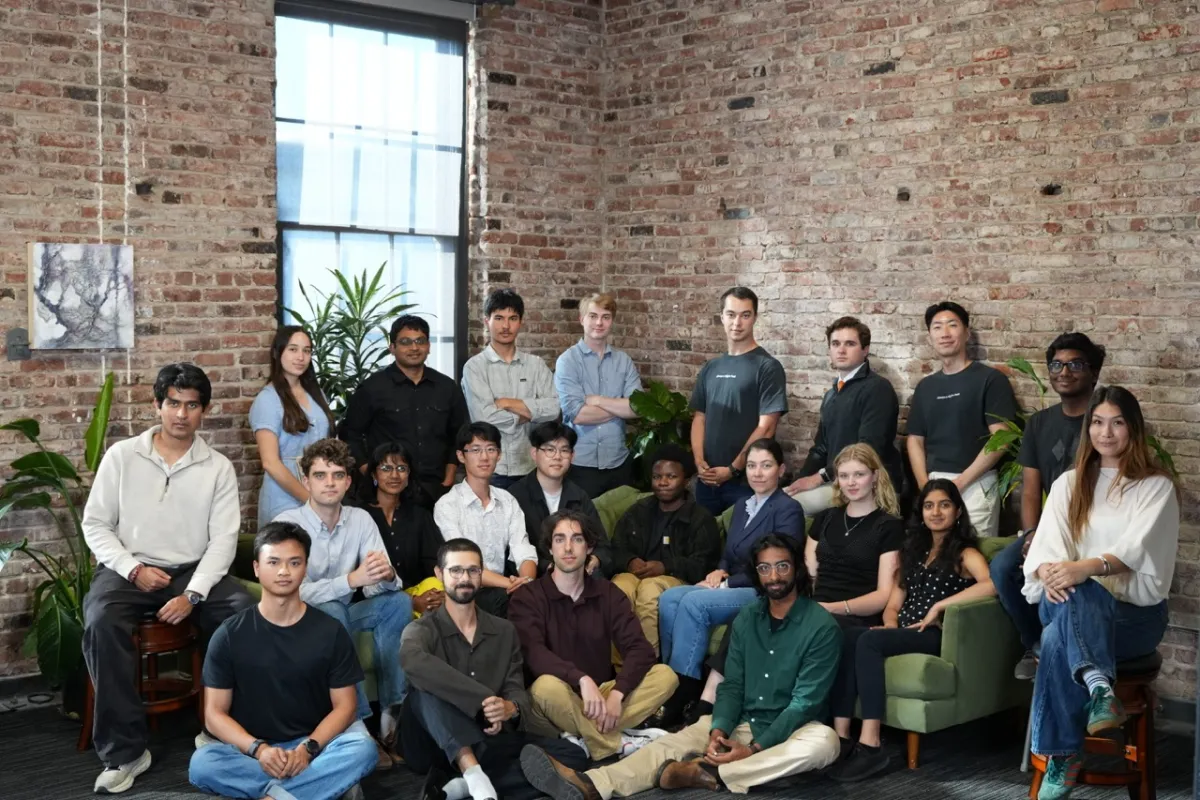
Superblocks is still an early-stage company, but the AWS deal could significantly raise its profile. The startup says it has 50 employees and has raised $60 million to date, including a Series A announced in May 2025. Investors include Spark Capital, Kleiner Perkins, Meritech Capital and Greenoaks.
For a company of that size, a partnership with AWS can do more than bring visibility. It can also lend enterprise credibility. Many large organizations are still cautious about adopting vibe-coding tools because they worry about governance, shadow IT and security. AWS’s involvement gives Superblocks a stronger sales story and a more familiar procurement path.
That matters because enterprise software purchases often depend less on product novelty than on trust, risk management and integration. If a tool can be presented as part of a major cloud provider’s controlled ecosystem, it is much easier for corporate buyers to imagine deploying it at scale.
| Item | Details | Why it matters |
|---|---|---|
| Partnership type | Multi-year joint marketing agreement between AWS and Superblocks | Signals long-term enterprise push, not a short-term pilot |
| Deployment model | Runs inside AWS customers’ private clouds | Helps keep business data under enterprise control |
| Data handling | Data does not leave the customer’s AWS account | Addresses privacy, compliance and security concerns |
| Database layer | Uses Amazon Aurora in the customer cloud | Reduces reliance on external database services |
| AI layer | Integrates with Amazon Bedrock | Connects app building to AWS’s AI gateway and inference stack |
| Company size | About 50 employees | Shows how early the category still is |
| Funding | $60 million total raised | Indicates strong investor interest in enterprise vibe coding |
What does this signal about hyperscaler competition?
It shows that cloud companies are trying to become the default operating system for enterprise AI. They do not want to be only infrastructure utilities; they want to own the software layer where workers interact with AI and where businesses govern model usage.
That competition is intensifying because the strongest model providers are not the only companies enterprises need. Large organizations also need routing, policy enforcement, audit trails, permissioning, databases, app templates and integration with internal systems. Those pieces are becoming as strategically important as the models themselves.
By partnering with Superblocks, AWS is effectively telling enterprise customers that they can have the convenience of vibe coding without giving up the control they expect from a private cloud. It also gives AWS a way to capture revenue from the growing category of AI application building even if the model layer remains plural.
How Microsoft’s message fits into the picture
It does so by reinforcing the same multi-model, cloud-controlled strategy that Microsoft has been promoting to enterprise buyers. Microsoft CEO Satya Nadella has recently argued that businesses should avoid dependence on a single AI model provider, partly to manage costs and partly to reduce lock-in.
That line of thinking is especially relevant in enterprise settings, where IT leaders are increasingly reluctant to make strategic bets on one vendor. The concern is not just price. It is also whether a model provider could one day use customer usage patterns, app behavior or business logic to compete directly with that customer.
In other words, the cloud providers are presenting themselves as the safer middle layer between businesses and the model labs.
Why enterprises are moving away from single-model dependence
Because model choice has become a procurement issue, not just a technical one. Companies want flexibility across coding, customer support, HR automation, sales workflows and internal knowledge tools. Different tasks may call for different tradeoffs among cost, speed, reasoning quality, privacy and geographic availability.
Superblocks says that appetite is already visible in the market. Menezes argues that only a short time ago many buyers wanted a specific model, often Anthropic, but now the demand has broadened into a multi-model approach. That shift reflects how quickly enterprise AI purchasing habits are evolving.
Menezes said the market has changed quickly enough that some buyers who once focused on a single preferred model are now asking for a broader model mix, including frontier models, open source options and newer Chinese open-weight systems.
One indicator of that trend comes from Vercel’s AI gateway, a tool used by enterprises to route and manage AI traffic. Open models accounted for 29% of all traffic routed through the gateway last month, suggesting that model diversity is becoming operationally important rather than merely theoretical.
- Enterprises want to reduce cost pressure by comparing models.
- They also want leverage in negotiations with AI vendors.
- Many prefer routing AI use through central gateways for security and oversight.
- Open source and open-weight models are gaining traction alongside commercial systems.
Who benefits most from this deal?
The clearest immediate beneficiary is Superblocks, which gets AWS distribution, enterprise validation and access to a larger customer base. The company is also likely to benefit from the credibility that comes with having its product aligned with a major cloud provider’s security model.
AWS benefits too. The cloud giant can deepen customer loyalty, increase usage of services such as Aurora and Bedrock, and keep enterprise AI spending within its ecosystem. If more business users build internal apps through AWS-backed tools, that creates more demand for cloud consumption and more stickiness for the platform.
Enterprise customers may benefit as well, at least if the promised controls work as advertised. They get a way to experiment with vibe coding without immediately exposing data to external systems or creating unmanaged apps outside IT oversight.
What are the broader implications for startup competition?
The AWS deal could raise the bar for independent vibe-coding startups. Many of those companies have differentiated themselves by making software creation simple for nontechnical users. But simplicity alone may not be enough in enterprise sales if cloud vendors can bundle similar capabilities with stronger governance and procurement advantages.
That does not mean startups are doomed. It does mean the market may split into two lanes: consumer or prosumer tools that prioritize speed and ease, and enterprise products that prioritize security, identity management, compliance and cloud integration. Superblocks appears to be betting on the latter.
It also suggests that the next phase of AI app building may be less about flashy demos and more about embedding those capabilities into existing enterprise workflows. The companies that win may be the ones that can satisfy both the business user who wants speed and the IT department that wants control.
How does this fit into the evolution of vibe coding?
It fits as a sign that vibe coding is moving from novelty to infrastructure. Early consumer-facing tools made the category famous by showing that people could describe an app in natural language and get usable software quickly. The enterprise version is now trying to solve a different problem: how to make that same experience safe enough for production use.
That transition often follows a familiar pattern in enterprise technology. A tool begins as a fast-moving product in the hands of individual users, then matures into a platform when larger organizations demand controls, integrations and governance. AWS is helping Superblocks make that leap by placing the product inside a trusted cloud environment.
The result could be a second wave of enterprise AI adoption, one centered not just on AI coding assistants for software teams but on vibe-coding tools for finance, operations, HR, customer service and sales teams. If that happens, the business value may be substantial, because more employees could become app creators without needing to become engineers.
What happens next?
The near-term question is whether AWS’s support translates into real enterprise adoption. If the partnership drives more deployments, it may encourage other cloud providers to make similar moves and push more startups into deeper alliances with hyperscalers.
The larger question is whether enterprises will continue consolidating around cloud-controlled AI stacks as model competition intensifies. Right now, the evidence suggests yes. Businesses appear to want model optionality, cloud governance and the freedom to swap components without rebuilding their AI architecture from scratch.
If that continues, the biggest winners may not be the model providers themselves, but the platforms that sit above them and make AI usable inside the enterprise. AWS clearly wants to be one of those platforms. The Superblocks deal shows it is willing to use partnerships, not just in-house products, to get there.
Timeline of the deal and the market shift
The partnership arrives amid a fast-moving enterprise AI market where the architecture is changing almost as quickly as the products themselves.
| Timeframe | Development | Significance |
|---|---|---|
| May 2025 | Superblocks announces its Series A | Signals investor confidence in enterprise vibe coding |
| Recent months | Enterprises increasingly adopt multi-model strategies | Reduces dependency on any single AI provider |
| Last month | Open models account for 29% of traffic through Vercel’s AI gateway | Shows model diversity is already operational |
| August 2026 | AWS and Superblocks announce their joint marketing agreement | Brings vibe coding deeper into enterprise private clouds |
For now, the takeaway is that vibe coding is no longer just a consumer-friendly way to sketch apps. It is becoming part of the enterprise cloud stack, and AWS is making sure it has a stake in that transformation.
Frequently asked questions
What did AWS and Superblocks announce?
AWS and Superblocks announced a multi-year joint marketing agreement that will let Superblocks’ vibe-coding tools run inside AWS customers’ private clouds. The goal is to let business users build apps while keeping data, governance and security inside the enterprise’s AWS environment.
Why does the AWS-Superblocks deal matter?
It matters because it shows cloud providers are moving beyond infrastructure and into the AI application layer. By keeping vibe coding inside private clouds, AWS can help enterprises adopt AI faster while preserving control, compliance and auditing over sensitive business data.
How is this different from consumer vibe-coding tools?
This version is built for enterprise control, not just speed. The apps are designed to stay inside the customer’s AWS account, use Amazon Aurora for databases and integrate with Bedrock, rather than sending data to external services or creating unmanaged shadow IT.
Is Superblocks a large company?
No. Superblocks is still an early-stage startup with about 50 employees. It has raised $60 million so far, including a Series A announced in May 2025, with backing from Spark Capital, Kleiner Perkins, Meritech Capital and Greenoaks.
What does this say about enterprise AI trends?
It shows enterprises want multi-model flexibility and stronger governance. Companies are increasingly avoiding dependence on a single AI provider and are instead looking for cloud-based orchestration, security and app-building tools that can work across different models and data sources.