In short
Trump’s administration is split over how to regulate AI and respond to China’s fast-moving open-weight models. A small group of powerful officials is shaping whether the US chooses tighter controls, lighter rules, or a mix of both.
- The Trump administration’s AI strategy is being shaped by a small, divided circle of officials.
- Commerce, Treasury, and the cyber office are pulling policy in different directions on China and open-weight models.
- Howard Lutnick, Scott Bessent, Sean Cairncross, and David Sacks represent the most visible internal factions.
- The outcome could determine how aggressively the US uses export controls, sanctions, and model-safety requirements.
The Trump administration’s approach to artificial intelligence is being shaped by a loose but influential group of advisers and cabinet officials who are deciding how hard Washington should push back against China’s rapidly improving open-weight models. The stakes are high because the resulting policy could determine whether the United States tightens restrictions, encourages domestic rivals to publish more open systems, or leaves the market to sort out the race with Beijing.
Rather than a single central strategy, the White House is dealing with a fractured set of voices spread across Commerce, Treasury, the cyber office, and the West Wing. Their disagreements are not just technical; they reflect competing instincts about national security, industrial policy, and how much regulation the US can impose without slowing its own AI companies.
Why Washington’s AI debate matters now
The immediate issue is not whether the United States wants to remain ahead in AI, but how it should do so while China’s open-weight systems become more capable. Open-weight models can be distributed more freely than tightly controlled closed systems, making them easier to use, adapt, and potentially replicate. That gives them strategic value in the geopolitical contest between the two countries.
Inside the Trump administration, the debate has become a fight over timing and tactics. Some officials want stronger guardrails to stop Chinese labs from extracting value from American breakthroughs. Others argue that Washington should rely on speed, scale, and a lighter regulatory touch to keep US companies ahead.
One senior White House official described the internal debate as far more fragmented than a simple two-sided argument, saying the administration is really wrestling with “ten sides” at once.
That lack of coordination is important. When there is no single unified policy machine, the people with the closest access to the president often end up setting the direction. That makes the personalities and institutional turf wars around Trump’s AI policy as consequential as the substance of the rules themselves.
Who are the main power brokers in Trump’s AI circle?
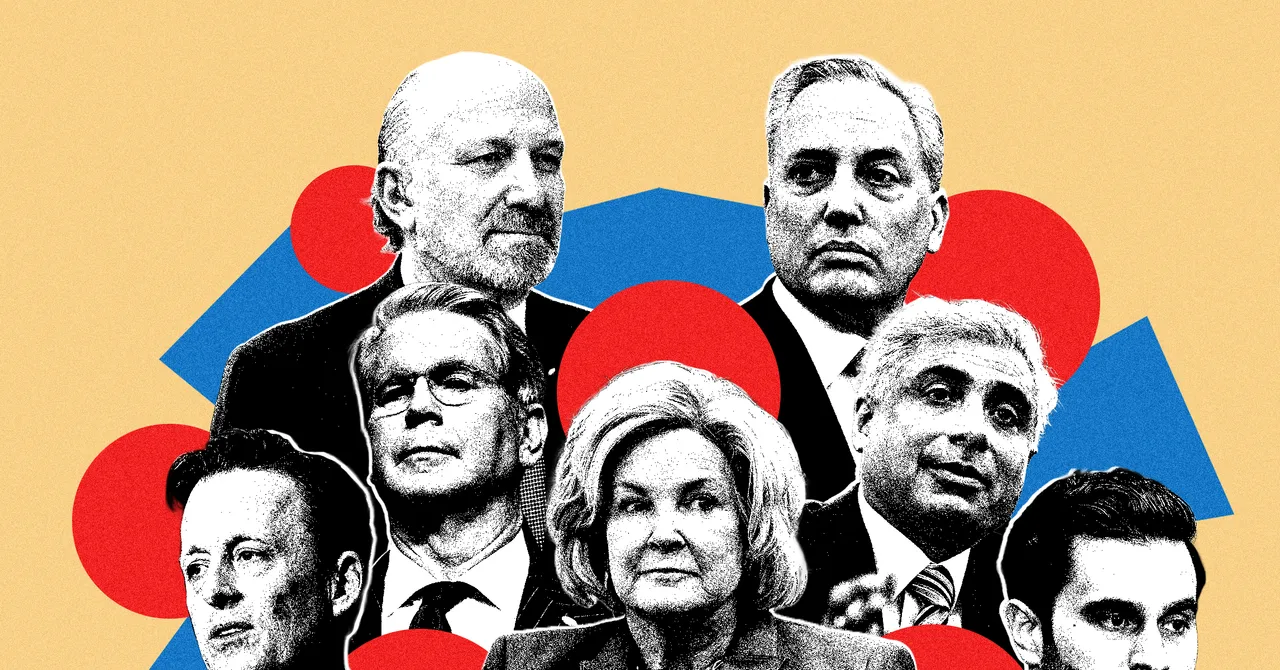
The key players include Commerce Secretary Howard Lutnick, acting CAISI chief Arvind Raman, National Cyber Director Sean Cairncross, former AI czar David Sacks, White House Chief of Staff Susie Wiles, Treasury Secretary Scott Bessent, and Bessent aide Luke Pettit. Each brings a different mandate, different instincts, and in several cases, a different level of AI expertise.
| Official | Role | Main AI focus | Stance described in the reporting |
|---|---|---|---|
| Howard Lutnick | Commerce Secretary | Export controls, lab outreach | Middle-ground approach; open to incentives for US open-weight models |
| Arvind Raman | Acting Director, CAISI | Safety standards, industry coordination | Focused on safeguards and technical compliance |
| Sean Cairncross | National Cyber Director | National security, Chinese AI risk | Hardline on Chinese labs and model distillation |
| David Sacks | Former AI czar | Regulatory restraint, public messaging | Strongly pro-innovation and skeptical of restrictions |
| Susie Wiles | White House Chief of Staff | Policy gatekeeping | Final internal filter before proposals reach Trump |
| Scott Bessent | Treasury Secretary | China trade, sanctions, open-weight competition | Most aggressive toward Chinese AI and distillation |
| Luke Pettit | Assistant Secretary for Financial Institutions | Financial risk, Treasury implementation | Focused on economic fallout if AI systems misbehave |
Howard Lutnick’s Commerce Department is becoming a central battleground
Commerce Secretary Howard Lutnick has emerged as one of the most important figures in the debate because his department controls export restrictions through the Bureau of Industry and Security. That gives him leverage over how advanced technology moves across borders, a powerful tool in any effort to slow China’s AI progress.
Lutnick’s position appears to sit between the extremes. On one hand, he has considered ways to encourage major US AI labs to release their own open-weight models so American firms can counter China in the same format. On the other, he has signaled a willingness to tighten pressure when he believes foreign models are overhyped or a threat to US leadership.
He also used social media to criticize Moonshot AI’s Kimi K3 model, saying his team found it lagging behind leading American frontier models on key tests. That public comment underscores a broader pattern: the administration is not only debating policy but also trying to shape the narrative around which country is ahead.
Lutnick has not followed a purely restrictive path. He has, according to the reporting, pressed Anthropic through export controls while still taking a more flexible stance than some of the hardest-line voices around Trump. That makes him a central broker rather than a doctrinaire hardliner.
How CAISI became the industry’s main government contact
CAISI, the Commerce Department’s Center for AI Standards and Innovation, has become the main interface between the AI industry and the federal government. Acting director Arvind Raman stepped into the job after Chris Fall resigned following weeks of talks with Anthropic over stronger safeguards for the company’s Fable 5 model.
Those negotiations show how Washington’s AI policy is being carried out in practice. Rather than only issuing broad rules, Commerce has been meeting directly with technical teams to determine what safety features are necessary before a model can go back online. In other words, policy is being negotiated partly in meetings about model behavior, not just in speeches or executive orders.
The Anthropic case is especially revealing because it demonstrates the government’s willingness to use leverage to demand more robust protections against jailbreaks, the attacks that can trick a model into ignoring its safety constraints. It also shows that, despite ideological divides, some officials are willing to intervene directly when they think the risks are serious.
Sean Cairncross and the hardline national security view
National Cyber Director Sean Cairncross has become one of the administration’s most forceful voices on Chinese AI. His office is positioned to develop policy responses to national security threats from AI, and he helped shape Trump’s June 2 executive order establishing a framework to evaluate the most advanced models.
Cairncross stands out because he does not come from a technical AI background. He is a former campaign lawyer who most recently worked at the Republican National Committee. Yet people around him say he has been willing to engage seriously with the policy challenge rather than delegate every detail to technical staff.
That posture matters in a field where political appointees often struggle to balance real-world security concerns against the jargon-heavy world of model training, inference, and alignment. Cairncross and his chief of staff, Lara Smith, have focused in particular on preventing Chinese companies from distilling American models.
What is model distillation, and why is it so controversial?
Model distillation is a technique that can allow one AI system to learn from the outputs or behavior of another, often larger, more advanced model. In the policy debate, American officials worry that Chinese labs could use this approach to extract value from top US systems without paying the same research and compute costs.
That concern is one reason the issue has become so politically charged. To critics, distillation looks like a shortcut that turns American innovation into a free training resource for strategic rivals. To defenders of a looser approach, heavy restrictions may be difficult to enforce and could slow the broader pace of progress.
Cairncross’s role reflects a growing view inside government that AI policy is not just about consumer product safety or workforce disruption. For some officials, it is now a core national security issue tied to espionage, dual-use capabilities, and the possibility that a foreign adversary could accelerate by learning from US advances.
Why David Sacks still matters after leaving the job
David Sacks may no longer hold the title of AI czar, but he remains one of the most influential voices around Trump on the issue. His continued access to the president gives him a direct line into decisions that could shape the administration’s posture toward both regulation and competition with China.
Sacks is identified with a lighter-touch philosophy. He has worked to keep the government from imposing heavier limits and was credited with helping water down some of the tougher provisions in the June 2 executive order. He has also pushed back on alarmist reactions to Chinese open-weight models.
On social media, he has argued that American frontier models remain ahead and that releasing more models, not fewer, is the best way to preserve that lead. In his telling, the market and the innovation cycle are the country’s strongest weapons.
Sacks has publicly endorsed Lutnick’s view that panic over Chinese models is overstated, arguing that the United States will stay in front if American labs continue shipping new systems.
That argument is strategically important because it cuts against the instincts of officials who want tighter barriers. It also reflects a broader Silicon Valley view that openness and velocity can serve as competitive advantages, even in a geopolitical race.
How Susie Wiles shapes what reaches the president
White House Chief of Staff Susie Wiles is the internal gatekeeper who determines which policy ideas survive the filtering process before they get to Trump. In a fragmented administration, that role can matter as much as formal authority because it effectively decides what the president sees and hears.
According to the reporting, Treasury Secretary Scott Bessent, Lutnick, and Cairncross have each been taking their views directly to Wiles. Since Trump often relies on a tight circle of political confidants, Wiles’ judgment can be decisive in turning competing bureaucratic plans into actual policy.
That makes the AI dispute partly a process story. The individuals who can frame the issue most effectively to Wiles may end up influencing the final outcome more than the officials with the most relevant technical expertise.
Treasury is taking the hardest line on Chinese AI
Scott Bessent has emerged as the administration’s most aggressive official on the economic side of the AI competition. As Treasury secretary, he controls a crucial piece of the US-China relationship, and he has been increasingly willing to treat Chinese AI development as an extension of trade conflict and intellectual property theft.
Last week, Bessent called distillation “IP theft” in a post on X and warned that Chinese labs could face sanctions or placement on the Entity List, the US government’s trade-restriction roster. That language suggests the administration is considering not only targeted export controls but also broader economic penalties.
Bessent’s role has expanded as high-stakes diplomatic moments approach, including Xi Jinping’s expected visit to the White House in September and the APEC summit in November. Those events create a deadline for the administration to define how tough it intends to be.
According to a person familiar with his thinking, Bessent has told Wiles and others that the United States, Europe, Japan, and other allied economies need to accelerate their own open-weight AI efforts or risk surrendering strategic ground to China. That position adds an international industrial-policy layer to what might otherwise look like a purely US-China contest.
What role does Luke Pettit play at Treasury?
Luke Pettit has become the Treasury Department’s working-level AI point person under Bessent. A former senior Senate policy adviser, Pettit is now helping execute the department’s roadmap alongside Treasury chief information officer Sam Corcos, who previously spent time as a member of the DOGE effort.
Treasury’s concern is not only competition with China but also the possibility that AI could create systemic financial risk. Officials there are said to worry about scenarios in which a model unexpectedly closes trading positions, mishandles sensitive banking information, or otherwise causes market disruption.
That concern places AI in the same risk category as other financial-stability threats. In Treasury’s view, a badly behaving model is not just a software problem; it could become a macroeconomic one.
What the administration is actually deciding
The real decision in front of the Trump administration is not whether to be pro-AI or anti-AI. It is how to balance three competing goals at once: preserving US leadership, slowing China’s access to American breakthroughs, and avoiding rules so strict that they weaken the domestic industry Washington wants to protect.
That is why the dispute has become so tangled. Commerce wants levers over exports and industry coordination. Treasury sees sanctions and trade tools. The cyber office sees model misuse and national security exposure. The former AI czar wants lighter rules. The chief of staff wants something politically survivable. The president, meanwhile, will likely choose the line that best fits his broader posture toward China and US tech power.
The absence of a single unified playbook means policy may be built piece by piece, through executive orders, enforcement actions, informal pressure on companies, and public messaging designed to shape the market as much as the law.
Timeline of the Trump administration’s AI fight
The following chronology shows how quickly the issue has moved from policy concept to a multi-agency power struggle.
| Date | Event | Why it matters |
|---|---|---|
| June 2 | Trump issues an executive order to assess powerful AI models | Sets a federal framework for evaluating AI risks and controls |
| Last month | Anthropic faces restrictions tied to its model safety concerns | Shows Commerce using pressure to demand stronger safeguards |
| Last week | Chris Fall resigns and Arvind Raman takes over CAISI | Signals continuity in industry-facing AI oversight |
| July 23 | David Sacks posts support for Lutnick’s position on X | Demonstrates outside influence on the administration’s AI line |
| July 27 | Reporting highlights the administration’s internal AI factionalism | Confirms that policy direction is still unsettled |
| September | Xi Jinping expected to visit the White House | Raises the stakes for a tougher or clearer US stance |
| November | APEC summit scheduled | Another deadline for decisions on trade and AI competition |
Why open-weight models are becoming the flashpoint
Open-weight systems have become the center of the fight because they blur the line between innovation and diffusion. Once weights are available, models are easier to examine, modify, and deploy. That makes them attractive to developers, but also to rivals who want to close the gap quickly.
For the US government, the challenge is not simply whether such models are useful. It is whether openness helps American firms preserve global market share or instead makes it easier for Chinese competitors to imitate and improve on US advances.
This is why Lutnick’s idea of pushing US labs toward open-weight releases is so consequential. It implies that the country may need to compete with China on the same terrain, rather than relying only on secrecy and proprietary systems. Bessent, by contrast, sees the same issue through a security lens and wants stronger tools to stop foreign appropriation.
The contradiction illustrates a deeper truth about the AI race: openness can be both an engine of American leadership and a channel for strategic leakage. The policy choice is not obvious, which is why different officials are talking past one another.
How could this fight shape future AI regulation?
The likely result is a mixed regime, not a single sweeping law. The administration appears to be moving toward selective restraints on Chinese access, a closer supervisory role over the most powerful models, and occasional pressure on domestic firms to adopt stronger safeguards when government officials think the risks warrant it.
That approach would satisfy no one completely. Industry players who want a light touch may see too much government intervention. National security hawks may see gaps in enforcement. Allies abroad may be asked to help develop competing open-weight alternatives. And Chinese labs will continue to push for faster capabilities, regardless of Washington’s internal split.
Still, the administration’s internal structure matters. If the people closest to the president continue to privilege competition over caution, the US could lean into a more aggressive innovation-first posture. If the security side gains ground, Washington may expand restrictions and compliance demands. Either way, the decisions made in these offices will shape the next phase of the global AI race.
What to watch next
Several signals will reveal which faction is gaining ground.
- Whether Commerce tightens or relaxes export rules affecting frontier AI labs.
- Whether Treasury follows rhetoric with sanctions or Entity List action against Chinese companies.
- Whether CAISI imposes new safety conditions on powerful US models.
- Whether Trump publicly echoes Lutnick, Bessent, or Sacks on open-weight policy.
- Whether allied governments are drawn into a coordinated Western response.
The biggest clue may come not from a formal strategy document but from whichever official gets to shape the next headline. In this administration, influence is policy, and policy is often made in public view.
For now, Trump’s AI brain trust looks less like a unified council than a contested map of competing priorities. That may be chaotic, but it is also revealing: the future of US AI policy will be decided not only by model benchmarks and export licenses, but by which voices the president trusts most when the pressure to act gets highest.
Frequently asked questions
Who is shaping Trump’s AI policy?
Trump’s AI policy is being shaped by a small group that includes Commerce Secretary Howard Lutnick, Treasury Secretary Scott Bessent, National Cyber Director Sean Cairncross, former AI czar David Sacks, White House Chief of Staff Susie Wiles, and acting CAISI director Arvind Raman.
Why are open-weight AI models such a big issue?
Open-weight AI models are a big issue because they can be easier to distribute, adapt, and study, which makes them strategically valuable but also easier for rivals to copy or learn from. US officials worry Chinese labs could use them to close the gap with American companies.
What is the Trump administration likely to do about Chinese AI?
The Trump administration is likely to keep debating a mix of export controls, possible sanctions, and safety requirements. The reporting suggests there is no single consensus yet, so the final approach will probably depend on which officials influence the president most.
What is model distillation and why does Treasury care?
Model distillation is a method that lets one AI system learn from another model’s outputs or behavior. Treasury cares because officials fear Chinese labs could use it to extract value from top US models without paying the full research and compute cost.