Updated August 15, 2026 4:23 pm
In short
Meta’s open-weight Glimmer launch and Zuckerberg’s AI pitch are still paired with warnings about AI’s infrastructure costs and a messy collapsed $250 million VideoVerse-Minute Media deal, now with added podcast topics and more specifics on related startups.
- Meta launched Glimmer as an open-weight model but kept Muse Spark behind APIs.
- AI’s energy and infrastructure demands are becoming a major business constraint.
- Anthropic’s watermarking plan and user backlash show the privacy trade-offs in AI.
- A reported $250 million VideoVerse-Minute Media deal allegedly collapsed amid forged documents and lawsuits.
Update — August 15, 2026 4:23 pm
The updated episode lineup adds a few new topics the published article didn’t mention, including Anthropic’s planned text watermarks, a $300 cocktail robot, and Joby Aviation’s $500 million purchase of a defense contractor.
It also fills in more detail on the AI infrastructure discussion, naming Form Energy’s $750 million raise for 100-hour batteries, Reservoir’s $8 million bet on smarter water heaters, and Discovered Materials’ work on cooler chips.
The VideoVerse-Minute Media story is unchanged in substance, but the new source again frames the deal as a $250 million collapse tied to allegedly forged documents, multiple lawsuits, and a CEO who still can’t be reached.
Update — August 14, 2026 7:23 pm
The latest source adds a few new episode topics beyond the Glimmer launch and the VideoVerse-Minute Media fallout, including Anthropic’s move to watermark AI-generated text and a discussion of a $300 cocktail robot.
It also names another deal in the podcast lineup: Joby Aviation’s $500 million purchase of a defense contractor, which the hosts said reminded them of Joby’s earlier Blade deal.
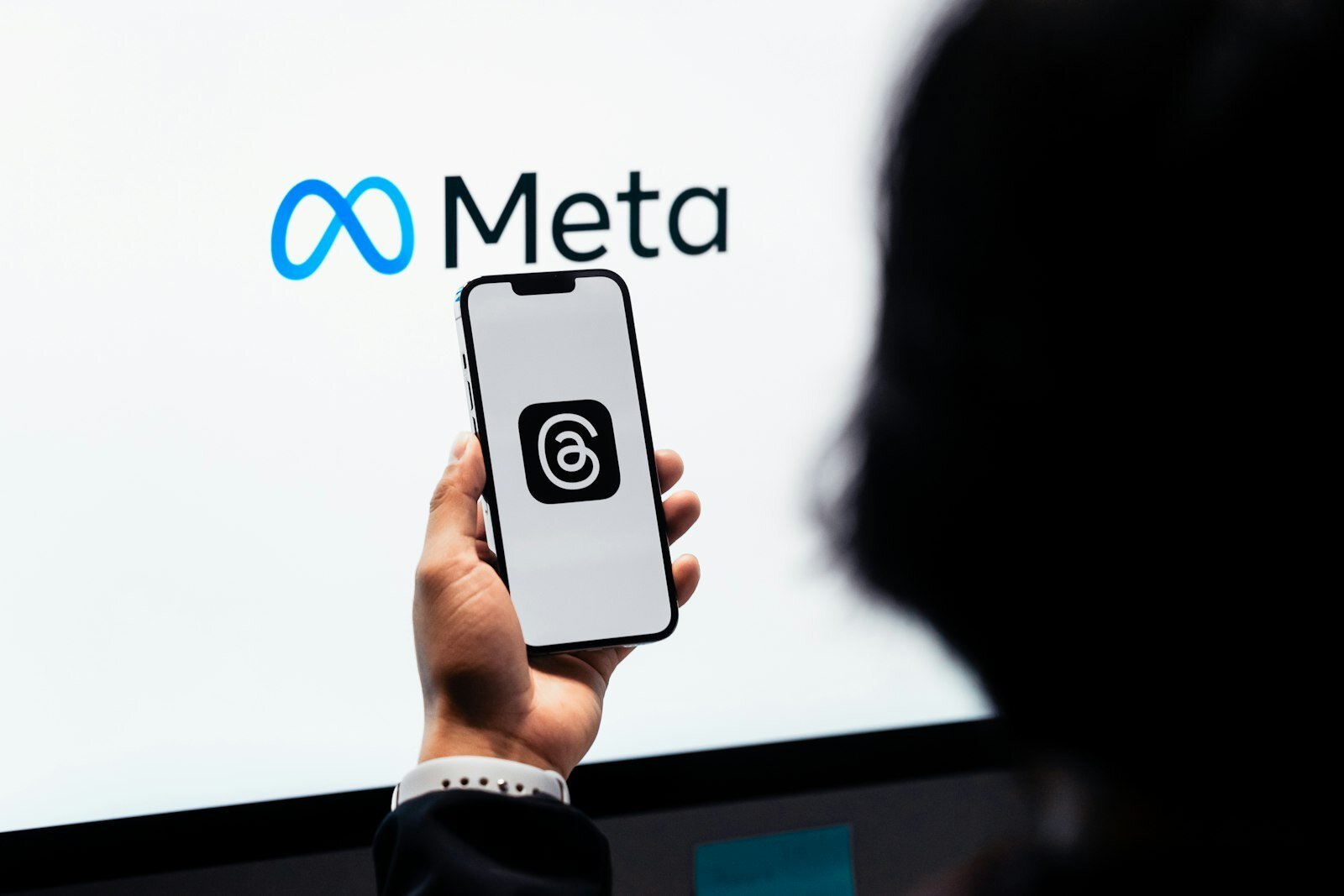
Meta is trying to reframe its artificial intelligence strategy around openness, but this week’s moves showed just how complicated that pitch can be. The company released Glimmer, an open-weight AI model that people can download and run on their own machines, even as it keeps its more capable Muse Spark model inside its own API walls — and that split landed alongside a fresh round of scrutiny over the cost, politics, and power dynamics of the AI industry.
At the same time, TechCrunch’s Equity podcast spotlighted a separate cautionary tale: a reported $250 million acquisition involving video-clipping startup VideoVerse and sports publisher Minute Media that appears to have collapsed amid allegations of forged documents, legal fights, and a chief executive who cannot be reached. Taken together, the week’s stories illustrate a central tension in tech right now: companies are selling AI as accessible, transformative, and inevitable, while the business realities behind that story are often messy, expensive, and fragile.
Meta’s latest AI release is open — but only up to a point
Meta’s new Glimmer model is presented as the kind of AI release that supporters of open development have been asking for: a model weight set that developers can download, study, and run on their own hardware. That matters because open-weight systems allow far more customization than tightly controlled products, and they can be deployed without depending on a provider’s servers or pricing decisions.
But Glimmer’s arrival does not mean Meta has abandoned a more guarded approach. The company’s stronger Muse Spark model remains behind Meta’s APIs, available on Meta’s terms rather than as a freely distributable package. That difference is central to the debate around “open AI”: access can range from partial transparency to full reproducibility, and not every model that is described as open gives the public the same level of control.
The release was paired with a long letter from Mark Zuckerberg arguing that AI should be developed “for everyone” rather than concentrated in the hands of a small number of labs. It is a populist-sounding argument with broad appeal, but Meta’s product choices suggest a more selective version of openness — one that preserves leverage over the most powerful systems while expanding distribution for less advanced ones.
Meta’s public message this week was that AI should be broadly available, even as its product lineup showed the company still wants to keep its most capable systems under tight control.
Why the distinction between open-weight and API-only models matters
The difference between open-weight and API-only models is more than technical jargon. It shapes who can experiment, who can build products, who pays for usage, and who controls updates and safety constraints. In practical terms, open-weight models can be deployed in private environments, which may appeal to companies worried about data handling, latency, or vendor dependence.
By contrast, API-only models create a recurring service relationship. That can be better for a company’s revenue and easier to monitor, but it also limits what users can modify or inspect. For developers, that trade-off can determine whether a model becomes a building block or merely a rented utility.
How Meta’s AI strategy reflects a larger industry split
Meta’s approach mirrors a larger argument in the AI sector about whether the next generation of tools should be broadly distributed or centrally managed. Supporters of openness say competition improves when developers can inspect and adapt models directly. Critics counter that very capable models can be misused, making centralized control safer and more commercially sustainable.
Zuckerberg’s letter landed in that debate at a moment when AI companies are increasingly trying to define not just what their models do, but who gets to decide how they are used. In that sense, Meta’s release was not just a product announcement; it was a strategic message to developers, researchers, regulators, and competitors about the company’s preferred model for the future of AI.
Still, the policy rhetoric runs into practical reality. Running large models on personal or corporate infrastructure requires meaningful compute resources, technical expertise, and ongoing maintenance. For many would-be users, “open” does not mean “easy.” It means more freedom with more responsibility.
What users gain — and what they do not
With Glimmer, users can in principle download and run the model independently, which gives them more autonomy than they would have with a locked-down service. But that does not automatically confer access to Meta’s highest-performing systems, and it does not remove the need for hardware, engineering, or operational support.
- More control: Users can host and adapt the model on their own terms.
- Less dependence: Teams are less reliant on a provider’s API uptime or pricing.
- More complexity: Self-hosting requires infrastructure and expertise.
- Limited access: Meta’s strongest model remains under API control.
The true cost of AI is becoming impossible to ignore
One of the biggest themes discussed on Equity was the infrastructure burden behind AI. The conversation pointed to the energy demands of the sector and to a growing recognition that the physical economy — power generation, cooling, storage, and grid reliability — is now inseparable from AI’s digital ambitions.
That is especially relevant as major cloud and AI companies continue to plan enormous data-center expansions. A single new facility can drive demand for electricity, water, land, transformers, and specialized cooling systems. For companies with aggressive AI road maps, these are not side issues. They are some of the main constraints on growth.
The episode highlighted Amazon’s planned data center in Texas as part of this broader story, along with the startups trying to solve the bottlenecks. The central question is not simply whether AI models can get smarter. It is whether the grid can keep up.
What startups are building to support AI infrastructure?
Startups are racing to tackle the pain points created by AI’s appetite for electricity and thermal management. Some are focused on storing power more efficiently, while others are designing devices that reduce overall load or help chips run cooler.
The podcast discussed several examples that show how AI’s growth is spilling into adjacent industries:
- Form Energy: The company raised $750 million to build batteries capable of storing electricity for up to 100 hours, a potential answer to long-duration energy balancing.
- Reservoir: The startup secured $8 million to develop smarter water heaters that can better align power usage with grid needs.
- Discovered Materials: The company is working on materials intended to help chips operate at lower temperatures, which could reduce cooling demands.
These businesses are not AI companies in the narrow sense, but they are becoming essential to the AI economy. As data centers multiply, the winners may be the companies that make the whole system less power-hungry, less heat-intensive, and less vulnerable to grid shocks.
Why data-center expansion is now a grid story
AI infrastructure increasingly functions like heavy industry. Training and serving large models requires constant electricity, backup systems, cooling, and physical space. That means the economics of AI can no longer be analyzed only through software margins or user growth. They also depend on transmission lines, utility planning, and local permitting.
That shift helps explain why energy startups are drawing fresh attention from investors. If the AI boom continues, demand will not only rise for chips and models but for everything that makes massive computing clusters operational. In that environment, power management becomes a competitive advantage.
| Company | Focus | Latest figure mentioned | Why it matters |
|---|---|---|---|
| Meta | AI models | Glimmer released; Muse Spark remains API-only | Shows the company’s split between openness and control |
| Form Energy | Long-duration batteries | $750 million raised | Could help balance electricity demand from AI data centers |
| Reservoir | Smart water heaters | $8 million raised | Aims to reduce grid strain through better energy timing |
| Discovered Materials | Chip cooling materials | No funding figure cited | Targets one of AI’s key infrastructure bottlenecks |
| Amazon | Data-center buildout | Planned site in Texas | Illustrates the scale of power demand behind AI expansion |
Anthropic’s text watermarking plan draws a backlash
Another AI storyline discussed this week involved Anthropic and its decision to add watermarks to text generated by its models. The intent is straightforward: make machine-generated writing easier to identify. But users who rely on Claude for work or school were reportedly unhappy, in part because the change could expose how they are using the tool.
Watermarking has become a recurring issue in AI policy. Companies want ways to track or signal AI-generated output, especially as concerns mount about plagiarism, fraud, and misinformation. Users, however, often see the same tools as productivity aids rather than something requiring oversight, and they may resist anything that makes their behavior visible to employers or educators.
The debate reveals a deeper fault line in the AI market. Providers want accountability and defensibility. Customers want convenience and privacy. The more AI blends into everyday work, the harder it becomes to separate those goals cleanly.
Who is buying a cocktail robot for $300?
Among the lighter but still revealing topics on the episode was the idea that there is a market for a cocktail robot priced at $300. On its face, that sounds like novelty hardware aimed at consumers who want a conversation piece. But it also reflects how AI-adjacent robotics continues to search for viable consumer use cases.
Consumer robotics has long struggled with a familiar problem: products must be practical enough to justify their cost, but charming enough to create demand. A cocktail robot may be an easy headline, yet it stands in for a broader industry question about whether AI-powered household devices can move beyond demos and into everyday life.
If the product works, it could appeal to parties, hospitality settings, or gadget enthusiasts. If it does not, it will join a long list of expensive hardware that generated attention before disappearing into the background.
The $250 million deal that reportedly fell apart
One of the most dramatic stories discussed on Equity was the reported collapse of a $250 million acquisition between VideoVerse, a video-clipping startup, and Minute Media, a sports publishing company. According to the episode’s summary, the transaction unraveled amid allegations of forged documents, multiple lawsuits, and a CEO who could not be contacted.
Deals like this often fail because of valuation disagreements or market changes. This one appears to have gone far beyond that, turning into a dispute over whether the underlying paperwork and management structure could even be trusted. That makes it a reminder that, in startup land, a headline valuation can disappear fast when diligence breaks down.
The fact pattern is especially striking because video clipping and sports publishing are both businesses where speed, rights management, and content distribution matter. If the claims around the deal are accurate, the breakdown would not just be a failed acquisition. It would be a case study in how legal, operational, and governance weaknesses can overwhelm even a substantial deal size.
Why due diligence matters more when numbers get bigger
In acquisition talks, the larger the price tag, the more important it becomes to verify the basics: ownership, contracts, authority, and the truthfulness of representations. A $250 million transaction magnifies any mistake. If documents are forged or executives are unreachable, the deal stops being a finance story and becomes a risk-management story.
For investors and acquirers, the lesson is familiar but unforgiving. Rapid growth and attractive metrics are not enough. The reliability of the corporate paper trail matters just as much as the product demo.
| Story | Type | Key issue | Why it stands out |
|---|---|---|---|
| Meta’s Glimmer | AI model release | Open-weight access vs API-only control | Illustrates the limits of “open” AI branding |
| Anthropic watermarking | Product policy | Identifying AI-generated text | Raises workplace and school privacy concerns |
| Amazon Texas data center | Infrastructure | Energy and grid pressure | Shows AI’s physical footprint |
| VideoVerse-Minute Media | Deal collapse | Alleged forged documents and lawsuits | Highlights startup diligence failures |
How the Joby Aviation deal fits the same bigger picture
Joby Aviation’s $500 million acquisition of a defense contractor was also part of the week’s discussion, and the timing matters. The move drew comparisons to Joby’s earlier Blade deal and raised questions about strategic positioning ahead of the 2028 Los Angeles Olympics.
That connection is less about one single transaction than about the way mobility companies are trying to create new markets through consolidation. For Joby, acquisitions may help build capabilities, secure relationships, or accelerate deployment plans. In a heavily regulated sector, growth is often as much about infrastructure and partnerships as it is about aircraft design.
The Olympics angle is also telling. Major events can act as catalysts for transportation companies seeking public visibility and real-world operational use cases. Whether those ambitions pay off depends on regulatory approval, aircraft readiness, and public trust — all of which are still in flux.
Why AI and dealmaking are colliding across the tech sector
What ties these stories together is that the technology sector is increasingly operating in two registers at once. On one level, companies are making bold claims about openness, automation, and the democratization of powerful tools. On another, they are wrestling with the hard realities of infrastructure, legal exposure, and corporate control.
Meta’s open-weight release is a good example. It suggests broad access, but the company still keeps its most powerful system private. Anthropic’s watermarking push signals accountability, but users see surveillance. Energy startups are building tools to stabilize AI’s growth, but the industry itself is still consuming more power. And a major acquisition can look transformative right up until the paperwork falls apart.
That combination makes the current AI era feel less like a straight line of progress and more like a series of overlapping negotiations: between openness and control, growth and scarcity, innovation and governance.
What happens next?
Meta will likely continue trying to position itself as an AI company that supports broad adoption while preserving strategic control over its best models. Whether that balance satisfies developers or critics remains to be seen. The company’s choices will also influence how rivals talk about openness in an increasingly competitive market.
Meanwhile, the infrastructure companies highlighted on the episode may benefit from rising attention as AI energy demands grow harder to ignore. The same is true for firms working on cooling, storage, and grid flexibility. In many ways, the next phase of AI investment may be less about model size and more about the systems that keep those models running.
And for the startup deal that reportedly imploded, the immediate future is likely to be defined by litigation, document disputes, and reputational fallout. The bigger lesson, though, extends well beyond a single transaction: in tech, a large number on paper does not protect a deal from collapsing when trust disappears.
Timeline: the week’s key developments
Here is a concise view of the major points discussed across Meta’s release and the Equity episode.
| When | Event | What it signals |
|---|---|---|
| This week | Meta releases Glimmer and publishes Zuckerberg’s AI letter | Push for broad access, but not full openness |
| This week | Anthropic watermarking plan draws user criticism | Growing tension over transparency and surveillance |
| This week | Energy and infrastructure startups attract attention | AI’s physical costs are becoming central |
| This week | VideoVerse-Minute Media deal is described as collapsing | Startup M&A risks can quickly become legal crises |
Bottom line
Meta’s new AI release and the week’s broader tech headlines underscore a simple reality: the AI industry is maturing, but its core tensions are not going away. Companies want the public to believe AI is becoming more open, more useful, and more inevitable. At the same time, the sector is grappling with the energy it consumes, the controls it imposes, and the deals that can still blow up spectacularly behind the scenes.
That is why this week’s news matters. It is not just about one model, one acquisition, or one manifesto. It is about the shape of the industry itself — and who gets to define it.
Frequently asked questions
What did Meta release this week?
Meta released Glimmer, an open-weight AI model that users can download and run on their own hardware. The company also kept its more powerful Muse Spark model inside its own API ecosystem, underscoring that Meta’s version of openness still has clear limits.
Why is Meta’s AI strategy being called only partly open?
Meta’s AI strategy is being called partly open because Glimmer is downloadable, but its strongest model, Muse Spark, is not publicly available as weights. That means users can experiment more freely with one model while still depending on Meta’s controlled infrastructure for the more advanced system.
Why are AI data centers such a big issue now?
AI data centers are a big issue now because they require huge amounts of electricity, cooling, and grid support. As more companies expand their computing capacity, the cost of power and infrastructure is becoming one of the main limits on AI growth.
What happened with the VideoVerse and Minute Media deal?
The reported $250 million deal between VideoVerse and Minute Media appears to have fallen apart amid allegations of forged documents, multiple lawsuits, and an unreachable CEO. If accurate, the breakdown shows how fast a major startup acquisition can unravel when trust and documentation fail.
Why are Anthropic users upset about text watermarks?
Anthropic users are upset because watermarks could make it easier to detect when Claude-generated text is being used at work or in school. Many users see the feature as a privacy and surveillance concern, even though Anthropic frames it as a way to identify AI-written content.