In short
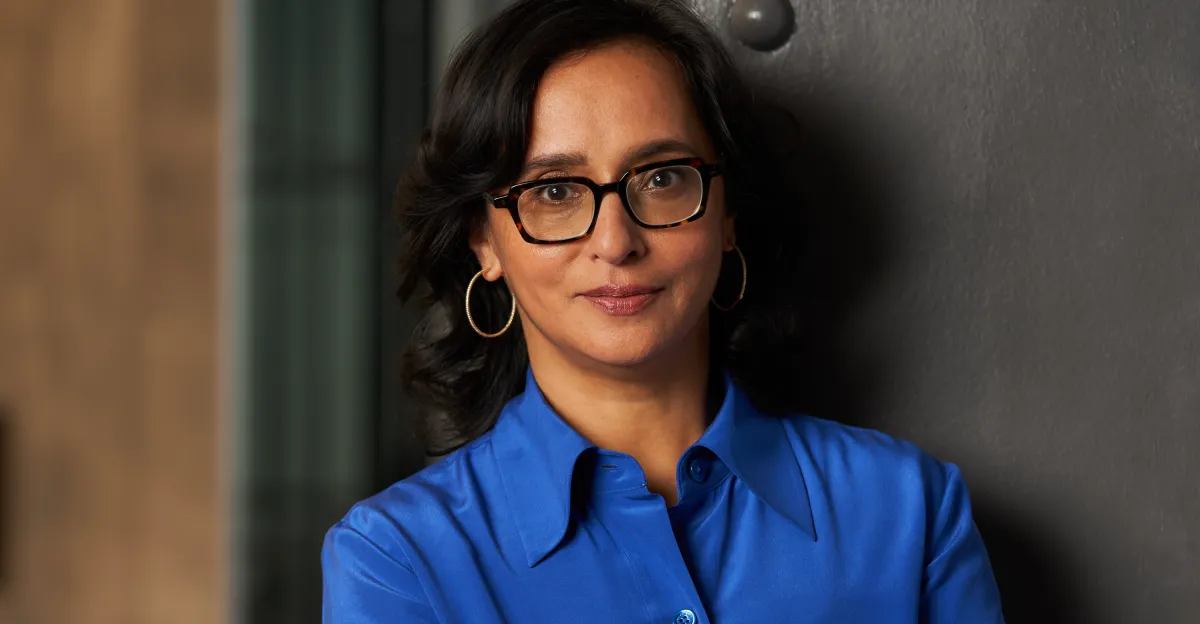
Splice CEO Kakul Srivastava argues that AI-written emails and documents can make workplace conversations worse because they hide the human behind the words. She also says Splice’s AI strategy should assist musicians without replacing creativity.
- Kakul Srivastava says AI-written emails can damage the quality of conversation.
- Splice is aiming for human-centered AI tools rather than fully automated song generation.
- Her comments connect workplace communication with broader concerns about authenticity in creative work.
- She also described technology as useful when it helps preserve culture and memory.
Splice chief executive Kakul Srivastava says the rise of AI-generated emails and documents is making workplace conversations weaker, and she believes creative tools should keep people at the center rather than automate them out of the process. Her comments, shared in a Verge questionnaire published on October 3, also reinforce her long-running skepticism about “push-button” music generation.
Srivastava, who leads the sample platform used by producers around the world and has overseen its expansion into generative AI, argued that once it becomes impossible to tell whether a message was written by a person or a machine, the discussion itself changes for the worse. The warning lands at a moment when more companies are adopting AI assistants for drafting, summarizing and composing internal communication.
Why Srivastava is wary of AI in everyday work
Srivastava’s central concern is not that AI is useless, but that it can flatten the human interaction that helps teams think clearly. In a remote-first company like Splice, she said, the quality of a document matters because it often replaces the hallway conversation that in-person offices take for granted.
Her view is that a well-argued memo should still reveal a person behind the words. When a reader cannot tell whether a document was written by someone who truly believes it or by software filling in the blanks, she believes the debate around it becomes less meaningful and harder to trust.
Srivastava said she prefers well-written documents followed by real conversation, and she cautioned that AI-authored writing can change the tone of discussion in a way that is difficult to reverse.
That is a notable stance from a technology executive whose company works directly with AI. Rather than rejecting the tools outright, she is drawing a line around where automation helps and where it risks diluting the creative or collaborative process.
How does this connect to Splice’s AI strategy?
It connects directly: Splice has tried to design AI features that support musicians instead of replacing them. Srivastava has previously been vocal about avoiding the kind of instant song-generation products that let a user press a button and get a finished track with minimal creative input.
That approach places Splice in a different camp from companies building fully automated music creation tools. Instead of eliminating the maker, the company has aimed to keep artists involved at every stage, from selecting sounds to shaping arrangements and final decisions.
The tension is familiar across the music industry. Tools that speed up production can be genuinely useful, but they can also raise questions about originality, authorship and the value of human taste. Srivastava’s comments suggest Splice sees those questions as a product design issue, not just a philosophical debate.
What Splice represents in music tech
Splice is best known as a vast sample library and production platform used by musicians and producers to find loops, one-shots and other building blocks for tracks. Its sounds have contributed to major hits, underscoring how deeply sample-based production has become embedded in modern pop and hip-hop workflows.
The company has also expanded beyond its original core through acquisitions, including Spitfire Audio, as it tries to broaden its position in the music creation ecosystem. Under Srivastava, that growth has been paired with a cautious stance on generative AI.
What did Srivastava say about creativity and family?
She pointed to music as something deeply human and emotionally specific, saying that even badly sung songs can move people when they come from a real place. One of the examples she offered was the Indian game Antakshari, in which players continue songs by starting with the last letter of the previous line. For her, the game’s charm is that it depends on memory, participation and the willingness to sing in front of others rather than on professional skill.
Her personal examples also highlighted how technology can preserve culture without replacing people. She described reconstructing her mother’s recipes from YouTube videos after her mother died before she could learn many of them directly. In her view, that was an instance of technology serving a deeply human purpose: strangers uploading family recipes that helped her recover a taste and memory she thought she had lost.
Srivastava framed that experience as proof that technology is most valuable when it helps people reconnect with meaningful parts of their lives, not when it erases the human origin of the work.
What does her career tell us about her perspective?
Srivastava’s career path helps explain why she is so attentive to the relationship between tools and creators. Before Splice, she held senior roles at Flickr, Yahoo, GitHub and Adobe, putting her at the intersection of consumer internet products, developer platforms and creative software.
That background has made her fluent in both Silicon Valley product thinking and the practical needs of creative communities. At Splice, those worlds meet every day: the company serves musicians who want powerful software and vast sound libraries, but who still care deeply about taste, authorship and originality.
Her experience also likely informs her skepticism about over-automating communication. In teams that rely on written documents, a generic AI draft may be faster, but speed is not always the same as clarity. Srivastava appears to be arguing that the quality of the exchange matters as much as the efficiency of producing it.
Why her comments matter now
The debate over AI in writing and creative work has moved from theory to everyday practice. Employees increasingly use AI tools to draft internal messages, summarize meetings and help structure proposals. Meanwhile, musicians, designers and video creators are confronting a wave of generative tools that promise to do in seconds what once required hours of human effort.
Srivastava’s remarks matter because they come from someone who is not anti-AI in principle. She is working inside the technology, but still insisting on guardrails. That nuance is increasingly relevant as companies try to figure out where AI helps people do better work and where it simply replaces the part of the process that makes the work feel human.
Her message is also a reminder that creative industries are not only debating copyright and compensation. They are also wrestling with subtle cultural questions: whether AI changes the way collaborators speak to one another, whether it reshapes trust in written communication and whether the convenience of automation is worth the loss of authorship signals.
How AI is changing creative work and communication
AI adoption in creative fields has accelerated because it lowers the time and technical barriers to producing content. But that same efficiency can make creative work feel less distinctive. In music, especially, the line between a helpful tool and a replacement system is unusually sensitive because artistry depends not only on output but on process.
Srivastava’s position is that the process matters just as much as the result. That is why she prefers AI systems that assist a musician rather than deliver a complete song. It is also why she is skeptical of AI-written workplace messages: the text may be polished, but the exchange may become less real.
This concern extends beyond Splice. Across industries, managers are beginning to notice that AI can standardize tone to the point that important nuance disappears. A message may sound professional while revealing little about the person who sent it, which can make collaboration feel colder and more transactional.
How remote work intensifies the problem
Remote-first companies rely heavily on written communication, which makes authenticity harder to preserve and easier to lose. Without in-person cues, a memo, chat message or document often becomes the main vehicle for persuasion, disagreement and decision-making.
Srivastava’s view is that AI can interfere with that process by smoothing away the idiosyncrasies that signal conviction. In her telling, the issue is not only whether the writing is good. It is whether the writing still carries evidence of a human mind working through an idea.
What was included in Srivastava’s questionnaire responses?
Her questionnaire answers moved between work, family, memory and culture, offering a portrait of a CEO who is as interested in lived experience as in product strategy. She named live jazz as something worth spending money on, describing the appeal of musicians making decisions in real time and living with them.
She also highlighted a frustrating gadget—a cup warmer—as an example of hardware that technically works but fails to solve the real problem. The distinction is revealing: for Srivastava, usefulness is not about whether a tool functions on paper, but whether it solves the actual human need behind the task.
That perspective echoes throughout her answers. Her favorite online place was Instagram, where she said she finds musical performances and unexpected forms of creativity she might never have encountered otherwise. Even there, the appeal is not automation but human invention.
| Topic | Srivastava’s view | Why it matters |
|---|---|---|
| AI-written emails | They can weaken real conversation | Changes how teams debate and trust ideas |
| Music generation | Tools should keep the human at the center | Protects authorship and creative judgment |
| Remote work | Documents must still show a person behind them | Documents replace hallway conversations |
| Technology and culture | Useful when it preserves human memory and connection | Examples include family recipes and shared music |
How her background shapes her stance on AI
Srivastava sits at a crossroads familiar to many technology leaders but especially fraught in the creative industries. She has spent years building and leading digital products, yet she remains cautious about tools that remove too much human intent from the final output.
That balance is visible in the way she talks about both music and communication. She is not dismissing technology’s role in either area. Instead, she is drawing a boundary between augmentation and substitution. In her view, the best tools make people more capable without making them invisible.
Her comments also reflect a broader cultural backlash against sameness. As more writing and content begin to sound as if they were produced by the same machine, audiences may become less willing to accept communication that lacks a clear human signature.
What this means for the music industry
For musicians and music-platform companies, Srivastava’s stance suggests that the next phase of AI will be judged not only on speed or novelty, but on whether it expands or narrows creative choice. The music business has already lived through major shifts from analog recording to digital editing to sample-based production. Generative AI may be the next major transition, but it will not be welcomed equally by everyone.
Artists often embrace tools that open new sounds or workflows, yet they resist systems that appear to automate their taste. That is why products like Splice’s can be successful: they provide raw material and flexibility rather than a finished artistic identity.
Srivastava’s remarks suggest the market may increasingly reward this middle ground. As backlash grows against fully autonomous creative systems, companies that help artists work faster without erasing the artist may have a stronger long-term story to tell.
Key timeline: Srivastava and Splice’s AI posture
The following timeline summarizes the major milestones referenced in her background and the company’s approach.
| Period | Event | Significance |
|---|---|---|
| Early career | Roles at Flickr, Yahoo, GitHub and Adobe | Built experience across consumer tech and creative software |
| Early Splice era | Joined and later led the company | Helped shape the platform’s direction for producers |
| Growth phase | Splice acquired Spitfire Audio | Expanded the company’s footprint in music tools |
| Recent period | Public skepticism toward “push-button” song generation | Signaled a human-centered AI strategy |
| October 3, 2026 | Questionnaire published with AI concerns in focus | Reiterated doubts about AI-written communication |
What should readers take away?
Srivastava’s position is not that AI is inherently bad. It is that AI should not erase the people whose thinking gives work meaning. In music, that means tools should support artists rather than replace them. In the workplace, it means documents should still feel like they came from a person who has something real to say.
That distinction is likely to remain central as AI becomes more embedded in daily life. Speed and convenience will continue to push adoption. But as Srivastava argues, the harder question is whether people still recognize one another in the words they send, the music they make and the traditions they pass along.
In a tech industry often obsessed with what can be automated next, her answer is simple: some parts of work and creativity are more valuable precisely because they stay human.
- Splice CEO Kakul Srivastava says AI-written emails can weaken real conversation.
- She favors AI tools that assist musicians without replacing human creativity.
- Her comments reflect a broader tension in remote work and creative software.
- She also described technology as valuable when it helps preserve memory and culture.
Frequently asked questions
Why does Kakul Srivastava dislike AI-written emails?
She says AI-written emails can make it harder to tell whether a real person stands behind the words, which changes the tone of debate and makes conversations worse. In her view, written communication should still reflect human thought, especially in remote teams.
What is Splice’s approach to AI music tools?
Splice is trying to build AI features that support musicians rather than replace them. Srivastava has said she is wary of one-click song generation and prefers tools that keep the artist involved in the creative process from start to finish.
What did Srivastava say about technology and culture?
She argued that technology is most valuable when it helps people reconnect with meaningful experiences, such as recovering her mother’s recipes through YouTube videos. She sees that as an example of tech preserving human memory instead of replacing it.
Why is Srivastava’s view important for remote companies?
Remote companies depend heavily on written documents and messages, so AI-generated text can have an outsized effect on trust and collaboration. Srivastava believes those documents need to feel authored by real people to keep discussions meaningful.