In short
Apple has opened its redesigned, AI-powered Siri to public testers through the iOS 27 beta, expanding access beyond developers for the first time. The assistant adds deeper device awareness, tighter OS integration and privacy-focused AI processing ahead of a broader launch expected in September.
- Apple is letting non-developers test its redesigned Siri for the first time via the iOS 27 public beta.
- The new Siri can use on-device data, respond to screen context and integrate more deeply with iPhone and other Apple products.
- Apple says the assistant is powered by Apple Intelligence, Foundation Models and Private Cloud Compute.
- Early testing shows better task handling, but the system still has occasional errors and confusion.
- A full release of iOS 27 and the new Siri is expected in September.
Apple is making its redesigned Siri available to ordinary users for the first time through the iOS 27 public beta, turning the company’s most ambitious voice-assistant overhaul into a large-scale real-world test ahead of its wider release later this year. The move matters because it puts Apple’s new AI assistant in front of millions of potential testers just as the company races to catch up with ChatGPT, Gemini and Claude.
The public beta, released on July 14, expands access beyond developers and gives Apple a chance to see how the new Siri performs on everyday tasks across the iPhone and the wider Apple ecosystem. Even if only a small percentage of Apple’s roughly 2.5 billion active devices install the beta, the result would still be one of the biggest public experiments yet for a consumer AI assistant.
Apple first introduced the upgraded Siri at its Worldwide Developers Conference in June, presenting it as a fundamentally more capable assistant that blends on-device intelligence with cloud processing while keeping user data protected. The company has framed the update as a major step toward making Siri useful for modern AI-era workflows rather than just basic commands and search.
What is new about Siri in iOS 27?
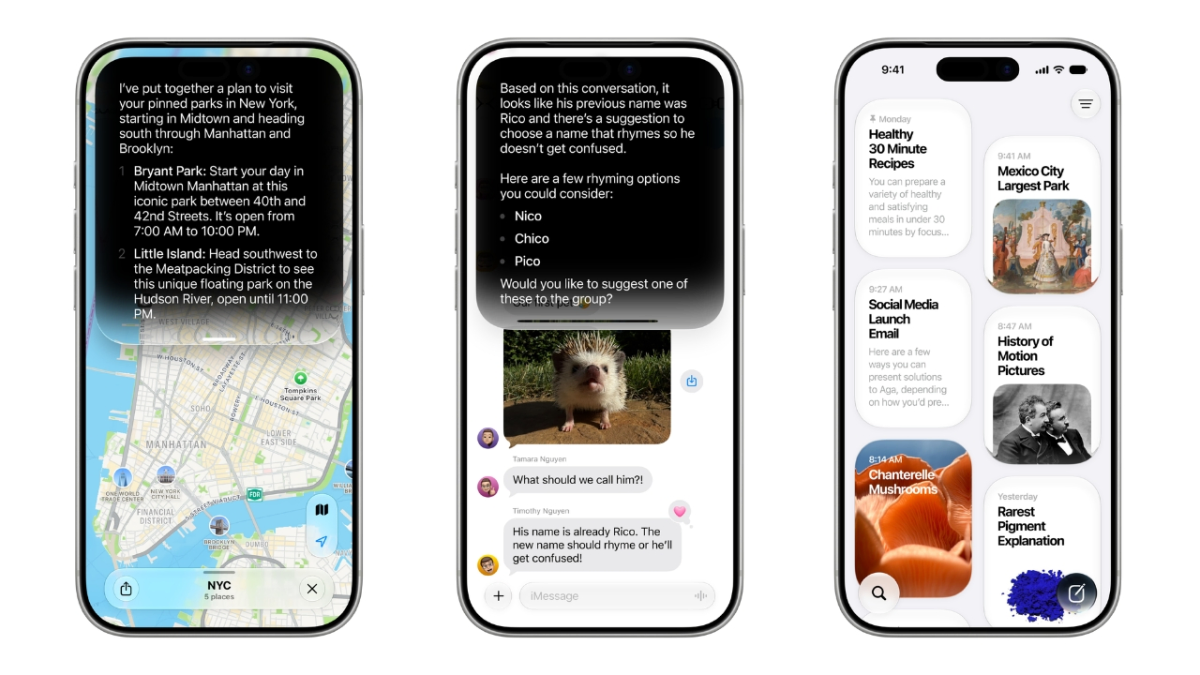
Apple’s updated Siri is designed to behave less like a narrow voice command tool and more like a full-fledged AI assistant. It can tap into information stored on the device, respond to what is visible on the screen, and draw on broader knowledge when answering questions.
That shift puts Siri closer to the way consumers now use chatbot products such as ChatGPT, Gemini and Claude. Instead of only setting timers, checking weather or launching apps, the assistant is now meant to help with tasks that require context, synthesis and follow-up reasoning.
Device-aware assistance
The biggest practical change is Siri’s deeper access to a user’s personal data and device context. Apple says the assistant can find information in emails, photos and messages, then use that context to respond more intelligently to requests.
It can also interpret what is on the screen, which means users should be able to ask about content they are already viewing instead of copying and pasting text into another app. That capability has become a common expectation in modern AI assistants, and it is one area where Apple’s earlier version of Siri had lagged far behind competitors.
Integrated across the operating system
The assistant is now woven more deeply into iPhone software. Users can still activate Siri with the familiar wake phrase or by pressing the side button, but Apple has added another entry point by letting people swipe down from Dynamic Island.
Siri is also integrated into Spotlight, Apple’s built-in search feature. That matters because Spotlight is already one of the fastest ways to find information on an iPhone, and the AI upgrade turns it into a much more powerful question-answering interface.
For the first time, Apple has also built Siri into a separate standalone app. That may appeal to people who are accustomed to interacting with chatbots in a dedicated window, even though Siri’s tight system integration means many users may never need to open a separate app at all.
How does Apple’s new Siri work?
Apple’s answer is that the new Siri sits on top of Apple Intelligence, the company’s broader AI framework. The assistant uses Apple’s new Foundation Models for on-device processing and also relies on Private Cloud Compute for heavier requests that cannot be handled locally.
Apple says that architecture is intended to balance capability and privacy. Sensitive personal information is not supposed to be stored by Apple or made accessible to the company, which has long tried to distinguish its products from rivals by emphasizing security and data protection.
Under the hood, Apple has combined its own model work with a partnership approach. The company has said its Foundation Models were developed for Apple Silicon and built using proprietary data, while also distilling Google’s Gemini model to create smaller, efficient systems that can run inside iOS and other Apple software.
That hybrid model reflects a wider trend in consumer AI: companies are using a mix of custom in-house systems and external model know-how to get products out the door faster. Apple is not simply rebranding Gemini, but it is clearly borrowing from the broader AI ecosystem while shaping the result to fit its devices and privacy standards.
Why is the public beta important?
The public beta is important because it is the first time Apple is letting ordinary users test the AI version of Siri at scale. Until now, access was limited mainly to developers, giving Apple feedback from a smaller, more technical group.
That matters for two reasons. First, consumer AI tools often behave differently once they are exposed to real-world use cases, messy questions and large volumes of requests. Second, Apple has a massive installed base, which means even a modest uptake could quickly generate a huge amount of feedback and pressure test the assistant before its full launch.
The company is also facing a wider competitive challenge. Google, Microsoft, OpenAI and Anthropic have all made major advances in conversational AI, and Apple has been under pressure to show that Siri can evolve into something more intelligent and genuinely useful.
By releasing the public beta now, Apple is effectively inviting the market to help it refine the product before it becomes a mainstream feature later in the year.
What did early testing show?
Early testing of the developer beta suggests the new Siri is meaningfully better at everyday tasks, though it is still imperfect. In practice, the assistant has shown improved ability to search a photo library, summarize text messages, add calendar events from a message, and identify nutritional details from objects in view.
It also appears more capable of answering questions that previously would have required a web search. That includes queries about upcoming local events and breaking news, which are the kinds of requests that can determine whether an AI assistant becomes habit-forming or remains a novelty.
In testing, the assistant handled several routine phone tasks better than before, but it still occasionally produced errors or confused one topic for another, showing that the system is improved without being fully polished yet.
Those rough edges are not surprising. Even as major AI companies have improved model quality, assistants can still misread context, hallucinate or latch onto the wrong interpretation. Apple’s challenge is to make Siri feel reliable enough that users trust it with everyday tasks, while still keeping the experience fast and private.
Examples of tasks Siri can now handle
- Finding specific photos in the user’s library
- Summarizing group messages
- Creating calendar entries from text messages
- Reading visual context from the camera view
- Answering general knowledge and local-information questions
How does Siri compare with ChatGPT and Gemini?
Siri is now being positioned as Apple’s answer to the AI assistants that have captured consumer attention over the past two years. Its main competitors are not traditional voice assistants anymore, but chatbot-style systems that can talk back, summarize, search and help users complete multi-step tasks.
Apple’s advantage is distribution. With billions of active devices, the company can put AI in front of an audience that most rivals can only reach through app downloads or web access. Its advantage is also integration: Siri is built into the phone, the watch, the Mac, CarPlay and other Apple products rather than existing as a separate tool that users must remember to launch.
The drawback is that Apple has arrived later than its biggest rivals and still needs to prove that its assistant is as dependable, flexible and capable as the best chatbot experiences on the market. The iOS 27 beta is the company’s first serious public opportunity to do that.
| Feature | Apple’s new Siri | Why it matters |
|---|---|---|
| Availability | iOS 27 public beta | First broad public test beyond developers |
| Device support | iPhone, iPad, Mac, Watch, CarPlay, AirPods, Apple TV, Vision Pro | Expands AI across Apple’s ecosystem |
| Data access | Email, photos, messages, on-screen content | Lets Siri answer with user context |
| Processing | On-device models plus Private Cloud Compute | Balances speed, capability and privacy |
| Launch timing | Broader release expected in September | Gives Apple time to refine before general release |
Which Apple devices get the new Siri?
The updated Siri is not limited to the iPhone. Apple says the assistant is available across the company’s major product lineup, including iPad, Mac, Apple Watch, CarPlay, AirPods, Apple TV and Vision Pro.
That broad rollout underscores Apple’s strategy: the company is not treating AI as a standalone product, but as a layer that should follow the user from device to device. In theory, that creates a much more seamless experience than one tied to a single chat app.
For users, it also means the new Siri could become a cross-device personal layer rather than just an iPhone feature. That could be especially important in scenarios like messaging, navigation, hands-free interaction in the car or quick checks on a wearable.
Why Apple’s privacy pitch still matters
Apple is leaning heavily on privacy as part of its AI pitch. The company says personal information stays protected through a combination of on-device processing and Private Cloud Compute, a system meant to handle requests without giving Apple direct visibility into user data.
That framing is central to Apple’s brand. While rivals are racing to make their assistants smarter and more open-ended, Apple wants to reassure users that they can get AI help without giving up the sense that their private information remains private.
Whether that promise will remain a selling point depends on how well the system performs in daily use. If Siri is clearly smarter but still protected, Apple may have a meaningful competitive advantage. If the assistant feels limited compared with rivals, the privacy argument may not be enough on its own.
What should users know before installing the beta?
The public beta gives users early access, but beta software is still beta software. Apple’s build has been described as relatively stable compared with earlier test versions, which makes it more practical for enthusiasts and early adopters than many beta releases have been in the past.
Even so, anyone relying on a phone for work or critical communication should be cautious. Beta systems can still have bugs, unexpected behavior or compatibility issues, and that risk is especially relevant when an AI assistant becomes part of daily device use.
- Back up the device before installing.
- Expect occasional errors or unfinished features.
- Wait for the full launch if stability is essential.
- Test the assistant on low-risk tasks first.
Apple is expected to release the final version of iOS 27 in September, which means the public beta is both a preview and a pressure test. Users who want to try the new Siri early can now do so, but they are also helping determine how polished the assistant will be when millions more people get access.
What this means for Apple’s AI strategy
The broader significance of the release is that Apple is no longer treating Siri as a legacy product that needs minor tweaks. Instead, the company is trying to reintroduce Siri as a central piece of its AI strategy, one that can compete in a market shaped by generative models and conversational interfaces.
That is a substantial shift for a company that has historically moved more cautiously than many of its rivals. Apple rarely rushes features to market, but in AI it cannot afford to appear idle. The public beta is therefore both a product milestone and a competitive signal.
If the new Siri proves genuinely helpful, Apple could turn one of its most widely recognized features into a stronger reason to stay inside its ecosystem. If it underdelivers, the company may need to iterate quickly again after September.
For now, the important point is simple: Apple has opened its revamped Siri to the public, and the company is asking millions of users to help shape the future of its assistant before the full release arrives later this year.
Timeline of the Siri overhaul
| Date | Event | Significance |
|---|---|---|
| June 2026 | Apple unveils the new Siri at WWDC | Shows Apple’s AI-first direction for the assistant |
| July 14, 2026 | iOS 27 public beta goes live | First broad access for non-developers |
| Summer 2026 | Public testing continues | Apple gathers feedback and fixes issues |
| September 2026 | Expected full release | New Siri reaches mainstream users |
For Apple, the next few months will decide whether the company’s most recognizable assistant can finally become something more than a punchline. The public beta suggests the answer may be yes — but only if the software continues to improve fast enough to meet the expectations of users who now expect AI to be genuinely useful.
Frequently asked questions
What is new Siri in iOS 27?
The new Siri in iOS 27 is Apple’s AI-powered overhaul of its voice assistant. It can access on-device information such as emails, photos and messages, respond to screen content and answer a wider range of questions more like a modern chatbot.
Can everyone try Apple’s new Siri now?
Yes, the assistant is available to the public through the iOS 27 beta. That means ordinary users can test it before the full release, although Apple still recommends caution because beta software can contain bugs or unfinished features.
Which Apple devices support the updated Siri?
The updated Siri is available across Apple’s major platforms, including iPhone, iPad, Mac, Apple Watch, CarPlay, AirPods, Apple TV and Vision Pro. Apple is positioning it as a cross-device feature rather than an iPhone-only upgrade.
How does Apple protect privacy in the new Siri?
Apple says the assistant uses a mix of on-device models and Private Cloud Compute so personal information is not stored by Apple or made accessible to the company. The privacy-first design is a core part of Apple’s pitch for its AI system.
When will the full Siri update launch?
Apple is expected to release the full iOS 27 update and the new Siri in September. The public beta gives the company time to collect feedback and improve the assistant before the wider launch.