In short
Microsoft has launched MAI-Cyber-1-Flash, its first cybersecurity model, alongside Perception, an AI agent platform for finding and fixing vulnerabilities. The company says both tools will help enterprises defend against AI-powered attacks more quickly and efficiently.
- Microsoft introduced its first cybersecurity-specific AI model, MAI-Cyber-1-Flash.
- The new Perception platform uses red, blue and green AI agents to simulate attacks, detect bugs and suggest fixes.
- Microsoft says the tools are more effective and cheaper than rivals on a cyber benchmark.
- The products will be available in preview on November 3.
- The launch intensifies competition with Anthropic, Google and OpenAI in enterprise security AI.
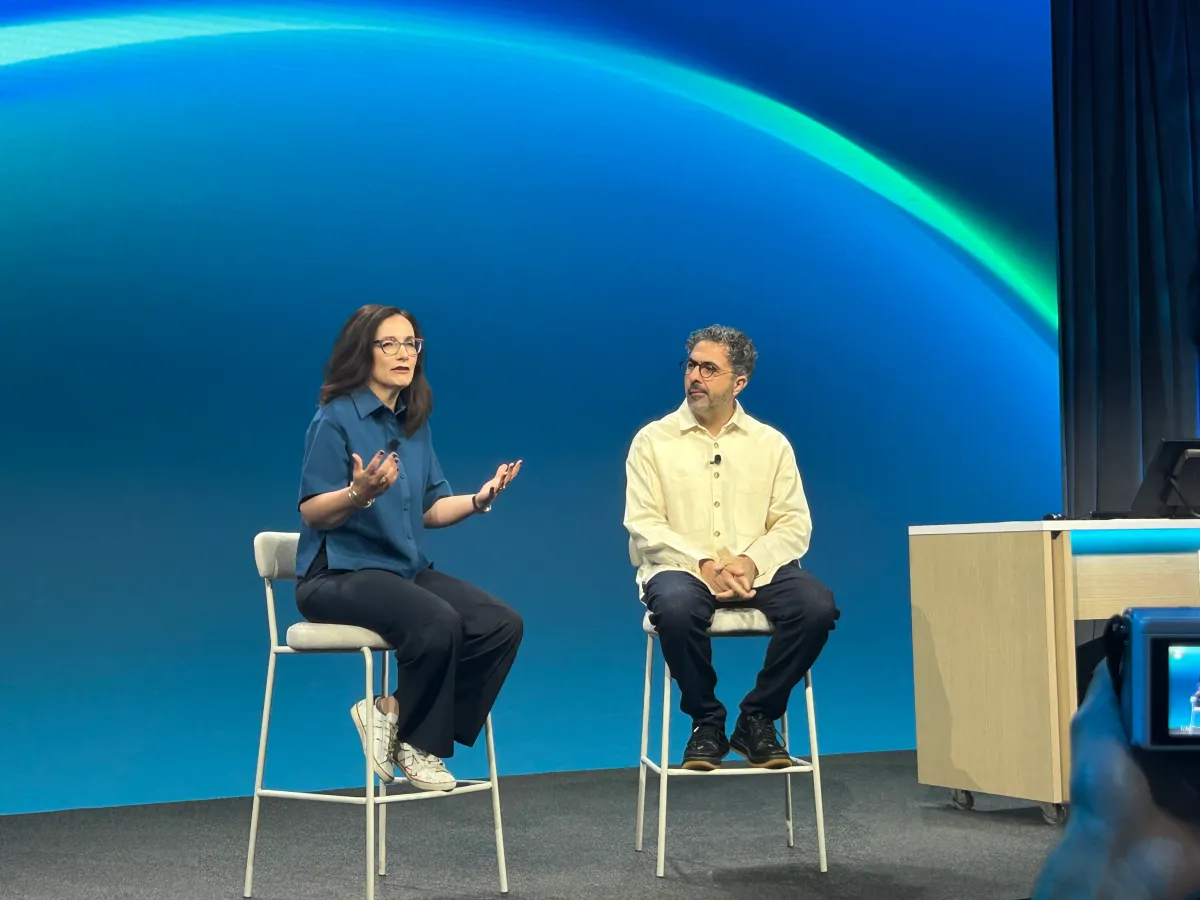
Microsoft on Monday introduced its first cybersecurity-focused AI model and a new agentic security platform, a move aimed at helping enterprises find, triage and fix vulnerabilities faster while competing more directly with Anthropic, Google and OpenAI in one of AI’s fastest-moving battlegrounds.
The company said the model, MAI-Cyber-1-Flash, is designed to uncover difficult weaknesses inside complex codebases, while the new platform, Perception, uses multiple AI agents to support security teams across testing, detection and remediation. Microsoft said the tools will be available in preview on November 3.
Microsoft’s announcement marks a notable expansion of its AI strategy into security-specific products at a time when both defenders and attackers are increasingly relying on machine learning systems. The launch also underscores a wider shift in cybersecurity: enterprises are no longer just experimenting with AI assistants, but beginning to embed AI into the operational core of security response.
What Microsoft announced
Microsoft unveiled two linked products: a specialized cyber model and a workflow platform built around agents. Together, they are intended to help security teams identify vulnerabilities, simulate attacks, prioritize fixes and even generate code-level remediation.
MAI-Cyber-1-Flash is the model layer. Perception is the orchestration layer. Microsoft’s pitch is that the combination can compress work that traditionally requires several specialists working across multiple handoffs.
| Product | Purpose | Key capability | Availability |
|---|---|---|---|
| MAI-Cyber-1-Flash | Cybersecurity-specialized AI model | Finds difficult vulnerabilities in complex codebases | Preview on Nov. 3 |
| Perception | Agentic cybersecurity platform | Deploys red, blue and green teams for attack simulation, detection and fixes | Preview on Nov. 3 |
| MDASH | Microsoft vulnerability harness | Supports identification and remediation workflows | Integrated with MAI-Cyber-1-Flash |
Why does Microsoft think this matters now?
Microsoft says the timing reflects a larger reality: hackers are already using AI, which means defensive teams need automated systems that can operate at similar speed and scale. That argument has become central to the next phase of cybersecurity product design.
In Microsoft’s view, the old model of manual review, fragmented escalation and slow remediation no longer matches the tempo of modern software development or modern attacks. The company is positioning its new tools as a way to narrow that gap.
Microsoft security leaders framed the launch as a way to help enterprise defenders keep pace with AI-enabled attackers by using AI-driven tools across the full security lifecycle.
The message is clear: if adversaries can use AI to identify weak points, defenders need tools that can search, test and repair at machine speed. Microsoft is betting that a purpose-built model, rather than a general-purpose chatbot, will be better suited to the job.
How MAI-Cyber-1-Flash works
MAI-Cyber-1-Flash is built to assist with vulnerability discovery inside complicated software systems. Microsoft says the model is trained and integrated specifically for that purpose, rather than for broad conversational tasks.
The model works through MDASH, Microsoft’s internal harness for vulnerability identification and remediation. That integration is important because it suggests the company is not merely offering a model, but packaging it into a workflow designed to turn findings into action.
What Microsoft claims about performance
Microsoft says the model performs better and at lower cost than competing systems on a recognized AI cybersecurity benchmark. The company also said it combined MAI-Cyber-1-Cyber Flash, as described in the event remarks, with GPT-5.4 inside the MDASH harness for its testing narrative, and that the resulting setup outperformed several rival systems on the Cyber Gym benchmark.
The benchmark comparison is likely to be a focus for security researchers and competing vendors. As with most AI benchmark claims, the details matter: the data used, the test conditions and the relevance of the benchmark to real-world security work will all shape how meaningful those results appear outside Microsoft’s presentation.
Why specialization matters in cyber AI
Security work differs from general AI tasks in one crucial way: errors are expensive. A model that writes plausible but wrong text is a nuisance. A model that misidentifies a vulnerability or proposes an unsafe patch can create real exposure.
That is why vendors increasingly emphasize narrow domain systems. Microsoft’s model appears designed to do one thing well: search for hard-to-find weaknesses and feed those findings directly into a remediation pipeline.
What is Perception, and how is it different?
Perception is Microsoft’s new AI cybersecurity platform, and its defining feature is that it organizes multiple agents into specialized roles. Instead of asking one model to do everything, Microsoft is separating the work into red, blue and green team functions.
That structure mirrors long-standing security practice, but automates it with AI agents that can continuously run simulated attacks, inspect vulnerabilities and help apply fixes.
Red teams, blue teams and green teams explained
- Red teams simulate attacks and model how threat actors might exploit a system.
- Blue teams identify and triage bugs or weaknesses already present in a codebase or environment.
- Green teams take corrective action, such as suggesting or generating fixes.
Microsoft’s version of this workflow is intended to move security from a mostly manual, person-by-person process to a coordinated, AI-assisted system. The company says the platform can connect these stages to produce detection, posture improvements and code fixes more quickly.
How much faster does Microsoft say it is?
Microsoft says the platform can compress work that used to take hours into minutes. Dave Weston, the lead engineer for Perception, described the system as an efficiency leap that can help security groups identify issues, prioritize them and generate remediation faster than conventional workflows.
Weston said the platform reduces manual work across application security and remediation teams, allowing the organization to move from issue discovery to fixes in minutes rather than hours.
That is an ambitious claim, but it reflects a real pain point in enterprise security. Even when organizations spot vulnerabilities quickly, turning that insight into a deployed fix often requires coordination across multiple teams, approvals and development cycles. Microsoft is trying to collapse that timeline.
How does Perception fit into Microsoft’s broader security stack?
Perception is designed to integrate with MDASH, which suggests Microsoft wants the platform to be more than a standalone dashboard. Instead, it appears to be a layer that plugs into existing vulnerability workflows and extends them with agentic automation.
This is strategically important because security buyers typically prefer tools that fit into current operations rather than requiring a total overhaul. If Perception can work alongside existing software security processes, it may be easier for Microsoft to persuade enterprise customers to adopt it.
The company’s emphasis on integration also hints at an ecosystem play. Microsoft has spent years building relationships with developers, enterprise security teams and cloud customers, and a cyber-focused AI stack could reinforce all three.
Who is Microsoft competing against?
Microsoft is entering a crowded and highly competitive category. Anthropic, Google and OpenAI have all moved into security-oriented AI tools, and each company is trying to define how AI should be used in cyber defense.
These launches are part of a broader race to establish that AI models are not only useful as chat interfaces or coding aids, but also as enterprise security engines. For Microsoft, the competition matters because security is one of the most valuable use cases in corporate software: it touches risk, compliance, engineering, operations and the C-suite.
| Company | Security AI move mentioned | Release approach |
|---|---|---|
| Microsoft | MAI-Cyber-1-Flash and Perception | Preview for enterprise use |
| Anthropic | Mythos security platform | Limited partner rollout through Glasswing |
| OpenAI | Security solution | Launched through Day Break program |
| Competing security AI efforts | Not detailed in this announcement |
How does this change the cybersecurity market?
The immediate effect is not that AI replaces security teams. The more realistic impact is that it changes what security teams are expected to do and how quickly they are expected to do it.
Enterprises already face pressure from growing codebases, cloud sprawl and a steady stream of vulnerabilities. AI-driven tools promise to reduce bottlenecks in discovery and response. If they work as advertised, they could lower the cost of maintaining secure software at scale.
But that also raises a new set of questions. If defenders are using AI to detect and patch vulnerabilities faster, attackers are likely to do the same for reconnaissance and exploitation. That dynamic could accelerate the cybersecurity arms race rather than resolve it.
What enterprises will likely evaluate
- Accuracy in finding real vulnerabilities instead of false positives.
- Speed gains compared with existing security tooling.
- How well the platform integrates with current development and security systems.
- Whether AI-generated remediation is safe and auditable.
- Total cost, including model usage and operational overhead.
Those are the practical tests that will determine whether Microsoft’s launch becomes a meaningful enterprise product line or simply another ambitious AI demonstration.
What comes next?
Microsoft said the new tools will enter preview on November 3, which means customers and security teams will soon have a chance to evaluate how much of the company’s pitch survives contact with real-world environments.
Preview launches are especially important in security because they expose systems to the kinds of messy conditions that benchmarks can miss: legacy code, incomplete documentation, internal access restrictions and inconsistent operational practices.
If the products perform well in the field, Microsoft could gain an early advantage in an emerging market where security vendors, cloud providers and AI model companies are all trying to define the standard stack. If they do not, the benchmark wins may matter less than the operational complexity of deploying AI into sensitive enterprise environments.
Timeline of Microsoft’s cyber AI launch
| Date | Event | Significance |
|---|---|---|
| Monday, July 27, 2026 | Microsoft announces MAI-Cyber-1-Flash and Perception in San Francisco | Company enters the cyber-specific AI race with its own model and platform |
| Earlier in 2026 | Anthropic and OpenAI release security products | Competitive pressure builds across AI security tools |
| November 3, 2026 | Microsoft plans preview availability | First chance for enterprises to test the tools |
Why this launch matters beyond Microsoft
This announcement matters because it shows the next phase of AI competition is not just about general intelligence or consumer chatbots. It is about ownership of high-value workflows inside the enterprise.
Cybersecurity is one of the clearest places where AI can deliver immediate business value, but it is also one of the riskiest. Microsoft’s launch suggests the company believes specialized models and agentic workflows are mature enough to move from research and demos into production systems.
Whether customers agree will depend on trust, performance and integration. Security leaders are famously cautious, and for good reason. They will want to know not only whether the tools can find a bug, but whether they can safely help fix it without creating another problem downstream.
For Microsoft, the strategic upside is substantial. A successful cyber AI platform would deepen its role in enterprise security, reinforce its broader AI platform strategy and give customers one more reason to rely on Microsoft infrastructure for critical operations. In a market where software risk and AI adoption are advancing in parallel, that is a timely and potentially powerful proposition.
Frequently asked questions
What did Microsoft announce in cybersecurity?
Microsoft announced MAI-Cyber-1-Flash, its first cybersecurity-specialized AI model, along with Perception, a new agentic security platform. The company says the products are designed to find vulnerabilities, simulate attacks and speed up remediation for enterprise security teams.
What is Perception?
Perception is Microsoft’s AI-driven cybersecurity platform that coordinates red, blue and green teams of agents. It is meant to simulate threats, identify bugs, and help generate fixes so defenders can respond faster and with less manual work.
When will Microsoft’s new cyber tools be available?
Microsoft says the tools will be available in preview on November 3. That preview phase should give enterprises and security researchers their first hands-on look at how the model and platform perform in real environments.
How does Microsoft say MAI-Cyber-1-Flash performs?
Microsoft says MAI-Cyber-1-Flash is more powerful and more cost-effective than competing models on a cybersecurity benchmark. The company also said its MDASH-based setup outperformed several rivals on Cyber Gym, though those claims will need independent evaluation.
Why is Microsoft entering cybersecurity AI now?
Microsoft is entering cybersecurity AI now because attackers are increasingly using AI tools, and defenders need comparable speed and automation. The company is positioning its products as a way to help enterprises keep up with AI-enabled threats.