In short
OpenAI has launched virtual try-on and Favorites in ChatGPT, expanding the assistant’s role in online shopping. The features aim to make product discovery more visual and useful as AI tools compete for consumer attention.
- OpenAI globally launched virtual try-on and Favorites in ChatGPT.
- Users can upload selfies or product images to preview clothing and accessories.
- Favorites saves products to a Library for later comparison and review.
- The update builds on OpenAI’s Images 2.5 model and its stronger visual output.
- ChatGPT is now competing more directly with Google and Pinterest for shopping discovery.
OpenAI has rolled out two new shopping features in ChatGPT: a virtual try-on tool for clothes and accessories, and a Favorites option that lets users save products for later. The global launch, announced Thursday, is the company’s latest attempt to make its chatbot more useful for online shopping and fashion discovery.
The move matters because it pushes ChatGPT deeper into consumer commerce at a time when AI assistants are increasingly competing to help people browse, compare and buy products. It also comes after OpenAI’s earlier checkout experiment failed to gain traction, making this launch a more cautious bet on shopping assistance rather than immediate transactions.
OpenAI says the features are powered by its newly released Images 2.5 system, which the company says improves lighting, texture quality, instruction-following and speed. The result is a shopping experience that is meant to feel more visual, more personal and, in theory, more practical for users deciding whether an item fits their style.
What OpenAI launched in ChatGPT
OpenAI introduced two shopping-focused additions designed to help ChatGPT users shop with more context and less guesswork.
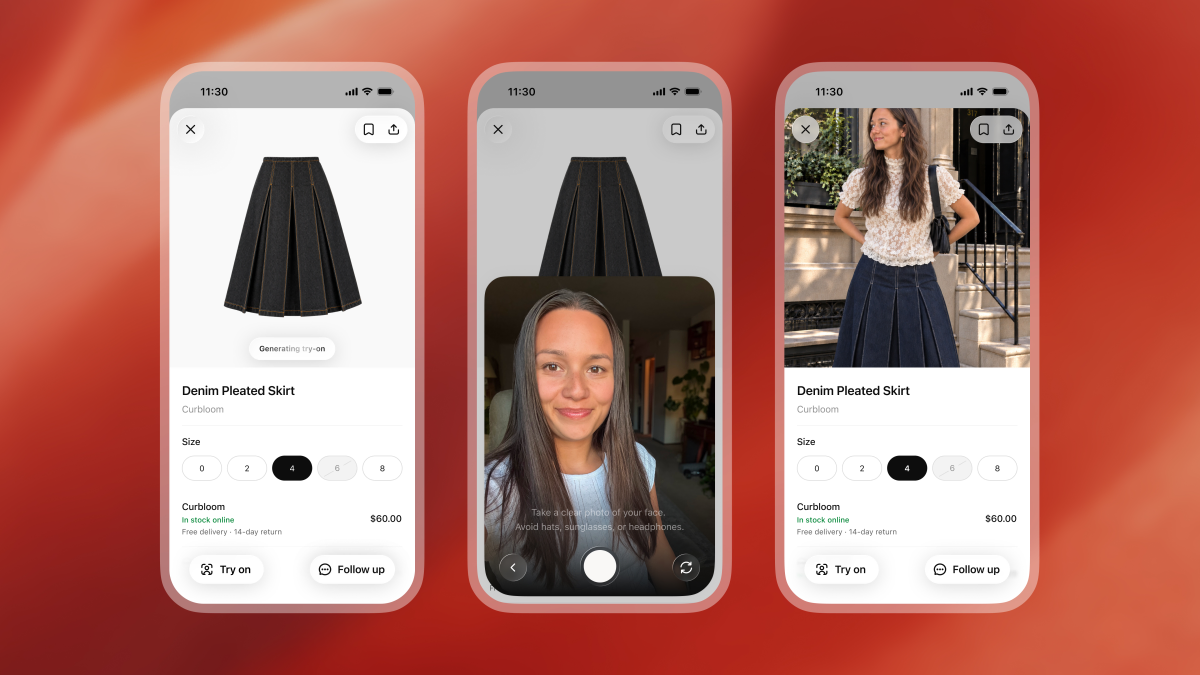
The first is a virtual try-on feature. Users can upload a selfie or full-body photo and see how clothing or accessories might look on them. In shopping results, ChatGPT will surface a dedicated “try on” button for eligible items. Users can also upload an image of an item they found elsewhere, such as a screenshot from a website, and ask ChatGPT to visualize it on them.
The second is Favorites, a saving tool that places products into a Library inside the app. OpenAI says saved items will sit alongside try-on images, giving users one place to revisit products they liked, compared with the old habit of bookmarking tabs or leaving shopping carts half-filled.
| Feature | What it does | Why it matters |
|---|---|---|
| Virtual try-on | Lets users upload a selfie or full-body image to preview clothing and accessories | Helps shoppers visualize fit and style before buying |
| Try-on button | Appears in ChatGPT shopping results for supported products | Makes the shopping flow faster and easier to use |
| Favorites | Saves items to a Library inside ChatGPT | Gives users a place to store products for later comparison |
| Images 2.5 | Supports the new visual features with improved generation quality | Promises better realism and quicker results |
Why is OpenAI focusing on shopping now?
OpenAI is focusing on shopping now because consumer commerce is one of the clearest ways to turn ChatGPT into an everyday assistant that goes beyond answering questions.
Shopping is a natural fit for conversational AI. People already ask chatbots for outfit ideas, product recommendations, gift suggestions and comparisons. By adding visual tools, OpenAI is trying to move from text-based advice to a more useful discovery experience that can influence what people actually buy.
There is also a competitive logic behind the release. Google, Pinterest and retail platforms have long dominated product discovery and inspiration, especially in fashion. If ChatGPT can become part of that process, OpenAI could capture a valuable slice of the shopping journey before users ever reach a retailer’s website.
At the same time, the company appears to be learning from earlier missteps. OpenAI previously tested an instant checkout concept, but that approach did not perform well enough to become a breakout feature. The new rollout suggests a shift away from forcing transactions and toward helping users decide what to buy in the first place.
How the virtual try-on feature works
The virtual try-on system works by letting users provide their own image and then asking ChatGPT to place selected fashion items onto that image in a realistic way.
That could mean uploading a selfie to test whether a jacket, hat or pair of sunglasses suits the user’s look. It could also mean submitting a full-body photo to get a broader sense of how an outfit might land visually. If a user finds an item elsewhere online, they can upload that product image and ask ChatGPT to show it on them.
OpenAI says the feature is designed to be simple: shoppers do not need to know editing software, and they do not need a separate app for the process. The idea is to make product exploration feel like a natural extension of the conversation already happening in ChatGPT.
What powers the visuals?
The visuals are powered by ChatGPT Images 2.5, OpenAI’s newly launched image model.
According to the company, the model improves several key qualities that matter for shopping experiences: more natural lighting, richer textures, better compliance with prompts and lower latency. Those enhancements are important because consumers are less likely to trust or enjoy a try-on tool if clothing looks blurry, distorted or obviously synthetic.
For OpenAI, the image model is also a product strategy. Better visuals do not just support creativity or entertainment use cases; they help make shopping feel less like a gimmick and more like a service people might revisit regularly.
OpenAI says its new image system produces more realistic lighting and textures, follows editing instructions more reliably and generates results faster than before.
What is Favorites and why does it matter?
Favorites is a saving feature that lets users store products in a dedicated Library inside ChatGPT.
That may sound modest, but in retail UX terms it is important. Shopping rarely happens in a single session. People compare, pause, return, reconsider and often buy days or weeks later. A favorites system helps ChatGPT stay involved in that longer decision cycle instead of being a one-time suggestion engine.
OpenAI says saved products will appear alongside try-on images, which could make it easier to revisit a specific look, compare alternatives and build a more coherent shopping shortlist. In practical terms, it turns ChatGPT into more of a shopping workspace than a one-off recommendation tool.
How does this compare with Google and Pinterest?
OpenAI’s new features put ChatGPT in direct competition with the platforms that already shape online fashion discovery.
Google has long been a starting point for product search, especially when consumers know roughly what they want. Pinterest has carved out a powerful role in style inspiration, mood boards and visual discovery. OpenAI’s pitch is that ChatGPT can combine those functions inside a single conversational interface.
That said, OpenAI is entering a crowded and well-established market. Google launched its own virtual try-on feature last year, which means ChatGPT is not first to this idea. The challenge for OpenAI will be making the experience good enough that users prefer it over existing shopping flows they already trust.
There is also a behavioral question. Search engines and inspiration platforms work because users know where to begin. ChatGPT has to prove it can be the starting point when shoppers are unsure, style-driven or just browsing casually.
What kinds of shopping tasks can ChatGPT handle?
OpenAI says ChatGPT can support shopping in several ways beyond virtual try-on and saved favorites.
Users can describe a look they want and ask the assistant to assemble the pieces needed to create it. They can also upload photos of celebrity outfits and ask ChatGPT to identify items that are available to purchase. That brings the assistant closer to a stylist, image interpreter and product scout all at once.
These use cases are important because they make ChatGPT less dependent on a user already knowing the right search terms. Someone can simply say they want a “clean, minimalist winter outfit” or point to a photo and ask for help finding similar items.
That may be especially appealing in fashion, where style can be aspirational, visual and hard to describe with words alone.
Potential shopping use cases
- Trying on a jacket from a screenshot before buying
- Saving several sneakers to compare later
- Asking for a complete outfit built around one piece
- Finding shoppable versions of a celebrity look
- Using ChatGPT as a style discovery tool rather than a search box
Why the rollout matters for OpenAI’s product strategy
The new shopping tools show OpenAI widening ChatGPT’s role from assistant to commerce platform.
That shift is significant because it gives OpenAI more chances to keep users inside the app. The more tasks ChatGPT can handle end-to-end — inspiration, visualization, saving and eventually, possibly, purchase — the more valuable the product becomes in everyday life.
It also reflects a broader industry trend: AI companies are looking for features that feel consumer-friendly and commercially relevant, not just technically impressive. In that context, shopping is attractive because it is familiar, frequent and easy to understand in a demo.
But the path is not guaranteed. Many AI products have been praised for novelty and then struggled to earn repeat usage. Shopping is particularly unforgiving because users compare AI experiences against polished retail apps, image search, social discovery tools and recommendation engines that already work well.
What challenges does ChatGPT face in fashion shopping?
ChatGPT faces three main challenges: trust, usefulness and habit.
First, users must trust the visual output enough to believe the try-on results are helpful. If the image looks too stylized or inaccurate, the feature could feel like entertainment rather than a shopping aid.
Second, the assistant must surface products that are actually relevant, available and priced in a way that makes sense. Recommendation quality often matters more than the interface itself.
Third, OpenAI has to change habits. People already use Google, Amazon, Instagram, Pinterest and retailer apps for shopping discovery. ChatGPT will need a compelling reason to sit in that routine.
Those hurdles do not make the launch unimportant. They help explain why the update is a step in a larger strategy rather than a final answer.
How OpenAI’s shopping push has evolved
OpenAI’s path into shopping has been iterative, not linear.
The company has experimented with commerce features before, including an instant checkout approach that did not take off. This time, it is leaning into discovery and decision-making instead of trying to jump directly to purchase completion.
That distinction matters. Many users are comfortable getting advice from AI, but fewer are ready to hand over the buying process to it. A virtual try-on tool and a favorites list are lower-risk entry points that may help OpenAI build trust over time.
They also align better with ChatGPT’s core strength: interacting naturally with people as they ask, revise and refine what they want.
| Milestone | What happened | Significance |
|---|---|---|
| Earlier shopping experiment | OpenAI tested instant checkout | Showed interest in commerce, but the concept underperformed |
| Last year | Google introduced virtual try-on | Set a benchmark for AI-assisted fashion shopping |
| Thursday launch | OpenAI rolled out virtual try-on and Favorites globally | Expanded ChatGPT’s shopping role beyond text recommendations |
| Current phase | ChatGPT combines image generation with shopping discovery | Positions the assistant as a visual commerce tool |
What this means for retailers and brands
For retailers and brands, ChatGPT’s shopping expansion could create another channel for product discovery and influence.
If consumers start using the assistant to shortlist outfits, identify celebrity pieces or test how accessories look on their own photos, brands may need to think more carefully about how their products appear in AI-generated or AI-assisted search results. Visibility inside conversational interfaces could become as important as ranking in traditional search.
The update may also add pressure on merchants to provide cleaner product photos, clearer metadata and more accurate catalog information. The better the underlying data, the better the AI shopping experience is likely to be.
At the same time, retail companies will want to watch closely to see whether ChatGPT becomes a genuine discovery engine or just a novelty layer on top of existing shopping behavior.
How likely is ChatGPT to become a major shopping destination?
It is too early to say whether ChatGPT will become a major shopping destination, but the company’s latest launch gives it a more credible shot.
The feature set is practical, visually focused and tied to real consumer habits. It also avoids some of the backlash that can come with overly aggressive product pushing. By helping users explore rather than forcing purchases, OpenAI may have found a more sustainable way into commerce.
Still, success will depend on execution. OpenAI has to prove that the feature works well across styles, body types, products and use cases, and that the recommendations feel helpful rather than intrusive. It also has to convince users that ChatGPT is worth opening when they are in a shopping mood.
If it can do that, the company could establish ChatGPT as more than an answer machine. It could become a place where people actually shop, plan and refine what they want before they buy.
Bottom line
OpenAI’s new try-on and favorites features are a clear sign that ChatGPT is evolving into a more visual, commerce-aware assistant. The launch does not guarantee that users will abandon Google, Pinterest or retail apps, but it does show that OpenAI wants a larger role in how people discover and choose products online.
The real test now is whether the experience feels useful enough to earn repeat use — and whether shoppers see ChatGPT as a smart helper, not just a flashy demo.
Frequently asked questions
What did OpenAI add to ChatGPT for shopping?
OpenAI added two shopping features to ChatGPT: a virtual try-on tool for clothing and accessories, and a Favorites function that saves products in a Library for later. The company says both features are available globally and are designed to make shopping more visual and easier to revisit.
How does ChatGPT virtual try-on work?
ChatGPT virtual try-on works by letting users upload a selfie or full-body photo and then preview how selected clothing or accessories might look. Users can also upload a product image or screenshot and ask ChatGPT to place that item on them, all from the shopping experience inside the app.
Why is OpenAI adding shopping tools now?
OpenAI is adding shopping tools now because online shopping is a high-value consumer use case for AI assistants. The company appears to be shifting from direct checkout experiments to discovery and decision support, which is a more natural fit for ChatGPT and less likely to feel overly pushy.
How does this compare with Google and Pinterest?
This puts ChatGPT closer to Google and Pinterest, which already shape product discovery and fashion inspiration. Google launched its own virtual try-on feature last year, so OpenAI is entering a competitive space where it must prove ChatGPT is more useful or more convenient than existing shopping tools.