In short
Canva launched Canva Craft, its first image-generation model, on Oct. 22, 2026, and made it available inside Dream Lab and via API. The company says the model is designed for design workflows, with better text rendering, layered editing and support for 2K images.
- Canva Craft is Canva’s first image-generation model and launched on Oct. 22, 2026.
- The model uses a two-step process that plans layout before generating the image.
- Canva says the system supports 2K output and 30 aspect ratios.
- The training set used human-made Canva templates, not photographs.
- Canva is also developing cheaper versions called Craftfast and Craft-ultrafast.
Canva has launched its first image-generation model, Canva Craft, and made it available to users and through its API on Oct. 22, 2026. The release is meant to push the design platform further into generative AI, with a system built to produce more editable images, cleaner text and more controllable layouts than a standard prompt-to-picture tool.
What Canva announced
According to TechCrunch, Canva Craft is the company’s first image-generation model and was developed by Canva’s research team to compete with image systems from Google, OpenAI, ByteDance and Meta. The launch is notable because Canva is not simply adding another AI feature on top of its software; it is trying to build an image model that reflects how design work actually happens inside presentations, posters, menus and social posts.
The model is already available in Dream Lab, Canva’s creative workspace, and through the Canva API. That means users can access it directly inside the product while developers can also connect to it programmatically. Canva also says it plans to support third-party chatbots, including ChatGPT and Gemini, through its MCP, a connector intended to let outside apps and models work with Canva tools.
How Canva Craft works
Canva says the model uses a two-step workflow: it first plans the image, then generates it. That planning stage maps spatial relationships, scale, visual hierarchy and text-generation details before the final picture is produced. The company’s aim is to make the output more accurate where design tools often struggle, especially around object placement and text rendering.
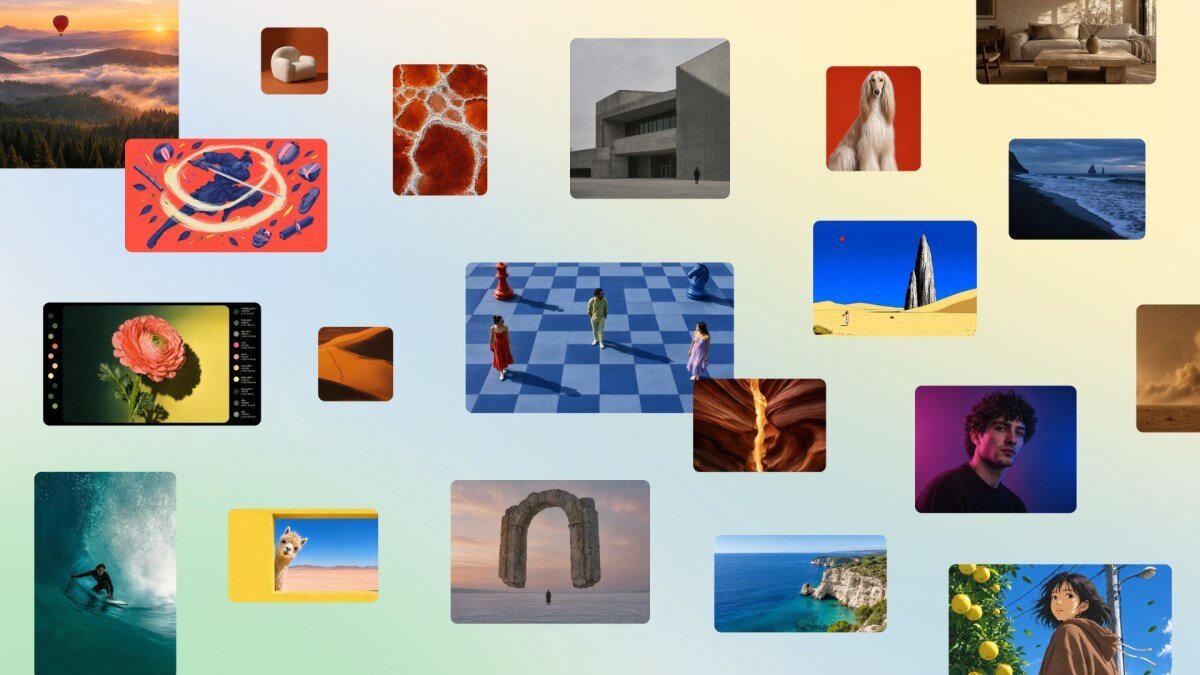
In practice, Canva says the model can improve object detail, produce legible text and allow selective editing without disturbing other parts of the image. The output can reach 2K resolution and supports 30 aspect ratios, which gives the system flexibility across formats ranging from social graphics to presentation assets.
Why the planning stage matters
The planning step is the clearest sign that Canva is targeting real design workflows rather than novelty image generation. A good prompt can create an attractive image, but it does not always preserve the structure needed for a poster, slide, menu or infographic. By mapping hierarchy and scale before drawing the image, Canva is trying to make the model behave more like a design assistant than a general-purpose art tool.
That also helps explain why Canva is emphasizing text-heavy layouts. In many image models, the words inside a visual are the first thing to break. For Canva’s customer base, text accuracy is not a bonus feature; it is often the point of the work.
What makes Canva Craft different?
Canva says the model was trained using human-made Canva design templates instead of photographs. The training set included posters, social posts, presentations, infographics, menus and typography-heavy layouts. That choice matters because it suggests the model learned from the kinds of assets Canva users actually create, rather than from a broad photo library optimized for generic image synthesis.
The company says that approach should lead to better object detail, more readable text and more precise editing. It also means the model may be better tuned to design conventions such as alignment, spacing and the relationship between text blocks and imagery.
From generation to layered design
Canva says generated images can be turned into layered designs through Canva Magic. That connects the new model to the rest of its editing stack, so users can move from a generated image to a format that is closer to a working design file.
That workflow is important for Canva because the company’s value lies not only in creation, but in editing and reuse. A usable draft that can be adjusted inside the platform may be more valuable to customers than a single polished image that cannot be easily adapted for another format.
Why it matters
The launch matters because it places Canva more directly in the race to control how AI-generated visuals are made, edited and distributed. The company is competing against Google, OpenAI, ByteDance and Meta in a field where image quality, speed, cost and controllability all influence whether a model is useful for everyday creators or for enterprise teams.
For users, the practical question is whether Canva Craft can generate visuals that are not just striking, but also usable. A design tool lives or dies on whether its outputs can be put to work in presentations, marketing materials and branded assets without extensive cleanup. Canva is betting that a model trained on its own design templates will do that better than generic image systems.
For the market, the launch underscores how design software companies are trying to own more of the AI workflow rather than renting capability from outside model providers. If Canva can deliver quality internally, it may have more control over cost, performance and product direction. That could also shape how quickly it can integrate new features without relying on third-party model access.
There is also a financial angle. TechCrunch reported that Canva was on track for $4 billion in revenue last year, but the company cut its 2026 growth forecast. External analysts said its valuation fell from $42 billion to $35 billion. Against that backdrop, a proprietary model is not just a product feature; it is part of the company’s effort to protect its position in a more competitive and more expensive AI market.
| Canva Craft by the numbers | What it means |
|---|---|
| Oct. 22, 2026 | Launch date reported by TechCrunch |
| 2K | Maximum image resolution Canva says the model can produce |
| 30 | Aspect ratios supported by the model |
| 2024 | Year Canva acquired Leonardo.ai |
| $4 billion | Revenue Canva was on track for last year |
| $42 billion to $35 billion | Reported valuation range after the forecast cut, according to external analysts |
Background: how Canva got here
Canva is best known as a design platform for graphics, presentations and marketing content. That history helps explain why image generation is such a strategic move for the company. Its users already work in formats where layout, typography and visual consistency matter, which makes it a natural place to test AI tools that do more than generate decorative images.
The company had previously released a model that understands designs and layers, suggesting that Canva has been building AI capabilities around structured creative work rather than raw image synthesis alone. Canva Craft extends that direction by adding a generation model built for output that can slot into design tasks instead of sitting outside them.
Another important factor is the 2024 acquisition of Leonardo.ai. TechCrunch reported that researchers from Leonardo.ai contributed to the new model. That acquisition likely helped Canva deepen its technical bench as it moved from design assistance to model development. It also indicates that the company has been investing in the underlying research needed to compete with larger AI labs.
At the same time, Canva’s move reflects a broader pattern in generative AI: companies that began as product platforms are increasingly trying to own the models beneath the interface. That shift can improve control over product quality and costs, but it also raises the bar for technical execution.
How can Canva lower costs and improve control?
Canva says the new model may reduce API costs while improving quality and speed control. That is a crucial commercial argument because image generation can be expensive to run at scale, especially when it is embedded in a product with millions of users and many different use cases.
A proprietary model may let Canva tune performance around the needs of its own platform instead of relying entirely on external systems. If the company can make generation cheaper and faster while keeping output quality high, it could improve margins and make AI features easier to package across user tiers and product lines.
The company is also developing cheaper variants called Craftfast and Craft-ultrafast, which it says are expected to launch soon. Those versions suggest Canva wants a range of performance options, likely to balance quality against cost depending on the task. The fact that they are still in development leaves open how the company will position them relative to the main Craft model.
What happens next
The immediate next step is rollout. Canva says Canva Craft is available to all users in Dream Lab and through the API, but the bigger question is how widely the model will be adopted and how it performs in real-world design workflows. The launch creates a live test for whether Canva’s planning-first approach delivers visible gains over rival image tools.
Three developments will be worth watching:
- How Craftfast and Craft-ultrafast differ from the main model in price, speed and image quality.
- Whether support for third-party chatbots through Canva’s MCP arrives broadly, and when it does.
- Whether the model’s design-oriented training translates into measurable advantages for text accuracy and selective editing.
There is also a business question hanging over the release. If Canva can use its own model to lower inference costs, it may help offset pressure from the growth forecast cut and the softer valuation picture reported by external analysts. If not, the company may still need to lean on external AI infrastructure while trying to differentiate its product on workflow alone.
Timeline
The path to Canva Craft has been short on public milestones but clear in direction: a design company acquiring AI talent, then building toward a native generation system that fits its product.
| Date | Milestone |
|---|---|
| 2024 | Canva acquires Leonardo.ai |
| Oct. 22, 2026 | TechCrunch reports the launch of Canva Craft |
| Oct. 22, 2026 | Canva says Craftfast and Craft-ultrafast are in development |
Bottom line
Canva Craft is more than another image generator. It is an attempt to make AI output behave like design work: structured, editable, text-aware and useful across multiple formats. The model’s real test will be whether users see a clear advantage over the image tools already available from much larger rivals.
Frequently asked questions
What is Canva Craft?
Canva Craft is Canva’s first image-generation model, launched on Oct. 22, 2026. Canva says it is built for design workflows, with a planning step before image creation, support for text-heavy layouts and output that can be edited further inside the platform.
How is Canva Craft different from other image generators?
Canva says the model plans spatial relationships, scale, visual hierarchy and text details before generating an image. It was trained on Canva design templates rather than photographs, which the company says should improve object detail, readable text and selective editing.
Where can users access Canva Craft?
Canva says the model is available to all users in Dream Lab and through the Canva API. The company also plans to support third-party chatbots, including ChatGPT and Gemini, through its MCP connector.
Why is Canva building its own image model?
Canva is building its own image model to compete more directly in generative AI while improving cost control, quality and speed. The company says a proprietary system may reduce API costs and give it more control over how images are generated and edited inside its product.
What comes after Canva Craft?
Canva says cheaper variants called Craftfast and Craft-ultrafast are in development and expected to launch soon. The company has not yet detailed pricing, limits or exact release timing, so those are the main things to watch next.