In short
Microsoft unveiled MAI-DxO, an AI diagnostic system it says beats doctors on complex cases and is moving toward hospital testing. The results are promising, but the company says the tool still needs clinical validation before wider use.
- Microsoft says MAI-DxO outperformed doctors on complex benchmark cases.
- The company plans hospital testing with Beth Israel Deaconess Medical Center in the coming months.
- Microsoft says the system uses multiple AI agents and still needs clinical validation.
- Outlets differ on some figures, but all point to strong early performance and cautious next steps.
Microsoft has unveiled MAI-DxO, an artificial intelligence diagnostic system it says can outperform doctors on difficult medical cases and is now headed toward hospital testing. The company says the tool is built to mimic the way a medical expert panel works, with early results suggesting it can diagnose some conditions up to four times more accurately than generalist physicians.
The announcement matters because Microsoft is moving the technology beyond benchmark demos and into clinical settings, a step that could reshape how hospitals triage patients, reduce diagnostic costs and change the role of physicians in complex cases. But Microsoft itself says the system still needs clinical validation before wider use.
What Microsoft announced
Microsoft’s new system, MAI-DxO, is designed as a diagnostic workflow rather than a single chatbot. According to The Verge, the company says the tool uses multiple AI agents to imitate the reasoning of a medical expert panel, assembling different perspectives before settling on a likely diagnosis.
The company is positioning the project as part of a broader effort toward what it calls “medical superintelligence.” That is a bold phrase, but Microsoft has paired it with a more cautious message: human clinicians will remain central in patient care, and the system is not ready for broad deployment until it passes further validation.
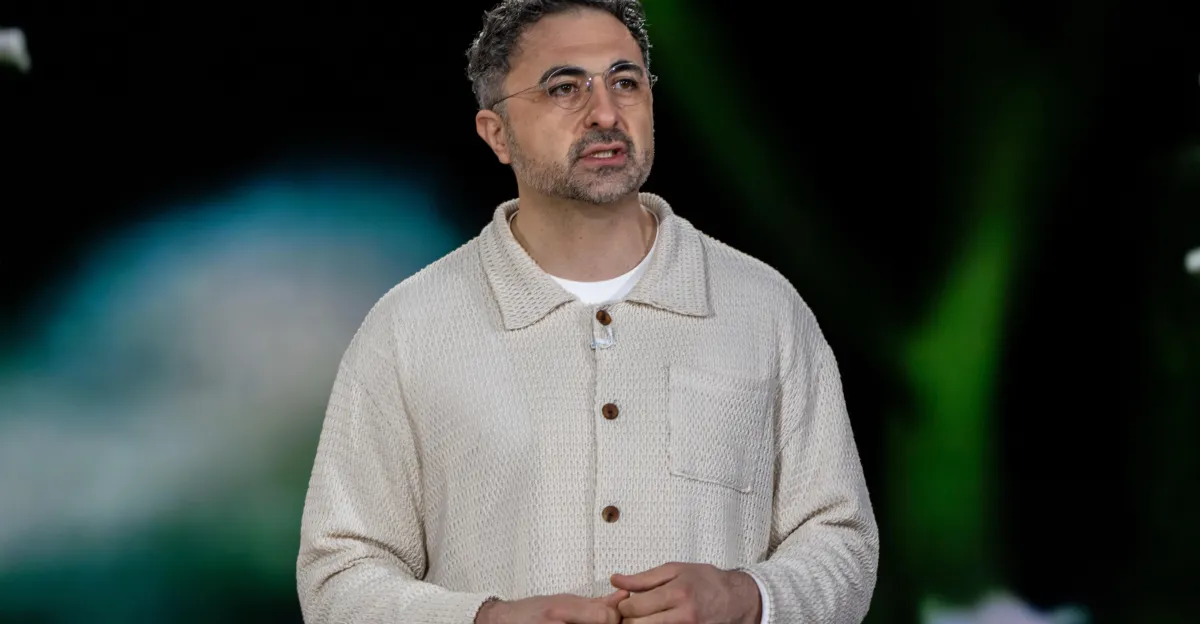
Mustafa Suleyman, Microsoft’s AI chief, framed the timeline in unusually direct terms. He said, “We’re going to build something that is indistinguishable from human performance … in the next couple of years,” and also stressed, “It needs clinical validation.”
How well did MAI-DxO perform?
Microsoft’s performance claims come from benchmark testing that, depending on the outlet, is described with slightly different numbers. The Verge reported that the system reached about 83% accuracy on New England Journal of Medicine cases, compared with roughly 36% for generalist physicians when they had references and 22% when they did not. On a set of Beth Israel Deaconess emergency-department cases, The Verge said MAI-DxO scored 80% versus 47% for human physicians.
Zee Business described the same research more aggressively, saying the tool topped 80% accuracy in trials, cut costs by 20% and reached up to 85% accuracy on NEJM benchmark cases. Zee Business also said the research is being submitted for peer review. The discrepancy in the headline figures is not unusual when one outlet emphasizes one benchmark result and another rounds differently or highlights a separate test set.
What does appear consistent across reporting is the direction of the results: Microsoft says MAI-DxO outperformed doctors on the harder benchmark cases and did so at a lower estimated cost. The company’s claim is not that the system has replaced doctors, but that it can handle parts of the diagnostic workflow more effectively than human physicians in controlled tests.
How the system works
Microsoft says MAI-DxO is built to behave more like a diagnostic team than a single answer engine. That matters because diagnosis in real medicine is not just a matter of naming a disease; it involves taking a history, ordering the right tests, revising hypotheses and weighing conflicting clues. AI tools that can imitate that process may be more useful than systems that merely answer quiz questions.
According to The Verge, the system is powered by OpenAI’s GPT-5, but Microsoft’s researchers are presenting it as a broader orchestration layer on top of large language model capabilities. Zee Business reported that the tool combines models from OpenAI, Google, Anthropic, Meta and xAI, underscoring the company’s multi-model approach. Taken together, those reports suggest Microsoft is not relying on one model alone, but on a coordinated system that can compare and refine different AI outputs.
That design choice is important for healthcare. A single-model chatbot can be fluent and still make confident mistakes. A multi-agent diagnostic system can potentially cross-check its own reasoning, though it can also create new layers of complexity, including harder-to-audit failure points.
Why it matters
The significance of MAI-DxO goes beyond one benchmark score. If Microsoft can show that an AI system can help diagnose patients more accurately, and at lower cost, it could change where and how hospitals use AI: not just for note-taking or scheduling, but for core clinical reasoning.
For patients, the potential upside is faster and more consistent assessments in difficult cases. For hospitals, the appeal is obvious: better diagnostic support could reduce expensive missteps, shorten the time to treatment and help overworked clinicians focus on the most complex decisions. For the AI industry, the stakes are even larger. Medical diagnostics is one of the most sensitive and commercially valuable applications of AI, and a credible hospital-tested system could become a reference point for the sector.
There is also a downside that cannot be ignored. If AI systems are deployed too quickly, errors could have serious consequences. That is why Microsoft’s caution about clinical validation matters as much as the headline-grabbing benchmark results. In healthcare, a strong demo is not enough.
What the numbers say
The published metrics give a rough sense of how Microsoft wants the system to be understood: as a diagnostic assistant with measurable gains, not a speculative concept.
| Measure | MAI-DxO | Human physicians | Source |
|---|---|---|---|
| NEJM cases | 83% | 36% with references / 22% without | The Verge |
| Beth Israel Deaconess emergency-department cases | 80% | 47% | The Verge |
| NEJM cases, alternate outlet figure | Up to 85% | Not specified | Zee Business |
| Estimated cost | Lower | Higher | The Verge |
| Cost reduction claim | 20% lower | Not specified | Zee Business |
Those figures should be read carefully. They are benchmark results, not proof of safe deployment in a live hospital. Still, they are strong enough to explain why Microsoft is drawing attention: the company is not merely saying AI can assist doctors, but that it can outperform them on selected, difficult cases.
How did Microsoft get here?
The new MAI-DxO push did not appear out of nowhere. Microsoft has already been involved in earlier medical AI efforts, including DxGPT, which Mint reported was launched on April 22 and was intended to help with diagnosis and treatment planning. Mint said the project was meant to support doctors rather than replace them, and that Microsoft provided Azure support for the development.
That earlier effort matters because it shows a progression in Microsoft’s health strategy. DxGPT was framed as a support tool. MAI-DxO is being presented as a more ambitious diagnostic system, one that does not just answer questions but orchestrates multiple AI agents around a clinical task. In other words, the company appears to be moving from assistance toward structured diagnostic reasoning.
The medical AI field itself has also been moving in this direction. These tools are often first tested on case studies, exam-style questions or curated benchmarks before anyone tries them in a real hospital. That sequence reflects both the promise of the technology and the constraints of medicine: doctors do not just need accuracy, they need accountability, reproducibility and safety.
Background: why diagnosis is such a hard AI problem
Diagnosis is a demanding benchmark because it combines language understanding with uncertainty, memory, pattern recognition and judgment under pressure. A system has to interpret symptoms, history, tests and context, then revise its answer when new information appears. That is much harder than answering a multiple-choice question or summarizing a chart.
Medical AI therefore tends to be judged on whether it can imitate the diagnostic process, not simply whether it can name the right condition. Microsoft’s pitch for MAI-DxO fits that logic. The company is not treating AI as a search box for medicine; it is treating it as a deliberative system.
How does Microsoft compare with other reporting?
Different outlets are emphasizing different parts of the story. The Verge focused on the study details, the benchmark percentages, the multi-agent setup and Microsoft’s plan to test the system in hospitals. Zee Business highlighted the higher end of the accuracy claims, the cost reduction figure and the fact that the work is being submitted for peer review. Mint provided useful historical context by pointing to Microsoft’s earlier DxGPT project.
That mix matters because it suggests the story is still in motion. Some claims are published in a research context, some are described in company language, and some are reported through secondary coverage. The broad picture is clear, but not every detail carries the same level of finality.
What the outlets agree on
- Microsoft has unveiled MAI-DxO as a medical diagnostic AI system.
- The company says it outperforms doctors on some complex benchmark cases.
- Microsoft plans hospital testing with Beth Israel Deaconess Medical Center in the coming months.
- The system is not ready for broad deployment without further clinical validation.
Where the reporting differs
- The exact benchmark accuracy ranges from 80% to 85% depending on the outlet.
- Only Zee Business explicitly states the research is being submitted for peer review.
- Zee Business says the system combines models from several AI companies, while The Verge emphasizes GPT-5 as the underlying power source.
What happens next
The most important next step is real-world testing. Microsoft says it plans to begin hospital trials with Beth Israel Deaconess Medical Center in the coming months. That will be the key test of whether MAI-DxO can work outside benchmark conditions, where cases are messier, stakes are higher and clinical judgment is shared across teams.
Several open questions will shape the next phase:
- How will MAI-DxO perform in live hospital settings?
- Will Microsoft commercialize the system, and if so, how?
- Will the benchmark, SDBench, and related code be fully open-sourced as planned?
- How will regulators, hospitals and clinicians assess liability, safety and compliance?
- Can the system maintain its performance when the data are incomplete or ambiguous?
Microsoft also says it plans to open-source its benchmark, SDBench, which could help outside researchers evaluate the system more independently. That would matter because one of the biggest challenges in health AI is whether outsiders can reproduce the results and understand the failure modes.
There is also a larger strategic question. Mustafa Suleyman has said he expects very impressive production deployments of intelligent systems next year, which signals a broader push beyond research. If MAI-DxO is the company’s medical showcase, then the hospital trials may become a template for how Microsoft tries to bring AI into regulated industries without overpromising what the technology can safely do today.
The bigger picture for healthcare AI
Microsoft’s announcement lands at a moment when the industry is trying to move from experimental AI into operational use. Hospitals are already familiar with software that assists with scheduling, documentation and imaging analysis. Diagnostic reasoning is a harder frontier, because it touches the most sensitive part of care: deciding what is wrong and what to do next.
That is why Microsoft’s language is so careful, even as its claims are ambitious. The company wants to show that medical AI can be more than a demo, but it also knows that healthcare buyers will demand proof. The difference between a promising benchmark and a trusted hospital tool is large, and the path between them runs through validation studies, peer review, safety checks and institutional review.
If MAI-DxO holds up, the impact could be substantial. Clinicians may get a second opinion faster. Hospitals may lower diagnostic costs. Patients may benefit from quicker answers. But if it fails in practice, the result will be a reminder that high benchmark scores are only the first gate, not the finish line.
For now, Microsoft has done what many AI companies try to do and few manage convincingly: it has turned a research result into a serious conversation about real-world medicine. The next few months will show whether that conversation leads to clinical trust or remains a promising experiment.
“I think that this is just going to change the way care is delivered in a big way.”
That is the scale of Microsoft’s ambition. The evidence so far suggests the company has built something noteworthy. The hospital trials will reveal whether it has built something medicine can actually use.
Frequently asked questions
What is Microsoft’s MAI-DxO?
Microsoft’s MAI-DxO is an AI diagnostic system designed to help identify medical conditions by mimicking a panel of experts. The company says it can outperform doctors on some complex benchmark cases, but it still needs clinical validation before broader use.
How accurate is MAI-DxO?
Microsoft’s reported results vary by outlet and benchmark. The Verge said it reached about 83% accuracy on NEJM cases and 80% on Beth Israel Deaconess emergency-department cases, while Zee Business reported up to 85% accuracy and a 20% cost reduction claim.
Will Microsoft use MAI-DxO in hospitals?
Yes, Microsoft says it plans hospital testing with Beth Israel Deaconess Medical Center in the coming months. Those trials will help determine whether the system works safely and reliably in live clinical settings rather than only in benchmark tests.
Does Microsoft say AI will replace doctors?
No, Microsoft says human clinicians will remain central in patient care. The company’s message is that MAI-DxO is meant to support diagnosis and clinical reasoning, not eliminate the doctor’s role.
Why does this matter for healthcare?
This matters because diagnostic AI could reduce costs, speed up care and help clinicians handle complex cases. But it also raises safety, validation and liability questions, which is why real-world hospital testing is the critical next step.