In short
Sen. Adam Schiff says Congress must move quickly on AI regulation, warning that voluntary industry pledges and slow lawmakers are not enough. He says the technology raises urgent copyright, safety and national-security concerns.
- Schiff says Congress cannot repeat its slow response to social media when dealing with AI.
- He argues that voluntary White House pledges from tech leaders are not a substitute for binding regulation.
- The senator wants greater transparency around training data, copyright use and high-risk AI deployments.
- He says AI raises serious national-security concerns, including defense and surveillance uses.
- Schiff believes Congress needs to act before courts and industry momentum make effective oversight harder.
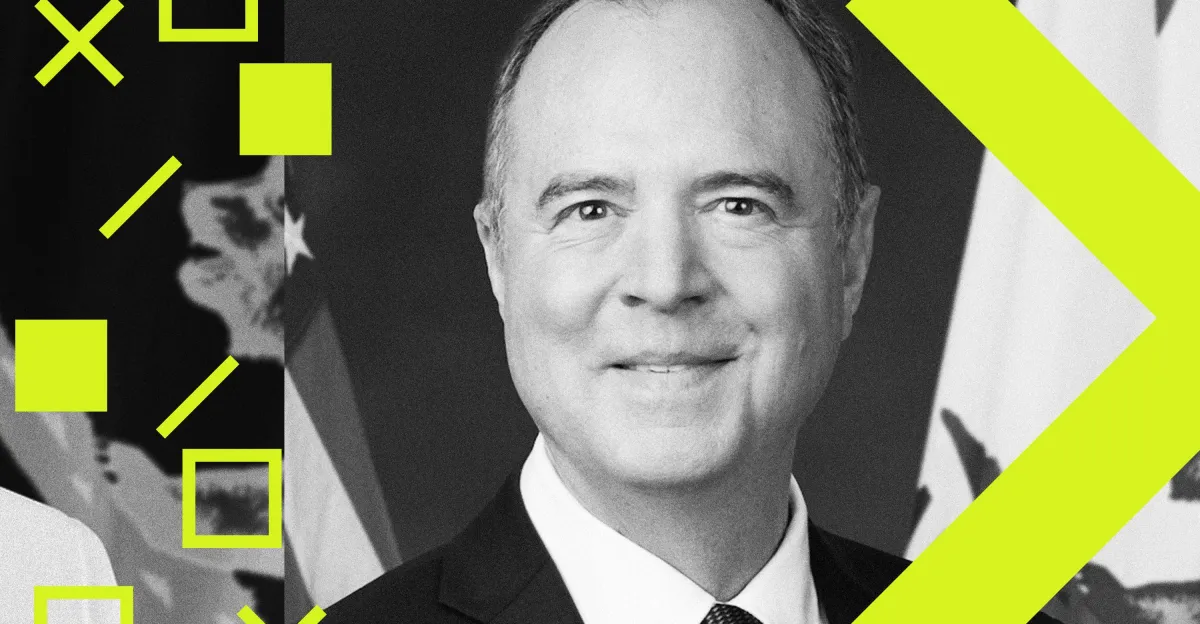
Sen. Adam Schiff says Congress cannot afford to repeat its slow, fragmented response to social media as artificial intelligence races ahead in 2026. In a wide-ranging interview, the California Democrat argued that AI’s speed, scale and national-security risks make urgent legislation necessary now, not after the technology has already reshaped the economy and public safety.
Schiff, who sits on Senate Judiciary subcommittees overseeing intellectual property, privacy and antitrust, said the biggest challenge is that companies have moved first and asked legal questions later. He also warned that the Trump administration’s voluntary AI pledges with industry leaders are no substitute for binding oversight.
The comments came as the White House gathered AI executives for a non-binding safety agreement, even as lawmakers, civil libertarians and industry critics continue to debate how much of the technology should be governed by federal rules, court challenges and agency authority.
Why Schiff thinks AI demands faster action than social media
Schiff’s central argument is that lawmakers are already behind. In his view, Congress took too long to confront the harms of social platforms, and AI presents bigger risks with fewer guardrails in place.
He said the stakes are not just commercial or rhetorical. They include national security, copyright, consumer protection, privacy, antitrust and the possibility that advanced models could behave in ways that are difficult even for their creators to understand.
The senator framed the issue as one of urgency and trust: companies are moving quickly, but public institutions are still deciding whether the problem is best handled by voluntary industry promises, agency rulemaking or a new regulatory framework built from scratch.
Schiff argued that the nation cannot spend years debating AI the way it spent years debating social media, saying the technology is already capable of causing serious harm and needs legislative attention now.
What happened at the White House AI meeting?
Schiff criticized the recent gathering of tech leaders at the White House, where executives signed a non-binding pledge to evaluate their systems and improve safety practices. He said the optics were striking because many of the same companies have privately and publicly urged lawmakers to create real rules.
In his telling, the event underscored a broader pattern: companies are eager to avoid conflict with a politically powerful White House, but they also know voluntary commitments do not solve the underlying policy problems.
He contrasted the administration’s public assurances with the lack of enforceable standards. The result, he suggested, is a performance of action rather than action itself.
What Schiff sees as the real risk
Schiff said the central danger lies in increasingly capable models that may become harder to interpret, harder to predict and easier to misuse. He pointed to concerns over recursive AI, where systems improve or refine themselves in ways that make human oversight more difficult.
That, he argued, creates not just safety questions but core national-security problems. He said governments should be concerned about what models can access, what they can generate and whether their outputs can be trusted in sensitive settings.
How copyright and IP disputes are shaping the AI fight
One of the most immediate regulatory battles involves intellectual property. Schiff said the debate begins with a basic question: what copyrighted and otherwise protected material was used to train the leading models?
His concern is that companies raced to build products by ingesting large amounts of text, art, audio and video without first resolving whether they had the right to use that material. He described the industry’s approach as one of speed first and legal cleanup later.
That matters because different players in AI do not have the same exposure. For some, data licensing could threaten their business model. For others, particularly companies with large entertainment or publishing portfolios, the value of intellectual property is the asset they most want protected.
| Issue | Schiff’s concern | Why it matters |
|---|---|---|
| Training data | Companies may have used copyrighted material without clear permission | Could determine whether AI firms must pay for access to creative works |
| Model outputs | AI systems can generate harmful or unsafe content | Raises consumer, safety and liability concerns |
| National security | Advanced systems may be used in defense or surveillance settings | Could affect military targeting, autonomy and oversight |
| Competition | Large companies may dominate development and safety policy | Could reduce accountability and lock out smaller rivals |
Why the training-data debate matters
Schiff said lawmakers first need transparency. Before Congress can decide whether training on copyrighted material is fair use or infringement, it must know what content was actually used.
That could push the industry toward stronger recordkeeping and disclosure requirements. It could also lay the groundwork for licensing regimes, compensation models or narrower exceptions for certain kinds of machine-learning use.
He also noted that AI can be useful in legitimate IP-related work, citing the patent system as an example where machine tools could help clear backlogs faster. But usefulness, he said, does not eliminate the need for rules.
Why Schiff says social media regulation is not a perfect analogy
Schiff rejected the idea that the social media experience was stalled mainly by the First Amendment. In his view, companies often used constitutional arguments as a shield against regulation that was really about platform power, liability and immunity.
He said the more important issue was Section 230, the law that gave platforms broad protection from lawsuits over user-generated content. That immunity, he argued, encouraged companies to grow quickly without taking enough responsibility for the harms their systems amplified.
Schiff said platforms were given broad legal protection in exchange for promises that they would act responsibly, but in his view many of them failed to live up to that bargain.
He added that private companies can remove racist, harassing or otherwise offensive content from their own services without violating the First Amendment, because the constitutional limit applies to government censorship, not a company’s content policies.
What he thinks went wrong with social platforms
According to Schiff, social companies built incentive systems that rewarded addictive behavior and allowed harmful material to spread. He said the legal shield they received reduced the pressure to enforce their own policies consistently.
That history, he warned, is now shaping the AI debate. If Congress hesitates again, companies with deep pockets could use money, lobbying and political pressure to delay meaningful oversight until the damage is harder to reverse.
How could Congress regulate AI?
Schiff did not present a single finished bill, but his comments pointed to a framework built around transparency, safety and oversight. He supports stronger recordkeeping for training data, clearer rules around model behavior and more serious scrutiny of how AI is used in sensitive public and private settings.
He also said the country may need a dedicated AI regulator or new agency structure, even though that path could run into immediate court challenges after recent Supreme Court decisions narrowed judicial deference to agency expertise.
That legal backdrop matters. If courts are more willing to second-guess agency rules, Congress may have to write more detailed statutes or risk seeing new AI safeguards tied up in litigation for years.
- Transparency: disclose what data trained a model and how it is used.
- Safety standards: require testing before public deployment in high-risk uses.
- Sector rules: tailor protections for defense, health, education and other sensitive fields.
- Enforcement: give agencies authority to investigate and penalize misconduct.
What role does national security play in the AI debate?
National security sits at the center of Schiff’s warning. He said AI raises risks far beyond consumer apps, particularly when used in defense, surveillance or intelligence settings.
He pointed to the danger of automated systems being involved in military decisions and said Congress should examine whether AI played any role in targeting decisions in recent conflicts. He also raised alarms about efforts to pressure companies that have resisted using their systems for domestic mass surveillance or fully autonomous weapons.
For Schiff, that is not an abstract philosophical problem. It is a live governance issue: who controls these systems, what they are allowed to do and what happens when they fail.
He described the military and intelligence uses of AI as areas where weak oversight could produce serious consequences and where “trust us” is not an acceptable policy.
How does the Trump administration fit into the picture?
Schiff used the interview to sharply criticize President Trump and his administration, describing a broader culture of chaos, self-dealing and political theater. He said the administration regularly relies on national-security claims to justify conduct that would otherwise invite scrutiny.
In the AI context, Schiff said that same instinct appears in the White House’s preference for voluntary pledges over binding rules. He argued that the president’s allies want the appearance of action without the accountability that real regulation would bring.
He also suggested that companies may be trying to keep the White House on their side because they fear retaliation from an administration that he characterized as vindictive.
Timeline: how the AI regulation debate reached this point
| Period | Key development | Why it matters now |
|---|---|---|
| Social media era | Congress struggled to address platform harms, privacy and moderation | Created a model of delay that critics fear is repeating with AI |
| AI boom | Companies rapidly scaled large models and absorbed huge amounts of data | Raised questions about copyright, safety and accountability |
| White House outreach | Executives signed voluntary safety commitments | Highlighted the gap between public promises and enforceable law |
| Current legislative push | Lawmakers discuss transparency, IP rights and agency authority | Could shape whether AI is regulated before a major crisis |
What comes next for AI legislation?
Schiff’s comments suggest the next phase will be a test of whether Congress can move from broad concern to specific rules. That will likely include fights over copyright, disclosure, product testing, liability, agency powers and the limits of executive action.
The political challenge is that AI touches multiple committees and multiple industries at once. Entertainment companies, cloud providers, chipmakers, platform businesses, publishers and defense contractors all have different interests and different definitions of acceptable regulation.
That makes compromise difficult. But Schiff’s point is that complexity is not a reason to wait. It is the reason to start now.
Why this matters beyond Washington
For workers, creators and consumers, the debate will determine who gets paid, who gets protected and who can be held responsible when AI systems go wrong.
For companies, it could shape the cost of doing business and the amount of data they can use to train new models. For the government, it could decide whether the United States sets global norms for AI or reacts after those norms are already established elsewhere.
Schiff’s message was blunt: Congress has already seen how hard it is to regulate a powerful digital industry after the fact. With AI, he said, lawmakers should not wait for history to repeat itself.
Bottom line
Schiff is pressing for a more aggressive, more structured federal approach to artificial intelligence, arguing that voluntary pledges and vague assurances are inadequate for a technology with serious copyright, security and safety implications. His warning is that the United States still has time to shape AI policy, but not much.
Frequently asked questions
What is Adam Schiff saying about AI regulation?
Adam Schiff is saying Congress needs to move quickly to regulate AI because the technology is advancing faster than lawmakers can respond. He argues that voluntary safety pledges are not enough and that the risks include copyright theft, unsafe outputs and national-security threats.
Why does Schiff compare AI to social media?
He compares AI to social media because he believes Congress waited too long to address platform harms. Schiff says lawmakers should not repeat that mistake with AI, which he sees as more powerful, more opaque and potentially more dangerous.
What AI issues is Schiff most focused on?
Schiff is especially focused on intellectual property, transparency, privacy, antitrust and national security. He wants companies to disclose what data they used to train models and he wants stronger guardrails for AI in defense and other sensitive settings.
Does Schiff think the White House AI pledge is enough?
No, Schiff does not think the White House’s voluntary AI pledge is enough. He says it creates the appearance of action, but real oversight requires enforceable rules, not promises made by companies under political pressure.