Updated November 16, 2026 5:54 pm
In short
Audible is rolling out AI-assisted audiobook discovery in the US, and it has now also expanded beta tools for asking questions about titles and getting spoiler-free recaps, with a broader release planned for December.
- Audible is launching AI-assisted audiobook discovery in the US on select English-language titles.
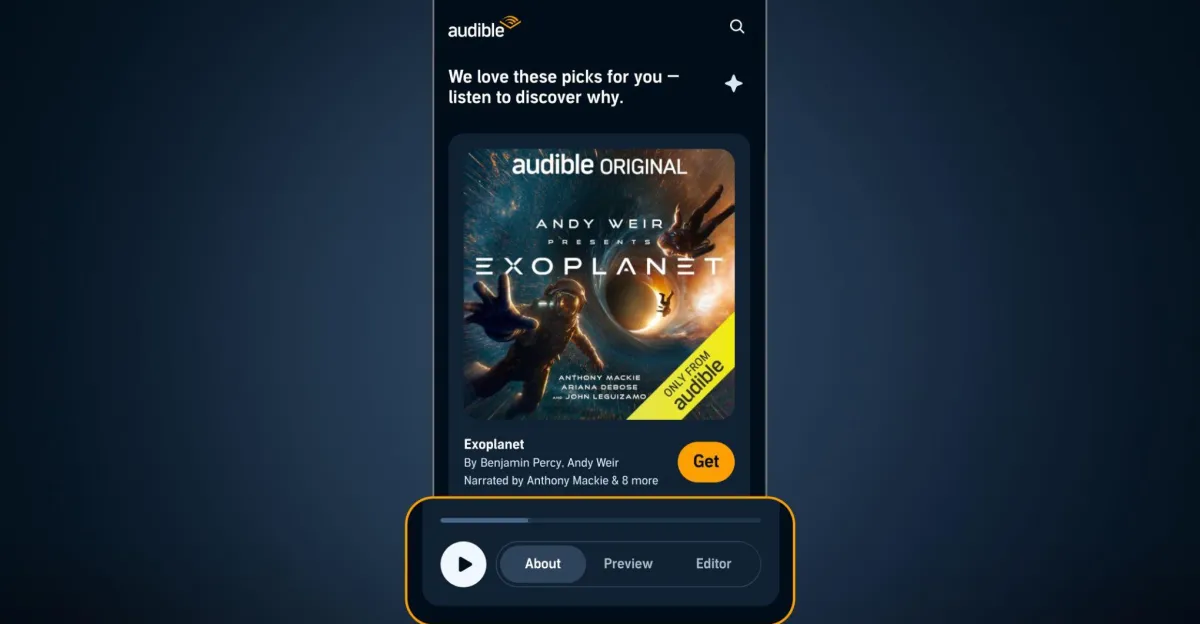
- The feature combines a sample, AI synopsis and author or editor commentary.
- Audible is also expanding personalized collections and beta features Ask a Question and Recaps.
- The rollout is part of Audible’s effort to compete with Spotify and reduce outside research by listeners.
Update — November 16, 2026 5:54 pm
Audible has also expanded two beta AI features: Ask a Question and Recaps.
Ask a Question lets listeners query the app about characters, plot points and other details, while Recaps offers spoiler-free audio refreshers on what they’ve already heard.
Both tools are now available to a larger set of English-language titles in the US, and Audible says a wider rollout will begin in December.
Audible is rolling out AI-assisted audiobook discovery tools in the US, starting with select English-language titles, in a move designed to help listeners decide faster whether a book is worth their time. The new features package a sample, an AI synopsis and author or editor commentary into one place, giving Audible a way to keep more of the discovery process inside its app.
The launch matters because audiobook choice has become a bigger competitive battleground as Spotify pushes further into the category. Audible, Amazon’s audiobook subscription service, is using AI to make browsing feel more immediate and less dependent on outside research.
What Audible is launching
Audible’s new audio discovery feature is built to answer a simple question: will I like this title before I start it? According to The Verge, the tool combines an audiobook sample with an AI-generated synopsis and commentary drawn from the author or an Audible editor.
The company says the overview can surface themes and listener reactions from reviews and other public data. That means a listener can hear a short excerpt, get a condensed sense of the book’s premise, and see how it has been discussed elsewhere without leaving Audible first.
The new experience is available now on select English-language audiobooks in the US, with plans to expand to other regions later. Audible is also rolling out personalized audiobook collections built around listening tastes, and those collections include Audible editor commentary.
How does the feature work?
Audible is trying to compress several steps of book discovery into one screen. Instead of asking users to sample an excerpt, search for reviews elsewhere and then decide, the company wants to surface those cues in-app.
- Sample: lets listeners hear the audiobook itself.
- AI synopsis: summarizes the title and pulls together themes.
- Listener reactions: draws from reviews and other public data.
- Author or editor commentary: may be included from prior Audible interviews.
That approach is meant to reduce the need for users to research titles on other platforms before pressing play. It also makes Audible’s own catalog feel more guided, which can be especially valuable for listeners who are overwhelmed by choice.
Why it matters
The feature is more than a convenience update. It is part of a broader race in consumer media apps to use AI for recommendation, summarization and personalization, while keeping users from drifting to competing services or outside review sources.
For Audible, the stakes are commercial. The company is trying to attract new users and defend its position as Spotify expands more aggressively into audiobooks. If Audible can help listeners decide faster, it may improve conversion from browsing to listening and reduce the chance that uncertain users abandon a title before starting.
There is also a publishing angle. The new system relies in part on public data and, in some cases, prior Audible interviews with authors or editors. That raises practical questions about how these summaries are built, how much control creators have over the framing, and whether future expansion will come with opt-out options. Audible has not answered those questions in the fact sheet.
Why would listeners care?
Because choosing an audiobook can take more effort than choosing a song or a podcast episode. A listener often wants to know not just what a title is about, but whether the narration, pacing and tone will work for them. Audible’s pitch is that AI can make that decision easier and faster.
Chief product officer Andy Tsao framed the goal as making discovery feel personal and low-friction. He said,
“Picking your next listen should feel like getting a tip from a friend.”
That is the business logic behind the rollout: turn a catalog search into a more conversational, guided experience that feels less like shopping and more like a recommendation from someone who knows your tastes.
What Audible says it is solving
Audible is trying to solve a familiar streaming problem: the paradox of too much choice. In an app with a large catalog, users may hesitate because they do not know enough about a title to commit several hours to it. The company’s new AI tools are meant to fill that information gap.
Andy Tsao also described the company’s discovery goals in terms of finding the titles people might otherwise miss. He said,
“Some of the best listening experiences are those rare finds or hidden gems, and we want to make those great discoveries happen more often and more easily.”
That emphasis on hidden gems is telling. Audible is not simply trying to improve search. It is trying to improve the odds that users stay engaged long enough to find something unexpected, while still being guided by machine-generated context.
Background: how Audible got here
Audible is Amazon’s audiobook subscription service, and it operates in a market where recommendation engines have become table stakes. AI-powered summaries and personalized suggestions are now common across consumer media apps, from music to video to books. The broader industry has moved toward automated discovery because users increasingly expect faster, more tailored suggestions.
At the same time, audiobook competition has intensified. Spotify has been expanding into audiobooks, bringing a well-known subscription platform into closer rivalry with Audible. That puts pressure on Audible to make its service feel not just comprehensive, but easier to use and better at surfacing the right title quickly.
The company’s latest move fits that competitive context. Instead of treating the app as a place to browse a catalog and then leave to verify a recommendation elsewhere, Audible is trying to become the primary discovery layer itself.
How is this different from older recommendation tools?
Traditional recommendation systems often rely on listening history and basic genre preferences. Audible’s new approach adds a richer layer: a sample, an AI summary, and commentary assembled from multiple sources. That makes the pitch less about simple personalization and more about helping users assess fit.
The company is also pairing the launch with personalized collections based on listening tastes. Those collections include Audible editor commentary, which suggests Audible wants to blend algorithmic personalization with human curation rather than rely on AI alone.
By the numbers
Audible’s rollout is limited for now, and the company has signaled a staged expansion. Here is a quick snapshot of the launch timing and scope based on the report from The Verge.
| Item | What Audible is doing | Scope / timing |
|---|---|---|
| Audio discovery | AI-assisted samples, synopses and commentary | Select English-language titles in the US |
| Personalized collections | Collections built around listening tastes | Rolling out now in the US |
| Ask a Question beta | Expanded access to more titles | More English-language titles in the US |
| Recaps beta | Expanded access to more titles | More English-language titles in the US |
| Broader rollout | Expanded Ask a Question and Recaps | Planned to start in December |
How do Ask a Question and Recaps fit in?
Audible is not launching its AI strategy with discovery alone. The company is also widening access to two other features, Ask a Question and Recaps, both of which are in beta and now expanding to more English-language titles in the US.
The broader rollout of those features is planned to start in December. Taken together, the new tools suggest Audible is layering AI deeper into the listening experience, not just the title-selection stage.
That matters because discovery, comprehension and retention are linked. If users can quickly decide on a title, catch up on what they missed and ask questions about the content, they may be more likely to finish books and keep using the service.
What happens next
Several practical questions remain open as Audible moves ahead with the rollout. The company has not detailed how many titles or users will be included in the first wave, and it has only said the feature is available on select English-language audiobooks in the US for now.
Future expansion is also on the table. The company plans to bring the discovery tools to other regions, but it has not said which markets will follow or when that will happen.
Another issue to watch is creator control. The fact sheet does not say whether authors or publishers will be able to opt out of AI overviews or commentary use, which could become important if the summaries influence how a book is presented to listeners.
Finally, the business test is straightforward: does the new system actually change behavior? Audible will be looking for signs that AI-assisted discovery improves listening conversion, deepens engagement and keeps more users inside the app instead of sending them to other review sites.
- How many titles and users will get the tools first.
- Which regions will receive the expansion next.
- Whether authors and publishers can opt out.
- Whether the tools improve title selection and completion rates.
What the rollout says about Audible’s strategy
Audible’s latest product changes point to a simple strategic idea: reduce friction at the moment of choice. The company wants listeners to trust what appears inside the app enough to commit to a title without a long external search.
That is a defensible move in a market where discovery can be the hardest part of retention. If a listener opens Audible, sees a sample, reads a concise AI synopsis and gets a sense of broader reception, the app has done more of the work that would otherwise happen across search engines, review sites and social platforms.
For now, the rollout is limited. But the direction is clear. Audible is making AI a front-end product feature, not just a back-end efficiency tool, and it is using it to sharpen the case for why listeners should stay inside its ecosystem as audiobook competition heats up.
Frequently asked questions
What is Audible’s new AI audiobook discovery feature?
Audible’s new AI audiobook discovery feature is a tool that combines an audiobook sample, an AI-generated synopsis and commentary from an author or Audible editor to help listeners judge a title before starting it.
Where is Audible rolling out the new AI tools?
Audible is rolling out the new AI-assisted discovery tools in the US first, and the initial launch covers select English-language audiobooks.
Why is Audible adding AI to audiobook discovery?
Audible is adding AI to make title selection faster and easier while keeping users inside its app instead of sending them to outside review sources. The move also helps the company compete as Spotify expands further into audiobooks.
What other Audible features are expanding?
Audible is also expanding its Ask a Question and Recaps beta features to more English-language titles in the US, with a broader rollout planned to start in December.
Will Audible’s AI discovery tools expand beyond the US?
Yes, Audible plans to expand the audio discovery feature to other regions, but it has not said which countries or markets will receive it next.