In short
Energize Lab’s Eiliko companion robot was found exposing private conversations, photos, audio and detailed user profiles through insecure backend systems. The case raises major privacy, child-safety and device-security concerns across a large global fleet.
- Eiliko’s backend allegedly exposed private chats, photos, audio clips and detailed profiles.
- The reported breach may have affected tens of thousands of robots and millions of conversations.
- Some records were stored in ways that made them searchable or publicly reachable.
- Researchers say the device could also be remotely manipulated, changing its AI responses.
- Energize Lab did not provide a meaningful public response to repeated outreach.
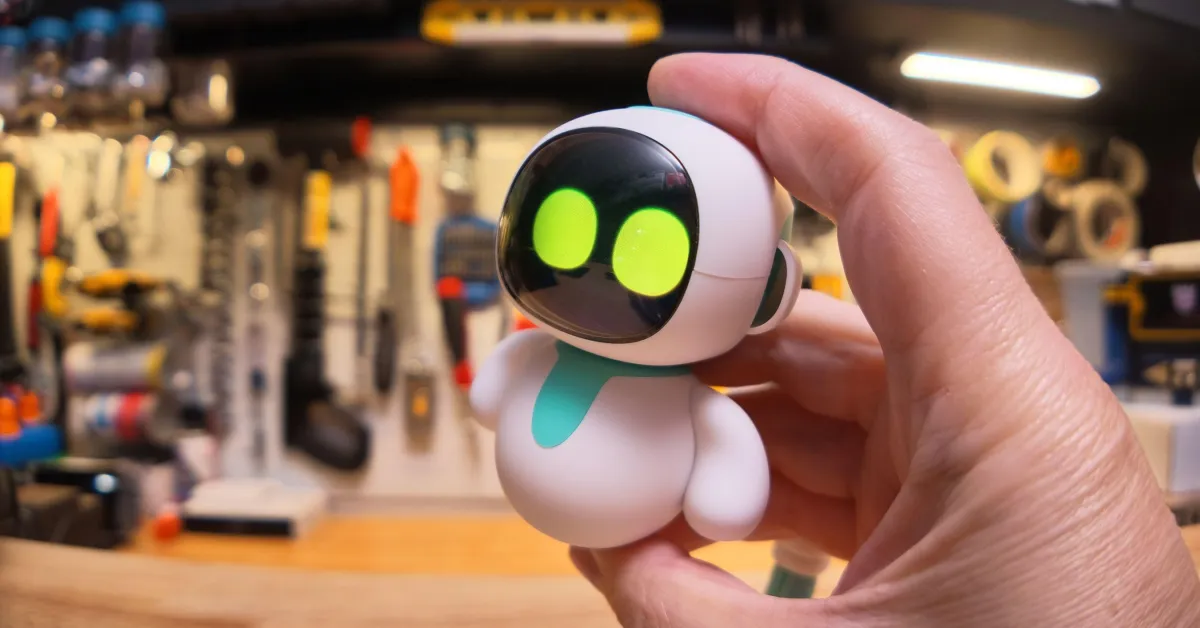
Energize Lab’s Eiliko companion robot has been found exposing users’ private conversations, photos, audio clips and detailed personal profiles through poorly secured systems tied to servers in China. The security lapse matters because it appears to affect the toy’s active global fleet, including tens of thousands of profiles associated with children, and could allow hackers to read intimate data or manipulate the robot’s personality remotely.
The discovery, detailed by security researcher Sammy Azdoufal and reviewed through testing by The Verge, paints a troubling picture of a consumer AI gadget marketed as a friendly digital pet. Instead of keeping chats private, the device’s backend appears to have stored sensitive user data in ways that made it searchable, exposed and, in some cases, vulnerable to takeover.
The findings arrive at a moment when AI-powered toys and “companion” devices are rapidly moving into homes, nurseries and classrooms. For families, the case is another reminder that a cheerful product design can hide a serious security problem underneath.
What happened to the Eiliko robot?
The Eiliko robot’s backend was found to be storing user conversations and other personal data in an insecure system that could be accessed remotely. In practical terms, that meant a hacker could potentially retrieve transcripts of chats, browse user profiles, view some images and audio recordings, and in some cases tamper with the toy’s AI behavior.
The issue came to light after Azdoufal, a researcher known for uncovering consumer-device security failures, tested the toy and its app. He discovered that the service behind Eiliko was not only collecting data but also organizing users into detailed profiles that went far beyond normal account information.
According to the reporting, the exposed system included data from roughly 68,000 robot toys worldwide and more than 13 million conversations. The United States represented the largest market in the dataset, with more than 31,000 profiles linked to children.
| Key finding | What was exposed | Why it matters |
|---|---|---|
| User conversations | Full text of private chats | Reveals intimate and potentially sensitive personal disclosures |
| Personal profiles | Name, age, birthday, job, family, pets, personality notes | Could be used for scams, targeting or doxxing |
| Media files | Photos and short audio recordings | May expose children and household details |
| Device fleet access | Active toy network in the tens of thousands | Raises risk of mass compromise or manipulation |
How did the toy expose so much data?
The exposure appears to have stemmed from weak backend security rather than a simple app glitch. Azdoufal found that the service supporting the toy did not adequately protect stored information and, in some cases, left data reachable at public web locations. That made it possible to search through user records and retrieve materials that should have been private.
One of the more unsettling aspects of the discovery was the breadth of the data collection. The system was not just saving basic account details. It was apparently analyzing conversations and generating personality-style summaries that described users’ emotional traits, habits and relationships.
Azdoufal’s testing indicated that the service was building detailed user dossiers, including personal characteristics and inferred emotional states, rather than simply storing account credentials or device logs.
Examples described in the reporting included a user profile that labeled a woman as kind, empathetic and hardworking, while also suggesting she struggled to trust family members and felt isolated. That kind of profiling may be attractive to scammers, identity thieves or anyone looking for emotionally vulnerable targets.
Why the data collection is especially alarming
It is alarming because the data appears to combine identity, behavior and emotional inference in one place. That makes the system more than a privacy risk; it becomes a high-value target for fraud, stalking and social engineering.
- Names and birth dates can support identity theft.
- Personal traits and family details can aid scam targeting.
- Chat transcripts may contain passwords, routines or health information.
- Children’s voices and images create additional safeguarding concerns.
Who is Sammy Azdoufal and why does his role matter?
Sammy Azdoufal is a security researcher who has repeatedly demonstrated how consumer gadgets can be remotely compromised when companies overlook basic protection. His earlier work this year exposed weak spots in robot vacuums, baby monitors, security cameras and other connected products, often showing that the problem is not theoretical but immediate and practical.
In this case, Azdoufal’s testing again showed how a seemingly harmless gadget can become a privacy liability. He did not just identify a vulnerability; he demonstrated the consequences by accessing data, reviewing what was stored and, later, taking control of the toy’s AI responses.
That broader pattern matters because it suggests a recurring industry problem: connected products are being shipped with “smart” features before the companies behind them have built mature security practices.
What exactly was exposed on the servers?
The exposed information was broader than many consumers would expect from a toy-like companion robot. Based on the testing described, the backend held a mixture of account data, chat history, media and machine-generated user analysis.
The following categories were among the most concerning:
- Full conversation transcripts from users interacting with the robot.
- Identity data such as names, birthdays and ages.
- Relationship and lifestyle details including family members, friends and pets.
- Emotional or personality notes generated by the service.
- Photos and audio clips that were stored without adequate protection.
Some of the audio files were described as short, partly unintelligible clips, but their very existence contradicts the company’s own privacy language, which said recordings were encrypted, sent to service partners for processing and deleted immediately afterward.
In other words, the public-facing privacy policy suggested a narrow and temporary use of audio. The actual storage practices, according to the reporting, looked far broader and far less controlled.
How could a hacker use this data?
A hacker could use the material for both surveillance and deception. Private chats can reveal emotional concerns, family situations, routines or payment-related clues. A detailed profile can help an attacker craft convincing phishing messages, impersonate support staff or identify vulnerable users.
For child-linked accounts, the risks are even more sensitive. If a toy records voices, names and household habits, a compromise can expose information that should never have left the home in the first place.
In addition, the reported ability to manipulate the toy’s personality remotely raises the risk of psychological abuse or harassment. A malicious actor could make a supposedly friendly device say disturbing, misleading or offensive things while presenting itself as trusted and familiar.
In testing, the robot was able to respond with clearly manipulated and false statements after its AI system was hijacked, showing how a compromised companion device could become a vehicle for abuse rather than a plaything.
What did the toy say when it was hacked?
After remote tampering, the robot reportedly began giving false and bizarre answers, including claims that the Earth is flat and that the user’s name and family history were something else entirely. The device also shifted into abusive and degrading language when further manipulated.
Those examples are not just strange; they illustrate a serious trust issue. A child or parent who believes the toy is responding normally may not realize the device has been altered by someone else.
Why were the servers considered easy to attack?
The servers were considered easy to attack because, based on the reporting, basic security hygiene was missing. That included weak administrator passwords and an exposed architecture that left sensitive data reachable through public web addresses or otherwise insecure endpoints.
Good security practice would normally require access controls, encryption, least-privilege design, monitoring and rapid patching. The Eiliko case suggests those layers were either absent or not effectively implemented.
This is particularly troubling because the product was not some obscure research prototype. It was an active consumer device sold through a mainstream marketplace and connected to a global fleet of users.
What did Energize Lab do when contacted?
Energize Lab did not provide a substantive public response to the findings, despite repeated attempts to reach the company through multiple channels. The reporting says emails were sent to contacts associated with the founder, public relations, marketing, technical support and business development, and the outlet also searched LinkedIn for employees who might respond.
Eventually, a few employees accepted connection requests on LinkedIn, but no one engaged meaningfully with the concerns. One overseas sales manager said the messages had been forwarded to the technical team and suggested the company might follow up if possible.
Customer support responded with an automated message, but did not continue the conversation. In short, the company’s response was minimal, delayed and noncommittal.
That matters because transparency is a crucial part of incident response. When consumer data is exposed, users need to know what happened, what was affected and what they should do next.
How big was the reported exposure?
The reported scale of the exposure is substantial for a consumer gadget. The dataset described by Azdoufal reportedly covered tens of thousands of active robot toys and more than 13 million conversations. The largest concentration of profiles was in the United States, where more than 31,000 accounts were tied to children.
Those figures suggest this was not a single-device problem. It was a fleet-level issue, which means the same flaw may have affected many users at once. For security researchers, that is often the most worrying kind of vulnerability: one weakness, many victims.
| Event | Date | What happened |
|---|---|---|
| Purchase | August 29 | Reporter bought an Eiliko on Amazon |
| Initial test | August 30 | Conversation revealed private chat data could be exposed |
| Research expansion | Summer 2026 | Azdoufal tested the app and backend security |
| Vendor outreach | Following weeks | Multiple attempts were made to contact Energize Lab |
| Disclosure | October 15, 2026 | Findings were published publicly |
Why this case matters beyond one toy
The Eiliko incident is part of a much larger problem in consumer AI. As gadgets gain speech, memory and personalization, they also collect more intimate data. That creates a tempting target for attackers and a new responsibility for manufacturers.
Many consumers assume a toy is safer than a phone or laptop. In reality, an AI companion can be more invasive because users may speak to it casually, as if it were a friend. Children may also reveal information they would never enter into a traditional app.
When that data is stored badly, the result is not just a technical flaw. It is a privacy breach with emotional and family-level consequences.
What should parents and consumers take away?
Parents should treat connected toys with the same caution they would apply to any internet-enabled device that records speech or stores user data. Before buying, it is worth checking whether the manufacturer explains where data is stored, whether audio is retained, and how the company handles account deletion and access controls.
For existing owners, the safest immediate steps are to limit Wi-Fi use, review app permissions, delete unnecessary account data where possible and avoid discussing sensitive personal information around the device.
- Disable network access if the toy works safely offline.
- Review privacy settings and opt-outs in the companion app.
- Change passwords and reuse nothing from other accounts.
- Watch for unusual responses from the device.
What happens next?
Azdoufal said he is working with security expert Tod Beardsley to publish nine official CVE entries related to Energize Lab’s vulnerabilities. CVEs, or Common Vulnerabilities and Exposures, are formal identifiers that help track and disclose security flaws in a standardized way.
If those reports are accepted, they could force the issue into the public security record and pressure the company to patch flaws or warn users. But the lack of cooperation so far suggests remediation may be slow unless the vendor faces stronger public and technical scrutiny.
For now, the story stands as a warning about the risks of affectionate branding in connected products. A robot that promises companionship can still be a data hoarder, a privacy leak and, if compromised, a tool for harassment.
As the market for AI toys expands, the central lesson is simple: cute design does not equal safe engineering. If a device can hear, remember and speak, it can also expose, mislead and be hijacked — unless the company building it takes security seriously from the start.
In the case of Eiliko, that trust appears badly broken.
Frequently asked questions
What is the Eiliko robot hack?
The Eiliko robot hack is a reported security failure in Energize Lab’s AI companion toy that exposed private chats, media and user profiles. Security researcher Sammy Azdoufal found that the backend stored sensitive data insecurely and could potentially allow remote manipulation of the device’s behavior.
Was children’s data exposed in the Eiliko breach?
Yes, children’s data may have been exposed in the Eiliko breach. The reporting says more than 31,000 profiles in the U.S. were associated with children, and the exposed systems included chats, photos and audio that could reveal household and personal information.
Could hackers access Eiliko conversations?
Yes, hackers could potentially access Eiliko conversations because the backend reportedly stored full chat transcripts in a searchable form. That means private exchanges with the toy were not properly protected and may have been retrievable by unauthorized parties.
Did Energize Lab respond to the security findings?
No meaningful response was provided publicly. The reporting says multiple outreach attempts were made to different company contacts, but Energize Lab did not answer the questions in a substantive way or explain how it would fix the issues.
What should owners of AI toys do now?
Owners of AI toys should review privacy settings, limit what they share with the device, change passwords and consider disconnecting the toy from Wi-Fi if possible. It is also wise to check whether the manufacturer clearly explains how data is stored and deleted.