In short
Pinterest has launched AI-powered Beauty Guides that turn saved hair and nail Pins into practical salon plans. The feature explains what to ask for, how much it may cost and what maintenance it requires.
- Pinterest’s Beauty Guides use AI to translate beauty Pins into salon-ready instructions.
- The feature adds terminology, estimated cost, time requirements and maintenance guidance.
- At launch, it supports hairstyle, hair color, nail shape and nail finish Pins.
- The tool is designed to make Pinterest’s inspiration content more actionable for real-world appointments.
Pinterest has launched a new AI feature called Beauty Guides that converts saved hair and nail inspiration into practical salon instructions, complete with terminology, timing, cost estimates and upkeep advice. The update matters because it moves Pinterest’s AI beyond inspiration and into decision-making, helping users translate a photo they like into language professionals can use.
Unveiled on Tuesday, the feature uses Pinterest’s visual intelligence and generative AI systems, which the company groups under the name Pinterest Intelligence, to explain what a user is seeing in beauty Pins and what to ask for when visiting a salon. At launch, it works on hairstyle, color, nail shape and finish Pins.
What Pinterest’s Beauty Guides do
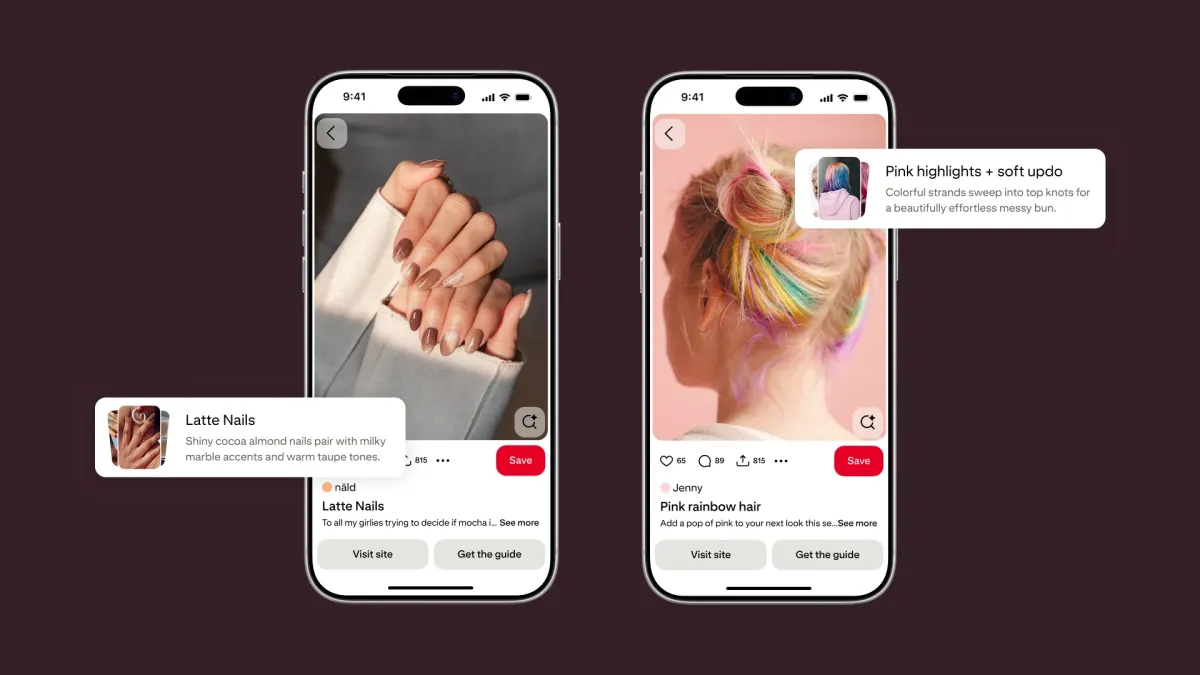
Beauty Guides are designed to bridge the gap between a saved image and a real-world appointment. If a user taps the “Get the Guide” button on eligible Pins, Pinterest will generate a breakdown of the style in plain language and in salon-specific terms.
The aim is not just to identify a look, but to make it actionable. That means the guide can suggest phrases stylists and nail technicians commonly use, such as balayage, root melt or almond nails, so users can explain the look they want without needing to know the industry vocabulary beforehand.
The feature also adds practical planning details. Users can see how long the process may take, a rough price range and maintenance considerations, including how often touch-ups, trims or toning may be needed.
Why this matters for Pinterest’s AI strategy
Pinterest has spent years positioning itself as a discovery platform where people collect ideas for future projects, purchases and personal style choices. Beauty Guides fit neatly into that behavior because many users already bring screenshots or photos to salons and ask professionals to recreate them.
By turning inspiration into instructions, Pinterest is trying to make its AI useful in a way that feels native to the app’s core use case. This is a different approach from chatbot-style AI features that aim to answer broad questions. Instead, Pinterest is focusing on a narrow, high-intent moment where users are already close to making a decision.
That could give Pinterest an advantage in beauty and personal style categories, where visual taste is important but specialist language can be a barrier. The company is betting that reducing that friction will improve the experience for both users and salon professionals.
How the new feature works
Beauty Guides appear inside the Pinterest app through a dedicated action button. Once a user opens the guide, the system generates a summary of the style and the practical steps needed to recreate it.
Step-by-step flow
The workflow is simple enough to fit a consumer app:
- A user saves or views a beauty-related Pin.
- The user taps “Get the Guide.”
- Pinterest generates a tailored explanation of the look.
- The guide translates the style into salon-ready terms.
- The guide estimates time, price and maintenance needs.
At launch, the feature is limited to hair and nail content, but Pinterest has framed it as a practical layer on top of visual discovery rather than a standalone AI product. That matters because it suggests the company is integrating AI into existing user behavior instead of asking people to learn a new tool.
What information will users get?
Users will receive a mix of descriptive and logistical details. In addition to naming or explaining the look, the guide can tell them what to request at the salon, how long each part of the process may take, what the likely cost range is and what kind of upkeep the style requires.
For beauty consumers, that mix is important. A look that appears simple in a photo may require bleaching, toning, shaping or repeated maintenance. Surfacing those realities before a salon visit may help users make more informed decisions and avoid surprises at checkout.
Pinterest is essentially trying to make its inspiration feed more useful at the point where users turn ideas into real appointments, by translating images into language, time and cost information people can act on.
How does Pinterest compare with other AI features in apps?
Pinterest’s approach is narrower than the AI tools now appearing across social and commerce platforms, but it is also more specific. Rather than building a general-purpose assistant, Pinterest is focused on a single category where its visual search and curation strengths already matter.
That specialization could help the company stand out. Many platforms are adding AI shopping assistants, content summarizers or conversational tools. Pinterest is using AI to solve a very particular user problem: how to turn a photo into a realistic beauty plan.
Because beauty services are personal, local and price-sensitive, the added context could be especially valuable. A user may be more willing to schedule a consultation if they know the likely cost and upkeep ahead of time.
Why beauty search is a natural fit for AI
Beauty is one of the most obvious places for image-based AI because the user’s intent often begins with a visual reference. Hair colors, nail shapes and finish styles are easier to show than to describe, but they still need precise terminology when it comes time to book an appointment.
That creates a common information gap. Users may know they want a specific look but not the professional phrase for it, or they may not know how much maintenance the style will require after the salon visit. Pinterest’s AI feature is designed to fill that gap.
It is also a useful example of how generative AI can be paired with visual intelligence to solve a narrow consumer task. Instead of generating new content from scratch, the system interprets content users have already saved and makes it more actionable.
How much could the feature help salon visits?
It could help in three practical ways. First, it gives users vocabulary they can confidently use with stylists. Second, it sets expectations around time and cost before the appointment. Third, it clarifies the upkeep that comes after the service, which is often the part people overlook.
Those details matter because salon appointments can vary significantly depending on the technique and finish a user wants. A style that looks identical in a photo may involve much more work than expected, especially for color services that require layering or repeated maintenance.
| Feature element | What it tells the user | Why it helps |
|---|---|---|
| Salon terminology | Words stylists and nail artists use | Makes it easier to explain the desired look |
| Time estimate | How long the process may take | Helps users plan appointments realistically |
| Price range | Expected cost of the service | Reduces surprise spending |
| Maintenance guidance | Trims, touch-ups or toning schedules | Shows the long-term commitment involved |
What Pins are supported at launch?
Pinterest says the feature initially covers Pins related to hairstyle, hair color, nail shape and nail finish. That scope keeps the launch focused on categories where visual details are easy to analyze and where salon terminology is especially important.
Hair and nails are also areas where consumers frequently seek inspiration online before committing to a service. That gives Pinterest a clear opportunity to test whether AI-generated planning tools can improve user satisfaction and engagement.
Why the feature is small but strategically important
On the surface, Beauty Guides may look modest compared with sweeping AI products from larger tech platforms. But product strategy often favors practical tools over flashy ones, especially when they align tightly with user behavior.
For Pinterest, that means the value may lie not in scale alone, but in relevance. If users trust the guides and find them useful before appointments, the feature could strengthen Pinterest’s position as a place to move from inspiration to action.
It also reflects a broader trend in consumer AI: the most effective tools may be the ones that eliminate small but persistent frictions in everyday life. In this case, that friction is the gap between a beautiful image and the words needed to bring it to life.
How Pinterest’s visual intelligence gives it an edge
Pinterest has long relied on image understanding to organize content around taste, style and intent. That history gives the company a natural foundation for AI tools that interpret visual references.
Because the platform already centers on discovery rather than conversation, it can frame AI as a utility layered on top of browsing. Users are not being asked to start from scratch with a chatbot prompt; they are being offered help with content they have already chosen.
This matters for adoption. People who save beauty Pins are already signaling strong intent, which means Pinterest can provide guidance at a moment when users are likely to value detail, comparison and cost awareness.
A quick timeline of the rollout
| Date | Event | Significance |
|---|---|---|
| Tuesday, Oct. 6, 2026 | Pinterest announces Beauty Guides | Introduces AI-powered salon planning inside the app |
| Launch phase | Feature becomes available on select beauty Pins | Focuses on hairstyle, color, nail shape and finish |
| Post-launch | Potential expansion based on user response | Could shape future beauty and shopping tools |
What users should keep in mind
Even with AI-generated guidance, Beauty Guides are best treated as a starting point rather than a final expert opinion. Salon results can vary by hair type, nail condition, stylist technique and local pricing.
Still, the feature should make conversations easier. Instead of trying to describe a look from memory or relying on vague references, users can walk into an appointment with a more structured plan.
That practical benefit may be what makes the update compelling. In a crowded AI market, Pinterest is not promising a futuristic assistant. It is offering something smaller, but arguably more useful: a better way to turn a saved idea into a finished result.
What this means for the future of Pinterest AI
Beauty Guides may be only one feature, but they offer a clear signal about Pinterest’s direction. The company appears to be leaning into AI that supports shopping, planning and personal expression instead of abstract productivity.
If the tool gains traction, Pinterest could extend the same logic to other categories where visual inspiration needs translation into real-world action. For now, though, the company is starting where the need is obvious and the value proposition is easy to understand.
That makes the launch notable not because it is huge, but because it is smartly targeted. Pinterest is using AI to solve one of the oldest problems in beauty: how to turn “I want this” into “here is exactly what to ask for.”
Frequently asked questions
What are Pinterest Beauty Guides?
Pinterest Beauty Guides are an AI feature that turns saved beauty Pins into practical salon plans. They explain the style in clearer terms, suggest what to ask for at the salon and provide details such as timing, price range and maintenance needs.
How do Pinterest AI beauty guides work?
Pinterest AI beauty guides appear when a user taps the “Get the Guide” button on eligible Pins. The system analyzes the image and generates salon-friendly language, plus estimates for how long the service may take, what it may cost and how much upkeep it will require.
Which Pins are supported by the new feature?
The feature currently works on Pins related to hairstyle, hair color, nail shape and nail finish. Pinterest has launched it in a focused form so it can handle categories where image interpretation and professional terminology are especially useful.
Why is Pinterest adding AI to beauty content?
Pinterest is adding AI to beauty content to make inspiration easier to act on in the real world. Many users already bring pictures to salons, and the company wants to help them translate those images into clear requests, expected costs and maintenance plans.