Updated November 19, 2026 4:25 pm
In short
The Verge’s longer test says Siri Recap remains a privacy-forward but uneven ambient-listening tool, with new examples showing it can misread media audio as real-life conversation and still miss what users actually want to remember.
- Siri Recap is an opt-in Apple Watch beta that summarizes ambient speech into bullet points.
- The feature is limited to 2026 Apple Watch S11 hardware and does not work on older models.
- The Verge found the summaries often lacked context, attribution and usefulness.
- Apple’s design keeps most processing on-device and deletes raw audio, but it adds a consent and etiquette burden.
Update — November 19, 2026 4:25 pm
The Verge’s updated review says Siri Recap was tested for two weeks and across the last month, not just a single week. The broader test still led the reviewer to the same conclusion: the feature’s privacy safeguards are impressive, but they often come at the expense of usefulness.
The new writeup adds several concrete examples of misfires. Recaps of TikTok videos were sometimes treated as if they were the reviewer’s own experiences, and because attribution is stripped out, the summaries could be confusing enough to sound like personal admissions or overheard conversations.
The Verge also says the feature can be turned off automatically when headphones are in use, and that some interview recaps now link to a matching Voice Memos file. Even so, the reviewer says Siri still struggles to identify what is actually worth remembering in casual chats, even when the summaries are factually on target.
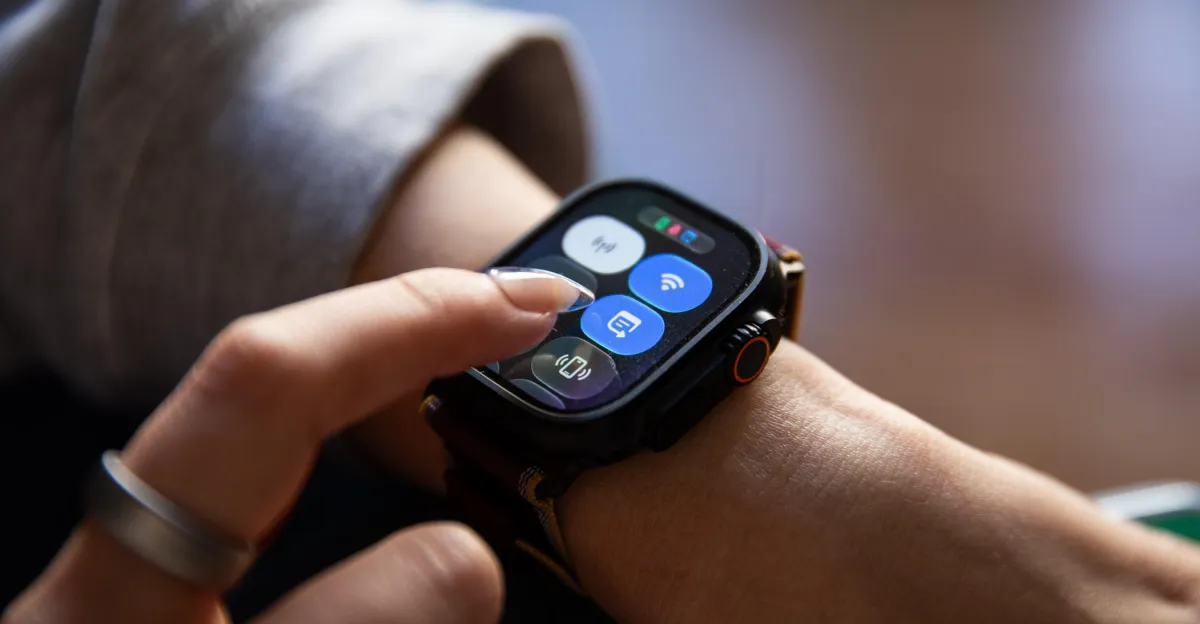
Apple’s new Siri Recap beta on the 2026 Apple Watch S11 is designed to listen in the background, summarize nearby speech into bullet points, and then erase the raw audio, but The Verge’s hands-on review found the feature is often awkward, incomplete and hard to trust. The test suggests Apple has made a deliberately private ambient-listening tool that may protect users better than rivals, while also making the product less useful than its promise.
What Siri Recap is supposed to do
Siri Recap is Apple’s attempt to turn the watch into a backup note-taker for real life. According to The Verge, the beta listens to ambient speech and converts it into recap bullets for later review, with the feature positioned for meetings, interviews and casual conversations.
Apple has built the system around privacy controls that are unusually strict for a voice-capture product. It is opt-in rather than enabled by default, users can schedule exactly when it activates, including narrow time windows, and recaps can disappear automatically after 1, 3 or 7 days unless the user saves them.
Just as important, the interface does not preserve a viewable transcript, and Apple says no raw audio file is retained. The audio is processed and deleted inside the secure enclave on the S11 chip, while any cloud-side processing runs through Private Cloud Compute. Apple also says Siri Recap does not train on the user’s voice.
How did the review test the feature?
The Verge said reviewer Victoria Song tested Siri Recap for about a week on an Apple Watch Ultra 4, generating more than 50 recaps across meetings, interviews and personal conversations. The experience gave a useful look at the beta’s strengths and weaknesses under ordinary use rather than a polished demo.
That testing led to a blunt verdict: the feature may be privacy-conscious, but it often fails to produce summaries that outsiders could reliably understand. The reviewer said the lack of attribution can make recaps confusing or flatly wrong, especially when the watch tries to summarize videos or fast-moving conversations without a transcript to check.
By the numbers
| Metric | What The Verge reported | Why it matters |
|---|---|---|
| 2026 | Apple Watch S11 hardware year tied to Siri Recap processing | The feature is limited to the newest watch generation |
| One week | Length of the hands-on test | Enough time to see repeated patterns, not just one-off glitches |
| More than 50 recaps | Number generated during testing | Provides a sizeable sample of the beta’s performance |
| 90 percent | Share of recaps the reviewer said would be gibberish to others | Highlights how little context the summaries can carry |
| 1, 3 or 7 days | Auto-delete options for unsaved recaps | Shows Apple’s emphasis on minimizing retention |
Why it matters
Siri Recap is not just another smartwatch feature. It sits at the intersection of wearable computing, consumer AI and privacy policy, which makes it a useful test case for how much convenience people will trade for ambient surveillance that stays local to the device.
Apple’s pitch is straightforward: if a watch can quietly capture and summarize the useful parts of a conversation, it can save people from taking notes by hand. But the same design creates a social problem. Anyone nearby may have no clear signal that the device is listening, because The Verge says Siri Recap has no outward recording indicator or chime, unlike Apple’s Live Rewind feature.
That choice matters beyond one product launch. If wearables can listen without obvious cues, the etiquette burden shifts to the person wearing the device. Users may need to warn others, ask permission more often, or avoid using the feature in places where consent is unclear. The reviewer’s conclusion was that ambient-listening wearables work best only in low-stakes, consented situations.
There is also a competitive angle. The Verge said Apple’s approach is more private than Amazon Bee, but less useful. That is the central tradeoff in this category: the tighter the privacy controls, the harder it can be for AI to produce summaries rich enough to be genuinely helpful.
What Apple got right — and where it fell short
Privacy is the product’s strongest pitch
Apple has long sold privacy as a core differentiator, and Siri Recap fits that pattern closely. The company keeps most processing on-device, uses the S11 chip’s secure enclave, and limits cloud use to Private Cloud Compute when necessary. In a market where voice tools can feel intrusive, that architecture is a clear selling point.
The feature also avoids one of the more alarming concerns around voice AI: model training on personal speech. Apple says Siri Recap does not train on the user’s voice, which may reassure people wary of long-term data retention or secondary uses of their recordings.
Utility is still the hard part
But privacy alone does not make a useful tool. The Verge’s review said the absence of a visible transcript leaves users with a summary that is difficult to audit. If the recap gets a name, pronoun or event wrong, there is no quick way to check what was actually said. That makes the feature less of a record and more of an interpretation.
The reviewer also found that interview recaps sometimes linked back to Voice Memos files, but that did not solve the core issue: the product often remains opaque to anyone who was not present for the original conversation. More than 50 generated recaps were enough, in the reviewer’s view, to show that most of them would not make much sense to a third party.
That is a practical limitation, not just a technical one. A note-taking tool is only useful if the user can trust its recall. Once summaries become too vague or misleading, the watch shifts from assistant to ambiguity machine.
“I’m not convinced the benefits outweigh the costs.”
That was Victoria Song’s assessment after testing the beta for The Verge. It captures the product’s central tension: the more Apple strips out from the data stream to protect privacy, the less context remains for the summary to be useful.
Background: how Apple got here
Ambient-listening wearables are built on a simple idea: capture nearby speech, process it with AI, and surface the parts that matter later. The concept is not new, but the promise has grown as on-device machine learning has improved and consumer companies have tried to make wearables feel less like trackers and more like assistants.
Apple’s version is notable because privacy has always been part of the brand story. That matters in voice technology, where microphones can easily become symbols of surveillance. By keeping most processing local and limiting how long recaps last, Apple is trying to reassure users that a helpful product does not need to become a persistent archive of private speech.
There is a second layer to the background as well: Apple is tying the feature to brand-new hardware. The Verge reported that Siri Recap requires 2026 Apple Watch hardware and is unavailable on older watches. That creates a familiar Apple pattern — newer AI capabilities arrive first, and only on the latest devices — while also suggesting that the secure-enclave processing Apple wants is tightly integrated with the S11 chip.
That hardware gate may help Apple market the watch as more advanced, but it also narrows the audience. Early adopters get the feature; everyone else waits, even if they are already wearing a compatible Apple Watch in every other respect.
How does Siri Recap compare with other ambient-listening tools?
Siri Recap stands out less for what it does than for how carefully it tries to do it. The Verge said Apple’s approach is more private than Amazon Bee, but less useful. That comparison neatly frames the tradeoff. A more permissive system may produce richer summaries, but it can also feel far more invasive. Apple is aiming for the opposite, accepting weaker performance in exchange for tighter controls.
There is also a difference in visibility. The Verge noted that Siri Recap does not provide an outward recording indicator or chime. Apple’s silence may reduce friction in the moment, but it also makes the feature harder to spot from the outside. In practical terms, that can make disclosure and consent more complicated than with tools that visibly announce themselves.
| Feature | Apple Siri Recap | Implication |
|---|---|---|
| Activation | Opt-in | User must choose to use it |
| Visibility | No outward recording indicator or chime | Harder for bystanders to notice |
| Retention | Auto-deletes after 1, 3 or 7 days unless saved | Minimizes long-term storage |
| Processing | Mostly on-device, with some Private Cloud Compute use | Privacy-first design, but still AI-assisted in the cloud when needed |
| Usefulness | Often awkward and unclear | Protection comes at the cost of context |
What happens next?
The biggest question is whether Apple changes the product before a wider rollout. The Verge’s review leaves several possibilities open: Apple could add a visible recording indicator, improve attribution in summaries, or find a way to make the recaps more readable without keeping more data around.
Another question is whether the beta will become broadly useful outside of narrow use cases. The reviewer’s conclusion suggests Siri Recap may work best in low-stakes settings where everyone involved knows the feature is on. Whether that is enough for broader adoption — in work meetings, interviews or personal life — remains uncertain.
It is also unclear how many older watch owners will be left behind if Apple keeps the feature locked to 2026 hardware. The Verge says Siri Recap is unavailable on older watches, so the company will need to decide whether the product is a one-generation showcase or the beginning of a wider software feature set.
For now, the beta looks like an example of Apple’s broader AI philosophy: make the system private first, even if that means making it less ambitious than rivals. Whether that balance satisfies users will depend on what they value more — fewer privacy risks, or more reliable memory.
Timeline
| Date / period | Event |
|---|---|
| During testing period | Victoria Song uses Siri Recap across meetings, interviews and personal conversations |
| After about one week | The Verge records more than 50 recaps and assesses the feature as private but often not useful |
| 2026 | Siri Recap is tied to Apple Watch S11 hardware |
| 2026-11-19 | The Verge publishes its hands-on review |
In the end, Siri Recap is a clear expression of Apple’s priorities. It protects the user’s data, it narrows retention, and it keeps most processing local. But The Verge’s testing also shows that an AI feature can be technically careful and still feel incomplete. That tension will likely define how Apple’s next wave of wearables is judged.
“Maybe that’s worth it — if Siri can be trusted to be truly helpful.”
Frequently asked questions
What is Siri Recap on Apple Watch?
Siri Recap is an opt-in Apple Watch beta that listens to ambient speech and turns it into recap bullets for later review. Apple positions it as a backup note-taker for meetings and conversations, while keeping most processing on-device and deleting raw audio after use.
Does Siri Recap keep recordings or transcripts?
No, The Verge says Siri Recap does not retain a raw audio file and the interface does not show a viewable transcript. Apple says the audio is processed and deleted inside the secure enclave, with any cloud use handled through Private Cloud Compute.
Why did The Verge say Siri Recap is hard to use?
The Verge said the feature often produced summaries that lacked attribution and context, making them confusing or incorrect. Reviewer Victoria Song generated more than 50 recaps and concluded that most would be unusable to outsiders.
Which Apple Watch models support Siri Recap?
The Verge reports that Siri Recap requires 2026 Apple Watch hardware and is unavailable on older watches. In the review, the feature was tested on an Apple Watch Ultra 4, but Apple ties the processing to the newer S11-based generation.