In short
TechCrunch Disrupt 2026 will spotlight how AI founders choose between open models, proprietary APIs, custom deployments and multi-model systems. The event aims to show startups how to balance cost, control and flexibility as AI architecture becomes a moving target.
- AI startups are moving away from one-model thinking and toward multi-model workflows.
- Founders now have to weigh cost, speed, flexibility and lock-in when choosing models.
- Disrupt 2026 will feature sessions on model ownership, venture strategy and hardware design.
- The conference runs Oct. 13-15 at Moscone West in San Francisco with 200+ sessions.
- AI infrastructure and chip design are becoming part of the startup strategy conversation.
TechCrunch Disrupt 2026 will put one of the industry’s most urgent startup questions front and center: in a world where open models, proprietary APIs, custom tuning and multi-model workflows all keep improving, what should founders actually build on? The answer matters because the choice now shapes cost, speed, product differentiation and how easily an AI company can adapt as the market shifts.
At the event in San Francisco next month, four sessions will examine that decision from different layers of the AI stack — from application strategy and model selection to infrastructure and chip design. For startup founders, the message is clear: the old binary between open and closed AI no longer fully describes how products are built.
What used to be a single architecture decision has become a moving target. Open-weight models are getting stronger, frontier APIs are improving rapidly, and many teams are already routing different tasks to different models depending on price, latency and quality. The result is a more flexible but also more complicated environment, where the smartest decision may be not to commit too early.
| Session | Stage | Core question | Speakers |
|---|---|---|---|
| The Real Tokenmaxxing: How the Best AI Companies Navigate a Multi-Model World | Builder’s Stage | When should teams use multiple models instead of one? | Mo Jomaa, Vipul Ved Prakash, Zuzanna Stamirowska |
| Which AI Should Your Company Actually Deploy: Rent, Customize, or Build | Real World AI Stage | How much of the AI stack should a startup own? | Manos Koukoumidis |
| Building AI Startups Worth Betting On | Builders Stage | What trade-offs separate durable startups from copycat products? | Nader Khalil, Sydney Sykes |
| When AI Starts Designing Its Own Hardware | Disrupt Stage | How will AI affect the chips that run it? | Anna Goldie, Azalia Mirhoseini |
Why the open-versus-closed debate is changing
The central debate in AI startup strategy used to be simple enough: should a company build on open models or buy access to proprietary ones through an API? That framing still matters, but it is no longer the whole story. Startups now have more options, and each one comes with trade-offs that can alter not just technical performance but the company’s economics and pace of product development.
Open models have advanced quickly, making them more viable for real products. At the same time, major model providers continue to push their APIs forward, adding capability, speed and tooling. In parallel, companies are increasingly customizing models for specific tasks, rather than relying on a general-purpose system to do everything.
That shift has created a more fluid market. A startup might begin with an off-the-shelf API, later add an open-weight model for a high-volume feature, and then migrate another workload to a custom deployment when margins or performance justify it. In practice, model strategy is becoming a portfolio decision rather than a one-time bet.
What founders are optimizing for now
Founders are no longer evaluating models only on quality. They are also weighing total cost, latency, reliability, vendor dependency, customization options and the risk of being boxed in by a single supplier. For many teams, flexibility has become its own strategic asset.
That is especially true in markets where the underlying model quality changes quickly. A company that ties itself too tightly to one system may gain short-term simplicity but lose the ability to switch when a better or cheaper option arrives. In a competitive startup environment, that can become an expensive mistake.
Industry speakers at Disrupt are expected to argue that the best AI companies increasingly treat model selection as an ongoing operating decision, not a permanent architectural commitment.
How do multi-model products work in practice?
Multi-model products work by assigning different tasks to different systems based on what each does best. One model might handle reasoning-heavy tasks, another might be better for structured extraction, and a third could be used for fast, low-cost responses in high-volume workflows.
The session titled “The Real Tokenmaxxing: How the Best AI Companies Navigate a Multi-Model World” will explore that reality with Mo Jomaa, partner at CapitalG; Vipul Ved Prakash, co-founder and chief executive of Together AI; and Zuzanna Stamirowska, chief executive and co-founder of Pathway.
Rather than treating model selection as a binary choice, the discussion will focus on how startups combine open and proprietary systems to balance price, performance and flexibility. It will also address a practical question that matters to every AI founder: when does an open model actually outperform a closed alternative?
For many businesses, the answer depends on workload. A product that needs fast inference at scale may prefer one system for customer-facing generation and another for internal processing. A company doing analytics, search or retrieval may prioritize one model’s structure and cost profile, while reserving premium APIs for especially hard cases.
Why multi-model strategies are attractive
Multi-model strategies let founders avoid overcommitting to a single provider while still benefiting from rapid advances across the ecosystem. They can also help teams control spend by using expensive frontier systems only where they add measurable value.
- Lower unit costs on high-volume tasks
- Better resilience if one provider changes pricing or policy
- More room to optimize for latency and accuracy by task
- Reduced lock-in when model quality changes quickly
But the approach adds operational complexity. Teams need routing logic, testing infrastructure and a clear way to measure which model is best for which job. As a result, the technical architecture of an AI product now looks more like a carefully managed supply chain than a single-model deployment.
How much of the AI stack should a company own?
The next major question for founders is ownership. Should a startup rent capability from a frontier API, customize a model it does not fully control, or build more of the stack itself?
Manos Koukoumidis, CEO and co-founder of Oumi, will tackle that question in a session on the Real World AI Stage titled “Which AI Should Your Company Actually Deploy: Rent, Customize, or Build.” The talk is designed to give founders a framework for thinking through the trade-offs between borrowed intelligence and in-house control.
The session will use audience polling, startup examples and practical decision rules to help attendees compare frontier APIs, customized open-weight models and fully owned systems. The aim is not to declare one approach universally superior, but to help companies figure out which option best matches their stage, product and risk tolerance.
This is not a purely technical question. Owning more of the stack can create differentiation, particularly if a product depends on unique workflows or proprietary data. But ownership also raises the bar for talent, infrastructure and time to market. For early-stage companies especially, the wrong level of commitment can burn capital faster than the product matures.
When customization becomes a competitive advantage
Customization becomes valuable when a company has enough proprietary data or domain specificity that a general-purpose model no longer delivers enough edge. In those cases, adapting an open model or training around a distinct workflow can improve quality and create features rivals cannot easily copy.
Still, customization is not free. It can require data engineering, evaluation pipelines, safety work and ongoing model maintenance. The strategic question for founders is whether the benefit justifies the overhead, and whether that advantage will endure long enough to matter.
| Option | Main advantage | Main drawback | Best fit |
|---|---|---|---|
| Frontier API | Fastest path to market | Vendor dependence | Early prototypes and quick launches |
| Customized open model | Better control and tuning | Added technical overhead | Products with domain-specific workloads |
| Own the full stack | Maximum control and differentiation | Highest cost and complexity | Well-funded teams with strong ML infrastructure |
What investors and builders are looking for
Another Disrupt session will bring a venture and builder perspective to the same question. Nader Khalil, director of developer technology at Nvidia, and Sydney Sykes, global head of VC partnerships at Nvidia, will appear on the Builders Stage for “Building AI Startups Worth Betting On.”
The discussion will focus on what founders are choosing today, how they are weighing frontier APIs against open-weight models, and what those choices reveal about a startup’s long-term defensibility. The message from that conversation is likely to be that model choice can signal much more than technical taste.
Investors often want to know whether a startup’s product can keep its margins under control, whether it can defend itself against fast followers, and whether it can survive an abrupt shift in model prices or performance. A team that understands those trade-offs can appear more durable than one that treats model selection as a superficial implementation detail.
According to the Disrupt agenda, the builder and venture conversation will examine how model strategy influences product positioning, infrastructure needs and a startup’s ability to maintain differentiation over time.
What makes an AI startup investable
In a crowded market, AI startups that stand out tend to show three things: a clear user problem, a thoughtful approach to model economics, and a strategy that does not depend entirely on a single external provider.
- They know which workloads justify premium model spend.
- They understand when open models can deliver better economics.
- They build systems that can adapt as the ecosystem evolves.
That does not mean every company needs to self-host everything. It means founders need to be deliberate about what they outsource and what they keep under their control.
When does AI start shaping the hardware underneath it?
The answer is already beginning to emerge: as models become more capable, they are increasingly influencing the design of the chips and systems that run them. That makes hardware strategy part of the AI conversation, not an afterthought.
Anna Goldie, founder and chief executive of Ricursive Intelligence, and Azalia Mirhoseini, founder and chief technology officer, will address that trend in “When AI Starts Designing Its Own Hardware” on the Disrupt Stage.
The session will explore how AI can optimize chip design, why model architecture and hardware are becoming more tightly connected, and what a more open AI ecosystem could mean for the infrastructure layer beneath it. For startups, that connection matters because hardware progress can change what is possible in product design, inference speed and deployment cost.
If chips can be designed faster or more efficiently with the help of AI, the benefits could cascade upward through the ecosystem. Better hardware can lower latency, improve throughput and expand the types of products startups can feasibly build.
Why hardware still matters for software startups
Even companies that do not manufacture their own hardware depend on it. Every inference call, every retrieval step and every model fine-tune ultimately runs on physical infrastructure. The economics of AI are therefore inseparable from the performance of the underlying compute stack.
That is why hardware design, model choice and product strategy are converging. The more AI systems become part of the process of designing chips, the more feedback loops emerge between software capability and infrastructure efficiency.
Why this matters for AI founders right now
The broader lesson of Disrupt 2026 is that AI strategy is no longer about picking a camp and staying there. Founders must be prepared to move between models, adjust their level of ownership and reconsider their infrastructure as the market evolves.
This is especially important because the AI ecosystem is still moving fast. A startup that locks itself into one architecture too early may miss new open models, cheaper APIs or better customization options that arrive only months later. The companies that benefit most will likely be those that preserve optionality.
That optionality can take several forms:
- Building a product that can swap models without major rewrites
- Designing cost controls that let teams use premium models selectively
- Keeping enough of the stack in-house to differentiate where it matters
- Tracking hardware and deployment trends alongside model quality
In other words, the next wave of AI winners may not be defined by ideological commitment to open or closed systems. They may be defined by pragmatic engineering and disciplined business judgment.
What to expect at Disrupt 2026
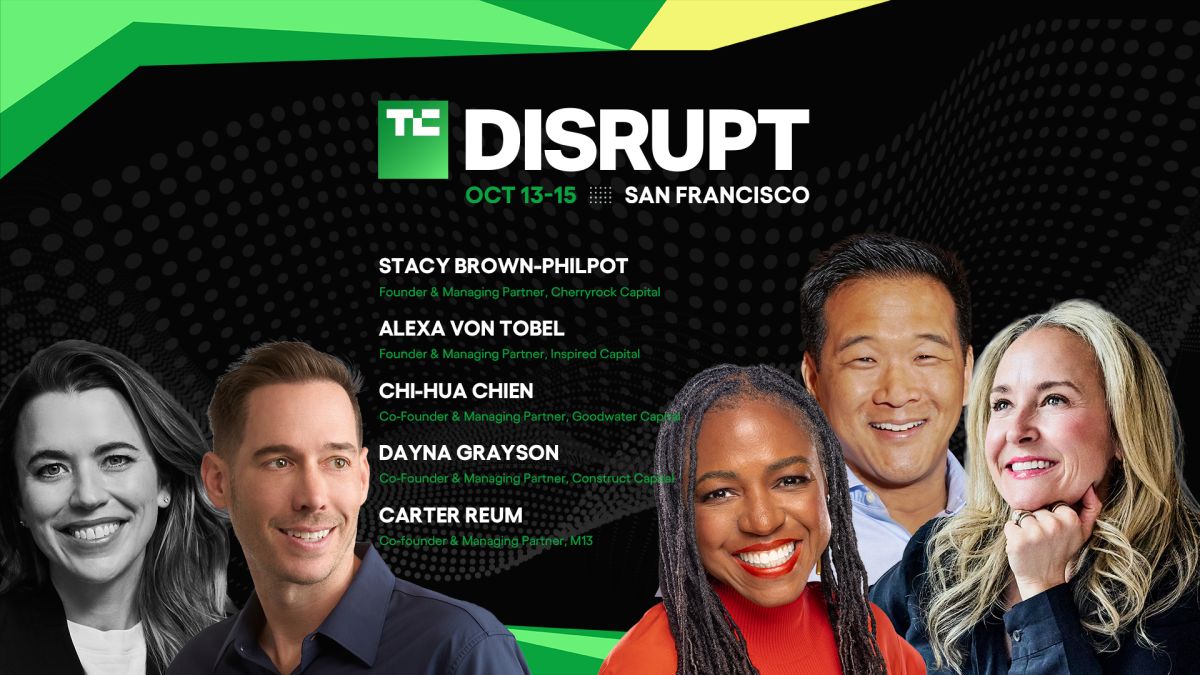
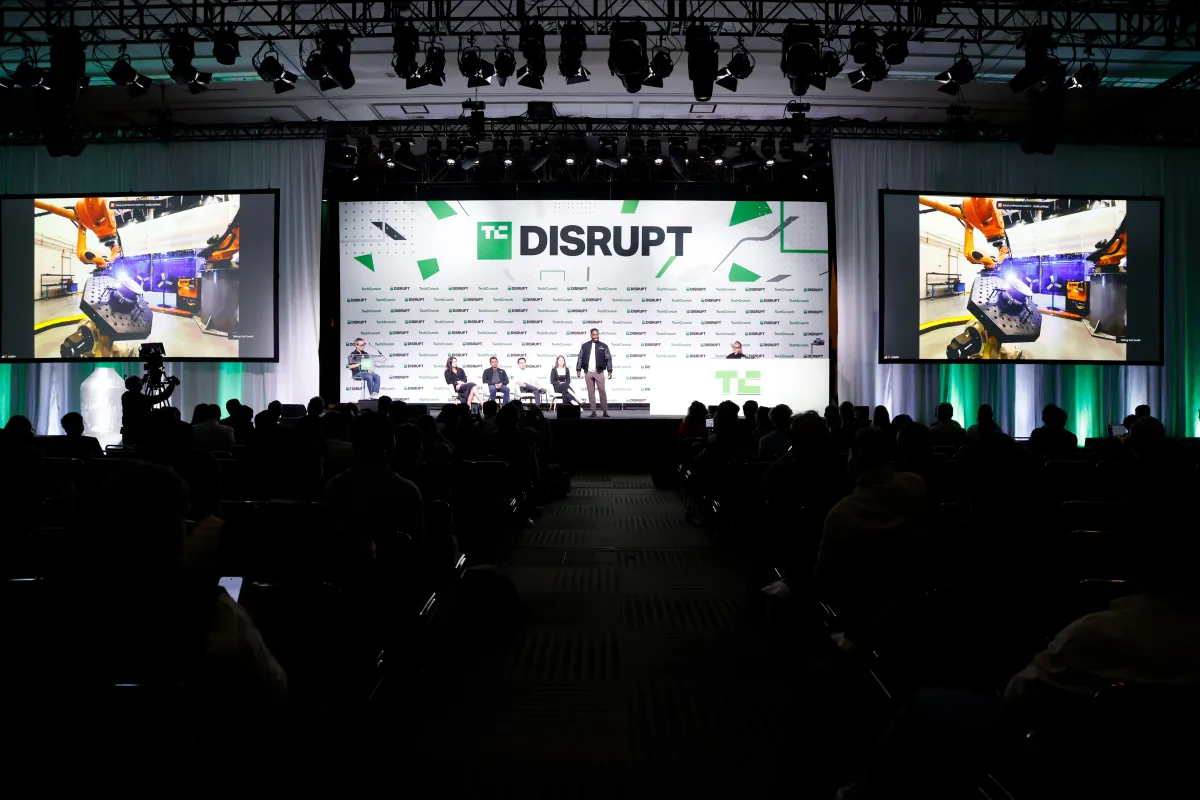
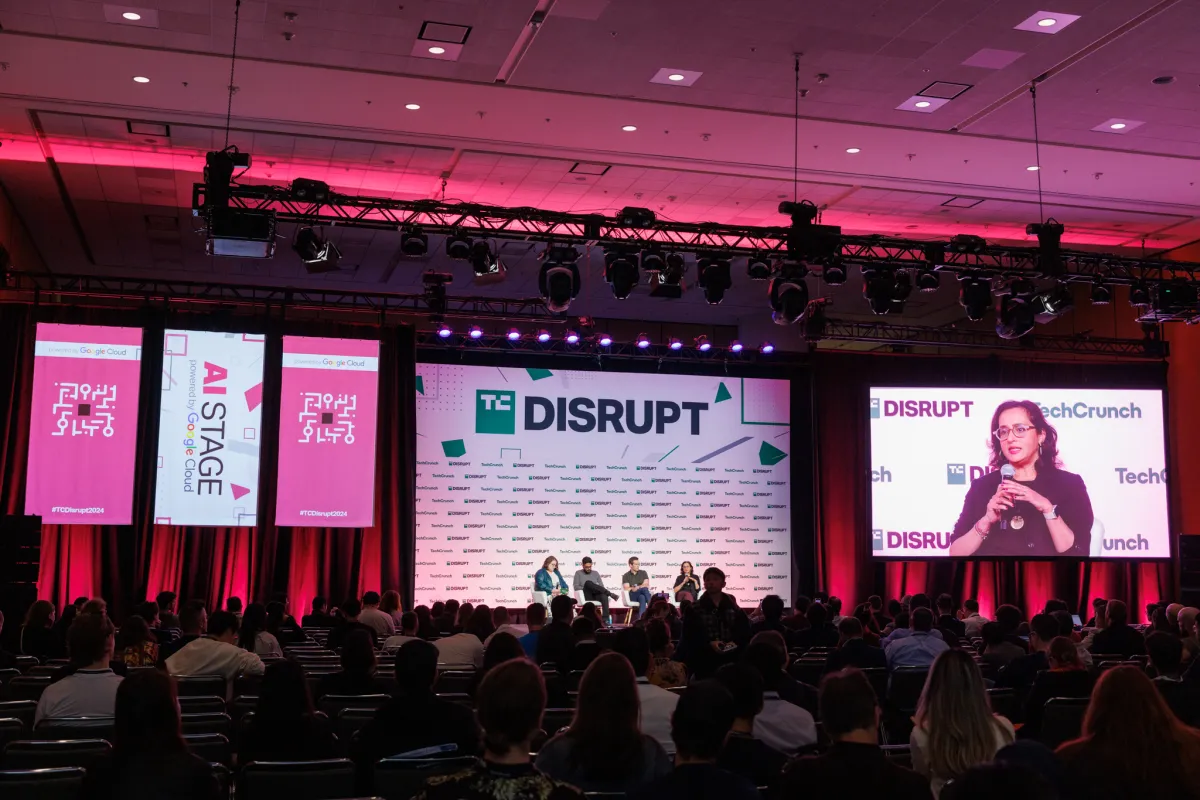
These model-strategy sessions are part of a much larger program at TechCrunch Disrupt 2026, which runs Oct. 13-15 at Moscone West in San Francisco. The event will feature more than 200 sessions spread across six industry stages, roundtables and breakout sessions.
Organizers say the conference is expected to draw more than 10,000 founders, investors, operators and technology leaders, along with more than 250 speakers and 300 exhibiting startups. Networking, matchmaking and dealmaking opportunities are also part of the program, creating a setting where product strategy discussions can turn into partnerships and funding conversations.
For founders, that makes the event more than a conference about AI models. It is also a live forum for comparing notes on the business realities of building in a fast-moving market — from architecture decisions to customer acquisition to infrastructure choices.
Key dates and details
| Detail | Information |
|---|---|
| Event | TechCrunch Disrupt 2026 |
| Dates | October 13-15, 2026 |
| Location | Moscone West, San Francisco |
| Expected attendance | More than 10,000 attendees |
| Speakers | 250+ speakers |
| Exhibitors | 300+ startups |
TechCrunch is also promoting discounted passes for attendees, including savings on second tickets and a lower-cost Expo+ option for people affected by layoffs. But the bigger draw for many founders will be the chance to hear how experienced operators are thinking about the most consequential AI decisions of the moment.
As the industry matures, the question is no longer whether to choose open or closed AI in the abstract. It is how to assemble a stack that can survive technical change, control costs and still create a product distinctive enough to matter. That is the debate Disrupt 2026 is setting out to capture.
Frequently asked questions
What is TechCrunch Disrupt 2026 focusing on for AI startups?
TechCrunch Disrupt 2026 is focusing on how AI startups should choose between open models, proprietary APIs, custom tuning and multi-model systems. The event’s sessions are designed to help founders think through cost, control, flexibility and long-term product differentiation.
Why are AI founders using multiple models instead of one?
AI founders are using multiple models because no single system is always best for every task. Different models can be optimized for different jobs, such as high-volume inference, reasoning, extraction or low-latency responses, which can reduce costs and improve performance.
Should startups build their own AI models or rent access?
It depends on the startup’s goals, budget and product requirements. Renting a frontier API is usually faster and easier, while building or customizing can create more control and differentiation. The trade-off is that ownership typically requires more talent, time and infrastructure.
When is a customized open model better than a frontier API?
A customized open model is often better when a startup has domain-specific data, high-volume workloads or a need to control deployment more closely. It can improve economics and differentiation, but it also adds engineering and maintenance overhead.
When and where is Disrupt 2026 taking place?
Disrupt 2026 is scheduled for October 13-15 at Moscone West in San Francisco. Organizers say the event will include more than 200 sessions, 250-plus speakers and more than 300 exhibiting startups.