In short
Safeworld has emerged from stealth with more than $12 million to build simulation-based robot safety testing for AI-driven machines. The startup aims to become a third-party validator as generative AI makes robots more capable, but also less predictable.
- Safeworld launched with more than $12 million in seed funding.
- The company tests AI-driven robots in realistic simulations with human models.
- Its founders believe third-party validation will be essential as robots move into workplaces and homes.
- The startup is targeting a growing need for safety standards in generative AI robotics.
Safeworld has launched with more than $12 million in seed funding to build safety tests for robots that are increasingly controlled by generative AI, a shift that makes machine behavior harder to predict and raises new questions about how humanoids can be certified for use around people. The startup says it wants to become the industry’s trusted evaluator before AI-powered robots move from demos into homes, factories and other shared spaces.
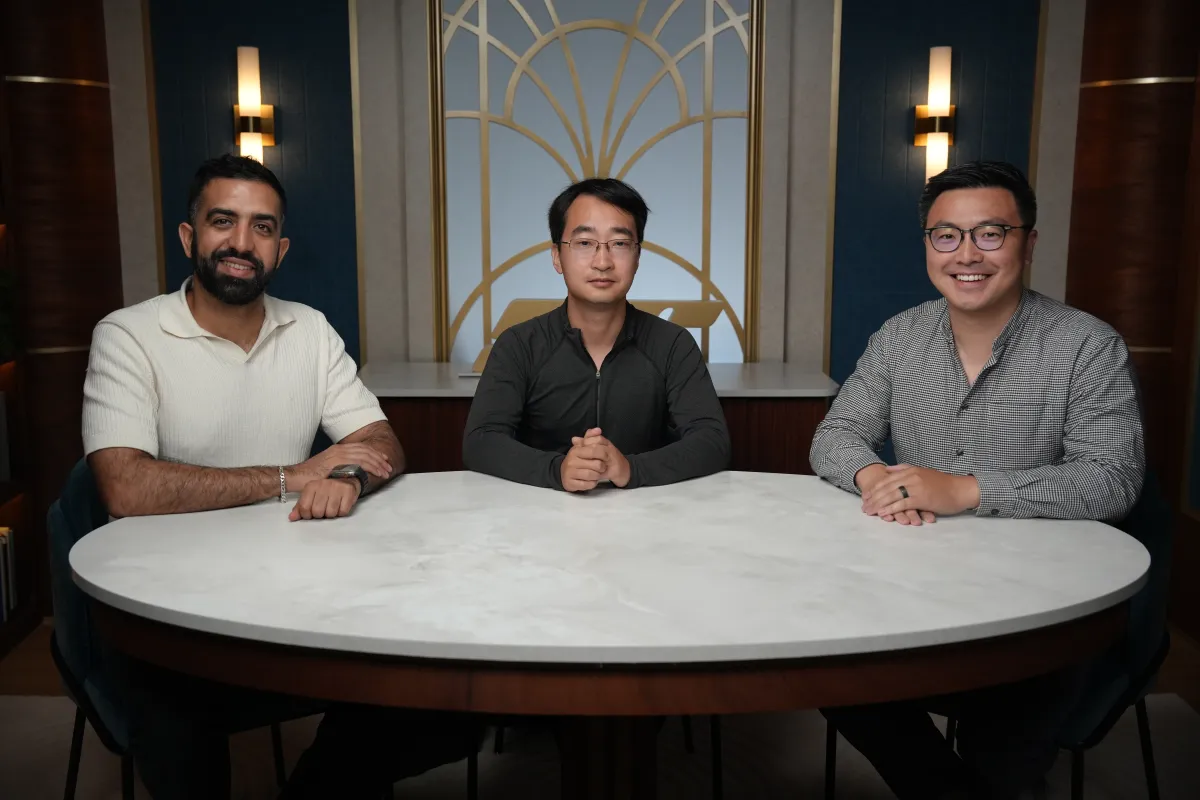
The San Francisco-area company is founded by Carnegie Mellon University’s Dr. Ding Zhao, veteran startup operator Kyle Wong and machine learning engineer Simo Rachidi. Its pitch is straightforward but ambitious: if robots are going to rely on probabilistic AI systems instead of tightly scripted code, the industry needs a better way to prove those machines will not hurt workers, bystanders or customers.
That problem is becoming more urgent as robotics companies race to replace rigid automation with systems that can reason, adapt and respond to the real world. The upside is flexibility. The downside is uncertainty. Safeworld is betting that the businesses building those machines will eventually pay an independent company to test them, validate them and help define a standard for what “safe enough” actually means.
Why robot safety is suddenly a startup opportunity
Robot makers have long tested machines before deployment, but the rise of generative AI changes the equation. Traditional industrial robots often follow preprogrammed paths in controlled environments. By contrast, AI-driven robots can interpret messy surroundings, react to people and make decisions that are not perfectly deterministic.
That makes them more useful, but also harder to certify. In a warehouse, factory or construction site, the margin for error can be small. A robot that misjudges a human’s position, speed or behavior could cause serious harm.
Safeworld’s founders argue that this is exactly the moment for a specialized safety layer to emerge. Their view is that the market will not wait for a major incident to force standards into place. Instead, companies deploying robots at scale will need evidence up front that the systems have been tested against realistic edge cases.
Dr. Ding Zhao, who leads Carnegie Mellon’s Safe AI lab and co-founded Safeworld, said the challenge has two parts: assessing the risk of a probabilistic AI system and building trust around it. He argued that both are necessary if robots are to be deployed broadly.
That framing matters because it suggests Safeworld is not just selling simulation software. It is trying to build a process by which robot makers can convince customers, regulators and their own internal teams that an AI robot is dependable enough to operate alongside humans.
How does Safeworld test robots before they reach the real world?
Safeworld’s core idea is to recreate the environments where robots will work, then run large numbers of simulated interactions between the machine and human models. The company says it can build a digital version of a factory corner, a worksite aisle or another location where accidents could happen, then insert the robot being evaluated and observe how it behaves in thousands of scenarios.
That means using simulation software such as Genesis or MuJoCo to model the physical space while driving the virtual robot with its actual software stack. The result is intended to be more rigorous than a simple demo and more practical than expecting engineers to manually anticipate every dangerous situation in the real world.
The goal is not only to see whether a robot completes a task, but whether it handles odd, inconvenient and unpredictable human behavior without creating danger. That includes humans bending, turning, carrying objects, tripping, kneeling, crouching or approaching the machine from unexpected angles.
Safeworld’s process also reflects a bigger truth about robotics testing: the most dangerous moments are often the least repeatable. Engineers cannot ethically ask workers to repeatedly walk into risky situations just to see whether a robot stops in time. Simulation offers a safer way to probe the boundaries.
What makes robotic testing different from self-driving cars?
Robotic safety is harder to standardize than autonomous driving because robots operate in less predictable environments and under more varied conditions. Self-driving systems usually contend with roads, lanes and traffic rules. Robots may work in warehouses, construction sites, hospitals or homes, each with different layouts, obstacles and safety expectations.
That difference is central to Safeworld’s business case. A robot in a warehouse may need to stop near a blind corner. A robot on a solar farm may need to avoid a worker carrying equipment. A humanoid in a home may need to recognize children, pets and furniture in constantly changing arrangements.
Safeworld’s founders say they are trying to build the tooling for that reality, not the cleaner and more controllable world that robotics investors often showcase in marketing videos.
Who is backing Safeworld and why?
The company emerged from stealth with backing from a group of investors that includes Shine Capital and a16z Speedrun, alongside Box Group, the Carnegie Mellon University Endowment, Innovation Endeavors and SV Angel. The financing round totals more than $12 million.
The investor mix suggests conviction in both the technical need and the market opportunity. If the robotics industry grows as many expect, safety infrastructure could become an important adjacent market, much like testing, compliance and verification tools in other regulated sectors.
Jonathan Lai, a partner at a16z Speedrun, said the industry needs a safety standard now, while robots are still being designed and rolled out. In his view, waiting until robots are already causing incidents in homes would be far too late.
That sentiment captures a broader shift in the robotics ecosystem. As the cost of AI models falls and hardware improves, the bottleneck is moving from capability alone to trustworthy deployment. Investors increasingly want to know not just whether a robot can do the job, but whether it can do it without creating liability.
Inside the use case: warehouse aisles, blind corners and human behavior
Safeworld’s founders point to practical deployment scenarios that are simple to imagine but difficult to model. In one example, a robot may need to navigate a factory blind spot where workers and machines could intersect unexpectedly. The key question becomes how fast the robot can move and how far it needs to stop to avoid a collision.
Another challenge is perception. If a worker is carrying boxes or partially obscured by equipment, can the robot still identify the person correctly? Will it behave conservatively when its confidence drops, or keep moving and risk a dangerous encounter?
These are not hypothetical questions for companies already bringing AI robots into industrial settings. They are the practical limits of autonomy. And because those robots may be used by people who have never worked around one before, the trust burden is higher than it is in a laboratory or a staged demonstration.
Kyle Wong, Safeworld’s co-founder, said testing has to account for situations such as a human tripping or falling, because otherwise the alternative would be to repeatedly stage those scenarios in real life, which is neither efficient nor safe.
That comment underscores the company’s practical pitch: if engineers can simulate uncommon but important events, they may be able to reduce the number of dangerous surprises after deployment.
Why third-party validation could matter for the robotics industry
Safeworld believes independent validation is part of the commercial opportunity. The founders argue that robot builders may want an outside party to certify or pressure-test their systems, both to strengthen trust with customers and to create a common language for safety claims across competitors.
That would make Safeworld similar, in some ways, to a testing laboratory or audit firm. Instead of merely selling software to one robotics company at a time, it could become part of the broader assurance layer that sits between product development and real-world deployment.
For the robotics industry, that could solve a coordination problem. If every company defines “safe” differently, buyers will struggle to compare systems. If a third-party evaluator helps establish repeatable methods, buyers may have more confidence in purchasing AI-driven machines.
There is also a strategic reason robot makers might embrace outside testing. A shared benchmark can support procurement, legal review and insurance underwriting. As robots become more capable, those non-technical questions may matter almost as much as the hardware and software themselves.
What does Safeworld actually sell?
Safeworld is still deciding the exact shape of its product. The company says it is weighing whether to operate as a software platform for external users or as a services-led business that works closely with individual customers.
That decision is important because the market for robotics safety is not yet mature. Some clients may want an off-the-shelf tool they can run in-house. Others may need bespoke work, where Safeworld helps design simulations, evaluate risk and document findings for customers or regulators.
For now, the founders appear to be leaning into flexibility. Early-stage robotics companies often need hands-on support, especially when the questions involve not only software performance but also physical deployment in complex sites.
The uncertainty over the model also reflects a broader truth about AI infrastructure businesses. In emerging categories, the winning product shape is often defined by customer demand rather than theory. Safeworld may start by doing whatever customers need most, then narrow into a scalable offering later.
How big could the market become?
Safeworld’s market opportunity rises with the expansion of robotics itself. As more companies put generative AI into humanoids, warehouse robots, agricultural machines and construction systems, the need for independent testing and simulation grows alongside them.
If AI robots become common in industrial and consumer settings, every deployment could require some form of safety evidence. That would create demand for software, services, documentation and repeatable standards.
In that sense, Safeworld is making a bet on a second-order market: not the robots themselves, but the trust layer that makes them acceptable to insurers, businesses and the public.
The company’s founders also see an advantage in timing. They believe standards are being shaped right now, while the sector is still early enough for a startup to influence how those norms are formed. If they are right, their work could become part of the robotics industry’s equivalent of a safety code.
How does Safeworld compare with the bigger robotics race?
Safeworld is not building a robot. It is building the infrastructure that could help robots leave the lab. That makes it different from the hardware startups attracting attention for humanoids or autonomous machines, but no less strategically important.
There is a growing gap between impressive demos and real deployment. Robots may look capable in controlled settings, yet still fail in the chaos of public or semi-public environments. Companies that close that gap can become essential suppliers to the sector.
Safeworld’s founders believe the company can occupy that role because they combine academic expertise, startup experience and applied engineering. Zhao brings research credibility from Carnegie Mellon. Wong adds operational startup experience. Rachidi contributes machine learning expertise.
That mix may help the company navigate an industry where technical rigor and commercial practicality both matter.
Key facts about Safeworld’s launch
| Item | Details |
|---|---|
| Company | Safeworld |
| Founded by | Dr. Ding Zhao, Kyle Wong and Simo Rachidi |
| Launch status | Emerging from stealth |
| Funding | More than $12 million seed round |
| Lead investors | Shine Capital and a16z Speedrun |
| Other backers | Box Group, Carnegie Mellon University Endowment, Innovation Endeavors, SV Angel |
| Main product | Simulation-based robot safety evaluation |
| Core use case | Testing AI-controlled robots in realistic human environments |
Timeline: how the story reached this point
- Before 2026: Robot builders increasingly adopt generative AI to make machines more flexible and capable.
- Over time: Researchers and engineers confront the problem of unpredictable behavior in probabilistic systems.
- Recent months: Zhao, Wong and Rachidi build Safeworld around simulation-based safety testing.
- October 5, 2026: Safeworld exits stealth with a seed round of more than $12 million.
What comes next for Safeworld?
Safeworld now has to prove that robot safety evaluation can become a repeatable business, not just a research problem. That means showing that its simulations can uncover meaningful risks, that customers are willing to pay for the service and that its methods are credible enough to influence deployment decisions.
The startup also has to determine whether the market prefers a tool, a consultancy-style engagement or a hybrid model. Each path comes with trade-offs in scale, margins and customer adoption.
Still, the company enters the market with a compelling thesis: as robots become more intelligent, the industry will need equally intelligent ways to measure their risk. If that proves true, Safeworld may be one of the more consequential picks-and-shovels startups in robotics.
The founders are essentially arguing that the future of robotics will not be won by who builds the flashiest humanoid, but by who can prove that machine will not injure the people around it. In a field where trust is becoming as important as capability, that may be a valuable place to stand.
Frequently asked questions
What is Safeworld?
Safeworld is a startup building simulation-based robot safety testing tools. It aims to help robotics companies evaluate whether AI-powered machines can operate safely around people before those robots are deployed in real-world environments.
Why do AI robots need special safety testing?
AI robots need special safety testing because generative models are probabilistic, not fully predictable. That means their behavior can change in ways traditional scripted automation does not, creating new risks when robots work near humans in factories, warehouses or homes.
How much funding did Safeworld raise?
Safeworld raised more than $12 million in seed funding. The round was led by Shine Capital and a16z Speedrun, with participation from Box Group, the Carnegie Mellon University Endowment, Innovation Endeavors and SV Angel.
How does Safeworld test robots?
Safeworld tests robots by recreating real-world environments in simulation, placing the robot’s actual software into those digital scenes and running many scenarios with virtual human behavior. The idea is to catch dangerous edge cases without risking real injuries.
Why might robot makers use a third-party safety company?
Robot makers may use a third-party safety company because outside validation can build trust with customers, help compare systems across competitors and support deployment decisions. It can also reduce the burden of proving safety entirely in-house.