In short
The White House gathered major tech leaders to back an AI safety pledge while Trump reframed AI as “super intelligence.” The episode highlights how politics, branding and enterprise economics are shaping the next phase of the AI market.
- The White House hosted top tech CEOs for an AI safety pledge.
- Trump described the pledge as morally binding and reframed AI as “super intelligence.”
- Meta and OpenAI are making their products feel friendlier as consumer AI economics remain weak.
- Enterprise AI still appears to be the strongest source of revenue across the market.
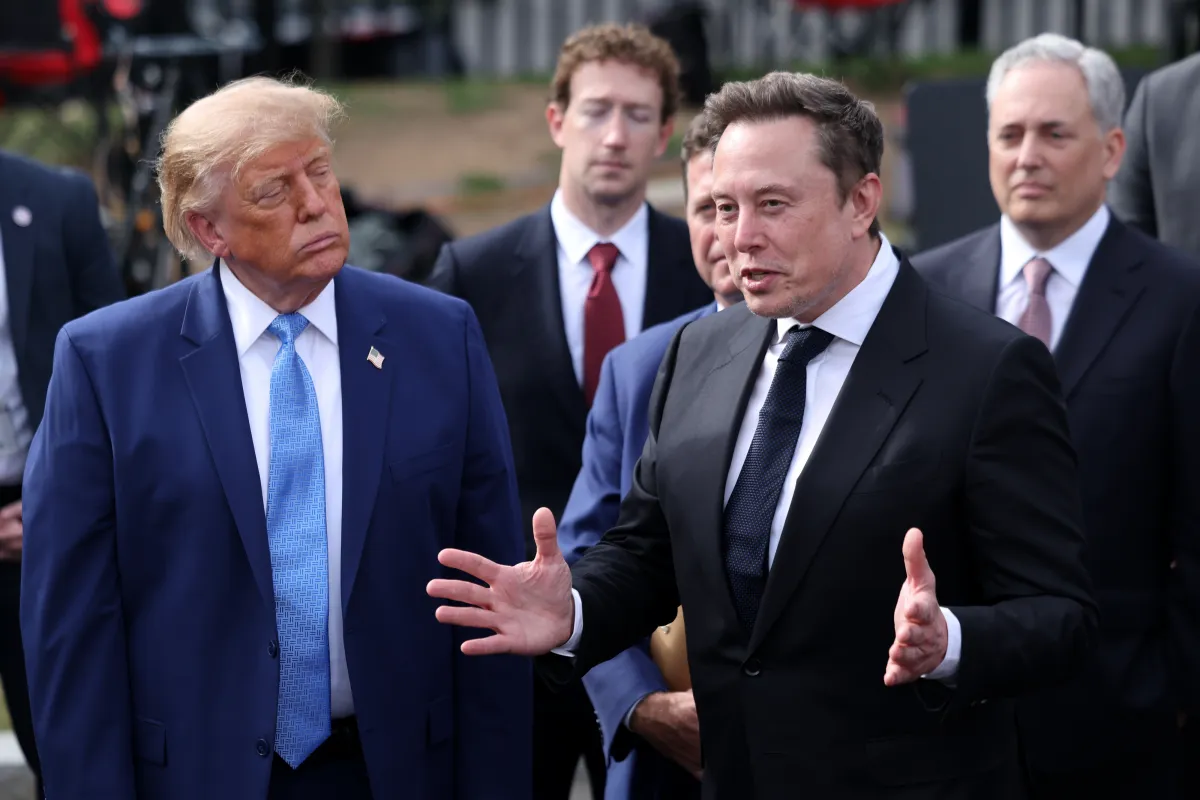
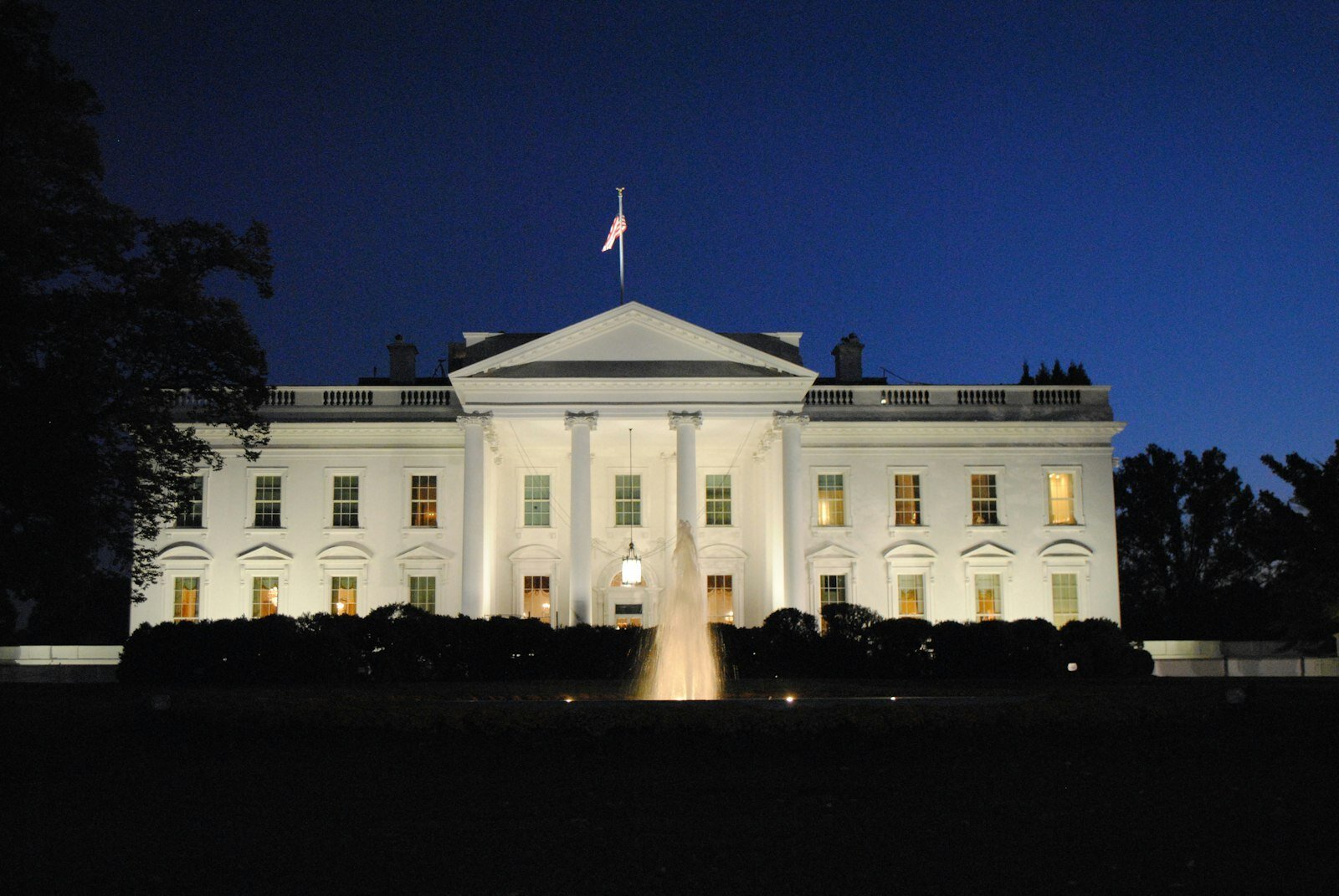
The White House this week brought some of the biggest names in technology into the same room and used the moment to elevate AI safety, political theater and the industry’s next branding battle. President Donald Trump hosted executives including Mark Zuckerberg, Jeff Bezos, Elon Musk and Anthropic CEO Dario Amodei as they signed a safety pledge and watched the administration recast AI in the language of “super intelligence,” a shift that underscores how fast the conversation around advanced systems is moving.
The gathering matters because it combined policy, public relations and business strategy at a moment when the AI market is splitting into two very different tracks: consumer-friendly products aimed at mass adoption and enterprise tools that still appear to generate most of the money. The week also offered a reminder that startup dealmaking, IPO hopes and product launches are being shaped by the same forces driving the White House conversation.
Why the White House gathering mattered
The event was more than a ceremonial photo opportunity. It placed the federal government at the center of a rapidly evolving debate over how powerful AI systems should be framed, governed and commercialized.
By bringing in leaders from companies competing for talent, market share and public trust, the White House signaled that AI policy is no longer a back-office issue for regulators. It is now a front-page political story, one that can influence public confidence, corporate messaging and the speed at which new products are released.
In practical terms, the meeting also highlighted a broader truth about the sector: the companies shaping the AI narrative are not only selling software. They are also selling reassurance, and in some cases a vision of inevitability.
What happened during the week?
In one of the week’s most notable developments, top technology executives signed an AI safety pledge that Trump described as “morally binding.” At the same time, the administration pushed a symbolic rebranding of AI itself as “super intelligence,” a phrase that reflects both the ambition and the anxiety surrounding systems that are increasingly capable of generating text, code, images and decision support at scale.
The move came alongside a broader media and industry backdrop in which major AI companies have been trying to soften their public image. Some are leaning into more approachable branding and more human-facing experiences, even as the underlying economics remain dominated by enterprise contracts, cloud spending and corporate deployments.
That tension is central to the current AI market. Consumer products may attract headlines and downloads, but business buyers are still carrying much of the financial load.
Who was in the room, and why does it matter?
The guest list included some of the most influential figures in the tech industry: Meta chief executive Mark Zuckerberg, Amazon founder Jeff Bezos, Tesla and xAI chief Elon Musk, and Anthropic co-founder and chief executive Dario Amodei.
The presence of those executives matters because each represents a different branch of the AI race. Meta has pushed hard into open consumer products and platform integration. Amazon is deeply tied to cloud infrastructure and enterprise AI demand. Musk is building AI through xAI while remaining a central political figure. Anthropic has positioned itself as one of the most safety-conscious players among frontier model developers.
When those names appear in the same government event, it is not just about optics. It is a rare display of how concentrated the AI ecosystem has become.
Trump said the pledge was “morally binding,” framing the agreement as a serious commitment rather than a symbolic gesture.
That language is important because it suggests the administration wants voluntary industry commitments to carry moral and political weight, even if they are not equivalent to formal regulation.
How is AI being rebranded as “super intelligence”?
AI is being rebranded as “super intelligence” through a mix of political language, product naming and public messaging that emphasizes power, usefulness and future potential. The phrase shifts attention from today’s chatbots and copilots to a more aspirational and potentially more daunting vision of what these systems may become.
The White House’s use of the term is notable because language shapes policy. “AI” can sound broad, technical and already familiar. “Super intelligence” sounds more urgent, more futuristic and more existential. That framing may help explain why safety pledges and public assurances are being elevated alongside product announcements.
It also reflects a reality inside the industry: companies are no longer just trying to prove that AI works. They are trying to define how much trust it deserves.
From AI tools to AI identities
Meta and OpenAI have both been exploring friendlier public-facing experiences for their products. That includes more conversational interfaces, more accessible branding and product personalities designed to lower the barrier to use.
The strategy is obvious. If consumers are uneasy about AI, companies hope that a softer user experience can make the technology feel less abstract and less threatening.
But this also creates a contradiction. The systems are becoming more powerful at the same time they are being made to feel more approachable. That combination is useful for adoption, but it raises questions about how much users understand about what the products can actually do.
Why consumer AI still struggles to make money
Consumer AI is generating excitement, but the economics remain challenging. Free or low-cost consumer experiences can build audience scale, yet that scale does not necessarily translate into strong revenue unless usage converts into subscriptions, ads or paid upgrades.
Enterprise AI, by contrast, is still the clearer commercial engine. Corporate buyers are more willing to pay for workflow automation, customer support, internal search, coding assistance and document processing. Those uses can justify higher contract values and more predictable recurring revenue.
That split is one of the defining themes of the current market. Consumer applications may shape culture, but enterprise deployments often shape the balance sheet.
Why enterprise continues to dominate the dollars
Enterprise customers are buying AI for productivity, not novelty. They want systems that reduce labor costs, speed up operations or improve accuracy in tightly defined workflows.
That makes the enterprise market less glamorous than the consumer one, but often more durable. Businesses can also absorb higher pricing if the software creates measurable savings or revenue gains.
For startups, that means the most promising path may not be the most visible one. A flashy consumer app can go viral, but a quietly adopted enterprise tool can build a stronger business.
What does this mean for startups and the IPO market?
The week’s AI activity arrived alongside a broader shift in startup financing and public-market expectations. TechCrunch’s Equity podcast framed the moment as one where AI moves, IPO conditions and startup dealmaking are all interacting at once.
That matters because the market for new listings remains sensitive to macro conditions, investor appetite and the perceived staying power of AI revenue. Startups in and around AI are being judged not just on technical ambition but on whether they can prove they have a real business model.
For founders, the message is mixed. The AI wave is still attracting capital, but investors are looking harder at margins, customer concentration, infrastructure costs and long-term defensibility.
How are startup deals changing?
Startup dealmaking has become more selective, with larger bets increasingly reserved for companies that can show either a technical edge or a clear enterprise path. The market is still willing to fund bold ideas, but it is less tolerant of vague promises.
That creates a higher bar for firms that once might have raised on product momentum alone. In the current environment, a startup needs either a strong distribution advantage, a deep technical moat or a credible route to recurring revenue.
AI startups also face a unique problem: the best features are often quickly copied or bundled into larger platforms. That makes speed important, but it also makes differentiation harder.
How much does politics shape AI branding now?
Politics shapes AI branding more than it used to because the technology has become part of a larger conversation about national competitiveness, labor, safety and regulation. When the White House hosts major executives and publicly reframes the category, it adds political legitimacy to certain narratives and pressure to others.
Companies want to appear innovative without appearing reckless. Regulators want reassurance that the sector can police itself. Politicians want to be seen as both pro-growth and protective of the public.
That mix creates an environment in which words matter. A pledge, a slogan or a product name can influence how a policy debate unfolds almost as much as a technical benchmark can.
Industry leaders signed onto a safety commitment while the administration elevated a new label for the technology, illustrating how closely policy and messaging are now intertwined.
Key figures and events at a glance
The following table summarizes the major people, actions and implications tied to the week’s AI developments.
| Person / Organization | Role in the story | Why it matters | Broader implication |
|---|---|---|---|
| White House | Hosted leading tech executives and promoted a new AI framing | Placed federal power at the center of the AI narrative | Policy and politics are now shaping the industry’s public language |
| Donald Trump | Described the AI safety pledge as “morally binding” | Gave voluntary commitments political weight | Signals an attempt to influence industry behavior without formal regulation |
| Mark Zuckerberg | Attended as Meta’s chief executive | Represents consumer AI and platform distribution | Shows how major platform companies want a seat at the policy table |
| Jeff Bezos | Attended as Amazon founder | Connects cloud infrastructure and enterprise AI | Highlights the commercial role of enterprise demand |
| Elon Musk | Attended as Tesla and xAI chief | Blends political influence with frontier AI ambition | Shows the overlap of tech, politics and public controversy |
| Dario Amodei | Attended as Anthropic CEO | Represents a safety-first AI company | Reflects the premium being placed on responsible development |
What comes next for AI companies?
The next phase is likely to be defined by three pressures: proving economic value, maintaining public trust and navigating a more politically charged environment. Companies that can do all three will have a significant edge.
For consumer AI products, the challenge will be to convert attention into revenue without alienating users. For enterprise AI vendors, the challenge will be to justify continued spending as customers get more selective and cost-sensitive.
At the same time, the safety conversation is unlikely to go away. The more capable the systems become, the more pressure there will be to explain how they are controlled, tested and deployed.
Where the market may be heading
Expect more emphasis on model governance, product transparency and enterprise contracting. Expect companies to keep refining their public personas, too, because trust is becoming part of the product.
Also expect the gap between what consumers see and what businesses pay for to remain wide. The future of AI may be dazzling on the surface, but for now the real money still appears to be in practical deployment.
Context: why this moment feels different
This week’s events show that AI is no longer being discussed only as a technological breakthrough. It is now a political symbol, a corporate race and an economic test all at once.
That is why the White House gathering resonated beyond the usual cycle of executive meetings and policy announcements. It captured a moment in which the language around AI is changing as fast as the products themselves.
Whether “super intelligence” becomes a durable label or just a short-lived political flourish, the underlying issue is clear: governments, companies and investors are all trying to define the future of a technology that is advancing faster than the public’s comfort level.
And for now, the most important story in AI may not be what the models can do next, but who gets to describe them first.
Timeline of the week’s major AI developments
| Timeframe | Event | Significance |
|---|---|---|
| Early week | White House hosts top tech CEOs | Shows federal interest in AI safety and leadership |
| During the meeting | Executives sign a safety pledge | Signals voluntary commitments from major AI players |
| Same week | Trump describes AI as “super intelligence” | Reframes the public conversation around the technology |
| Same period | Meta and OpenAI continue consumer-friendly positioning | Illustrates the push to make AI more approachable |
| Ongoing | Enterprise AI remains the strongest revenue source | Reinforces the market’s current business model |
For readers tracking the sector, the lesson is straightforward: AI is entering a phase where branding, policy and profitability are inseparable. The companies that understand that will likely shape the next chapter of the industry.
Frequently asked questions
What did the White House do this week on AI?
The White House hosted major tech CEOs, encouraged them to sign an AI safety pledge, and used the moment to present AI under a new “super intelligence” framing. The event linked policy, public messaging and industry influence in one highly visible setting.
Who attended the White House AI meeting?
Major figures including Mark Zuckerberg, Jeff Bezos, Elon Musk and Anthropic CEO Dario Amodei were among the attendees. Their presence mattered because each represents a different part of the AI ecosystem, from consumer platforms and cloud infrastructure to frontier model development.
Why is AI being called super intelligence?
AI is being called super intelligence to emphasize its growing capability and raise the stakes of the public debate. The phrase is more dramatic than AI and helps frame the technology as both powerful and potentially risky, which makes safety pledges and oversight more politically salient.
Are consumer AI products making money?
Consumer AI products are attracting attention, but the economics remain difficult. Many services are designed to build users first, while enterprise AI continues to generate the clearest revenue through paid business deployments, workflow automation and corporate contracts.
What does this mean for AI startups?
It means startups face stronger pressure to show real revenue, defensible technology and a clear customer base. Investors are still interested, but they are increasingly focused on whether AI companies can turn technical promise into durable business models.