Updated October 1, 2026 6:53 pm
In short
Chesky says Airbnb’s AI plans now extend to interoperable agents, broader in-app automation and a future AI operating system, not just a better chatbot or search UI.
- Airbnb has launched a new AI-powered search feature, but Brian Chesky says it is only an early version.
- Chesky argues chatbots are too limited for travel discovery, shopping and group planning.
- He wants Airbnb to support more collaborative, multiplayer AI and richer user controls.
- The CEO believes consumer AI will eventually need interoperable agents and possibly a new operating system.
- Voice will play a bigger role at Airbnb, with voice agents planned for rollout this fall.
Update — October 1, 2026 6:53 pm
Chesky also said Airbnb is thinking beyond its own app and toward agent-to-agent interactions, including with other companies’ tools. He said the company is exploring an interoperable future in which Airbnb’s agents can talk to outside agents, with standards like MCP helping those systems connect.
He went further, arguing that consumer AI still is not solved and that the industry needs something closer to a true AI operating system, not just apps layered onto iOS, macOS or Windows. In his view, the bigger race is to build the underlying software stack and richer developer tools that let agents and apps work together.
Chesky added that Airbnb itself could eventually have multiple agents across the product — for discovery, support and other services — and possibly a broader “macro” Airbnb agent later on.
Airbnb is moving deeper into AI, but CEO Brian Chesky says the company’s next-generation tools will not be built around a simple chatbot. Speaking after Airbnb’s fall product update on October 1, Chesky argued that consumer AI still lacks the right interface, the right infrastructure and, ultimately, the right operating system to make agents truly useful for travel and shopping.
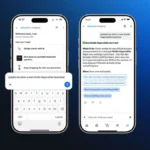
The comments came as Airbnb introduced a new AI-powered search experience, underscoring how cautiously the company is approaching artificial intelligence while also signaling that more changes are coming to the app. Chesky said the current version is only an early step, not the finished product, and that Airbnb is thinking about a future where AI supports browsing, planning, messaging, identity checks and voice — all without stripping away the discovery that makes travel appealing in the first place.
Airbnb’s AI search is only the beginning
Airbnb’s latest search update is meant to help travelers find options more quickly, but Chesky is already looking beyond it. He said the company sees the current interface as a starting point rather than a final design, and he does not believe a chatbot alone can support the full experience of booking a trip or exploring where to stay.
That matters because Airbnb’s business is not just about transactions. It is also about inspiration, comparison and group decision-making. Chesky’s view is that the best travel product should not reduce the experience to a series of generic prompts and answers.
In his telling, there is a real difference between wanting an assistant to book something quickly and wanting a platform that helps people browse, compare and dream. Airbnb, he argued, has to preserve both sides of that equation.
Why Chesky rejects a chatbot-only model
Chesky’s answer is simple: chatbots are too narrow for commerce. They tend to surface only a few options at a time, and users must keep asking follow-up questions before they reach a decision. That may work for a quick task, he said, but it is not a satisfying way to discover travel.
He also noted that travel planning is often a source of enjoyment in itself. People, he said, often derive more pleasure from anticipating a trip than from taking it. Removing too much of the browsing and inspiration layer would risk damaging the very thing that makes Airbnb distinctive.
Chesky said he has long believed chatbots are not the right interface for e-commerce and that the current generation of AI products is still far from the end state for travel and shopping.
That point is important because it frames Airbnb’s AI strategy as a design problem, not just a technology rollout. The company is not merely adding AI features; it is trying to figure out what kind of interface should exist between travelers and machines.
How will Airbnb make AI feel useful instead of generic?
Airbnb wants AI to feel specific, not flattened into a one-size-fits-all interface. Chesky said the company expects to land somewhere between a classic chatbot and a fully AI-generated screen, creating an experience that blends predictable design with more dynamic, generated elements.
That approach reflects a broader debate in consumer software: how much of an interface should be fixed, and how much should be generated on the fly by AI? Chesky believes the answer is a mix. Some features should remain deterministic and reliable, while others can adapt to the user’s intent.
He suggested that the industry is moving toward interfaces that are less static and more responsive to context. For Airbnb, that could mean AI helping with discovery in one moment, then shifting into booking help, messaging or support later in the process.
Multiplayer AI is a key design challenge
One of Chesky’s biggest criticisms of current chatbots is that they are built for one person. Airbnb, by contrast, is often used by couples, families and groups planning together. That makes collaboration a core requirement rather than a bonus.
Over the next several months, Chesky said Airbnb will explore what he called “multiplayer” AI — systems that several people can use at the same time while planning the same trip. The idea is to support a shared decision-making process rather than forcing one user to relay a chatbot’s suggestions to everyone else.
That distinction may seem subtle, but it goes to the heart of Airbnb’s product identity. A trip is often a shared project. The tool that helps plan it should be shared too.
- Supports group planning instead of one-user-only prompting
- Preserves browsing and discovery alongside automation
- Can shift between search, chat, booking and service
- Fits Airbnb’s social and collaborative use case
What does Airbnb mean by an agent-friendly app?
An agent-friendly app is one that can work smoothly with AI systems acting on behalf of users. Chesky said Airbnb wants to make its software easier for agents to access, but he also warned that the app cannot simply disappear behind a generic assistant layer.
He described a future in which an agent may help a user search for a trip, but Airbnb still needs robust controls for browsing listings, messaging hosts, verifying identity, comparing options and using maps. In other words, the platform has to remain rich enough to handle complex tasks even when an agent is involved.
Chesky said that if users want to stay inside Airbnb, the AI agent will either need to hand off to the app or operate through a stronger software development kit that can bring the app’s functionality into the agent environment. The goal is not to surrender the interface, but to extend it.
Why lead generation may matter as much as replacement
Some in Silicon Valley have worried that AI agents will cut platforms out of the customer relationship. Chesky offered a more pragmatic view. He said chatbots have already shown value as lead generators, which suggests they can drive demand even if they do not own the entire transaction.
That matters for Airbnb because the company does not necessarily need AI to replace its app. It needs AI to help more people discover and complete bookings, while keeping the platform at the center of the experience.
In that sense, Airbnb’s AI strategy is less about surrender and more about redesign. The company wants to be visible in agent-driven workflows rather than invisible to them.
Why Chesky thinks apps are not going away yet
Chesky’s larger argument is that the mobile app era is not ending anytime soon. He does not believe every app will be reduced to a universal, plain-vanilla interface layered on top of AI. Instead, he thinks different products need different designs because they do different jobs.
He pointed to the fact that Airbnb, DoorDash, Shopify and Amazon all look and behave differently on a phone for a reason. Their interfaces reflect distinct use cases. A travel app, he argued, should not be forced into the same mold as a retail app or a food-delivery app.
That view runs counter to a popular Silicon Valley narrative that software will eventually become a single conversational layer. Chesky’s position is that utility matters too much for that to be the whole story.
Chesky argued that apps should remain adaptive to their function, and that any future in which AI truly replaces traditional apps would likely require new platform-level support from Apple, Google or another major player.
He suggested that if the industry is going to move from apps to agents in a meaningful way, the change will probably need to come from the platform layer itself. Without that, he said, companies will simply end up with apps that contain AI features, rather than AI-native systems that can interoperate more freely.
How does Airbnb see agent-to-agent communication?
Airbnb expects agents to talk not only to users, but also to other agents. Chesky believes that is where the biggest long-term shift may happen. Instead of each app being locked into its own silo, agents could act like software proxies that negotiate and exchange information across services.
He described a future in which Airbnb may have multiple agents inside the product — one for search, one for customer service and eventually a broader Airbnb agent that can coordinate more tasks. That broader agent could potentially connect with systems in other apps using MCP, a standard designed to let AI agents link up with software tools.
Chesky’s theory is that apps have historically needed business deals to interoperate. Agents, by contrast, may create a more natural bridge. He referred to them as “apps with faces,” a phrase that captures his view that AI could make software more conversational without stripping away the functional layers underneath.
| Topic | Chesky’s view | Why it matters |
|---|---|---|
| Chatbots | Useful, but not enough for browsing or shopping | They are too linear for complex travel decisions |
| Airbnb search | Early version, not the final design | Signals more interface changes ahead |
| Agents | Should be interoperable and app-aware | Could drive bookings and lead generation |
| Voice | Will become more important over time | Could reshape search and customer service |
| Platform future | Likely depends on Apple, Google or another OS-level shift | AI adoption may be constrained without platform change |
What is missing from consumer AI today?
Chesky’s bluntest assessment is that consumer AI is still not solved. He said he has personally used AI agents such as Muse and Instinct with Airbnb, but the results are not yet strong enough to deliver a polished consumer experience.
Even hotel bookings, he said, do not work especially well through these systems, and Airbnb listings can perform worse. That is not a small critique. It suggests that the promise of agentic commerce is still ahead of the tools currently available to most users.
His conclusion is that the technology stack itself needs to improve before consumer AI can become genuinely useful. The problem is not just the prompt. It is the substrate beneath it.
What Chesky means by a missing operating system
Chesky’s strongest claim is that AI needs its own operating system, not merely another app layer on existing platforms. He said people are currently building AI tools for iOS, macOS and Windows, but those are not the same as an AI-native operating system.
In his view, the ideal system would operate closer to the kernel level, with agents and services able to interact more deeply and consistently. Right now, he said, many companies are competing to become the main “quarterback” — the primary agent users rely on — but they are doing so without the foundational tools needed for a true platform shift.
He used OpenAI’s early app-store effort as an example of what he sees as a missing piece. Without a full SDK and deeper operating-system support, he argued, the ecosystem cannot fully function as a durable platform.
Chesky said that if AI developers want something comparable to the iPhone’s app ecosystem, they need more than a storefront. They need the kind of underlying software infrastructure that lets third-party functionality actually live inside the system.
How voice fits into Airbnb’s next phase
Voice is becoming a more important interface across consumer AI, and Chesky believes it will matter for Airbnb too. He said people will likely speak to computers more often than they type in the future, especially for tasks like search and support.
Airbnb plans to roll out voice agents this fall to help with those use cases. The company sees voice as a natural fit for faster interaction, especially when a user wants help navigating options without tapping through multiple screens.
Still, Chesky does not present voice as a replacement for everything else. It is one part of a broader hybrid model that could include browsing, text, visual comparison and automated support.
For Airbnb, the challenge is not choosing one interface and discarding the rest. It is building a system flexible enough to let users move between them.
Why Chesky says AI is already changing how he works
Beyond product design, Chesky said AI is helping Airbnb ship features faster. He also said it has changed how he personally manages information as CEO.
Where he once relied on meetings to gather updates, he now often asks AI directly. That, he said, reduces the number of communication layers between him and the information he needs. It is a small but telling example of how executives are already using AI to compress routine work.
That operational benefit may be one reason Airbnb remains committed to the technology even while Chesky argues that consumer AI is not fully mature. The tools are imperfect, but they are already saving time.
At a company level, that can translate into quicker product iteration. At a personal level, it can mean fewer meetings and faster answers. Chesky sees both as signs that AI has practical value, even if the larger consumer vision is still years away.
What Airbnb’s AI strategy reveals about the wider market
Airbnb’s approach reflects a larger truth about the AI industry: the hardest problems are often not model quality, but product design and integration. Consumers do not just want answers. They want interfaces that understand context, support collaboration and preserve the richness of the tasks they are trying to complete.
That is especially true in travel, where decisions are often emotional, visual and shared. A system that is too stripped down may be efficient, but it can also feel sterile. A system that is too dynamic may become confusing. Airbnb is trying to navigate that tension.
Chesky’s comments also underscore how unresolved the agent era remains. Startups and big platforms alike are building assistants, but the infrastructure for making them interoperable, reliable and useful at scale is still incomplete.
For now, Airbnb is taking a measured approach: improve search, test voice, build more controls, explore shared planning and prepare for agents without assuming that the old app model has already collapsed.
Timeline: Airbnb’s AI push and Chesky’s view of the future
The company’s current work can be understood as a series of incremental steps rather than a single launch. The following timeline summarizes the key moments and ideas discussed by Chesky.
| Period | Development | Significance |
|---|---|---|
| Past year | Chesky argues chatbots are not the right interface for travel discovery | Sets the philosophical foundation for Airbnb’s AI strategy |
| Fall update, Oct. 1 | Airbnb launches new AI-powered search | Marks the company’s latest visible AI product change |
| Next 3-6 months | Airbnb explores multiplayer AI and richer controls | Focuses on collaborative planning and better usability |
| This fall | Airbnb plans voice-agent rollout | Adds spoken interaction to search and support |
| Long term | Chesky envisions interoperable agents and a possible AI operating system | Points to a platform-level shift beyond today’s apps |
The bottom line
Chesky’s message is that AI in consumer products is still in its early stages, especially in travel. Airbnb is embracing the technology, but it is doing so with a clear belief that chatbots alone are too limited, voice will grow in importance and the future may depend on richer, interoperable agents rather than a single conversational box.
In his view, the winners will not be the companies that merely bolt AI onto existing apps. They will be the ones that redesign the interface, the controls and the underlying system so AI can actually work the way consumers need it to.
Frequently asked questions
What did Brian Chesky say about AI agents and operating systems?
Brian Chesky said AI agents will not reach their full potential without a deeper software layer, including stronger interoperability and what he describes as an AI-specific operating system. He believes current apps and chatbots are not enough to support the future of consumer AI.
Why does Chesky think chatbots are not good for Airbnb?
Chesky says chatbots are too limited for travel discovery because they show only a few options at a time and require many back-and-forth prompts. He argues Airbnb needs an interface that supports browsing, comparison and inspiration, not just quick answers.
Is Airbnb replacing its app with AI?
No, Airbnb is not replacing its app with AI. Chesky says the company wants AI to enhance the app with better search, voice and agent support while keeping rich features such as maps, identity verification, messaging and browsing.
How will voice be used in Airbnb’s AI strategy?
Voice will be used for search and customer service, according to Chesky. Airbnb plans to roll out voice agents this fall, and the company sees spoken interaction as an increasingly important part of how users will communicate with software.
What does Chesky mean by ‘multiplayer’ AI?
By ‘multiplayer’ AI, Chesky means AI that can be used by more than one person at the same time. He thinks this matters for Airbnb because trips are often planned by couples, families or groups, and current chatbots are built mainly for single users.