In short
OpenAI introduced new ChatGPT workplace tools at Dev Day, including a shared workspace, a document editor and collaborative slides. The launch pushes ChatGPT deeper into office software and directly into competition with Microsoft and Google.
- OpenAI introduced Space, Pages and collaborative slides at its Dev Day conference.
- The new features bring ChatGPT into direct competition with Microsoft 365 and Google Docs.
- Space is a shared workspace, Pages is a document editor and collaborative slides are AI-built presentations.
- The launch highlights how AI firms are moving from chat interfaces into full productivity platforms.
OpenAI has unveiled a suite of new ChatGPT tools that moves the company far deeper into office software territory, setting up a more direct challenge to Microsoft and Google in the workplace productivity market. Announced at the company’s Dev Day conference in San Francisco on Tuesday, the new features include a shared workspace called Space, a document editor named Pages, and collaborative slides that can be created and edited through ChatGPT.
The launch matters because it shows OpenAI no longer wants ChatGPT to function only as a chatbot or coding assistant. The company is now building a broader work platform where people and AI agents can collaborate on documents, presentations and team projects inside the same environment.
What OpenAI announced at Dev Day
OpenAI used its annual developer event to introduce a set of tools that look increasingly like an AI-native office suite. The company framed the releases as a new way for users to organize work, produce content and coordinate with AI agents without leaving ChatGPT.
Space: a shared workspace inside ChatGPT
Space is OpenAI’s new shared environment for teams. It is designed to bring files, pages and agent-driven work into one place so coworkers can collaborate with both the chatbot and OpenAI’s new agent personas, called Dots.
According to the company, Space is meant to function a bit like a cloud drive, but with a more active and interactive layer of AI assistance built in. Users can assign instructions to individual pages, turning them into living workspaces that can be updated automatically by a chatbot or agent.
Sam Altman described Space as a place where pages and files sit together in a drive-like structure, but said the experience is different because the spaces are meant to feel responsive and active rather than static.
Pages: OpenAI’s document editor
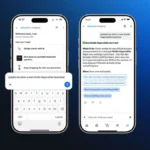
Pages is the company’s new document tool and appears to be OpenAI’s clearest answer yet to Google Docs and Microsoft Word. OpenAI says the product is built for human and agent collaboration, allowing users to write, research, generate charts, create images and visualize information in one document.
In practical terms, that means a worker could draft a report, ask ChatGPT to gather background, generate a chart and format the final output without switching apps. OpenAI is betting that many office tasks will increasingly be done in a conversation-first interface rather than a traditional document editor.
Collaborative slides: AI-generated presentations
OpenAI also introduced what it calls collaborative slides, a presentation tool that can be generated simply by describing what you want inside ChatGPT. Once a deck exists, multiple people and AI agents can work in it together, add comments and make edits.
That puts OpenAI into even more direct competition with PowerPoint, another core Microsoft product. The company is clearly aiming at one of the most familiar workflows in business software: creating slides from notes, research and rough ideas.
Why the launch is a direct challenge to Microsoft
The new releases mark a notable shift in the relationship between OpenAI and Microsoft. The two companies have been close partners since OpenAI’s early growth, with Microsoft supplying major cloud infrastructure and integrating OpenAI’s models into its own products. But the latest product direction suggests the partnership is now running alongside a competitive overlap.
Microsoft’s bread-and-butter business has long been workplace software. By adding documents, shared workspaces and slide creation to ChatGPT, OpenAI is now reaching into the same category of tools that help define Microsoft 365.
This is not the first sign of tension in the broader productivity software landscape. Over the past year, companies across the sector have raced to add generative AI features to their own products, trying to prevent ChatGPT from becoming the default interface for knowledge work. Microsoft, Salesforce and others have all been pushing new AI capabilities in response to the changing market.
How the rivalry is evolving
The competitive dynamic is becoming circular. OpenAI is borrowing the familiar structure of office software, while Microsoft and its peers are trying to make their tools feel more like AI assistants. In effect, each side is moving toward the other.
That convergence has strategic implications:
- ChatGPT becomes more useful for day-to-day office tasks.
- Microsoft must defend its core productivity franchise against an AI-native workflow.
- Enterprises may be forced to choose how much of their work should live inside a chatbot-first interface.
- Developers gain a new platform for building tools around team collaboration and document automation.
How does Space change the way teams use ChatGPT?
Space changes ChatGPT from a one-on-one assistant into a place where teams can coordinate work together. Instead of relying only on individual chats, users can organize files and pages into a shared area, then direct AI agents to act on those materials.
That matters because most office work is collaborative. Reports are reviewed, decks are edited, notes are checked, and tasks are handed from one person to another. OpenAI is trying to turn ChatGPT into the layer that coordinates those handoffs.
In that model, a team member might ask an agent to monitor a channel, pull in updates and revise a page based on the latest information. OpenAI’s pitch is that the workspace becomes something closer to an active project hub than a static repository.
What does this mean for document work?
Pages is designed to collapse several steps of document creation into one place. Instead of drafting in one app, researching in another and then moving charts or images into a final file, users can ask ChatGPT to help throughout the process.
That could be especially attractive for teams that already use ChatGPT for summaries, brainstorming, editing and research. If the document itself becomes AI-aware, OpenAI gains a powerful foothold in the daily workflow of business users.
Potential uses for Pages
- Drafting memos and reports
- Researching background material
- Generating charts and visuals
- Building internal planning documents
- Preparing customer-facing summaries
The key question for adoption will be whether Pages is good enough to replace established office tools for serious work, or whether users will treat it as an AI-enhanced companion. OpenAI appears to be aiming for both.
Table: OpenAI’s new workplace tools at a glance
| Feature | What it does | Closest familiar comparison | Why it matters |
|---|---|---|---|
| Space | Shared workspace for files, pages, coworkers and agents | Cloud drive plus team hub | Moves ChatGPT into collaborative project management |
| Pages | Document editor for writing, research, charts and images | Google Docs / Microsoft Word | Brings core document workflows into ChatGPT |
| Collaborative slides | AI-generated presentations with comments and edits | Microsoft PowerPoint | Targets a central business productivity category |
| Dots | Agent personas that can take actions on behalf of users | Digital assistant / task bot | Turns ChatGPT from responder into workflow participant |
Why now?
OpenAI is launching these features at a moment when the software industry is reorganizing around generative AI. The race is no longer just about model quality. It is about where users spend their time, how work gets initiated and which company controls the interface that wraps around everyday tasks.
For OpenAI, the logic is straightforward. If ChatGPT is where people already go to brainstorm, summarize, write and analyze, then the company can extend that relationship into the actual tools used to produce work output. That creates a stronger product moat and potentially deeper business adoption.
For Microsoft and its peers, the challenge is equally clear. Productivity software is one of the most profitable and sticky categories in enterprise technology. If users begin to associate that workflow with ChatGPT rather than Word, Docs or PowerPoint, the competitive balance could shift over time.
How Microsoft and others may respond
Microsoft is unlikely to stand still. The company has already integrated OpenAI technology into many products and has spent the past year broadening its own AI features. But OpenAI’s move creates pressure to make Microsoft’s apps feel more indispensable, more automated and more deeply embedded in the workday.
Other software vendors face a similar choice. They can either build more AI-native experiences into their own products or risk becoming the background layer beneath a ChatGPT-centered workflow.
Salesforce has also been among the companies pushing new AI offerings, reflecting a larger industry pattern: the major software players are all trying to look more like the next generation of AI assistants while protecting the value of their existing products.
What this means for users and enterprises
For individual users, OpenAI’s new tools could simplify everyday office work by keeping writing, research, collaboration and presentation building in one interface. For companies, the appeal could be faster drafting, easier brainstorming and less friction between tasks.
Still, enterprises will likely ask familiar questions before adopting the tools widely:
- How secure are files and team data inside ChatGPT?
- How well do agents handle sensitive or repeated workflows?
- Can the tools match the reliability of existing office software?
- Will employees use the new features or continue working in legacy apps?
Those concerns matter because workplace software is not just about convenience. It is also about compliance, permissions, version history, collaboration rules and long-term storage of business records. OpenAI will need to prove that its office-style tools are not merely impressive demos but dependable enterprise products.
Timeline of the shift toward AI workplace software
| Period | Development | Significance |
|---|---|---|
| OpenAI’s early partnership with Microsoft | Microsoft backed OpenAI and integrated its models into its own ecosystem | Established a close but increasingly overlapping relationship |
| Last year | Major software firms accelerated AI product launches | Triggered an industry-wide race to adapt to generative AI |
| Tuesday’s Dev Day | OpenAI introduced Space, Pages and collaborative slides | Showed OpenAI moving directly into office productivity |
| Looking ahead | Microsoft and others are expected to keep expanding AI features | Sets up a long-term battle for the workplace interface |
OpenAI’s broader strategy is becoming clearer
The new workplace tools fit a larger pattern: OpenAI is turning ChatGPT into an operating layer for daily digital work. That includes not just chatting with a model, but also generating content, coordinating tasks and producing deliverables.
That strategy has multiple benefits. It strengthens user retention, increases the value of the ChatGPT subscription experience, and gives OpenAI a path into enterprise software markets that are traditionally difficult to enter. It also broadens the company’s relevance beyond model APIs and consumer chat.
In other words, OpenAI is no longer just selling intelligence as an abstract capability. It is trying to sell a place where work itself happens.
The big picture
OpenAI’s latest product wave is one of the clearest signs yet that the AI industry is entering a new phase. The first phase was about proving the technology could generate useful text and code. The next phase is about embedding that capability into the tools people already use all day.
By launching Space, Pages and collaborative slides, OpenAI is making a deliberate push into the office software market that has long been dominated by Microsoft and Google. The move deepens the company’s competitive posture while also demonstrating how quickly the borders between AI assistants and workplace applications are disappearing.
For users, that may mean fewer app switches and more fluent work. For Microsoft, it means one of its closest partners is now aiming at the heart of its business. And for the rest of the software industry, it is another reminder that the future of productivity software may be built around the chatbot, not beside it.
Frequently asked questions
What did OpenAI announce at Dev Day?
OpenAI announced a set of new workplace tools for ChatGPT, including Space for team collaboration, Pages for document creation and collaborative slides for presentations. The features are designed to make ChatGPT useful as a broader office productivity platform rather than just a chatbot.
How is OpenAI competing with Microsoft?
OpenAI is competing with Microsoft by adding features that resemble Word, PowerPoint and shared workspaces inside ChatGPT. That puts the company in direct competition with Microsoft’s core productivity products, even though Microsoft has been one of OpenAI’s closest partners.
What is Pages in ChatGPT?
Pages is OpenAI’s new document editor inside ChatGPT. It is built for human and agent collaboration and can be used to write, research, create charts, generate images and visualize information within a single document workflow.
Why does this launch matter for businesses?
The launch matters because it could change how teams create documents, presentations and shared work. If OpenAI’s tools prove reliable and secure, businesses may begin using ChatGPT as a central workspace for collaboration and content production.