In short
Atlassian CEO Mike Cannon-Brookes says AI will change enterprise software by speeding up workflows and improving process visibility, not by eliminating tools like Jira and Trello. He argues the so-called SaaSpocalypse is overstated because businesses still need human judgment and coordination.
- Atlassian says enterprise AI will augment workflow software rather than replace it.
- Mike Cannon-Brookes argues most businesses are too complex for a model to run end to end.
- The company sees tools like Jira as a human reference layer for understanding work.
- Atlassian has already reshaped its workforce and product strategy around AI.
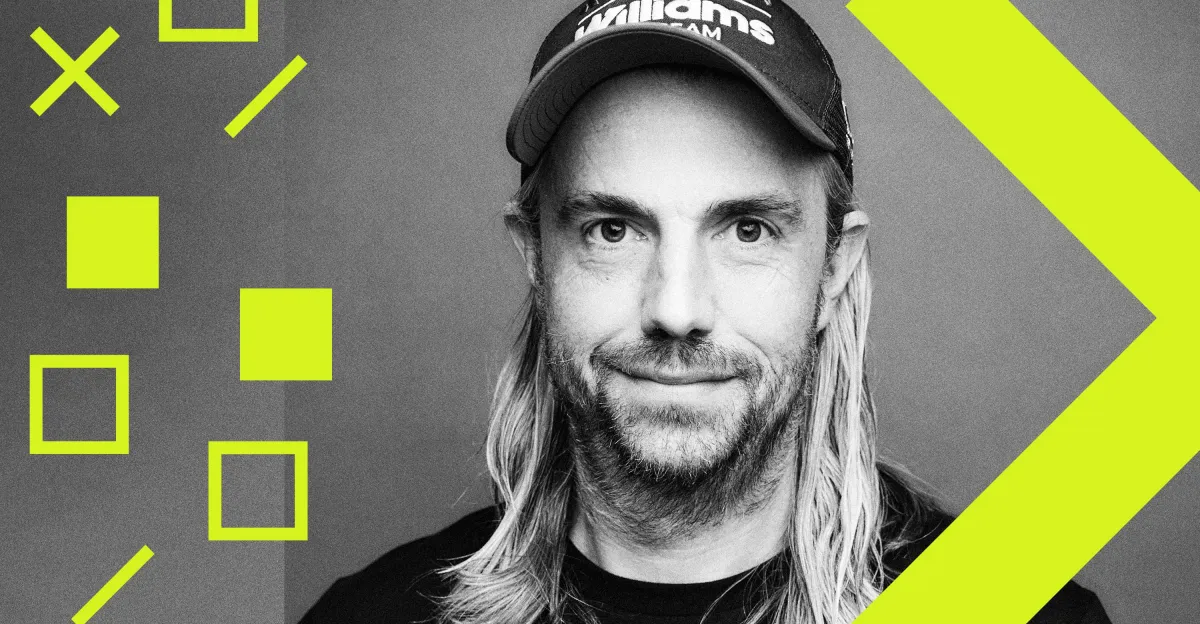
Atlassian co-founder and CEO Mike Cannon-Brookes says artificial intelligence is not about to make enterprise software disappear. In a wide-ranging conversation recorded from Australia, he argued that AI will accelerate how companies use tools like Jira and Trello, but it will not eliminate the need for systems that help businesses see, coordinate and govern work at scale.
The comments matter because Atlassian sits near the center of modern knowledge work: if AI changes how companies organize projects, approvals and internal processes, it could reshape one of the biggest categories in software. Cannon-Brookes pushed back on the idea of a coming “SaaSpocalypse,” saying AI is more likely to change the job of software platforms than destroy them.
His remarks also arrive as Atlassian itself is changing. The company has recently cut staff, rethought its skills mix, and pushed deeper into AI-powered products such as Rovo, while continuing to sell the collaboration tools that millions of teams rely on every day.
Why Atlassian sees AI as a force multiplier, not a replacement
Atlassian’s view is that AI will sit inside existing work systems rather than sweep them away. Cannon-Brookes described the company’s core role as helping organizations coordinate the flow of work across teams, functions and business units.
In his framing, Jira is not where the work happens. It is the reference layer that lets people understand what is being worked on, by whom, at what stage and with what priority. That legibility, he said, becomes even more valuable as companies add AI to their operations.
Instead of replacing workflow software, AI can handle pieces of a process, reduce manual review and improve speed and consistency. But businesses will still need systems that show the whole picture, track exceptions and provide a human-readable view of what is happening.
Atlassian’s chief executive argued that AI is likely to automate parts of business processes, but not remove the need for human judgment, oversight and coordination.
What Atlassian actually does today
Atlassian is best known for products such as Jira and Trello, but Cannon-Brookes said the company should be understood as a broader platform for managing work. Its tools help software teams, operations groups, finance departments and service organizations collaborate around shared information and deadlines.
He said the company’s products are different expressions of a single platform. That structure matters because it shapes how Atlassian builds software and how it organizes itself internally. Rather than making isolated point solutions, Atlassian aims to connect multiple layers of company activity in one system.
That includes everything from tracking development tasks to managing strategy, operations and service workflows. In an AI-heavy future, Atlassian believes those systems become more important, not less, because businesses need a reliable way to see how work is moving across the organization.
Atlassian in one glance
| Topic | Details |
|---|---|
| Company | Atlassian |
| CEO | Mike Cannon-Brookes |
| Best-known products | Jira, Trello |
| Workforce | About 12,000 to 13,000 employees worldwide |
| Work model | Globally distributed, with a strong remote-first orientation |
| AI strategy | Embed AI into workflows and increase process speed, quality and reliability |
How does Atlassian think AI changes enterprise workflows?
Atlassian thinks AI will automate narrow steps inside larger business processes, not erase those processes entirely. Cannon-Brookes repeatedly returned to the idea that most enterprises are made up of many interlocking rules, exceptions and human decisions.
He gave the example of a sales deal approval process. AI can often handle the standard case quickly, such as reviewing a simple payment term request and determining whether it fits policy. But edge cases still require people, especially when a request is unusual, high-risk or commercially sensitive.
That creates a hybrid future. Software and AI can reduce the time spent on routine work, while humans stay in the loop for judgment calls, escalation and exception handling. The result, Atlassian argues, is faster flow, higher quality output and better visibility into what the business is doing.
Where AI is already useful inside companies
- Standardizing routine approvals and reviews
- Summarizing documents and internal information
- Routing requests to the right person or team
- Speeding up ticket handling and workflow triage
- Helping managers understand volume, bottlenecks and exceptions
Why the “SaaSpocalypse” argument is overstated
Some AI enthusiasts argue that frontier models will eventually absorb enough software capability to replace much of the SaaS industry. Under that theory, companies would simply ask an AI system to run the business, and the old layer of enterprise apps would become unnecessary.
Cannon-Brookes rejected that premise. His core argument is that most companies are too complex, too regulated and too dependent on human judgment for a single model to manage everything cleanly. He said that even if models become dramatically more capable over the next four or five years, the average enterprise will still have a large amount of work that needs to be coordinated, tracked and audited.
He also argued that technological change tends to expand what businesses can do rather than shrink the need for software. As companies become more efficient, the bar for competition rises. That means more work often gets created, not less.
How Atlassian compares AI to earlier technology shifts
Atlassian’s CEO likened the current moment to earlier waves of digital transformation. Spreadsheets, the internet, e-commerce and mobile banking all changed how companies and consumers behave, but they did not remove the need for institutions, services or coordination.
His banking example was particularly revealing. Many people assumed branch networks would vanish as mobile apps took over everyday transactions. Instead, branches adapted. They now do different work than they did 20 years ago, with more emphasis on service, advice and complex needs than basic cash handling or transfers.
That same pattern, he suggested, is likely to play out in enterprise software. AI will change what workflows are for, but businesses will still need tools that help them understand and direct those workflows.
What is Rovo and why does it matter?
Rovo is Atlassian’s newer AI-facing product, and it represents how the company wants to package the next generation of work tools. While the conversation did not dive into a product demo, the broader message was clear: Atlassian wants AI to feel native to its platform rather than external to it.
That matters because the challenge in enterprise AI is not just answering questions. It is connecting answers to actual work: tickets, documents, approvals, service requests, project plans and strategy maps. Atlassian’s bet is that the company can make AI more useful by anchoring it in the systems where work already lives.
In that model, AI becomes a layer that helps people move faster across processes rather than a standalone chatbot that sits outside the business. That distinction is central to Atlassian’s strategy.
How big is Atlassian now, and how is it organized?
Atlassian employs roughly 12,000 to 13,000 people around the world and continues to operate with a globally distributed structure. Cannon-Brookes said the company remains committed to its “Team Anywhere” approach, which allows employees to work from the office or remotely.
He said about 60% of staff come into an office at least three days a week, while around 25% do not go into an office at all during a typical week. The company’s distributed culture dates back to its origins in Australia and San Francisco, long before video calls and modern remote collaboration became standard.
That organizational model also fits Atlassian’s product philosophy: if software is meant to help teams coordinate across time zones, functions and locations, the company itself has to live that reality.
Atlassian’s workplace model, by the numbers
| Measure | Approximate figure |
|---|---|
| Total headcount | 12,000-13,000 |
| Employees in office 3+ days per week | About 60% |
| Employees who do not go into an office weekly | About 25% |
| Work model | Team Anywhere |
Why Atlassian cut jobs earlier this year
The company has not been immune to the industry-wide pressure to adjust headcount as AI changes product road maps and management expectations. Cannon-Brookes said Atlassian recently made layoffs because it needed a different mix of skills.
That phrasing is notable. Rather than portraying the cuts as purely a cost exercise, he framed them as a shift in capability requirements. In other words, Atlassian is trying to line up its workforce with a future where AI is embedded more deeply into products and operations.
For investors and employees alike, the implication is that AI is changing not only what software does, but also what kinds of people software companies need. The balance between engineering, product, operations, support and AI-specific expertise is shifting.
What AI can’t do, according to Atlassian’s CEO
Cannon-Brookes was unusually direct about the limits of automation. His argument is not that AI is weak; it is that businesses are messy. Legal requirements, local regulations, customer differences, internal politics and uneven data all make full automation difficult.
He said that if an AI system could truly run an entire business end to end, that would imply a very simple company. Most enterprises are not simple. They are composed of overlapping processes, human exceptions and global operational complexity.
That view also explains why he pushed back on the idea that frontier models will quickly make human coordination tools obsolete. The more AI is used, the more important it may become to know what is happening, where decisions are made and who is accountable.
How does Atlassian’s view challenge other AI leaders?
Atlassian’s position is not universal in Silicon Valley. Some executives argue that AI will dramatically compress knowledge work, making many current software layers less necessary. Others believe software agents will sit on top of existing systems and perform tasks that humans currently do manually.
Cannon-Brookes is closer to the second camp, but with a stronger emphasis on business process visibility. He does not deny that AI will be transformational. He simply believes its transformation will come through higher throughput, better quality and more sophisticated workflows, not the disappearance of enterprise platforms.
That puts Atlassian in an interesting position. It must prove that its core products remain essential while also convincing customers that AI features are not a distraction from the real value of the platform. So far, its answer is to make AI part of the workflow itself.
Timeline: how Atlassian’s AI story is unfolding
| Period | Development | Why it matters |
|---|---|---|
| Early years | Atlassian grows around Jira and Trello | Establishes the company as a core enterprise collaboration platform |
| Remote-work era | Team Anywhere becomes part of the company identity | Reinforces Atlassian’s distributed operating model |
| Recent period | AI products such as Rovo move to the forefront | Shows how the company is adapting its platform to the AI era |
| Earlier this year | Layoffs reflect a need for a different skill mix | Signals restructuring around AI and changing product priorities |
| Now | Cannon-Brookes argues AI will enhance, not replace, enterprise software | Defines Atlassian’s public stance on the future of SaaS |
Why this debate matters beyond Atlassian
The stakes go well beyond one company’s product line. Atlassian is a proxy for a large part of the enterprise software market, especially tools that sit between people and the work they need to complete. If AI changes how those systems are built, adopted or priced, the effect could ripple across the software industry.
The debate also touches a larger question about the future of white-collar work. If AI mainly handles routine steps while humans focus on judgment, coordination and exceptions, then software companies that help manage those processes may become more central. If, on the other hand, AI systems grow to handle entire workflows independently, the software stack could be radically simplified.
Cannon-Brookes is betting on the first outcome. His company’s strategy, leadership changes and product direction all suggest Atlassian expects AI to make work faster and more legible, not invisible.
What happens next?
For now, Atlassian appears determined to keep doing what it has always done: help organizations understand and coordinate work, while layering AI into the process. That is a pragmatic bet in an industry that often swings between hype and skepticism.
The company’s challenge is proving that AI can enhance software businesses without hollowing them out. If it succeeds, Atlassian may become one of the clearest examples of how enterprise software survives the AI transition by becoming the system that helps humans and agents work together.
Frequently asked questions
What did Atlassian CEO Mike Cannon-Brookes say about AI?
Atlassian CEO Mike Cannon-Brookes said AI will speed up business processes, improve consistency and help teams work faster, but it will not eliminate the need for enterprise software. He argued that human judgment, oversight and workflow visibility will still be essential.
What is the SaaSpocalypse?
The SaaSpocalypse is a theory that AI will eventually replace much of the SaaS industry by building or running software tools directly. Cannon-Brookes said that idea overstates what AI can do in complex businesses, where rules, exceptions and accountability still matter.
How is Atlassian using AI?
Atlassian is weaving AI into its platform and promoting products such as Rovo. The company’s aim is to use AI inside workflows for summarization, routing, review and exception handling, while keeping Jira, Trello and other tools as the core system of record.
How many people work at Atlassian?
Atlassian has about 12,000 to 13,000 employees worldwide. The company operates with a distributed model called Team Anywhere, and Cannon-Brookes said about 60% of staff are in offices three days a week or more.
Why does Atlassian think enterprise software still matters in an AI era?
Atlassian believes enterprise software still matters because businesses need a clear way to track work, handle exceptions and understand what is happening across teams. AI can automate parts of a process, but it does not remove the need for coordination and accountability.