In short
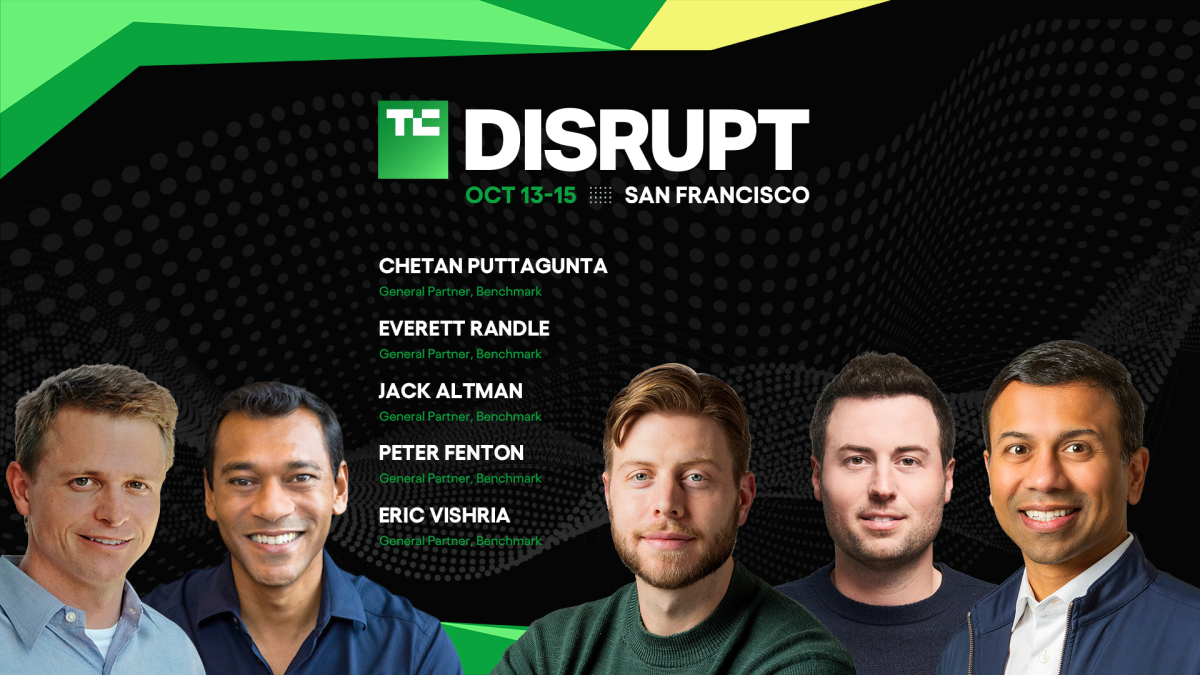
TechCrunch has announced five more venture capitalists who will judge Startup Battlefield 200 at Disrupt 2026 in San Francisco. The expanded panel underscores how the competition will test founders on execution, market opportunity and defensibility in front of more than 10,000 attendees.
- TechCrunch added five more investors to the Startup Battlefield 200 judging panel for Disrupt 2026.
- The competition runs October 13-15 at Moscone West in San Francisco.
- Judges come from firms focused on AI, enterprise software, healthcare, industrial tech and growth investing.
- Founders will have six minutes to pitch before facing detailed questions on execution and market fit.
- Tickets and exhibit opportunities have time-sensitive deadlines, including a price increase on September 25.
TechCrunch has added five more venture capitalists to the judging panel for Startup Battlefield 200 at Disrupt 2026, sharpening the scrutiny that founders will face onstage in San Francisco this October. The expanded lineup matters because these judges will help decide which early-stage companies move closer to the $100,000 prize and, more importantly, will put the next generation of startup ideas through the same kinds of questions real investors ask in the market.
The competition will run from October 13 to 15 at Moscone West during TechCrunch Disrupt 2026, where hand-picked founders will have just six minutes to pitch before facing a round of probing questions on execution, market size, timing and defensibility. TechCrunch says the event will bring together more than 10,000 tech leaders, investors and founders, making Startup Battlefield one of the conference’s biggest draws and one of the clearest windows into how venture capital evaluates early-stage companies.
The five newly announced judges include investors with backgrounds in enterprise software, AI, healthcare, physical operations and growth investing. Their addition comes after TechCrunch previously revealed the first 10 judges for the event, building what the company describes as one of the strongest panels in the competition’s history.
Why Startup Battlefield matters to founders and investors
Startup Battlefield is not just a pitch contest. It is a public stress test for startup companies, one that often reveals more in the Q&A than in the formal presentation. For founders, the format compresses a months-long fundraising conversation into a few minutes on stage. For everyone watching, it offers a rare chance to hear how investors think when they are asked to separate promising ideas from businesses with genuine breakout potential.
TechCrunch has positioned the competition as a showcase for the next wave of startups most likely to shape the industry’s future. The six-minute pitch limit forces clarity, but the judge-led discussion that follows is where the most important signals emerge. Investors typically press on whether a team can actually execute, whether the addressable market is large enough, whether the startup has a reason to win now, and whether its edge can be defended once competitors arrive.
That dynamic helps explain why founders often treat Battlefield as a kind of live masterclass. Even teams that do not win can leave with feedback that resembles a real investor meeting, only in front of thousands of peers, customers, recruiters and potential partners.
Who are the new Startup Battlefield 200 judges?
The newly announced panelists come from firms and operating backgrounds that span AI, enterprise software, healthcare, manufacturing and robotics-adjacent industries. In practice, that mix means founders will face judges who can assess not only pitch polish but also technical depth, go-to-market strategy and operational reality.
| Judge | Firm / Role | Primary focus | Notable background |
|---|---|---|---|
| Vaibhav “Dr.V” Agrawal | Co-founder and General Partner, ODDBIRD VC | AI, health, bio, critical supply chains, automation | Physician, Stanford MBA, former Lightspeed Venture Partners India GP |
| Anu Bharadwaj | Partner, ICONIQ Growth | Enterprise software and AI | Former Atlassian president and COO; earlier leadership roles at Microsoft |
| Sho Sho Leigha Ho | Partner, General Catalyst | Seed-stage investing | Youngest partner at General Catalyst; board observer at Together AI |
| Miloni Madan Presler | Partner, IVP | Enterprise software, healthcare, security | Growth equity and private equity background at Summit Partners and Warburg Pincus |
| Aidan Madigan-Curtis | Partner, Eclipse Ventures | AI, computer vision, manufacturing, logistics, supply chain, climate | Former Apple and Samsara executive; focused on physical-world AI applications |
Vaibhav “Dr.V” Agrawal, ODDBIRD VC
Agrawal co-founded ODDBIRD VC in 2024 as a pre-seed fund built to back AI companies aimed at reindustrializing the West. His investment focus includes health and bio, critical supply chains and automation in the physical world, a thesis that reflects the growing interest in startups trying to bring AI beyond software-only use cases.
He brings a rare combination of medical and financial training to the table. Agrawal holds an MBBS degree, earned an MBA from Stanford and previously served as a general partner at Lightspeed Venture Partners India, where he backed early-stage companies from 2016 onward. One of the firms in his current orbit is Anterior, a healthcare AI company that has raised $64 million from NEA and Sequoia.
Agrawal’s background suggests a judge likely to look closely at whether AI startups can produce measurable outcomes in health, manufacturing and supply chains, not just clever demos.
Anu Bharadwaj, ICONIQ Growth
Bharadwaj brings the perspective of an operator who spent nearly 12 years helping scale Atlassian into a major enterprise software company. At Atlassian, she served as president and chief operating officer and oversaw product, engineering and the enterprise business across Jira, Confluence and the company’s cloud platform as the business grew to billions in annual revenue.
Her background also includes leadership roles at Microsoft and a computer science engineering degree from R.V. College of Engineering. At ICONIQ Growth, her investment focus sits squarely on enterprise software and AI, which means founders in those categories will likely face especially direct questions about adoption, customer retention and expansion economics.
Sho Sho Leigha Ho, General Catalyst
Ho joined General Catalyst in 2024 and became the firm’s youngest partner. She sits on the seed team and focuses on early-stage founders, making her one of the clearest representatives of the earliest part of the venture funnel on this panel.
Her public investments include Graylark, Autoscience, Standard Kernel and The Interaction Company of California, also known as Poke, which Cognition acquired in July 2026. She is also a board observer at Together AI. Ho earned an A.B. from Harvard and is based in San Francisco, placing her close to the center of the startup ecosystem where many Battlefield competitors hope to build their companies.
Miloni Madan Presler, IVP
Presler’s background gives her a more growth-oriented lens than some of the other judges. At IVP, she works with first-time founders building technology companies that are moving from early traction into inflection-stage growth across enterprise software, healthcare and security, typically from Series B through pre-IPO.
Before IVP, she worked at Summit Partners and Warburg Pincus, two firms known for disciplined growth equity and private equity investing. That experience suggests she may press founders on the business fundamentals behind scale: capital efficiency, customer concentration, durability of revenue and whether a company can support the transition from promise to repeatable performance. Presler studied economics and finance at Johns Hopkins University and speaks four languages.
Aidan Madigan-Curtis, Eclipse Ventures
Madigan-Curtis brings especially relevant experience for startups operating at the intersection of AI and the physical world. She invests at Eclipse Ventures in AI, IoT, computer vision and software for manufacturing, logistics, supply chains and climate transition.
Before venture capital, she spent years inside operating companies. At Apple, she helped scale Apple Watch manufacturing from launch to millions of units a week. Later, as vice president and general manager at Samsara, she helped grow the company from pre-revenue to more than $1 billion in annual recurring revenue. That combination of hardware execution and software scaling gives her a distinctive vantage point on founders who claim to solve real-world industrial problems.
Business Insider previously named her one of its 22 Investors to Know in Robotics and Physical AI. She holds a Harvard BA and an MBA from Stanford.
How will the judging format shape the competition?
The judging format will likely reward precision, clarity and evidence over hype. Startup Battlefield founders get only six minutes to present, which means they must communicate the core of their product and business model quickly enough to survive the transition into tougher investor questioning.
After the pitch, judges are expected to probe the same questions that shape actual venture decisions. That includes whether the startup is solving a problem large enough to support venture-scale returns, whether the team has the technical and commercial capability to execute, and whether the company has something meaningfully difficult for competitors to copy.
Because the panel includes investors with different stages, sector specialties and operating histories, the competition can produce a layered evaluation. A seed investor may focus on vision and product insight, while a growth investor may concentrate on traction, margins and repeatability. Meanwhile, an operator-turned-investor may notice the practical constraints that a pure financial investor could miss.
What does this say about the current startup market?
The judge lineup reflects where venture capital attention is concentrated in 2026: AI, enterprise software, industrial automation, healthcare, security and physical-world infrastructure. That spread mirrors a broader shift in startup funding, where investors increasingly want companies that can show concrete outcomes rather than theoretical market narratives.
ODDBIRD VC’s emphasis on reindustrialization and Eclipse Ventures’ focus on manufacturing and logistics point to a growing appetite for startups that apply AI to real operations. At the same time, ICONIQ Growth, General Catalyst and IVP bring deep coverage of software and scaling businesses, suggesting that the strongest Battlefield entrants may be those that combine technical innovation with efficient distribution and strong unit economics.
In other words, the panel is not just a list of names. It is a map of the current venture landscape, where the best startups are expected to prove they can do more than attract attention. They need to show they can build durable companies.
Why TechCrunch is emphasizing the audience experience
TechCrunch is presenting Startup Battlefield not only as a competition but also as an educational moment for the broader Disrupt audience. That framing matters because the event is meant to serve founders who are still early in their journeys as well as investors scouting for opportunities.
With more than 10,000 attendees expected in San Francisco, the main stage becomes a live case study in startup evaluation. Founders in the room can watch how different investors interpret the same business. Potential employees can see what kind of company-building questions matter most to hiring leaders and future backers. Customers and partners can get a better feel for what “traction” and “defensibility” actually mean in venture terms.
TechCrunch is also using the event to drive registrations, offering savings of up to $200 before prices rise on September 25 at 11:59 p.m. PT. Group registrations receive an additional 30% discount, and the company says the last day to book an exhibit table is September 18. Those deadlines underline how heavily the event is being packaged as both a media moment and a live deal-making venue.
Timeline of key dates for Disrupt 2026
For founders, exhibitors and attendees planning around the event, the schedule is straightforward and time-sensitive. The biggest dates are listed below.
| Date | Event milestone | Why it matters |
|---|---|---|
| September 18, 2026 | Last day to book an exhibit table | Final opportunity for companies seeking expo hall visibility and lead generation |
| September 25, 2026, 11:59 p.m. PT | Discounted ticket pricing ends | Registration costs increase after this deadline |
| October 13–15, 2026 | TechCrunch Disrupt 2026 and Startup Battlefield 200 | Founders pitch live at Moscone West in San Francisco |
How founders can read the judge lineup strategically
Founders can treat this panel as a preview of the kinds of objections their startups may face in future fundraising rounds. The names on the list are not interchangeable; each judge brings a different lens, and understanding those lenses can help founders prepare sharper answers.
For companies in enterprise software or AI, Bharadwaj, Ho and Presler may be especially attentive to product-market fit and scale mechanics. For startups building in health, automation or industrial operations, Agrawal and Madigan-Curtis are likely to care about whether the product solves a difficult problem in a measurable way. Founders with early traction will probably want to explain not just what they have built, but why their business has a credible path to becoming a large, lasting company.
Questions judges are likely to ask
- What is the exact customer pain point, and why is it urgent now?
- How does the startup differentiate itself from faster-moving or better-funded competitors?
- What evidence shows the product works in the real world, not just in a demo?
- Can the team scale sales, operations or manufacturing as demand grows?
- Why will this company still matter in three to five years?
What comes next for Startup Battlefield 200?
The announcement of five additional judges signals that TechCrunch is still building toward a high-profile showcase rather than simply filling seats on the stage. The competition’s value depends in part on the credibility of the people asking the hard questions, and this latest batch brings a mix of operating depth and investing experience that should raise the bar for every founder who takes the microphone.
For attendees, the appeal is not only in discovering the next breakout startup but also in watching how seasoned investors compare notes when confronted with the same pitch. For founders, the opportunity is bigger than the prize money. Battlefield can create investor attention, press visibility, customer interest and hiring momentum all at once.
As Disrupt 2026 approaches, the message from TechCrunch is clear: the competition is designed to reveal which startups can survive rigorous scrutiny, not just deliver polished storytelling. In a year when investors are asking for sharper proof and stronger execution, that may be exactly the kind of stage founders need.
Frequently asked questions
What is Startup Battlefield 200 at Disrupt 2026?
Startup Battlefield 200 is TechCrunch’s flagship pitch competition at Disrupt 2026, where selected early-stage founders present live on stage and answer investor questions. The contest is one of the conference’s main attractions and includes a $100,000 prize for the eventual winner.
Who are the new judges for Startup Battlefield 200?
The new judges are Vaibhav “Dr.V” Agrawal of ODDBIRD VC, Anu Bharadwaj of ICONIQ Growth, Sho Sho Leigha Ho of General Catalyst, Miloni Madan Presler of IVP and Aidan Madigan-Curtis of Eclipse Ventures.
When and where is TechCrunch Disrupt 2026 happening?
TechCrunch Disrupt 2026 takes place October 13 to 15 at Moscone West in San Francisco. Startup Battlefield 200 will be staged there alongside the rest of the conference programming and expo hall activity.
Why does the judge lineup matter for founders?
The judge lineup matters because these investors will ask the kinds of questions founders face in real fundraising meetings. Their feedback can reveal whether a startup has a large market, a defensible product and a team capable of executing at scale.
How can attendees save on Disrupt 2026 tickets?
Attendees can save up to $200 before pricing rises on September 25 at 11:59 p.m. PT, and TechCrunch says group registrations get an additional 30% discount. Exhibit table bookings also have an earlier deadline on September 18.